
Syllophopsis fisheri
- Sci. Name
- Syllophopsis fisheri
- Tribe
- Solenopsidini
- Subfamily
- Myrmicinae
- Author
- Heterick, 2006
- Distribution
- Found in 1 countries
Introduction
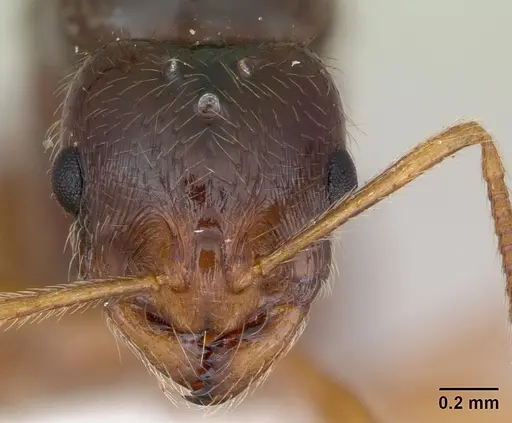
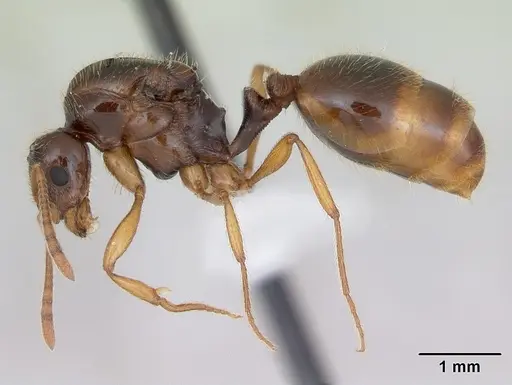
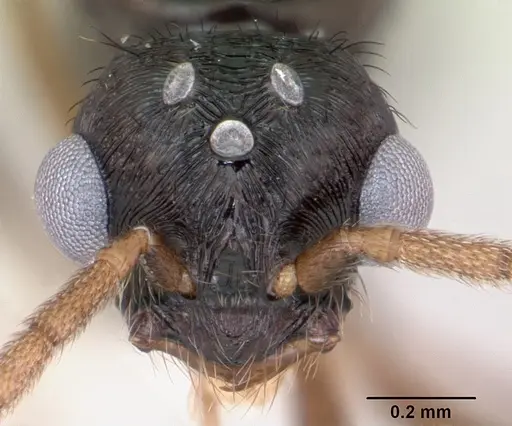
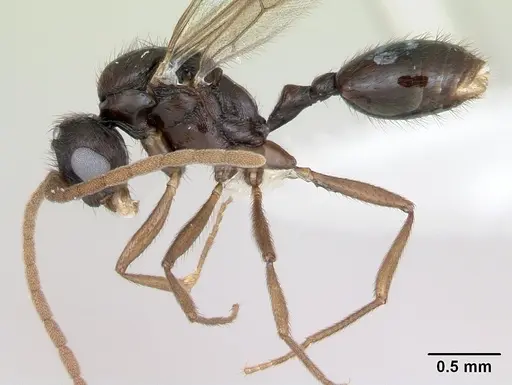
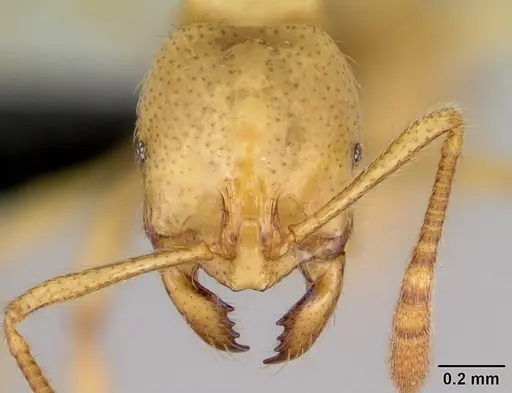
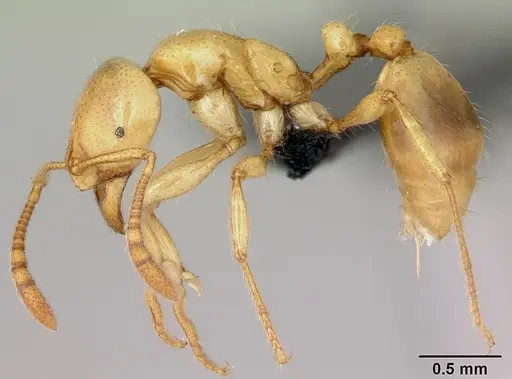
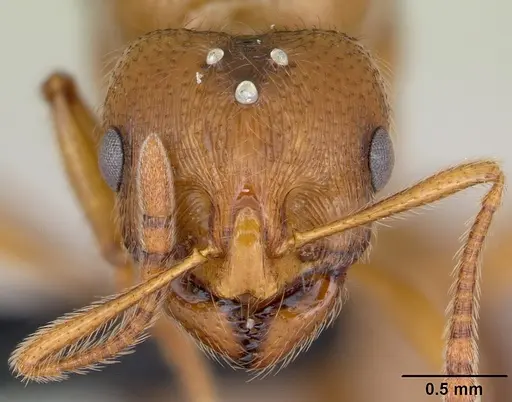
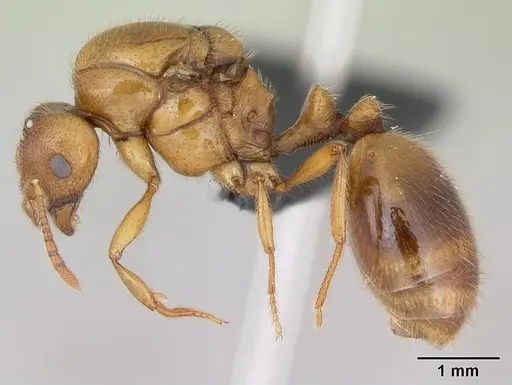
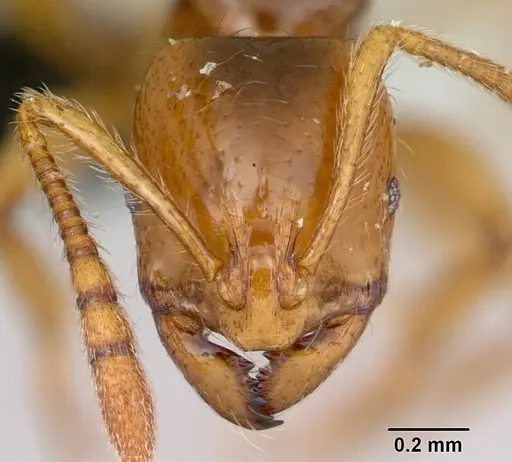
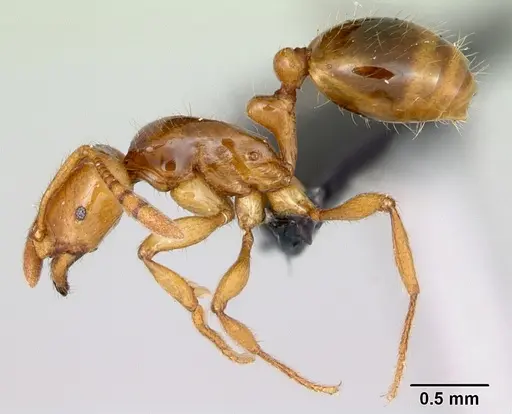
Syllophopsis fisheri is a tiny ant species native to Madagascar, where it lives in montane rainforest habitats across the island . Workers are extremely small, with head width data under 1.3 mm, though total body length hasn't been formally recorded . They come in several color variations - typically yellow to reddish-brown, with some specimens showing a yellow head and gaster with a reddish mesosoma, while dark brown specimens have pale legs . The species is highly variable in size and morphology, with three distinct worker morphotypes recognized: some populations have uniformly pale yellow workers with very small eyes, others produce dramatically larger polymorphic workers with massive heads, and a third form is smooth and glossy with a russet-brown coloration . Queens are relatively large, at over 5 mm total length ('over half a centimeter') . This species was originally described as Monomorium fisheri but was moved to the genus Syllophopsis when genetic analysis revealed it belonged in a separate lineage .
Quick Summary
- Difficulty: Medium
- Origin & Habitat: Montane rainforest in Madagascar, found across Antananarivo, Antsiranana, Fianarantsoa, Toamasina, and Toliara provinces [1][2]. They live in damp forest floor microhabitats, typically nesting in sifted litter, root mats, and rotten wood [2].
- Colony Type: Colony structure is unconfirmed. Workers can be monomorphic (all the same size), monophasically allometric (varying in size but not shape), or polymorphic (varying in both size and shape) depending on the population [1]. No data on queen number in established colonies.
- Size & Growth:
- Queen: Over 5 mm total length, described as 'over half a centimeter' in the literature [2]
- Worker: Total body length not formally recorded, head width data suggests workers are very small, with the largest workers having heads ~1.26 mm wide [1]
- Colony: Unknown, no colony size data exists for this species [1]
- Growth: Unknown, no documented growth rate [1]
- Development: Unconfirmed, no direct development data exists for this species. Based on typical small Myrmicinae patterns, expect roughly 5-8 weeks at optimal temperature, but this is an estimate [1]. (Development timeline is unconfirmed in scientific literature. Related small Monomorium species typically develop in 4-8 weeks.)
- Antkeeping:
- Temperature: Based on their montane rainforest origin, they likely prefer cooler temperatures, aim for roughly 18-22°C. Avoid warm conditions. This is an inference based on their natural habitat [1][2].
- Humidity: Montane rainforest ants need high humidity. Keep the nest substrate consistently moist but not waterlogged. Provide a humidity gradient with a damp side and slightly drier areas for the ants to choose [2].
- Diapause: Unknown, Madagascar has less extreme seasonal temperature swings than temperate regions, but montane areas do experience cooler winters. Monitor colony behavior for seasonal slowdowns [1].
- Nesting: In nature they nest in rotten wood, root mats, and forest litter [2]. For captivity, a naturalistic setup with moist substrate or a Y-tong/plaster nest works well. Their tiny size means they need tight chambers and fine mesh barriers to prevent escapes.
- Behavior: These are tiny, docile ants that likely forage individually in the leaf litter layer [2]. No aggressive behavior has been documented. Their small size (head width under 1.3 mm) means escape prevention is critical, they can squeeze through standard test tube cotton and will find any gap in lid seals. Use fine mesh and check connections regularly.
- Common Issues: escape prevention is critical due to their tiny size, they can slip through gaps that larger ants cannot, wild-caught colonies may carry parasites or pathogens from their native habitat, slow growth and small size mean colonies are vulnerable to stress, high humidity requirements can lead to mold if ventilation is poor, balance moisture with airflow, lack of documented care information means you'll be pioneering husbandry for this species
Temperature and Care
Syllophopsis fisheri comes from Madagascar's montane rainforests, which means they prefer cooler, more stable conditions than many tropical ants. Based on their origin, aim for temperatures in the 18-22°C range, avoid heating the nest above room temperature [1][2]. These ants are likely sensitive to temperature extremes, so keep them away from direct sunlight and heating sources that could cause overheating. A room-temperature setup (around 20°C) is probably ideal. If your colony shows signs of stress (workers clustering away from heat sources), slightly cooler temperatures may be better. The key is stability, sudden temperature swings are likely more harmful than the temperature itself.
Humidity and Nesting
Montane rainforest ants need consistently high humidity. The nest substrate should feel damp to the touch but never waterlogged, standing water in the nest can drown small colonies quickly. A naturalistic setup with a moist soil/gypsum mixture works well, or you can use a test tube setup with a water reservoir. Provide a humidity gradient by keeping one side damper than the other, allowing the ants to self-regulate. Good ventilation is essential to prevent mold growth, but avoid excessive airflow that dries out the nest. For such tiny ants, the nest chambers should be appropriately scaled, small passages help them feel secure. In nature they nest in rotten wood and root mats, so a substrate with decaying wood pieces may encourage natural nesting behavior [2].
Feeding and Diet
Like most small Myrmicinae, Syllophopsis fisheri likely feeds on small arthropods and honeydew in the wild. For captive colonies, offer small protein sources like fruit flies, pinhead crickets, or tiny mealworms. Because of their minute size, prey items should be appropriately scaled, even small fruit flies may need to be cut up for the smallest workers. Sugar sources like honey water or sugar water are likely accepted, especially for colony founding and maintenance. Feed small amounts a few times per week and remove uneaten food promptly to prevent mold [1]. The small worker size means even modest portions are substantial relative to their needs.
Escape Prevention
This is perhaps the most critical aspect of keeping Syllophopsis fisheri. Workers are extremely small (head width under 1.3 mm), smaller than a grain of rice. They can and will squeeze through the tiniest gaps. Standard test tube cotton barriers are not adequate, use fine mesh (at least 0.5mm or finer) on all openings. Check lid seals regularly and consider double-barrier systems for the outworld. Any connection points, air holes, or feeding ports need to be sealed with fine mesh or appropriate barriers. Even a tiny gap that seems insignificant for larger ants will be an escape route for these [1]. A small, well-secured outworld is better than a large one with gaps.
Colony Establishment
Starting a colony from a wild-caught queen is challenging since nuptial flight timing and mating behavior are unconfirmed. If you acquire a queen, the claustral founding process (where she seals herself in and raises first workers alone) is typical for Myrmicinae but not documented for this species. Provide a small, humid founding chamber with minimal disturbance. Queens are relatively large, over 5 mm total length, which is a big contrast to the tiny workers [2]. Wait several weeks before checking, and do not disturb the founding chamber until you see workers. Wild-caught colonies may carry parasites or pathogens from their native habitat, so quarantine and monitor closely after establishment.
Behavior and Temperament
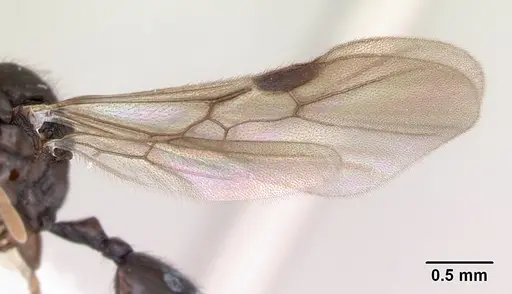
Syllophopsis fisheri is a docile, inconspicuous ant. In the wild, workers forage individually in the leaf litter layer rather than forming obvious foraging trails [2]. They are not documented as aggressive and likely avoid conflict with larger ants. The three worker morphotypes (pale small-eyed workers, large polymorphic workers, and smooth glossy workers) represent natural variation within the species, your colony may produce workers in one or more of these forms depending on its origin population [2]. Queens and males have fully developed wings, indicating they likely conduct nuptial flights, though timing is unknown [1]. They belong to the Myrmicinae subfamily and Solenopsidini tribe, which have functional stingers, but their tiny size makes any sting negligible to humans.
Seasonal Care
Diapause requirements are unconfirmed for this species. Madagascar's climate is tropical to subtropical, with montane areas experiencing cooler, wetter conditions. The Beanka Reserve studies found them in both burned and unburned grassland areas, suggesting some adaptability [4]. However, montane rainforest origins suggest they prefer stable, cool, humid conditions year-round. If your colony shows reduced activity during winter months, this may indicate a rest period, reduce feeding and avoid disturbing them, but maintain humidity. Do not assume they need hibernation like temperate species.
Frequently Asked Questions
How long does it take for Syllophopsis fisheri to go from egg to worker?
This is unconfirmed, no scientific study has documented the development timeline for this species. Based on typical small Myrmicinae patterns, expect roughly 5-8 weeks at optimal temperature (around 20°C). Be patient, as small colonies often develop slowly [1].
What do Syllophopsis fisheri ants eat?
They likely accept small protein sources like fruit flies, tiny crickets, and other micro-arthropods. Sugar sources (honey water, sugar water) are probably accepted too. Cut prey to appropriate sizes for their tiny workers, even small fruit flies may need to be sectioned [1].
Can I keep multiple queens together?
Not documented. Colony structure (monogyne vs polygyne) has not been studied for this species. Do not combine unrelated queens unless you have specific evidence they will tolerate each other [1].
What temperature do they need?
Based on montane rainforest origin, keep them at roughly 18-22°C, cooler than typical tropical ants. Room temperature around 20°C is likely ideal. Avoid heating above this range [1][2].
Are Syllophopsis fisheri good for beginners?
No, their tiny size makes escape prevention challenging, and there is no established care information in the antkeeping hobby. They are better suited for experienced keepers who can provide the high humidity and fine escape prevention they require [1][2].
How big do colonies get?
Unknown, colony size has not been documented. Based on their tiny worker size, colonies likely remain relatively small, probably under a few hundred workers [1].
Do they need hibernation?
Diapause requirements are unconfirmed. Madagascar has less extreme seasons than temperate regions, but montane areas do experience cooler winters. Monitor your colony for seasonal slowdowns and adjust care accordingly, but do not force hibernation [1].
What nest type is best?
Naturalistic setups with moist substrate (like a dirt/plaster mix) or Y-tong/plaster nests work well. They naturally nest in rotten wood and root mats in the wild [2]. Small chambers scaled to their tiny size help them feel secure.
Why are my Syllophopsis fisheri dying?
Common causes include: escape through tiny gaps (check all barriers), improper humidity (too dry or waterlogged), temperature stress (too warm), mold from poor ventilation, or stress from disturbance. Also consider that wild-caught colonies may carry parasites [1][2].
When should I move them to a formicarium?
Wait until the colony is established with at least 20-30 workers. For such small colonies, a test tube setup with a water reservoir often works well long-term. Only move to a larger formicarium when the colony clearly needs more space [1].
Report an Issue
The current care sheet is based fully on literature. See inconsistencies, or something that's incorrect? Please , it will be resolved after review from an admin. Contributing to the blogs tab also helps providing information, to make us be able to further improve the caresheets. Thank you for your support!
References

This caresheet is licensed under CC BY-SA 4.0 .
Community Blogs
CASENT0173601
View on AntWeb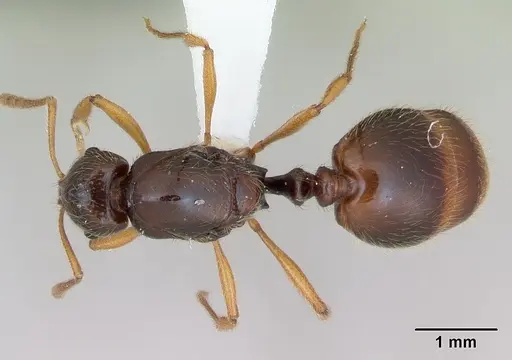
CASENT0173602
View on AntWeb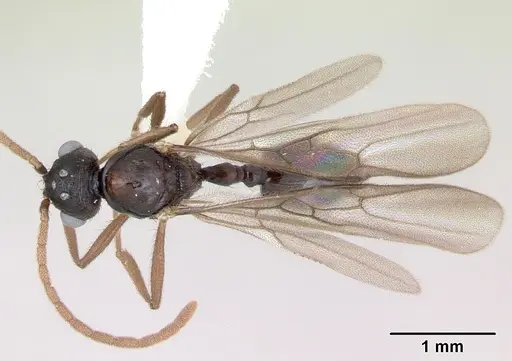
CASENT0274442
View on AntWeb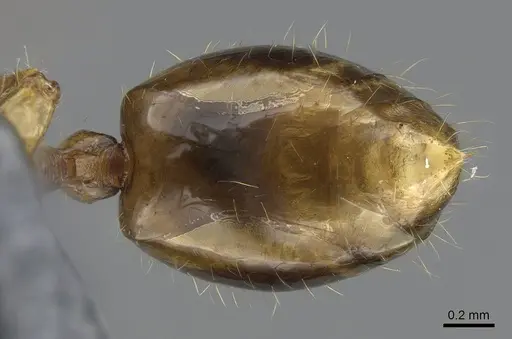
CASENT0430841
View on AntWeb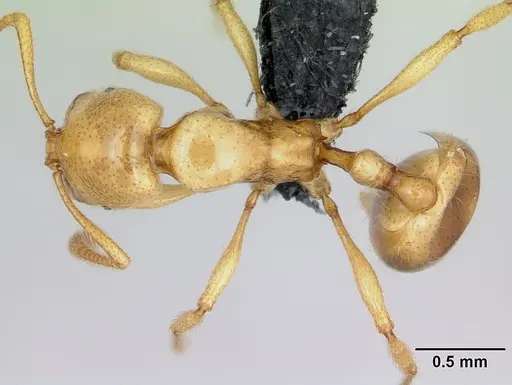
CASENT0455879
View on AntWeb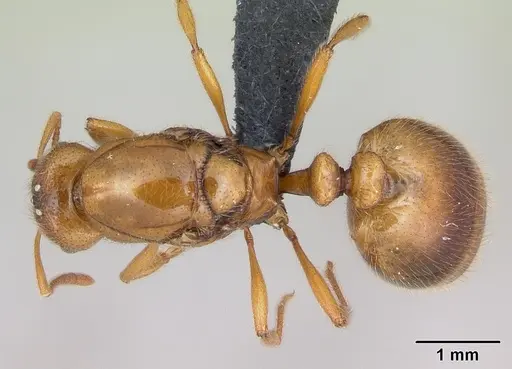
CASENT0491610
View on AntWeb
Literature
Loading distribution map...Loading products...