
Syllophopsis australica
- Sci. Name
- Syllophopsis australica
- Tribe
- Solenopsidini
- Subfamily
- Myrmicinae
- Author
- Forel, 1907
- Distribution
- Found in 11 countries
Introduction
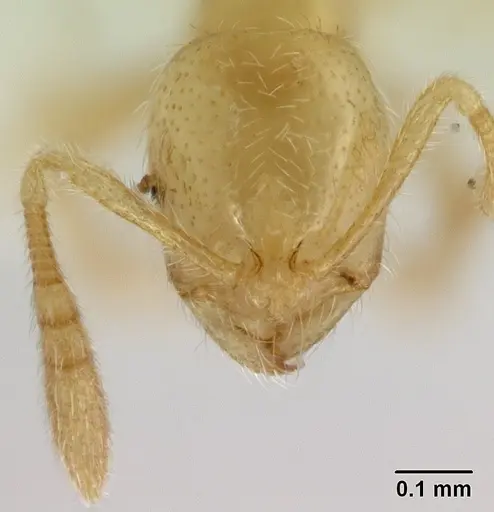
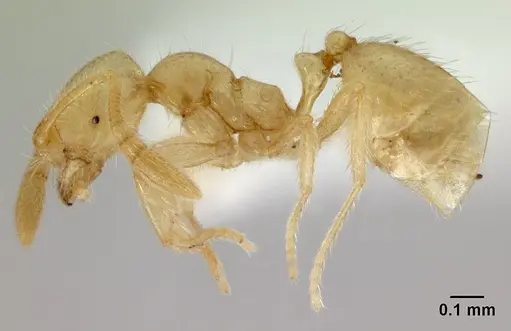
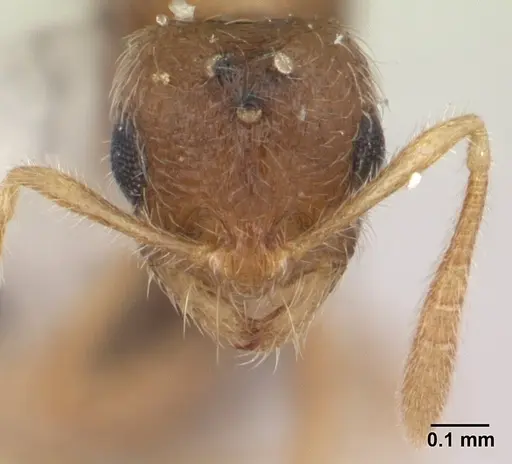
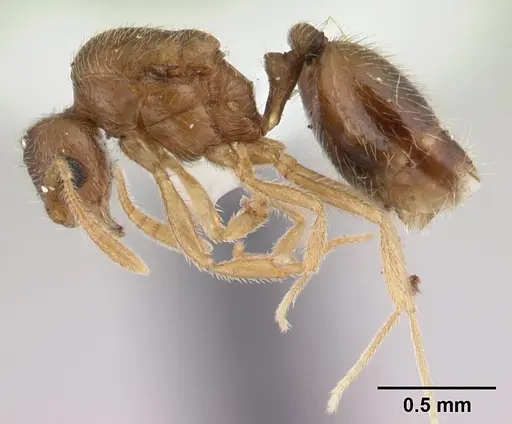
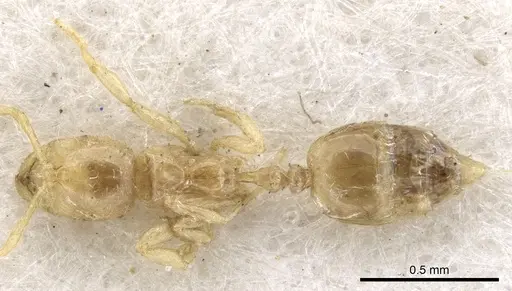
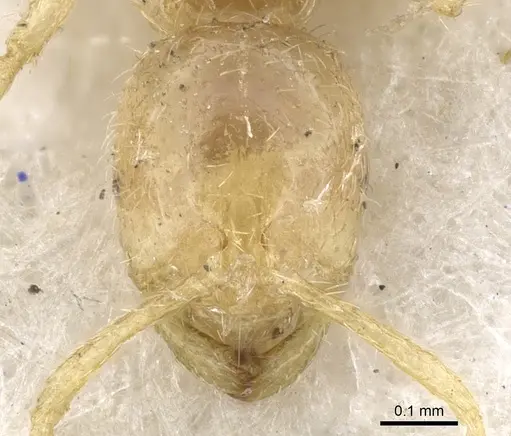
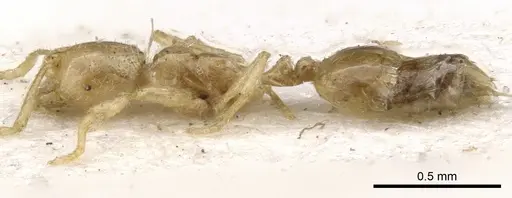
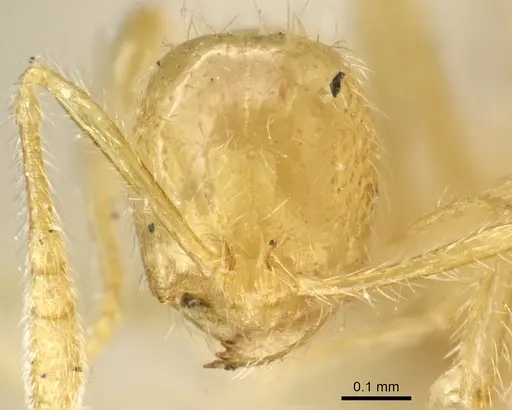
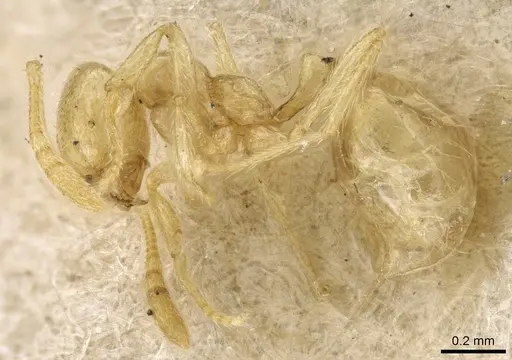
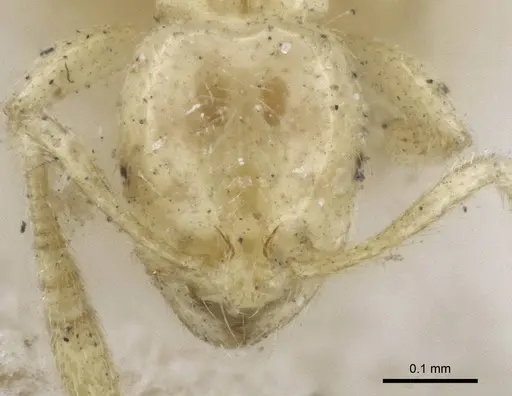
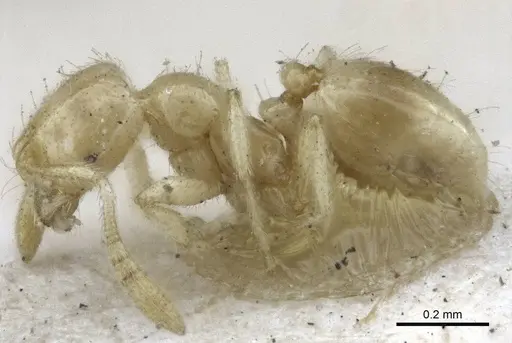
Syllophopsis australica is a tiny, pale yellow to light brown ant from the Myrmicinae subfamily. Workers measure about 2-3 mm, making them one of the smallest ants you might encounter. They have noticeably reduced eyes and antennal insertions that sit very close together, a give‑away identification feature . Originally described from the Blue Mountains of New South Wales, Australia in 1907,this species now has an enormous range that includes Sri Lanka, Southeast Asia, Borneo, Australia, Micronesia, and many Pacific islands like American Samoa, Samoa, and the Solomon Islands . It lives in lowland dipterocarp forests and thrives in disturbed agricultural areas such as coconut and rubber plantations . That broad distribution is probably thanks to human transport, the ant is considered exotic in several regions .
Quick Summary
- Difficulty: Hard
- Origin & Habitat: Native to Australia but widely introduced across tropical Asia and the Pacific. Found in lowland dipterocarp forests [2], rubber plantations [4], and coconut plantations [1]. Habitats range from forest floor to heavily disturbed agriculture.
- Colony Type: Unconfirmed, no specific data on queen number. Most likely monogyne (single queen) based on related species, but this is not documented.
- Size & Growth:
- Queen: Size data unavailable, no specimens described in the available literature.
- Worker: ~2-3 mm (inferred from closely related Monomorium species) [3].
- Colony: Unknown, no data available for this species.
- Growth: Moderate (estimated)
- Development: Unknown, no specific data. Based on related Monomorium species, likely 6-8 weeks, but this is unconfirmed. (Development time is an estimate, no direct measurements exist for Syllophopsis australica.)
- Antkeeping:
- Temperature: 22-26°C (inferred from its tropical distribution) [2][4]. Avoid prolonged temperatures below 18°C.
- Humidity: Keep the nest substrate consistently moist but not waterlogged. Good ventilation prevents mold. Test tube setups naturally maintain appropriate humidity.
- Diapause: No, this tropical species does not require hibernation. A slight winter temperature drop is harmless but not needed.
- Nesting: Compact setups work best: Y‑tong (AAC) nests with narrow chambers, test tubes, or plaster nests. Tight, small chambers match their natural preference. Avoid large open spaces. A naturalistic setup with moist soil is also suitable.
- Behavior: Docile and non‑aggressive, but they can sting (typical of the Solenopsidini tribe, piperidine alkaloid venom). The sting is mild and rarely used against humans. Workers forage individually rather than in visible trails. Because they are less than 3 mm, escape prevention is critical, use fine mesh and tight‑fitting lids. They are primarily ground‑nesting.
- Common Issues: escape prevention is critical due to their tiny size, they can squeeze through gaps smaller than 1 mm., invasive species warning: Syllophopsis australica is considered exotic in many regions [4]. It must never be released, and extreme care must be taken to prevent escape., sting capable, though not aggressive, they can deliver a mild sting if handled roughly., slow colony growth compared to many beginner species, patience is required., founding details are undocumented, wild queens are extremely hard to find because they are tiny and cryptic.
Housing and Nest Setup
Syllophopsis australica is very small, so a compact nest is best. A Y‑tong (AAC) formicarium with narrow chambers works well because it mimics their natural preference for tight spaces under stones or in rotting wood. Test tube setups are perfect for founding, fill a tube one‑third with water, plug it with cotton, and place the queen inside. Avoid large, open nest chambers, they prefer snug areas. For a naturalistic setup, use a shallow container with moist soil or sand. The outworld should be small with good escape prevention, use very fine mesh on all ventilation holes and ensure the lid seals tightly. Their tiny size means they can slip through gaps that look closed to the naked eye.
Temperature and Heating
Being a tropical to subtropical species, Syllophopsis australica needs steady warmth. Aim for 22-26°C [2][4]. A heating cable on one side of the nest creates a gentle temperature gradient so the ants can choose their preferred spot. Avoid letting the nest drop below 18°C for long periods. If your room stays within that range naturally, extra heating may not be needed.
Feeding and Diet
Like most Solenopsidini, these ants are omnivorous with a preference for protein. Offer small insects such as fruit flies, pinhead crickets, or tiny pieces of mealworm. They also accept sugar sources, a drop of honey water or sugar water in the outworld is usually taken. Feed small amounts twice a week and remove any uneaten food after 24-48 hours to prevent mold. During founding, the queen may need feeding (founding behavior is unknown), so check if she accepts food, if not, she may be claustral. Once workers appear, they will quickly take protein and sugar.
Humidity and Water
Syllophopsis australica lives in tropical forests and agricultural areas, so it prefers a moderately moist environment [2]. Keep the nest substrate consistently damp but never waterlogged. In a test tube setup, the water reservoir provides steady humidity. For Y‑tong or naturalistic setups, mist the substrate occasionally to keep it moist. Provide a water source in the outworld, a small piece of damp cotton or a tiny water tube works well. Good ventilation is important to prevent mold while maintaining humidity.
Colony Development
Details about founding are undocumented for this species. Some small myrmicines are claustral (queen raises first brood on stored reserves), but we do not know if this applies here. If you start with a queen, give her a test tube setup and observe whether she accepts food or stays sealed. The first workers (nanitics) are tiny and likely paler than mature workers. The time from egg to worker is unknown, based on related Monomorium species it probably takes 6-8 weeks at 24-26°C, but this is an estimate. Colony growth is moderate, a mature colony may reach a few hundred workers, though maximum size is unknown.
Behavior and Temperament
This ant is calm and not aggressive. Workers forage alone rather than in trails. They are ground‑dwelling and do not climb smooth walls easily, which helps reduce escape risk, but their tiny size still demands careful prevention. As members of the Solenopsidini tribe, they possess a sting that injects piperidine alkaloid venom. They rarely use it on humans, handling may cause a mild, brief irritation. In a colony they use the sting to subdue prey and defend the nest. The species is most active when temperatures are warm, activity drops if the nest gets too cool.
Frequently Asked Questions
How long does it take for Syllophopsis australica to raise first workers?
The exact timing is unknown. Based on related Monomorium species, it probably takes 6-8 weeks at 24-26°C, but this is an estimate, no specific data exists for S. australica. The queen may seal herself in or remain active during founding, observe her behavior.
What do Syllophopsis australica ants eat?
They are omnivorous with a preference for protein. Offer small live or dead insects like fruit flies, pinhead crickets, or tiny mealworms. They also take sugar water or honey water. Feed small amounts twice a week and remove leftovers after 24-48 hours to prevent mold.
What temperature do Syllophopsis australica ants need?
Keep the nest at 22-26°C. This tropical species needs steady warmth and will become sluggish below 18°C. A heating cable on one side of the nest provides a temperature gradient [2][4].
Are Syllophopsis australica ants good for beginners?
No. While they are small and docile, the species is considered invasive or exotic in many regions [4], so extreme escape prevention is necessary. Their tiny size makes them difficult to contain, and colony development data is lacking. This species is better suited for experienced keepers who can manage a potentially invasive ant.
How big do Syllophopsis australica colonies get?
Maximum colony size is unknown. Based on related small Monomorium species, they might reach a few hundred workers, but no data exists specifically for S. australica. Growth is moderate.
Can I keep multiple Syllophopsis australica queens together?
Not recommended. The social structure of this species has not been studied, but most closely related species are single‑queen (monogyne). Mixing unrelated queens usually results in fighting. House each queen separately.
Do Syllophopsis australica ants need hibernation?
No. This species comes from tropical and subtropical areas where temperatures stay warm year‑round [2]. It does not require diapause. A slight seasonal temperature drop is unlikely to hurt them but is not necessary.
Why are my Syllophopsis australica ants dying?
Common causes: temperatures below 18°C, too dry conditions, mold from overfeeding or poor ventilation, or escape (they are tiny enough to slip through small gaps). If you have a colony, check temperature, humidity, and cleanliness. Wild‑caught colonies may also carry parasites.
When should I move my colony to a formicarium?
Wait until the colony is well‑established, typically when you can count at least 10-15 workers or more. A Y‑tong or plaster nest with small chambers is ideal. Moving too early can cause stress, use a test tube as the nesting area for as long as possible.
Report an Issue
The current care sheet is based fully on literature. See inconsistencies, or something that's incorrect? Please , it will be resolved after review from an admin. Contributing to the blogs tab also helps providing information, to make us be able to further improve the caresheets. Thank you for your support!
References

This caresheet is licensed under CC BY-SA 4.0 .
Community Blogs
CASENT0178387
View on AntWeb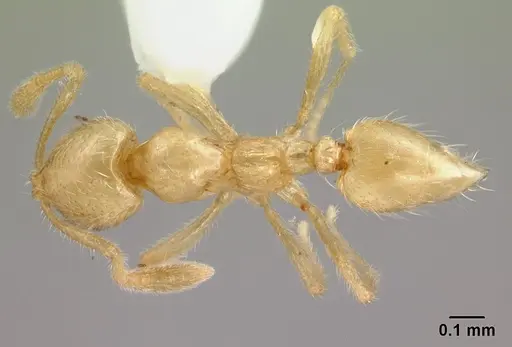
CASENT0178388
View on AntWeb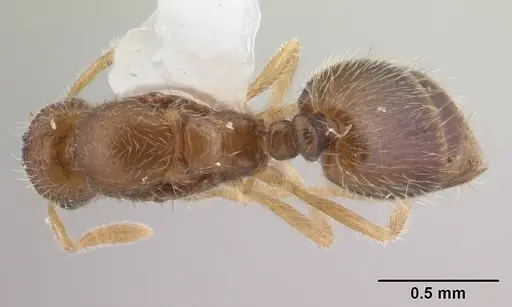
CASENT0434414
View on AntWeb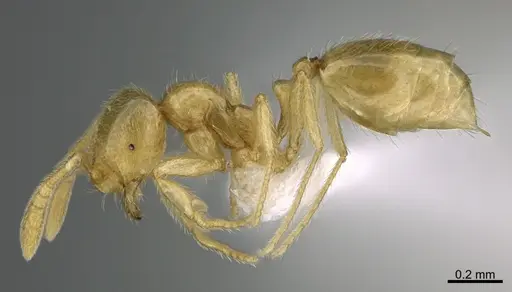
CASENT0902225
View on AntWeb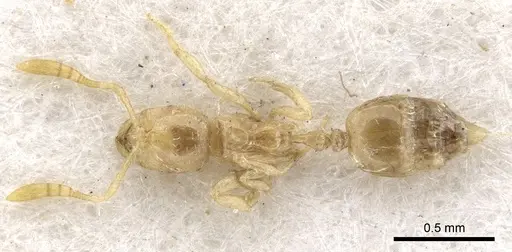
CASENT0904578
View on AntWeb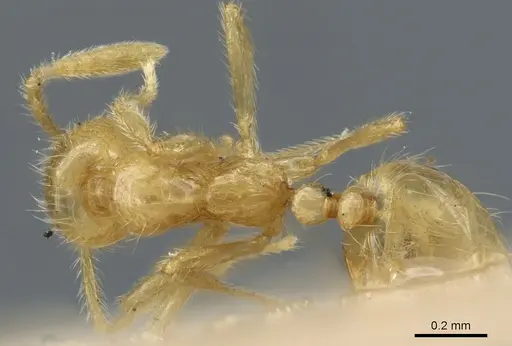
CASENT0916610
View on AntWeb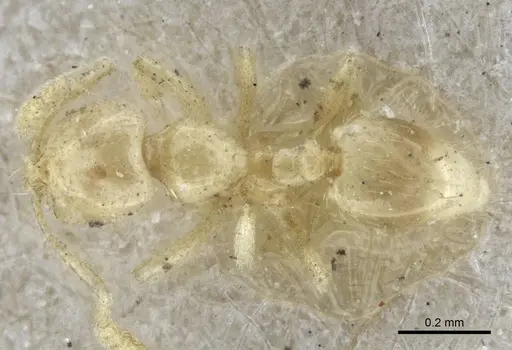
Literature
Loading distribution map...Loading products...