
Syllophopsis aureorugosa
- Sci. Name
- Syllophopsis aureorugosa
- Tribe
- Solenopsidini
- Subfamily
- Myrmicinae
- Author
- Heterick, 2006
- Distribution
- Found in 1 countries
Introduction
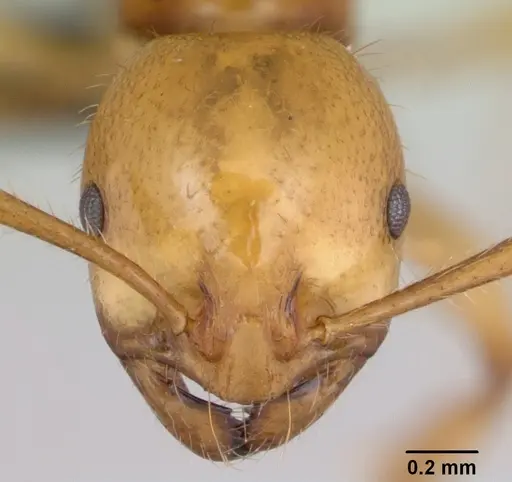
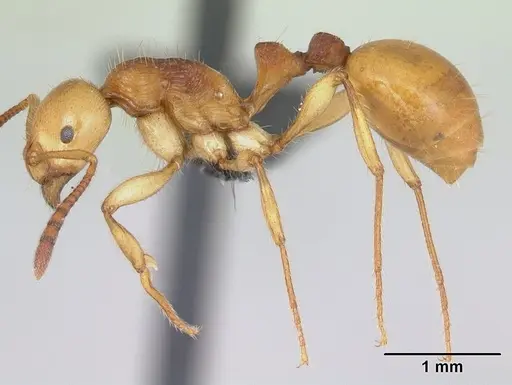
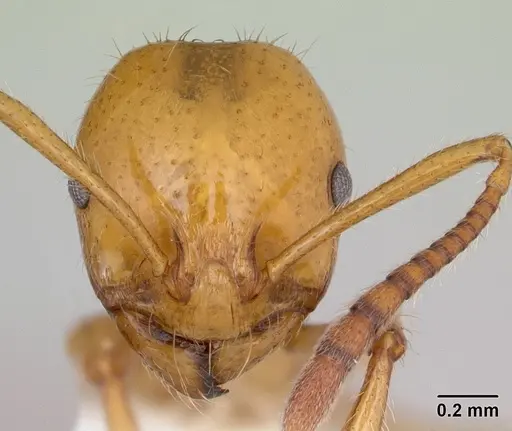
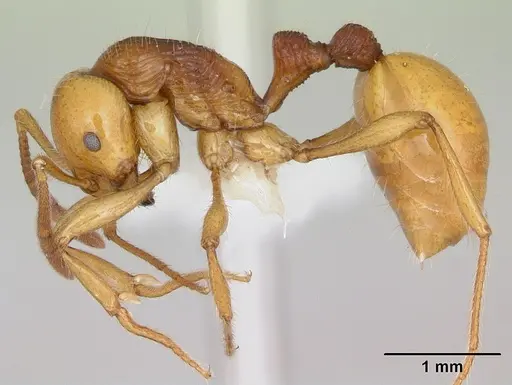
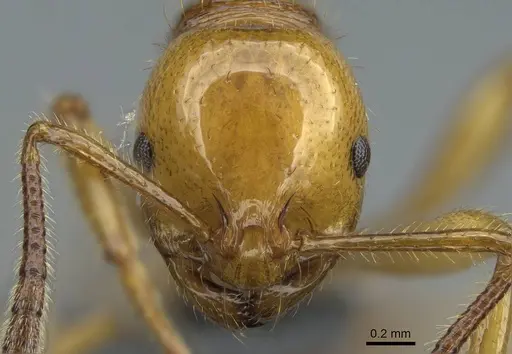
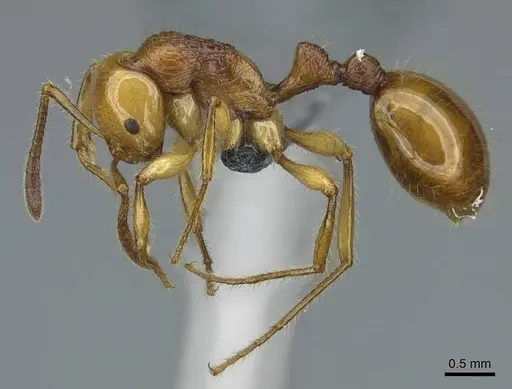
Syllophopsis aureorugosa is a small myrmicine ant native to the rainforests of far northeastern Madagascar. Workers are relatively large for the genus, with head to mesosoma length of about 3.5-3.9 mm (total body length likely slightly larger, but not reported). They have a distinctive color pattern: the head, gaster, and appendages are yellow while the mesosoma is reddish-orange . This species belongs to the Monomorium hildebrandti group and is one of two very large members of the group with a restricted range . The head is oval with a planar to weakly concave vertex, and the 12-segmented antennae lack a clearly defined club . These ants are known from only a small number of workers, collected primarily from soil below tree roots and through various methods including sifted leaf litter and Winkler traps .
Quick Summary
- Difficulty: Medium
- Origin & Habitat: Far northeastern Madagascar, specifically Antsiranana and Toamasina Provinces. Confined to rainforest habitats at elevations around 825 m [2][1].
- Colony Type: Unknown from literature. Based on genus patterns, likely monogyne, but this is unconfirmed.
- Size & Growth:
- Queen: Undescribed, queen measurements not available in literature [2][1].
- Worker: No total body length (TL) reported. Head to mesosoma length ranges 3.52-3.90 mm [1], total length likely slightly larger but unconfirmed. The species is one of the largest in its group [1].
- Colony: Unknown, only a few workers have ever been collected in the wild. No colony size data exists [2].
- Growth: Unknown, no data on development speed.
- Development: Unknown, no specific data for this species. Based on typical Monomorium patterns, perhaps 6-10 weeks at optimal conditions, but this is speculative. (All development estimates are inferred from related species, not from direct observation of Syllophopsis aureorugosa.)
- Antkeeping:
- Temperature: As a rainforest species from Madagascar [2][1], these ants need warm conditions. Maintain 24-28°C, with a gentle gradient from a heat mat on one side. Avoid extremes below 20°C or above 32°C.
- Humidity: High humidity, typical for a rainforest species. Keep the nest substrate consistently moist but not waterlogged. Provide a water tube for drinking.
- Diapause: No, as a tropical rainforest species, diapause is not required. Maintain stable conditions year-round.
- Nesting: In captivity, test tubes or Y‑tong formicaria with narrow chambers work well. They naturally nest in soil below tree roots [2], so a naturalistic setup with damp soil or a plaster nest with a water reservoir can mimic their habitat. Avoid acrylic nests. Escape prevention is critical, use fine mesh and fluon on rims.
- Behavior: Workers are active foragers that likely search for food on the ground and in leaf litter. Based on related Monomorium species, they are not particularly aggressive but will defend the nest. Their small size (under 4 mm) means escape prevention is essential, fine mesh and tight‑fitting lids are a must. They likely accept both sugar sources and small protein prey.
- Common Issues: escape prevention is critical due to very small size, they can squeeze through standard gaps., humidity control is essential, too dry colonies fail, too wet causes mold., mold from overwatering or uneaten food can kill the colony., wild‑caught colonies may have parasites that are difficult to treat in captivity.
Housing and Nest Setup
Syllophopsis aureorugosa is a small ant that does well in a standard test tube setup during founding. For larger colonies, use Y‑tong or plaster nests with narrow chambers scaled to their size. They naturally nest in soil below tree roots in rainforest habitats [2], so a naturalistic setup with damp soil works well. Always provide a water tube connected to the nest for drinking access, as rainforest species need constant moisture. Escape prevention is essential, apply fluon on rims and cover ventilation holes with fine mesh. Do not use acrylic nests.
Feeding and Diet
Based on typical Monomorium genus behavior, these ants are omnivorous and accept both sugar and protein sources. Offer sugar water, honey, or diluted maple syrup as a constant sugar source. For protein, give small soft‑bodied insects like fruit flies, small mealworms, or cricket pieces 2-3 times per week, adjusting based on colony size and consumption. Remove uneaten food after 24-48 hours to prevent mold. They may also collect honeydew from aphids if kept in a naturalistic setup. Start with small prey and observe acceptance, adjust offerings based on what workers readily take.
Temperature and Humidity Management
As a Madagascar rainforest species [2][1], these ants need warm and humid conditions. Maintain temperatures between 24-28°C. Place a heating cable on one side of the nest to create a temperature gradient so the ants can self‑regulate. Avoid heating directly over water reservoirs as this causes excessive evaporation. Keep the nest substrate consistently moist but not waterlogged, and provide a water tube. Mist the outworld occasionally but avoid saturating the setup. Good ventilation is important to prevent stagnant air and mold. Monitor for condensation on nest walls, a light film is a good sign of proper humidity.
Colony Development and Growth
Very little is known about colony development in this species, only a few workers have ever been collected [1]. Founding behavior is unconfirmed. Based on typical Monomorium patterns, if a queen founds claustrally, she would seal herself in and raise the first brood on stored reserves. The first workers (nanitics) might appear after 6-10 weeks at optimal temperatures, but this is entirely speculative. Do not expect rapid growth. Careful observation is needed to learn more about this species' development.
Seasonal Care and Overwintering
As a tropical rainforest species from Madagascar, these ants do not require true hibernation. Maintain stable warm and humid conditions year‑round. There is no evidence that they experience a pronounced dry season in captivity, so do not reduce temperature or humidity significantly. Keep conditions consistent, sudden changes are more stressful than any seasonal variation.
Handling and Observation
These small ants are best observed rather than handled directly. Their small size makes them fragile, and excessive disturbance can stress the colony. Use red film or red LED lights when observing, many ants are less disturbed by red light. Avoid tapping on nests or frequent colony inspections. For photography, use minimal flash and take quick shots. If you need to move the colony, coax workers gently with a soft brush rather than forcing movement. Respect their preference for stable, dark, humid environments.
Frequently Asked Questions
How long does it take for Syllophopsis aureorugosa to have first workers?
The exact timeline is unknown, no published data exists for this species. Based on related Monomorium species, a founding queen might take 6-10 weeks to produce the first workers at optimal temperatures, but this is purely speculative. Observe your colony and record development to help fill the knowledge gap.
What do Syllophopsis aureorugosa ants eat?
They are omnivorous, like most Monomorium species. Offer sugar water, honey, or maple syrup as a constant sugar source. For protein, provide small soft‑bodied insects such as fruit flies, small mealworms, or cricket pieces 2-3 times per week. Remove uneaten food after 24-48 hours to prevent mold.
What temperature do Syllophopsis aureorugosa ants need?
Keep them at 24-28°C based on their Madagascar rainforest habitat [2][1]. Place a heating cable on one side of the nest to create a gradient. Avoid temperatures below 20°C or above 32°C. Consistent warmth is more important than exact precision.
Are Syllophopsis aureorugosa good for beginners?
This species is rated Medium difficulty. While not the hardest, it requires careful humidity and temperature control. Beginners should be comfortable maintaining consistent conditions before trying this species. Its small size also demands thorough escape prevention.
How big do Syllophopsis aureorugosa colonies get?
Colony size is unknown, only a handful of workers have ever been collected in the wild [2]. There is no evidence to support estimates of 300-500 workers. Any claim about colony size is speculative. Keep careful notes if you maintain a colony.
Can I keep multiple queens together?
It is not recommended, there is no data on colony structure. Most Monomorium species are monogyne (single queen), so housing multiple queens together is risky. If you have multiple queens, house them separately.
What humidity level do Syllophopsis aureorugosa ants need?
High humidity is essential, keep the nest substrate consistently moist but not waterlogged. Provide a water tube. This matches the rainforest conditions they come from [2][1]. Too dry and the colony will fail, too wet will cause mold.
When should I move my colony to a formicarium?
Wait until the colony has at least 15-20 workers and is actively foraging in an outworld. Moving too early stresses the colony. Test tube setups can be used for a long time, these ants don't need large spaces. A good sign is when workers consistently explore beyond the test tube.
Why are my Syllophopsis aureorugosa dying?
Common causes include: low humidity (rainforest species need high moisture), temperature stress (below 20°C or above 32°C), escape due to small size, mold from overwatering or uneaten food, or parasites from wild‑caught colonies. Check your setup parameters and adjust accordingly. Since so little is known about this species, careful observation and adjustment are key.
Report an Issue
The current care sheet is based fully on literature. See inconsistencies, or something that's incorrect? Please , it will be resolved after review from an admin. Contributing to the blogs tab also helps providing information, to make us be able to further improve the caresheets. Thank you for your support!
References

This caresheet is licensed under CC BY-SA 4.0 .
Community Blogs
CASENT0044971
View on AntWeb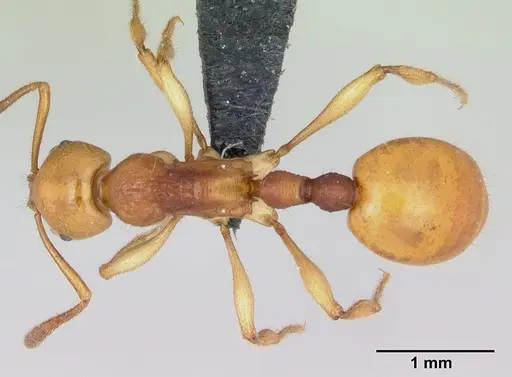
CASENT0172919
View on AntWeb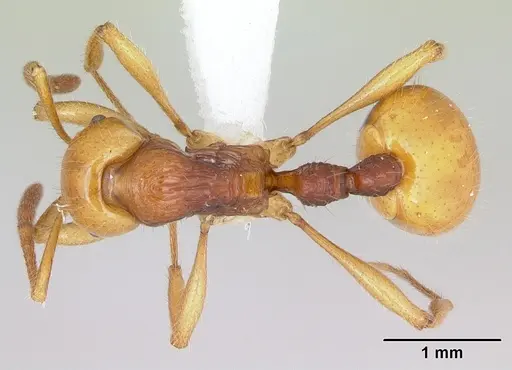
CASENT0291293
View on AntWeb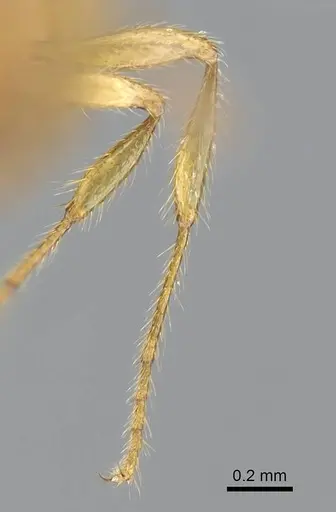
CASENT0840860
View on AntWeb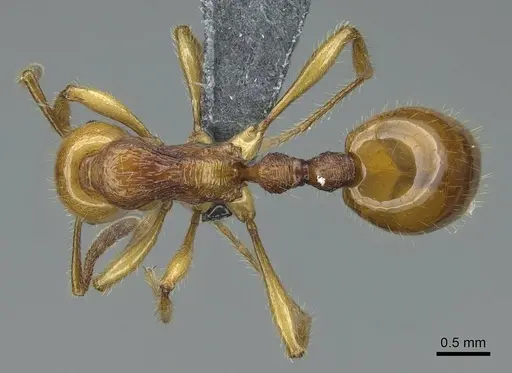
Literature
Loading distribution map...Loading products...