
Syllophopsis adiastolon
- Sci. Name
- Syllophopsis adiastolon
- Tribe
- Solenopsidini
- Subfamily
- Myrmicinae
- Author
- Heterick, 2006
- Distribution
- Found in 1 countries
Introduction
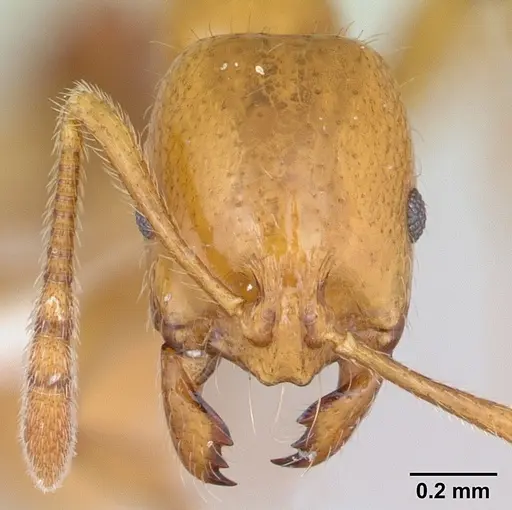
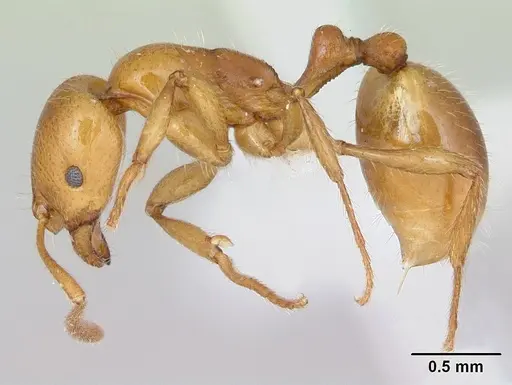
Syllophopsis adiastolon is a tiny yellow ant found only in the montane rainforests of northern Madagascar. Workers are monomorphic, with a yellowish to yellowish-brown body and a darker brown gaster (rear segment). They have 12-segmented antennae ending in a 3-segmented club and four mandibular teeth. Originally described as Monomorium adiastolon, they were moved to Syllophopsis in 2015 . Their taxonomic position is uncertain, appearing intermediate between related Monomorium species . What makes this species special is the presence of ergatoid (wingless) replacement queens. They nest in rotten wood and leaf litter in montane rainforests at around 1580m elevation . They are collected by beating low vegetation or sifting leaf litter, suggesting they forage close to the ground.
Quick Summary
- Difficulty: Expert
- Origin & Habitat: Antsiranana Province, northern Madagascar. Montane rainforest at around 1580m, nesting in rotten wood and leaf litter [2][3].
- Colony Type: Colony structure is unconfirmed. Ergatoid (wingless) replacement queens have been observed, which means the colony might replace a lost queen with one of these [2].
- Size & Growth:
- Queen: Total length not recorded, head width 0.77-0.88 mm in literature [2]. Inferred from related species: likely ~3-4 mm total length.
- Worker: Total length not recorded, head width 0.63-0.70 mm in literature, with head+mesosoma length 2.17-2.41 mm [2]. Estimated total length around 2-2.5 mm based on related species.
- Colony: Unknown. Based on similar small myrmicine ants, likely a few hundred workers.
- Growth: Slow, inferred from small myrmicine genera.
- Development: Estimated 6-10 weeks based on related Monomorium patterns. (Development likely depends on stable temperature and humidity. No specific data available.)
- Antkeeping:
- Temperature: Keep at 22-26°C. Avoid over 30°C. As a montane rainforest species, stable moderate temperatures are preferred.
- Humidity: Moderate to high. Keep substrate damp but not waterlogged. Provide a water tube. Montane habitat suggests consistent moisture.
- Diapause: Unknown. As a tropical species, true diapause is unlikely, but activity might slow in cooler months. Keep at stable room temperature year-round.
- Nesting: Natural nesting in rotten wood and leaf litter suggests Y-tong (AAC) or test tube setups with moist substrate work well. Their small size demands tight connections and small chambers [2].
- Behavior: Docile and non-aggressive. They belong to subfamily Myrmicinae (tribe Solenopsidini) and have a sting that injects piperidine alkaloids, used for hunting and defense, but it poses no threat to keepers. Their tiny size (under 3mm) makes escape prevention critical, use fine mesh and fluon barriers. They likely forage individually or in small groups for small prey and honeydew. Probably nocturnal or crepuscular.
- Common Issues: escape prevention is critical due to their very small size, they can slip through gaps that seem sealed, high humidity needed can lead to mold if ventilation is poor, prey items must be tiny (fruit flies, micro-crickets) because workers are so small, colony growth is slow, requiring patience and consistent care, wild-caught colonies may carry parasites or diseases that can collapse the colony
Housing and Nest Setup
Because these ants are so small, your setup needs to be escape-proof. A test tube with a cotton water plug works for founding colonies. Once the colony grows, switch to a Y-tong (AAC) nest with small chambers, their tiny workers will use oversized chambers poorly. Ensure all connections are tight and apply fluon (PTFE) to the rims of the outworld. A small outworld (foraging area) allows you to feed and remove waste without disturbing the nest [2].
Feeding and Diet
Like other Monomorium-group ants, this species is likely omnivorous. In the wild, they probably eat small insects, springtails, and honeydew. In captivity, offer tiny live prey: fruit flies (Drosophila), pinhead crickets, or small mealworms cut into pieces. They also accept sugar water or diluted honey. Feed small amounts every 2-3 days and remove leftovers after 24 hours to prevent mold. Protein is key for brood development.
Temperature and Humidity
Their montane rainforest habitat points to stable, moderate conditions. Keep the nest at 22-26°C, room temperature works. Avoid heating above 30°C, which can kill them. For humidity, aim for constant dampness in the nest substrate (like a wrung-out sponge) but not waterlogged. A water tube provides a steady source. Ventilate the outworld to prevent mold. If using a heat mat, put it on the side or top of the nest, not underneath, to avoid drying out the soil. [2]
Colony Development and Growth
Growth is slow. The queen lays eggs that develop through larvae and pupae into workers. Based on similar Monomorium species, expect 6-10 weeks from egg to first worker at optimal temperature. The first workers (nanitics) will be very small. The colony then grows gradually. Maximum colony size is unknown, but likely stays under a few hundred workers. If the queen dies, the colony might replace her using an ergatoid queen, though this is not guaranteed and depends on conditions [2].
Handling and Temperament
These ants are docile and rarely sting. They possess a sting (as members of Solenopsidini) but it's not considered painful. They may bite if provoked, but you'll barely feel it. The real challenge is keeping them contained. Their size means they can slip through gaps you'd think are sealed. Always use tight-fitting lids, fine mesh, and fluon barriers. Observe from outside the enclosure to avoid stressing the colony. Never handle them directly, it's unnecessary and risky for such delicate ants.
Frequently Asked Questions
How long does it take for Syllophopsis adiastolon to produce first workers?
No specific data exists. Based on related Monomorium species, expect 6-10 weeks from egg to first worker at around 24°C. The first workers (nanitics) will be tiny and delicate.
What do Syllophopsis adiastolon ants eat?
They likely eat small insects and honeydew, like other Monomorium-group ants. In captivity, offer fruit flies, pinhead crickets, or cut-up mealworms. They also accept sugar water. Prey must be very small because of their tiny size.
Can I keep multiple queens together?
Probably not. The colony structure is unconfirmed, but the presence of a single ergatoid suggests monogyny. Combining unrelated queens would likely lead to fighting. If you have a queen and she dies, an ergatoid may take over, but this is not guaranteed [2].
What temperature and humidity do they need?
Keep the nest at 22-26°C with moderate to high humidity. The substrate should stay damp but not wet. Avoid temperatures over 30°C. Their natural montane habitat is cool and moist.
Are Syllophopsis adiastolon good for beginners?
No. They are rated Expert difficulty. Their tiny size requires excellent escape prevention, and their specific humidity needs can be tricky. Beginners should start with hardier, larger species before attempting this one.
How big do Syllophopsis adiastolon colonies get?
Maximum colony size is unknown. Based on similar small myrmicine ants, probably a few hundred workers at most. Growth is slow and gradual.
Do they need hibernation or diapause?
No specific data. As a tropical montane species, they likely do not require true diapause. Activity may slow in cooler months, but keep them at stable room temperature year-round.
Why are my Syllophopsis adiastolon escaping?
Their tiny size (under 3mm) lets them through gaps you can't see. Check all connections, lid seals, and barriers. Use fine mesh and fluon on all rim edges. Even a tiny crack is an escape route. This species demands impeccable containment [2].
When should I move them to a formicarium?
Wait until the colony has about 20-30 workers and has outgrown the test tube. A Y-tong (AAC) nest with small chambers is a good choice. Move carefully to avoid stressing the queen and workers. Standard practice applies.
Report an Issue
The current care sheet is based fully on literature. See inconsistencies, or something that's incorrect? Please , it will be resolved after review from an admin. Contributing to the blogs tab also helps providing information, to make us be able to further improve the caresheets. Thank you for your support!
References

This caresheet is licensed under CC BY-SA 4.0 .
Community Blogs
CASENT0010843
View on AntWeb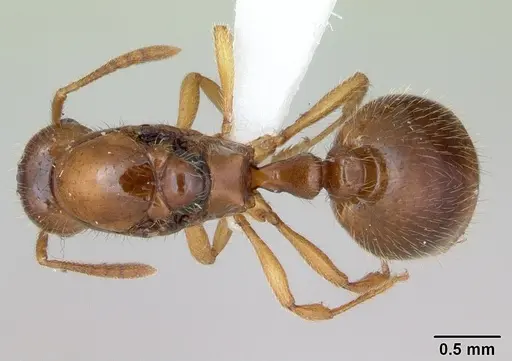
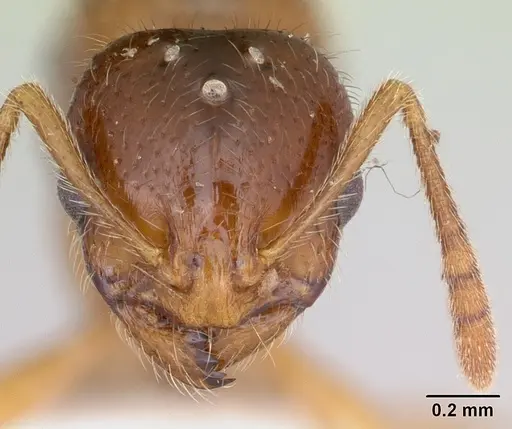
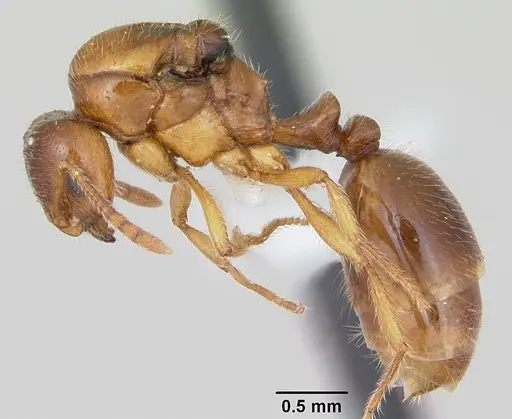
CASENT0172864
View on AntWeb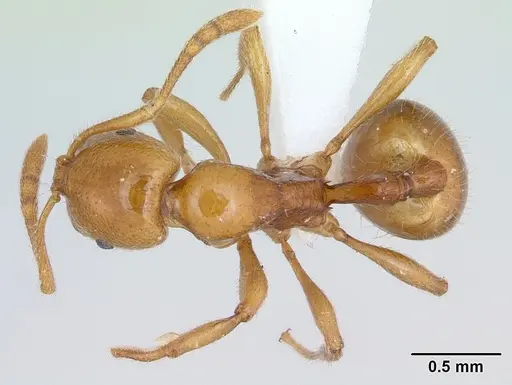
Literature
Loading distribution map...Loading products...