
Strumigenys yaleopleura
- Sci. Name
- Strumigenys yaleopleura
- Tribe
- Attini
- Subfamily
- Myrmicinae
- Author
- Brown, 1988
- Distribution
- Found in 2 countries
Introduction
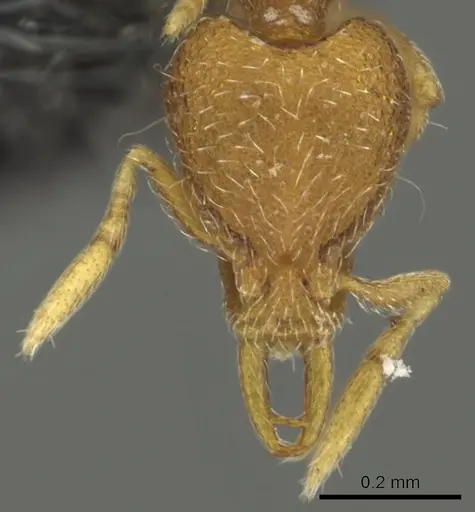
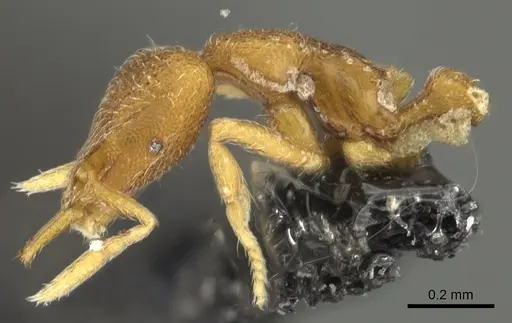
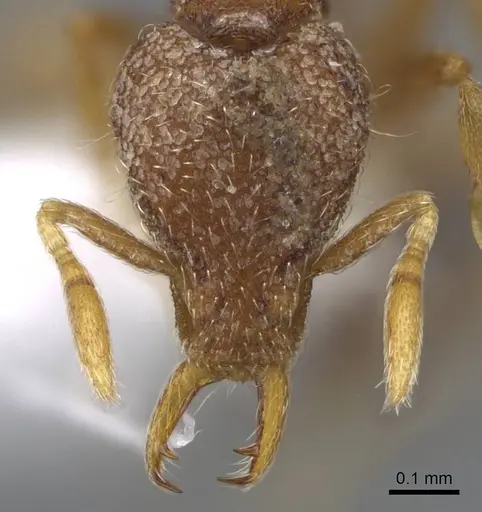
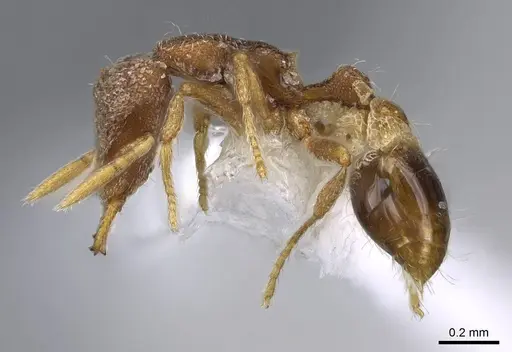
Strumigenys yaleopleura is a tiny predatory ant measuring 1.7-1.9mm in total length . Workers have notably long mandibles and scapes, with unique flagellate hairs on their middle and hind legs that distinguish them from related species . The head and mesosoma are dark reddish-brown, while the gaster is darker. These ants belong to the dacetine group (tribe Attini) and are likely specialized predators of small arthropods like springtails. They are found in rainforests of northern Australia (Queensland), New Guinea, and the Solomon Islands, living in leaf litter and under stones .
Quick Summary
- Difficulty: Hard
- Origin & Habitat: Rainforests of northern Australia (Queensland), New Guinea, and Solomon Islands. Specimens have been collected from leaf litter and under stones in humid forest environments [1][2].
- Colony Type: Unconfirmed, Strumigenys species are typically monogyne (single queen), but specific data for yaleopleura is lacking.
- Size & Growth:
- Queen: Size data unavailable, likely slightly larger than workers based on related species, but no measurements are recorded.
- Worker: 1.7-1.9mm [1]
- Colony: Likely under 100 workers based on typical Strumigenys colony sizes
- Growth: Slow
- Development: Estimated 4-6 months based on similar Strumigenys species (Development is slow, these tiny ants invest heavily in each individual. First workers (nanitics) are very small.)
- Antkeeping:
- Temperature: Keep warm and stable, roughly 22-26°C based on rainforest habitat. Avoid temperatures below 20°C.
- Humidity: High humidity is essential, maintain a moist but not waterlogged substrate, mimicking rainforest leaf litter conditions. Mist regularly but ensure ventilation to prevent mold.
- Diapause: Unlikely, being a tropical/rainforest species, they probably do not require true diapause. They may slow down slightly if kept cooler, but can be kept active year-round.
- Nesting: Naturalistic setup works best, a shallow container with moist soil and leaf litter allows them to hunt naturally. Y-tong or plaster nests can be used if kept humid, but prefer floor-level spaces rather than vertical chambers.
- Behavior: These are small, docile ants that rely on stealth and speed to hunt tiny arthropods. They possess a functional stinger (subfamily Myrmicinae), but are not aggressive toward humans and rarely use it. Workers are solitary hunters that patrol through leaf litter. Escape prevention is critical due to their tiny size, use mesh with holes 0.5mm or smaller on all openings.
- Common Issues: tiny size makes escape likely without fine mesh barriers, slow growth can frustrate impatient keepers who overfeed or disturb the colony, require constant supply of small live prey (springtails, fruit flies), cannot survive on sugar alone, high humidity needs can lead to mold if ventilation is poor, wild-caught colonies may contain parasites that cause colony collapse
Housing and Setup
Strumigenys yaleopleura is a tiny ground-dwelling ant that thrives in naturalistic setups. A shallow container filled with moist soil (2-3cm deep) with some leaf litter on top creates an ideal hunting environment. These ants are specialized predators that hunt through leaf litter, so they need floor space rather than vertical nest chambers. You can also use Y-tong or plaster nests if humidity is maintained, but provide a foraging area with moist substrate where they can hunt. Because they are only 1.7-1.9mm long [1], escape prevention must be excellent, use fine mesh (0.5mm or smaller) on all openings. A humidity reservoir or moist cotton ball in the setup helps maintain the high humidity they need. Keep the setup in a warm area away from direct sunlight and drafts.
Feeding and Diet
These ants are obligate predators that require live small arthropods. Their primary food should be springtails (Collembola), these are their natural prey in the wild and the best staple for captive colonies. Other accepted prey includes fruit flies (Drosophila), booklice (Psocids), and other tiny insects. You can also offer small crickets or mealworms cut into tiny pieces, but live prey is preferred. Feed every 2-3 days, offering only what the colony can consume in a day. Remove any uneaten prey to prevent mold. Sugar water or honey is rarely accepted, these ants are specialized predators, not sugar feeders. A water tube should always be available, but they get most moisture from their prey. These feeding recommendations are based on general Strumigenys husbandry, as no species-specific data exists. [1]
Temperature and Humidity
As a rainforest species from northern Australia, New Guinea, and the Solomon Islands [1][2], Strumigenys yaleopleura requires warm and humid conditions. Based on its natural habitat, keep temperatures in the range of 22-26°C, avoid dropping below 20°C as this can slow their metabolism and make them inactive. Humidity should be high, the substrate should feel consistently moist but not waterlogged. You can achieve this by misting the setup regularly and using a moisture reservoir. A shallow water dish can also help maintain humidity. Avoid placing the colony near air conditioning or heating vents that create dry air currents. If you use a heating element, place it on one side to create a temperature gradient so the ants can choose their preferred spot.
Colony Development
Colony growth is slow compared to many common ant species. A founding queen will likely seal herself in a small chamber and raise her first workers (nanitics) over several months, though the exact founding behavior is unconfirmed. The first workers are tiny and the colony may take 4-6 months to reach 10 workers. Maximum colony size is likely under 100 workers, Strumigenys colonies remain relatively small even when established [1]. Be patient with these ants and resist the urge to disturb the nest frequently. Once workers emerge, they will begin hunting for springtails and other tiny prey to feed the colony. Do not combine multiple queens in one setup unless you observe them peacefully founding together, as queens may fight.
Behavior and Temperament
Strumigenys yaleopleura is a docile, non-aggressive species. They possess a functional stinger (typical of Myrmicinae) but are not known to use it on humans and will flee rather than fight. Workers are solitary hunters that patrol through leaf litter searching for springtails and other tiny arthropods. They use their specialized mandibles to capture prey in a rapid strike. These ants are not territorial and are primarily nocturnal or crepuscular, becoming more active in dim lighting. Because they are so small (1.7-1.9mm), they can squeeze through tiny gaps, making fine mesh essential for escape prevention. They are not climbers on smooth surfaces but can escape through any small opening. [1]
Frequently Asked Questions
How long does it take for Strumigenys yaleopleura to produce first workers?
Based on similar Strumigenys species, expect 4-6 months from founding to first workers. Development is slow, the queen likely seals herself in and raises her nanitics alone, living off her fat reserves until the first workers emerge. The exact timeline is unconfirmed for this species.
What do Strumigenys yaleopleura ants eat?
They are specialized predators that need live small arthropods. Springtails are the ideal staple food, these are their natural prey. You can also offer fruit flies, booklice, and tiny insects. They rarely accept sugar sources. Feed them every 2-3 days with only what they can consume.
Can I keep Strumigenys yaleopleura in a test tube?
You can start them in a test tube setup, but provide a foraging area with moist substrate for hunting. A naturalistic setup with shallow moist soil works better long-term. Ensure excellent escape prevention, they are tiny (1.7-1.9mm) and can slip through standard barriers. Use fine mesh (0.5mm or smaller).
How big do Strumigenys yaleopleura colonies get?
Colonies remain small, likely under 100 workers even when mature. This is typical for Strumigenys species. They are not large colony builders like some other ants.
Do Strumigenys yaleopleura need hibernation?
No, they do not need hibernation. Being a tropical/rainforest species from Australia, New Guinea, and Solomon Islands, they do not experience cold winters. Keep them warm year-round at 22-26°C.
Why are my Strumigenys yaleopleura dying?
Common causes include: too low humidity (keep substrate moist but not waterlogged), temperatures below 20°C, lack of live prey (they cannot survive on sugar), mold from overwatering with poor ventilation, or escape due to inadequate barriers. Check these parameters first.
Are Strumigenys yaleopleura good for beginners?
They are advanced difficulty. While not aggressive, they have very specific care requirements: high humidity, warm temperatures, and a constant supply of small live prey. Their slow growth and tiny size require patience and good escape-proofing. They are not recommended for beginners.
When should I move my colony to a formicarium?
Wait until the colony has at least 20-30 workers and is actively foraging. For Strumigenys, a naturalistic setup with a foraging area works better than traditional formicariums. They prefer floor space to vertical chambers.
How often should I feed Strumigenys yaleopleura?
Feed every 2-3 days with small amounts of live prey. Offer only what the colony can consume in 24 hours. Remove uneaten prey to prevent mold. A constant water source should always be available.
Report an Issue
The current care sheet is based fully on literature. See inconsistencies, or something that's incorrect? Please , it will be resolved after review from an admin. Contributing to the blogs tab also helps providing information, to make us be able to further improve the caresheets. Thank you for your support!
References

This caresheet is licensed under CC BY-SA 4.0 .
Community Blogs
CASENT0900854
View on AntWeb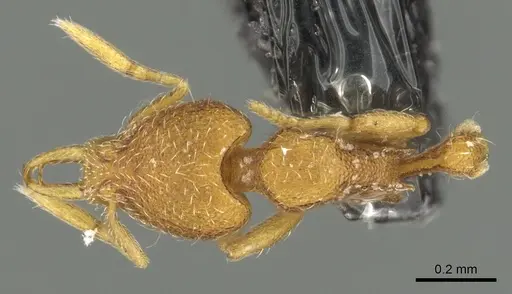
CASENT0914879
View on AntWeb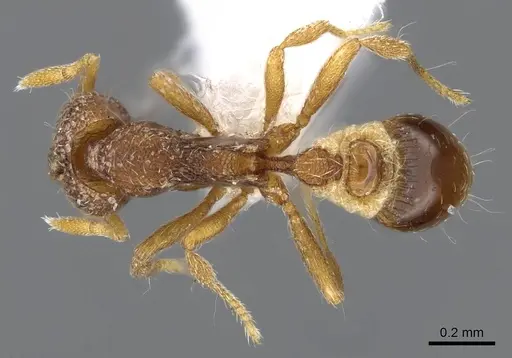
Literature
Loading distribution map...Loading products...