
Strumigenys wardi
- Sci. Name
- Strumigenys wardi
- Tribe
- Attini
- Subfamily
- Myrmicinae
- Author
- Fisher, 2000
- Distribution
- Found in 1 countries
Introduction
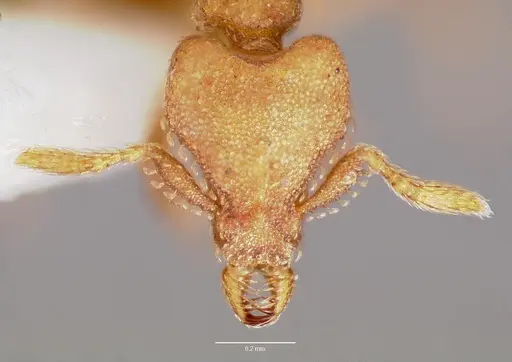
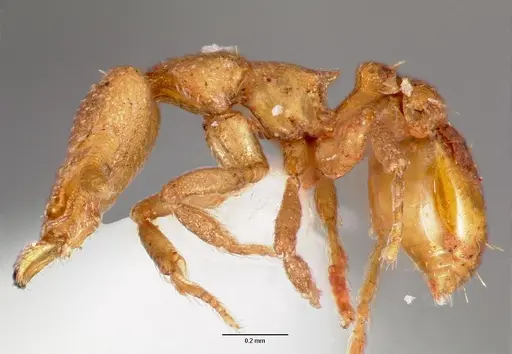
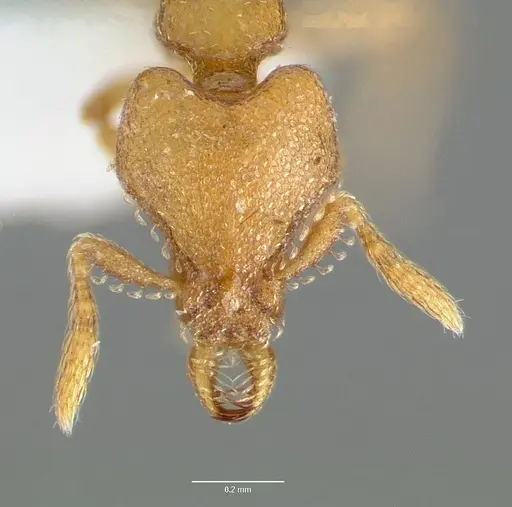
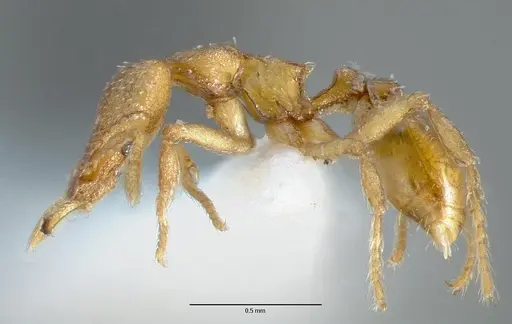
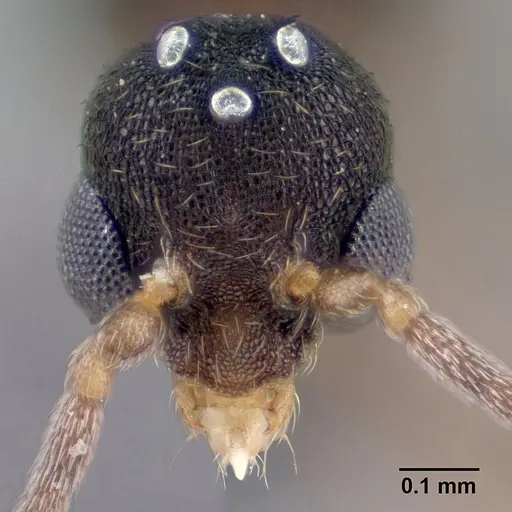
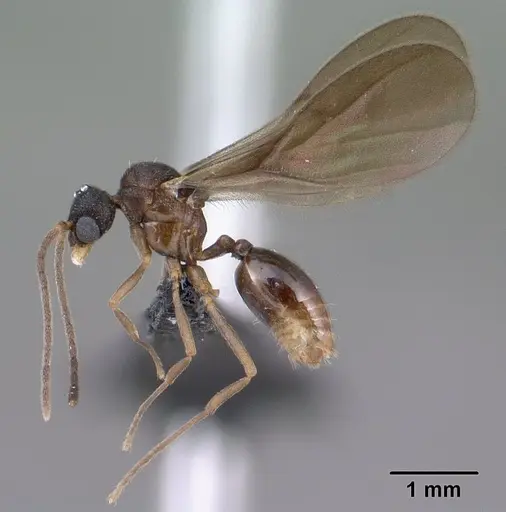
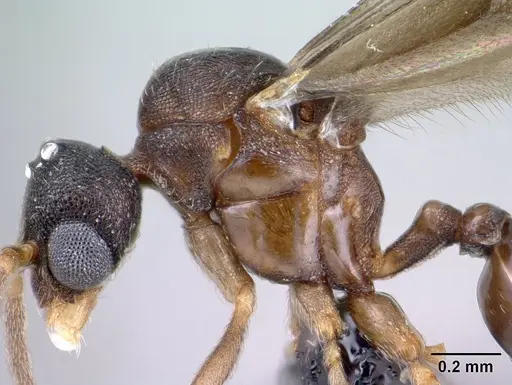
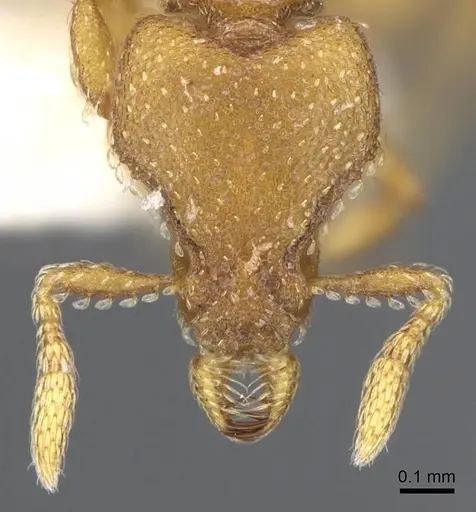
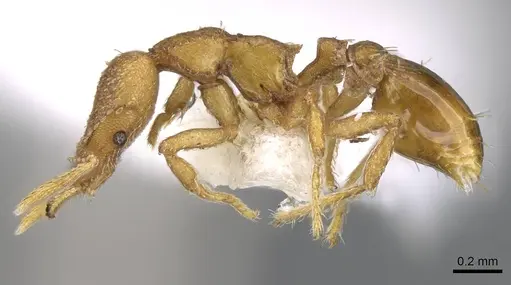
Strumigenys wardi is a tiny ant, with workers measuring 2.2 mm in total length . It belongs to the sylvaini-complex of the Strumigenys dexis group, which includes trap-jaw species . This ant was described in 2000 from specimens collected in secondary forest near Antalaha, Madagascar, at 50 m elevation . It is known from a handful of records, making it a rare species even in the wild . These ants live in wet forests and are usually found in leaf litter, with one record from a rotten log . Their bodies are covered in fine, dense sculpturing, and they have short erect hairs on the head, thorax, and waist segments . They are specialized predators that hunt tiny soil arthropods using their spring-loaded mandibles.
Quick Summary
- Difficulty: Expert
- Origin & Habitat: Madagascar (Antalaha region, northeast). Inhabits wet forest types, primarily in leaf litter and occasionally rotten logs [1].
- Colony Type: Single-queen colonies (monogyne) are typical for this genus. Founding method is not confirmed, but most Strumigenys are claustral [1].
- Size & Growth:
- Queen: Unknown – queens have not been described. Estimated ~3–4 mm based on genus patterns.
- Worker: 2.2 mm [1]
- Colony: Likely under 100 workers – based on typical litter-dwelling Strumigenys [1].
- Growth: Slow
- Development: Estimated 8–16 weeks at optimal temperature, using data from related Strumigenys [1]. (Actual development time for S. wardi has not been studied.)
- Antkeeping:
- Temperature: 22–26°C – as a tropical species from Madagascar they need stable warmth. A gentle gradient is helpful [1].
- Humidity: High humidity is critical. Keep nest substrate consistently moist but not waterlogged – aim for the feel of damp forest soil [1].
- Diapause: No – tropical species, no hibernation needed. Keep warm year-round [1].
- Nesting: Small chambers that match the ant’s tiny size (2.2 mm). Y‑tong (AAC), plaster, or small soil nests work well. Provide a moist, compact substrate 1–2 cm deep. Avoid excessive open space [1].
- Behavior: Docile and slow-moving. They rely on trap‑jaw mandibles to capture micro‑prey. Workers are not aggressive toward keepers and pose no significant sting risk due to their tiny size. However, their small size makes escape prevention essential [1].
- Common Issues: escape prevention is critical – 2.2 mm ants can squeeze through standard mesh or tiny gaps., high humidity needs can lead to mold if ventilation is poor., specialized diet – they only accept live micro‑prey like springtails, standard ant foods will be ignored., slow growth rate tests patience – colonies may take many months to establish., extreme rarity in the hobby – wild‑caught S. wardi are almost impossible to obtain.
Housing and Nest Setup
Because Strumigenys wardi workers are only 2.2 mm long, you need a nest with very small chambers. Standard formicarium passageways are far too large. A Y‑tong (AAC) nest with narrow channels, a plaster nest with carved chambers, or a small soil setup works well. The nest material should hold moisture well while still letting some air circulate to prevent mold. Since these ants live in leaf litter, include about 1–2 cm of moist substrate (e.g., a mix of soil and sand) that stays damp but not waterlogged. The outworld should also be small and fitted with the finest mesh you can find – window screen is not enough, use precision mesh with openings under 0.5 mm. Test tubes work fine for founding colonies, but you may need to upgrade as the colony grows [1].
Feeding and Diet
Strumigenys wardi are specialized predators that must be fed live micro‑prey. Their natural diet consists of springtails (Collembola), but they also accept booklice (Psocoptera), minute beetles, and other tiny soil arthropods. Do not offer sugar water, honey, or standard ant protein mixes – these ants are obligate predators and will ignore them. For a small colony, offer a few springtails every 2–3 days. Remove any uneaten prey after a day to prevent mold in the humid nest [1].
Temperature and Humidity
As a tropical species from Madagascar, Strumigenys wardi needs steady warmth and high humidity. Keep the nest area at 22–26°C with minimal fluctuation. A small heating cable placed on one side of the nest creates a temperature gradient, letting the ants choose their comfort zone. Humidity is the key challenge – the nest substrate must always feel damp (like squeezed‑out sponge). Mist the outworld occasionally, but avoid spraying directly into the nest. Aim for 70–85% relative humidity, measured with a hygrometer. Good ventilation is needed to prevent stagnant air and mold, but too much airflow will dry the setup too fast [1].
Colony Establishment
If you manage to obtain a founding queen, she will likely seal herself into a small chamber (typical claustral founding) and raise the first workers alone using stored fat reserves. Do not disturb her during this period – any interference can cause failure. The first workers (nanitics) are very small and may take several months to appear. Once workers are present, start offering small live prey. Growth is slow: a colony may take a year or more to reach 30–50 workers. Do not attempt to combine multiple queens unless you have confirmed that the particular species can do so – pleometrosis is not documented for S. wardi and mixing unrelated queens usually leads to fighting [1].
Behavior and Temperament
Strumigenys wardi is a docile ant. Workers move slowly and deliberately, using their trap‑jaw mandibles to snatch prey. They are not defensive toward keepers – even if you open the nest they will not swarm or sting. They do possess a stinger (like other Myrmicinae), but it is so small that it cannot break human skin. Their main defense is to hide or flee. Their tiny size means you must be careful not to accidentally crush workers when handling equipment. Sick workers may leave the nest to die, which is normal and helps protect the colony [1].
Frequently Asked Questions
How long does it take for Strumigenys wardi to raise first workers?
Based on other small Strumigenys species, expect 8–16 weeks from egg to first worker at 22–26°C. The exact timing for S. wardi has not been recorded [1].
What do Strumigenys wardi ants eat?
They are specialized predators of tiny arthropods. Their main food is springtails (Collembola), but they also accept booklice, minute beetles, and soil mites. They will not eat sugar water, honey, or protein mixes – they need live prey [1].
Can I keep Strumigenys wardi in a test tube?
Yes, test tubes work well for founding colonies. Use a small tube with a water reservoir plugged by cotton. The chamber should be scaled to their tiny size – standard tubes are acceptable but smaller vials are even better. Maintain high humidity by keeping the water reservoir full [1].
Are Strumigenys wardi good for beginners?
No – this species is rated Expert. Their specialized diet, tiny size (escape risk), high humidity needs, and slow growth make them challenging even for experienced keepers. They are also extremely rare in the hobby [1][2].
How big do Strumigenys wardi colonies get?
Based on related litter‑dwelling Strumigenys, colonies probably stay under 100 workers. They are efficient predators that can sustain a small colony [1].
Do Strumigenys wardi need hibernation?
No – as a tropical species from Madagascar, they require stable warmth year‑round. Do not let temperatures drop below 18°C for long periods [1].
Why are my Strumigenys wardi dying?
Common causes: escape (tiny size – check all seals and mesh), starvation (they need live micro‑prey, not standard ant food), low humidity (substrate must stay damp), and mold from poor ventilation. Review each factor if you see die‑offs [1].
When should I move my Strumigenys wardi to a formicarium?
Move to a small formicarium (Y‑tong or plaster with tiny chambers) when the colony reaches 30–50 workers and the test tube becomes cramped. Moving too early stresses the colony [1].
Can I keep multiple Strumigenys wardi queens together?
Not recommended – pleometrosis is not documented for this species. Unrelated queens will fight. Keep one queen per colony [1].
Report an Issue
The current care sheet is based fully on literature. See inconsistencies, or something that's incorrect? Please , it will be resolved after review from an admin. Contributing to the blogs tab also helps providing information, to make us be able to further improve the caresheets. Thank you for your support!
References

This caresheet is licensed under CC BY-SA 4.0 .
Community Blogs
CASENT0003243
View on AntWeb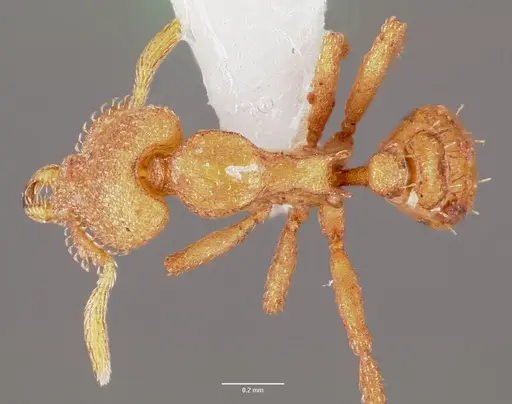
CASENT0005899
View on AntWeb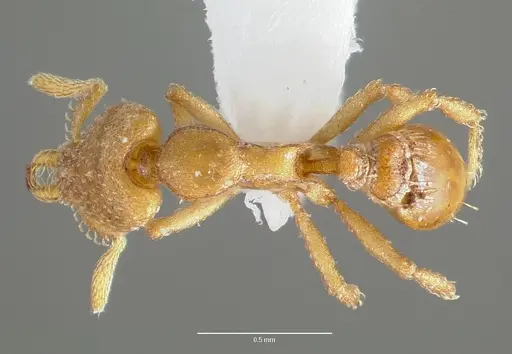
CASENT0135828
View on AntWeb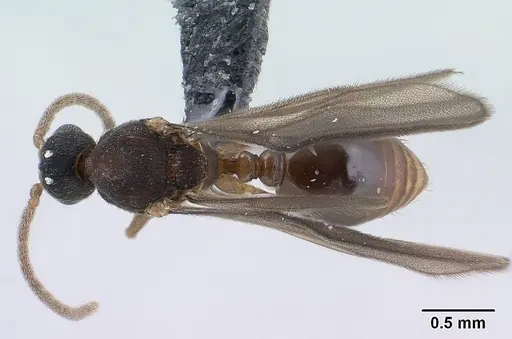
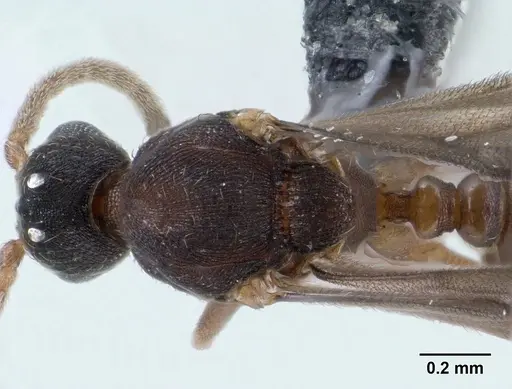
CASENT0914780
View on AntWeb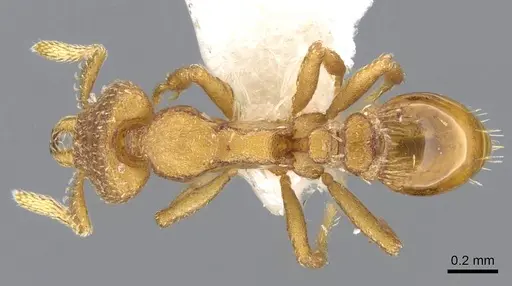
Literature
Loading distribution map...Loading products...