
Strumigenys waiwai
- Sci. Name
- Strumigenys waiwai
- Tribe
- Attini
- Subfamily
- Myrmicinae
- Author
- Sosa-Calvo <i>et al.</i>, 2010
- Distribution
- Found in 2 countries
Introduction
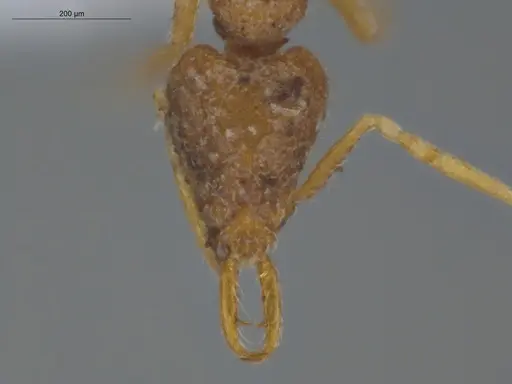
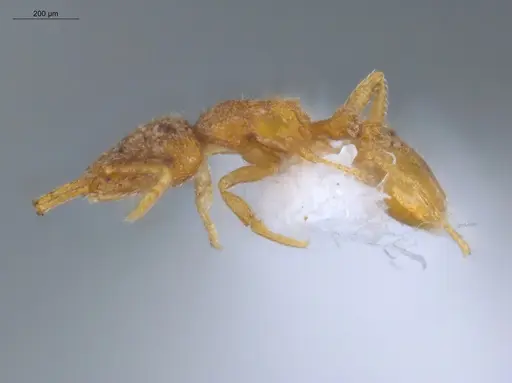
Strumigenys waiwai is a tiny ant from the dacetine group (tribe Attini), measuring just 1.35-1.45 mm in total length . These ants are found only in the forests of Guyana and French Guiana, where they live in leaf litter on the forest floor at elevations around 400-500 meters . They were discovered and named after the Wai-Wai indigenous people whose land encompasses their known range . As a dacetine ant, S. waiwai possesses specialized trap-jaw mandibles used to capture small prey. They can be identified by their extremely small eyes (only 2-3 ommatidia), multi-furcate hairs on the head, and a distinctive angular ventral process on the petiole . This is a rarely kept species in captivity due to its tiny size and specialized predatory diet.
Quick Summary
- Difficulty: Expert
- Origin & Habitat: Guyana and French Guiana in Neotropical forests, specifically in leaf litter at elevations of 394-530 meters in the Acarai Mountains [1][2]
- Colony Type: Unconfirmed, only worker caste known [1]. Colony structure has not been studied.
- Size & Growth:
- Queen: Unknown, queen caste not described [1]
- Worker: 1.35-1.45 mm total length [1]
- Colony: Unknown, no data available [1]
- Growth: Unknown, likely slow based on dacetine patterns
- Development: Not recorded, no data available for this species (Development has not been studied. Any timeline is entirely speculative.)
- Antkeeping:
- Temperature: Maintain warm conditions around 24-28°C, inferred from their tropical rainforest habitat [1]
- Humidity: High humidity, keep nest substrate consistently moist but not waterlogged. Their natural habitat is damp leaf litter [1]. No specific measurements are available.
- Diapause: No, tropical species, no hibernation required [2]
- Nesting: Use a naturalistic setup with moist leaf litter, or a small plaster or Y-tong nest with very small chambers. Scale down nest dimensions to match their tiny size. Avoid large open spaces. Provide narrow passages [1]
- Behavior: Strumigenys waiwai are shy, non-aggressive ants that prefer flight over fight. They possess a functional stinger (common to Myrmicinae) but it is not medically significant to humans and is rarely used. Their primary hunting tool is their trap-jaw mandibles for capturing small prey. Workers forage individually through leaf litter. Their tiny size (under 2 mm) makes escape prevention critical, they can squeeze through standard mesh barriers.
- Common Issues: escape prevention is critical due to their tiny size, standard mesh will not contain them, difficulty establishing colonies, only worker caste known, making captive breeding challenging, specialized diet requires live small prey, they cannot survive on standard ant foods, high humidity needs can lead to mold if ventilation is poor, potential for colony failure due to slow growth and narrow environmental tolerances
Housing and Nest Setup
Housing Strumigenys waiwai presents unique challenges due to their extremely small size. A naturalistic setup with moist leaf litter works well, this mimics their natural forest floor habitat and provides hunting grounds for their prey [1]. Alternatively, a small plaster or Y-tong nest with chambers scaled to their tiny size (under 2 mm workers) can be used. The nest should have multiple small chambers connected by narrow passages. A test tube setup can work for founding colonies, but you may need to scale down the water reservoir to prevent flooding in such small quarters. Escape prevention must be excellent, these ants can pass through standard mesh. Use tight-fitting lids and consider using cotton plugs or fine mesh (0.3 mm or smaller).
Feeding and Diet
Strumigenys waiwai are specialized predators that require live small prey. In the wild, dacetine ants hunt micro-arthropods, primarily springtails and similar tiny invertebrates. In captivity, their primary food should be live springtails, these are ideal in size and nutritional value. Other small live prey like micro-arthropods, minute soil mites, and tiny isopods may also be accepted. They are unlikely to accept sugar sources or dead prey, their hunting strategy relies on movement to trigger their trap-jaw response. Feed small prey items every 2-3 days, adjusting based on colony size and consumption. Remove uneaten prey to prevent mold. Do not attempt to feed them standard ant foods like mealworms or honey, their mandibles are specialized for tiny prey.
Temperature and Humidity
As a tropical species from Guyana, Strumigenys waiwai requires warm and humid conditions. Maintain the nest at 24-28°C, use a heating cable on one side of the nest if room temperature is below this range. Place the heating element on top of the nest to create gentle warmth without drying out the substrate. High humidity is essential, keep the nest substrate consistently moist but not waterlogged. Their natural habitat is damp leaf litter in tropical forests [1]. Monitor for condensation on nest walls, some condensation is normal and indicates good humidity, but excessive moisture can lead to mold. Good ventilation is necessary to prevent stagnant air while maintaining humidity.
Colony Establishment
Establishing Strumigenys waiwai in captivity is challenging because only the worker caste has been described, the queen is unknown [1]. This means wild-caught colonies are your primary option. When collecting from the wild, search carefully in leaf litter samples from forest floors in their known range. Once acquired, let the colony settle with minimal disturbances during the first few weeks. Provide a constant supply of small live prey. Colony growth will likely be slow, dacetine colonies typically remain small. Patience is essential. Monitor for signs of stress like workers dying outside the nest or refusal of food [1].
Behavior and Temperament
Strumigenys waiwai are shy and non-aggressive. They possess a functional stinger (common to Myrmicinae) but it is not used defensively against humans, they prefer to flee. Their trap-jaw mandibles are used for hunting small prey. Workers forage individually through leaf litter. Their tiny size makes them vulnerable in open areas, so they stay within the nest and surrounding leaf litter. They do not form visible trails or swarm to food sources. Observing their hunting behavior is the best way to appreciate this species. Their delicate nature means they are not suitable for keepers who want interactive ants.
Frequently Asked Questions
Can I keep Strumigenys waiwai in a test tube?
Yes, a test tube can work for founding colonies, but you must use a very small water reservoir to prevent flooding, these ants are only 1.35-1.45 mm total length. Standard test tube setups may be too large. Consider using micro test tubes or scaling down the water chamber. Escape prevention is critical, use cotton that fits tightly or add a barrier [1].
What do Strumigenys waiwai eat?
They eat live small prey, primarily springtails and micro-arthropods. They are specialized predators and will not accept dead prey, sugar water, or standard ant foods. Their tiny trap-jaw mandibles are designed for capturing small, moving invertebrates. Offer live springtails every 2-3 days.
How long until first workers in Strumigenys waiwai?
The development timeline is unknown, no studies have been conducted on this species. Any estimates are speculative. Colony growth is likely slow, and colonies remain small.
Are Strumigenys waiwai good for beginners?
No, this is an expert-level species. Their tiny size makes housing and escape prevention difficult, their specialized diet requires live prey, and their colony growth is slow. They also require high humidity and warm temperatures year-round. This species is best suited for experienced antkeepers who have successfully kept other dacetine species.
How big do Strumigenys waiwai colonies get?
Unknown, only the worker caste has been described. No colony size data is available [1].
Do Strumigenys waiwai need hibernation?
No, they are tropical ants from Guyana and do not require hibernation. Keep them warm year-round at 24-28°C. Unlike temperate species, they do not have a winter rest period and will remain active throughout the year if temperatures are maintained [2].
Why is my Strumigenys waiwai colony dying?
Common causes include: escape through tiny gaps (use fine mesh), improper humidity (too dry causes death, too wet causes mold), temperature too cold (below 24°C), and lack of live prey. They are extremely sensitive to environmental conditions. Also check for stress from excessive disturbance during the settling period. Their specialized requirements make them challenging to keep long-term.
Can I keep multiple queens together?
The colony structure is unconfirmed for this species, only workers have been described. Combining unrelated queens is not recommended as it has not been documented for this species and could result in aggression [1].
When to move to a formicarium?
Wait until the colony is established with at least 10-20 workers and consistently accepting food. Dacetine colonies prefer small spaces, so do not move them to a large formicarium, a small naturalistic setup or appropriately scaled nest works best. Moving too soon or into too large a space can stress the colony.
Report an Issue
The current care sheet is based fully on literature. See inconsistencies, or something that's incorrect? Please , it will be resolved after review from an admin. Contributing to the blogs tab also helps providing information, to make us be able to further improve the caresheets. Thank you for your support!
References

This caresheet is licensed under CC BY-SA 4.0 .
Community Blogs
ECOFOG-PTG20-0027-04
View on AntWeb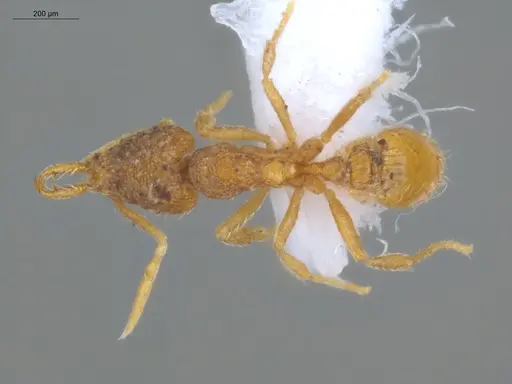
Literature
Loading distribution map...Loading products...