
Strumigenys trudifera
- Sci. Name
- Strumigenys trudifera
- Tribe
- Attini
- Subfamily
- Myrmicinae
- Author
- Kempf & Brown, 1969
- Distribution
- Found in 5 countries
Introduction
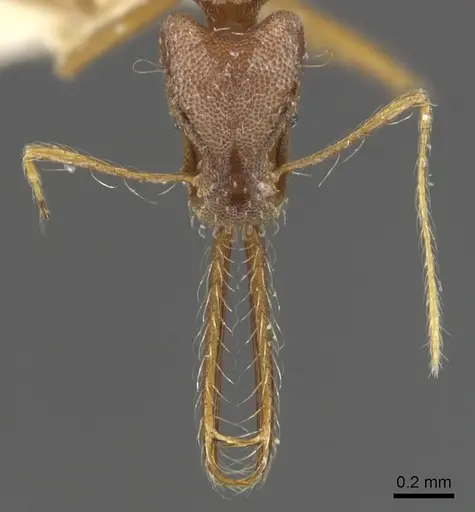
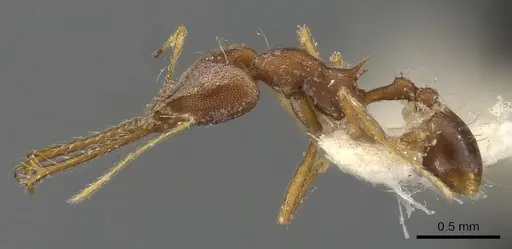
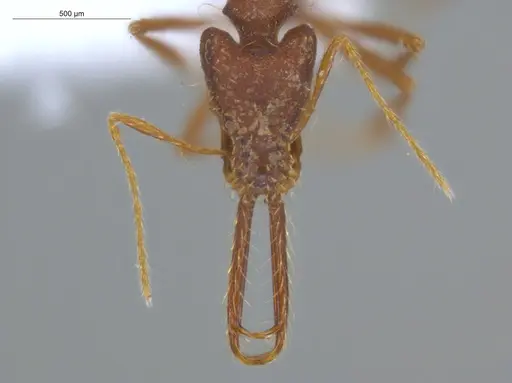
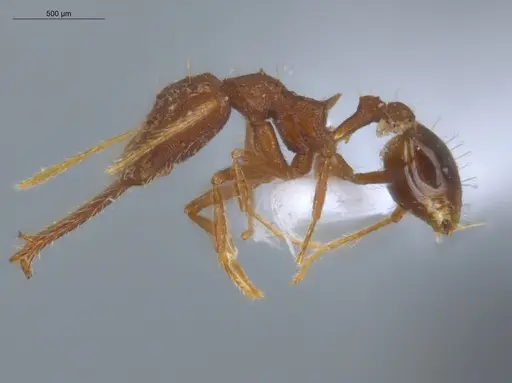
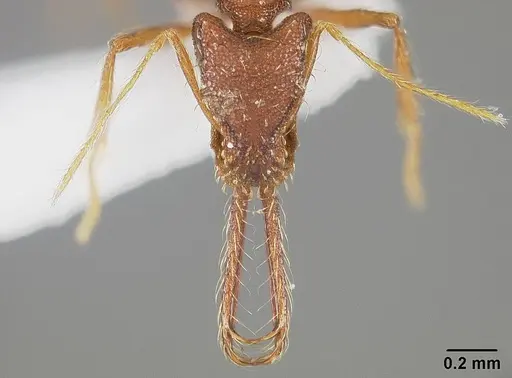
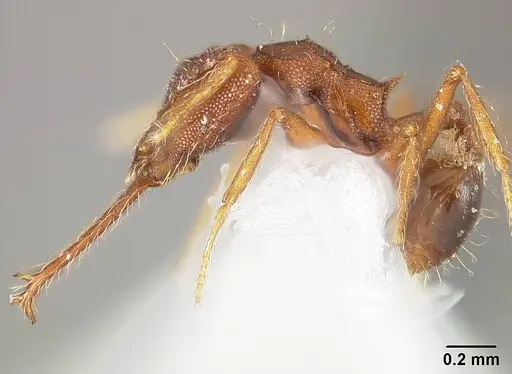
The tiny ant Strumigenys trudifera measures just 3.0-3.4 mm in total length, making it a true micro-predator of the forest floor . It has remarkably long, slender mandibles (mandibular index over 100) that snap shut like a bear trap to capture prey . Its scape (first antennal segment) is widest in the apical third and bears hairs that curve toward the base . This species was first described from leaf litter in a degraded rainforest near Belém, Brazil, and has since been recorded across the Amazon basin in Brazil, Colombia, Ecuador, French Guiana, Venezuela, Peru, and Guyana . As a member of the Strumigenys trudifera group, it is part of a lineage of specialized hunters that live and forage in the dark, humid layer of rotting leaves.
Quick Summary
- Difficulty: Expert
- Origin & Habitat: Native to the Amazon basin and surrounding regions of northern South America, including Brazil, Colombia, Ecuador, French Guiana, Venezuela, Peru, and Guyana [4][2][5][6][7]. Inhabits leaf litter in tropical rainforests, both primary and degraded, where it hunts tiny arthropods in the dark, humid micro-environment [1].
- Colony Type: Colony structure is not well documented in scientific literature. Based on related Strumigenys species, colonies are likely small with a single queen (monogyne), but this requires confirmation for this specific species.
- Size & Growth:
- Queen: Size data unavailable for queens, only workers have been measured in available literature.
- Worker: 3.0-3.4 mm total length [1]
- Colony: Likely small, up to 200 workers (inferred from related Strumigenys species)
- Growth: Slow
- Development: Unknown for this species. Based on related Strumigenys species, development likely takes several weeks to months at warm temperatures (24-28°C) [1]. (Exact timeline not documented.)
- Antkeeping:
- Temperature: Maintain 24-28°C with minimal fluctuations. Use a small heating mat on one side of the nest to create a gentle gradient. [1]
- Humidity: Keep the nest substrate consistently moist but not waterlogged. Provide good ventilation to prevent mold. [1]
- Diapause: No diapause required. This tropical species from the Amazon basin does not need hibernation. [1]
- Nesting: Prefers naturalistic setups with deep, moist substrate (soil, coco fiber, or peat). Use small plaster nests, soil-based setups, or 3D-printed nests with narrow chambers. Avoid acrylic nests. Escape prevention is critical due to tiny size, barriers must seal gaps under 0.5 mm. [1]
- Behavior: Shy, slow-moving predators that hunt individually in the leaf litter. They have a functional stinger (based on subfamily Myrmicinae, tribe Attini) but it is not medically significant to humans. Very timid, workers flee rather than fight. Escape risk is high because of their tiny size. [1]
- Common Issues: escape prevention is critical due to their tiny size, they can squeeze through gaps under 0.5 mm., requires live prey, based on related species, they likely need springtails and will not accept dead food or sugar sources., slow colony growth can frustrate keepers expecting rapid development., high humidity requirements can lead to mold problems if ventilation is inadequate., wild-caught colonies may arrive with parasites or fail to adapt to captive conditions.
Housing and Setup
To house Strumigenys trudifera, replicate the humid leaf-litter environment they come from. A small container filled with 5-7 cm of moist substrate (coco fiber, peat, or a soil mix) works well, these ants will create their own tunnels. Add a few dead leaves on top for cover. Alternatively, use a small plaster or 3D-printed nest with chambers sized for tiny ants. Escape prevention is essential: use fine mesh (0.5 mm or smaller) or a fluon barrier on all openings. Provide a small outworld for feeding, but keep it simple as these ants rarely forage far from the nest. [1]
Feeding and Diet
- suggest it is a specialized hunter of tiny, fast-moving prey like springtails (Collembola) [2]. Based on related Strumigenys species, offer live springtails every 2-3 days. They likely will not accept dead insects, honey, or sugar water. Keep the feeding area close to the nest and remove uneaten prey after 24 hours to prevent mold. Culturing springtails is essential for long-term success. [2]
Temperature and Humidity Management
As a tropical species from the Amazon basin, Strumigenys trudifera needs warm, stable conditions year-round. Keep the nest at 24-28°C, using a small heating mat on one side to create a gradient if needed. Avoid direct overheating, never place the mat directly under the nest. Humidity must be high: keep the substrate consistently moist but not waterlogged. Mist lightly every few days or use a water reservoir. Good ventilation is important, stagnant air can lead to mold. Think of a damp tropical forest floor, not standing water, but never dry. [1]
Colony Founding and Growth
How Strumigenys trudifera queens found new colonies has not been studied. Unknown whether they are claustral or semi-claustral. After mating, a queen likely finds a small cavity in the leaf litter to start laying eggs. Development is slow: based on related Strumigenys species, it may take several weeks to months for the first workers to emerge at warm temperatures. The colony will grow slowly and likely remain small for the first year. Be patient, this is normal for specialist predators. [1]
Behavior and Observation
Workers of Strumigenys trudifera are shy, methodical hunters that spend most of their time moving through the substrate in search of tiny prey. Their long mandibles are capable of a rapid snap capture. You will rarely see surface activity, most hunting happens inside the nest tunnels. They have a functional stinger (based on subfamily Myrmicinae, tribe Attini), but it is not medically significant and they are not aggressive. Their tiny size makes them prone to escaping, so check barriers often. For patient keepers, watching them hunt springtails in their humid tunnels is fascinating. [2]
Frequently Asked Questions
Can I keep Strumigenys trudifera in a test tube?
Test tubes are not ideal for this species. They need a deep, moist substrate to hunt and tunnel in. A naturalistic setup with soil or a small plaster nest is much better. A test tube can work temporarily for a founding queen, but move the colony to a proper setup once workers emerge. [1]
What do Strumigenys trudifera ants eat?
Their natural diet is not confirmed for this species, but based on related Strumigenys, they are specialized hunters of springtails (Collembola) and probably other tiny micro-arthropods. Offer live springtails every 2-3 days. They likely will not accept dead food or sugar. Culturing springtails is essential. [2]
How long does it take for the first workers to emerge?
This is unknown for Strumigenys trudifera specifically. Based on related Strumigenys species, it likely takes several weeks to months at warm temperatures (24-28°C). Do not disturb the queen during founding. [1]
Are Strumigenys trudifera ants good for beginners?
No. This species is expert-level because they likely require live springtail prey (which must be cultured), need high humidity without mold, are extremely small and prone to escaping, and grow very slowly. Beginners should start with more forgiving species like Lasius or Camponotus. [1]
Why are my Strumigenys trudifera dying?
Common causes include lack of live springtails (they may starve), incorrect humidity (too dry dehydrates them, too wet causes mold), temperature fluctuations (keep stable 24-28°C), and escape (they are tiny, check barriers). Ensure you have a steady supply of live springtails and maintain a moist but well-ventilated setup. [1]
Do Strumigenys trudifera need hibernation?
No. As a tropical species from the Amazon, they do not require hibernation. Keep them warm (24-28°C) year-round. Slight seasonal temperature drops are fine, but do not intentionally cool them. [1]
How big do Strumigenys trudifera colonies get?
Colony sizes are not documented for this species. Based on related Strumigenys, colonies likely reach up to 200 workers over several years. Growth is slow and colonies remain small. This is normal for specialized predators. [1]
When should I move Strumigenys trudifera to a formicarium?
It's best to start them in a naturalistic setup from the beginning. If you must use a test tube, move them once the colony has 10-15 workers and you see active foraging. Prepare the new nest in advance and use extreme care during transfer, these ants escape easily. [1]
Can I keep multiple Strumigenys trudifera queens together?
This has not been studied for this species. Based on related Strumigenys, colonies are likely monogyne (single queen). Do not combine unrelated queens. Keep them separate. [1]
What is the best nest type for Strumigenys trudifera?
A naturalistic setup with 5-7 cm of moist soil or coco fiber works best. Add leaf litter on top. Small plaster nests or 3D-printed nests with narrow chambers also work. Avoid acrylic nests because they don't hold humidity well and these ants need moist substrate. [1]
Report an Issue
The current care sheet is based fully on literature. See inconsistencies, or something that's incorrect? Please , it will be resolved after review from an admin. Contributing to the blogs tab also helps providing information, to make us be able to further improve the caresheets. Thank you for your support!
References

This caresheet is licensed under CC BY-SA 4.0 .
Community Blogs
CASENT0900440
View on AntWeb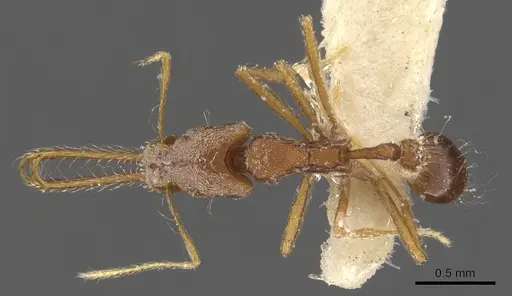
CASENT0914756
View on AntWeb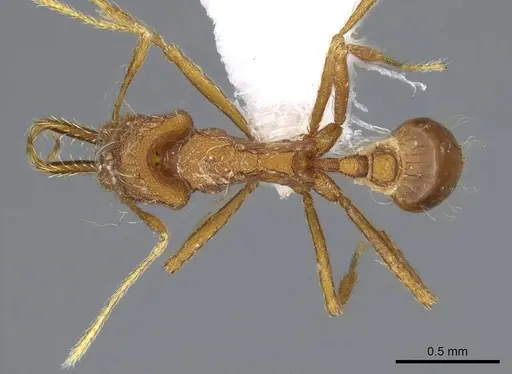
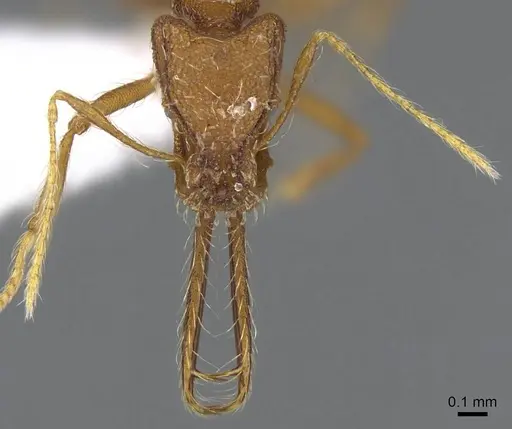
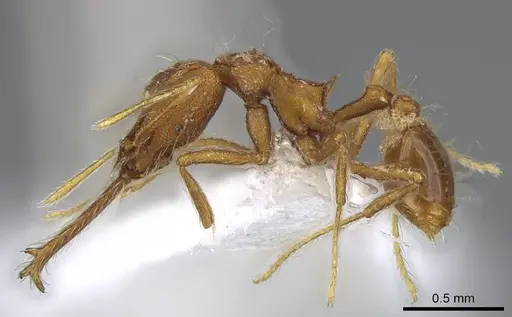
CASENT4036195
View on AntWeb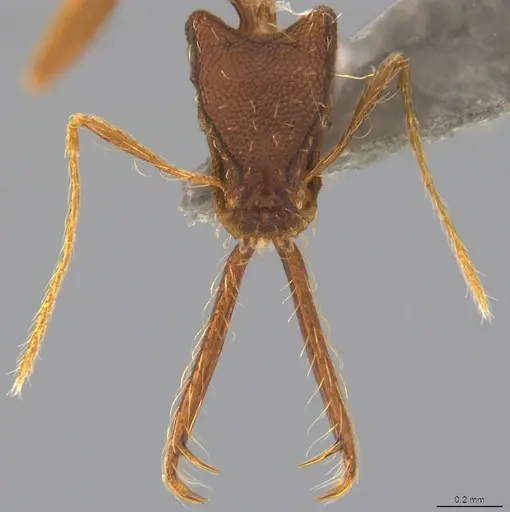
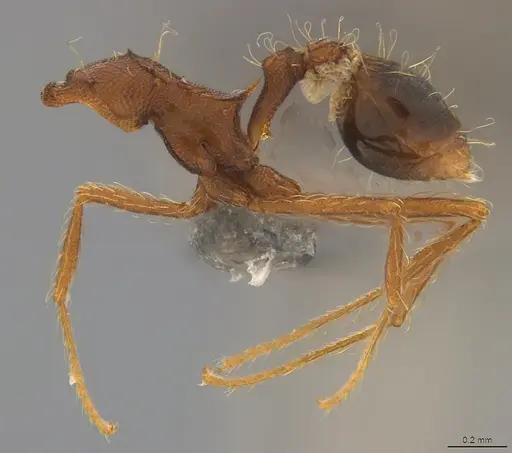
ECOFOG-IT14-0820-103
View on AntWeb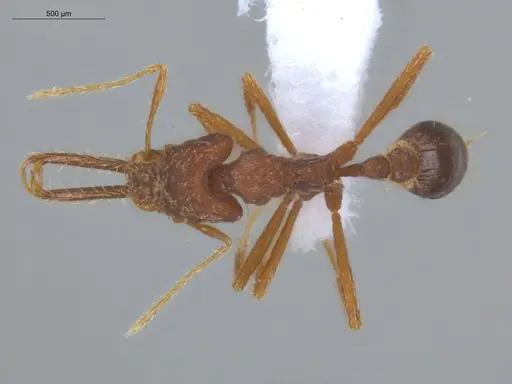
USNMENT01124314
View on AntWeb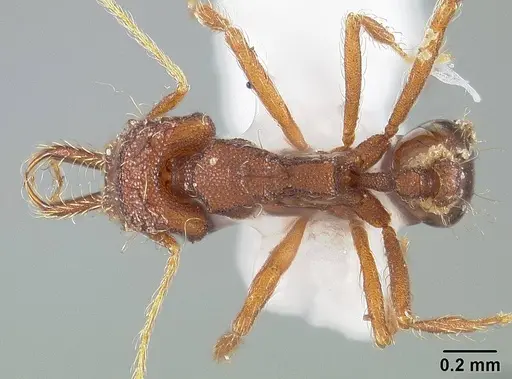
Literature
Loading distribution map...Loading products...