
Strumigenys transenna
- Sci. Name
- Strumigenys transenna
- Tribe
- Attini
- Subfamily
- Myrmicinae
- Author
- Bolton, 2000
- Distribution
- Found in 0 countries
Introduction
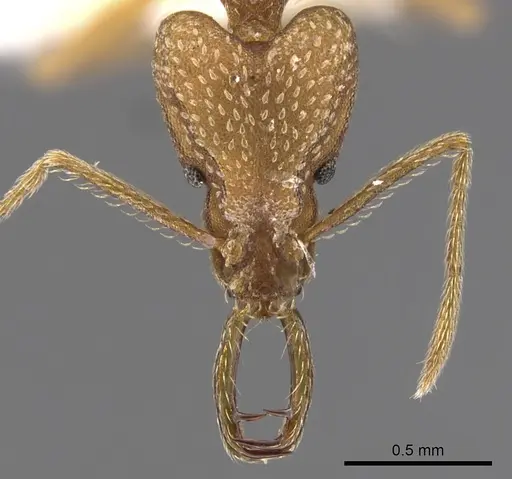
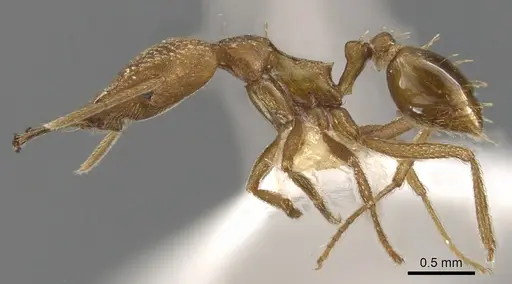
Strumigenys transenna is a rare dacetine ant from the highlands of East Africa. It is the largest Afrotropical species in the genus, with workers measuring 3.8-4.0mm (total length) . The species belongs to the Strumigenys rogeri group, specifically the londianensis complex, and is known only from Burundi and Rwanda in the Afrotropical region . Workers have the characteristic trap-jaw mandibles of dacetine ants, with all hairs on the leading edge of the scape curved toward the apex. The propodeum bears a pair of short triangular teeth, and the first gastral tergite has weakly curved standing hairs . This species remains one of the most poorly studied ants in the world. Only 22 workers and a single dealate queen have ever been collected, all from the type locality in Burundi. The 2022 record from Rwanda's Nyungwe Tropical Rain Forest represents only the second known collection of this species . Nothing is known about its biology, colony structure, or captive care requirements.
Quick Summary
- Difficulty: Expert
- Origin & Habitat: Highland forests of Burundi and Rwanda in the Afrotropical region. The type locality is Banage, Burundi, where the original collection was made in May 1980 [1]. The 2022 record comes from Kitabi in southwestern Rwanda's Nyungwe Tropical Rain Forest [2]. Based on genus patterns, it likely inhabits moist forest floor microhabitats.
- Colony Type: Unknown. Only 22 workers and a single dealate queen have ever been documented. The colony structure of this species has never been studied.
- Size & Growth:
- Queen: Unknown, only a single dealate queen has been collected, and no measurements are available [1].
- Worker: 3.8-4.0mm (total length) [1]
- Colony: Unknown, no colony size data exists.
- Growth: Unknown, no development data exists for this species.
- Development: Unknown, this species has never been reared in captivity and no biological observations exist. (No data exists on development. Related Strumigenys species typically take several months to produce first workers, but this is an inference.)
- Antkeeping:
- Temperature: Unknown for this species. Based on its highland tropical origin (Rwanda/Burundi), aim for warm conditions around 24-28°C with stable temperature. Avoid temperatures below 22°C.
- Humidity: Likely requires high humidity, related species are forest floor inhabitants that prefer moist conditions. Aim for 70-85% relative humidity with a consistently damp substrate.
- Diapause: Unknown, no seasonal data exists. Given the tropical origin, diapause is unlikely but cannot be confirmed.
- Nesting: Unknown. Presumably nests in soil or rotting wood in forest floor microhabitats. In captivity, a small test tube setup with a water reservoir is a reasonable starting point. Avoid acrylic nests, use Y-tong, plaster, or soil.
- Behavior: Unknown. The genus Strumigenys is characterized by specialized trap-jaw mandibles used to capture prey, primarily springtails. Workers are likely solitary foragers that hunt individually on the forest floor. Based on genus patterns, they are probably docile and non-aggressive. Despite having a functional stinger (subfamily trait), they pose no danger to keepers. Escape prevention is important given their small size.
- Common Issues: no biological data exists, all care recommendations are speculative based on genus-level patterns., colony may fail because specific dietary requirements are unknown., humidity requirements are unconfirmed and based on guesswork., slow growth typical of dacetine ants may frustrate keepers., wild-caught colonies may have parasites or health issues from unknown causes.
Species Background and Rarity
Strumigenys transenna is an extraordinarily rare ant that has been documented only twice in over 40 years of research. The original description by Bolton in 2000 was based on just 22 workers and a single dealate queen collected in Burundi in 1980 [1]. The 2022 record from Rwanda's Nyungwe Tropical Rain Forest represents only the second known collection of this species anywhere in the world [2]. This makes it one of the rarest ants in captivity, if it exists in the hobby at all.
The species is the largest Afrotropical Strumigenys ever recorded, with workers reaching 4.0mm in length [1]. It belongs to the londianensis complex within the Strumigenys rogeri group, making it closely related to Strumigenys londianensis and Strumigenys sarissa, also from East Africa. The identification relies on subtle morphological differences, including the shape of humeral hairs and the sculpturing of the postpetiole disc [1].
For antkeepers, this species represents both a challenge and an opportunity. Because so little is known about its biology, successful captive husbandry would constitute a genuine scientific contribution. However, the extreme rarity means virtually no specimens exist in the antkeeping hobby, and even finding a colony to acquire would be exceptionally difficult.
Housing and Nest Setup
Since nothing is known about the nesting preferences of this species, recommendations must be based on what works for related Strumigenys species. These are small, cryptic ants that typically nest in moist soil or rotting wood on the forest floor. A small test tube setup with a water reservoir works well as a founding setup, providing consistent humidity without flooding.
For established colonies, a small nest made of Y-tong, plaster, or naturalistic setup with moist substrate would be appropriate. The key is maintaining high humidity while allowing for some ventilation to prevent mold. Because workers are only 4mm, escape prevention is straightforward, standard mesh barriers will contain them.
The nest should be kept in darkness, as dacetine ants are photophobic and prefer dark, humid microhabitats. Avoid placing the nest in direct light. A simple setup with a small foraging area connected to a humid nest chamber gives the ants options to move between conditions.
Feeding and Diet
The diet of Strumigenys transenna has never been documented, but the genus is specialized predators that primarily hunt springtails (Collembola). Their trap-jaw mandibles are specifically adapted for catching these small, fast-moving prey. In captivity, offering small live springtails is the most natural and likely accepted food source.
Beyond springtails, related species occasionally accept other small arthropods including fruit flies, booklice (Psocoptera), and other tiny insects. Sugar sources are generally not important for dacetine ants, as they are obligate predators. Do not expect them to accept honey or sugar water.
Feed small prey items every few days, removing any uneaten prey after 24-48 hours. The key challenge is that this species may have very specific prey requirements that are impossible to determine without extensive trial and error. Start with live springtails as the primary food and experiment cautiously with other small live prey.
Temperature and Humidity Requirements
The exact temperature and humidity requirements of Strumigenys transenna are completely unknown. However, we know it comes from the highlands of Rwanda and Burundi, which are tropical but at elevation, meaning moderate temperatures with high humidity year-round.
For temperature, start with a range of 24-28°C, which is typical for tropical ant species. Avoid temperatures below 22°C or above 30°C until you observe how the colony responds. Related Strumigenys species do best with stable, warm conditions.
Humidity should be high, aim for 70-85% relative humidity. The substrate should feel consistently damp but not waterlogged. Dacetine ants are sensitive to drying out. Monitor the colony behavior: if workers seem sluggish or cluster tightly together, the conditions may be too cold or dry.
Because this species has never been kept in captivity, you are essentially pioneering its husbandry. Keep detailed notes on what conditions work and what doesn't, and be prepared to make adjustments based on colony health.
Growth and Development
No data exists on the development time of Strumigenys transenna. Based on related species in the genus, development from egg to worker likely takes several months. Dacetine ants are typically slow-growing compared to many other ant genera.
The single known queen measured approximately the same size as workers (dealate, meaning she has shed her wings), indicating she is not significantly larger than workers. This is unusual compared to many ant species where queens are substantially larger [1].
Colony size in the wild is unknown, the largest collection was only 22 workers plus a queen. This suggests either colonies are naturally small, or the collection method simply didn't capture the full colony. Related Strumigenys species typically form colonies of several dozen to a few hundred workers.
Expect slow growth. Even if you obtain a colony, it may take a year or more to see significant population increases. Patience is essential with this species.
Frequently Asked Questions
Is Strumigenys transenna available in the antkeeping hobby?
Almost certainly not. This species is known from only 22 workers and a single queen collected in 1980,with a second record in 2022. It is one of the rarest ants in the world and almost certainly not available commercially. Any Strumigenys for sale are almost certainly different species.
How do I care for Strumigenys ants?
Since Strumigenys transenna specifically has never been kept, care recommendations are based on the genus Strumigenys in general. Provide high humidity (70-85%), warm temperatures (24-28°C), and feed small live prey, primarily springtails. Keep nests dark and moist. Expect slow growth and small colony sizes.
What do Strumigenys transenna eat?
The diet of this specific species is unknown, but Strumigenys as a genus are specialized predators of springtails. In captivity, offer small live springtails as the primary food. Other small live arthropods may be accepted experimentally. Do not expect them to accept sugar sources.
How big do Strumigenys transenna colonies get?
Unknown. Only 22 workers have ever been collected in a single collection. Related species typically form colonies of several dozen to a few hundred workers. Expect moderate colony sizes rather than massive supercolonies.
Does Strumigenys transenna need hibernation?
Unlikely. This species comes from the tropical highlands of Rwanda and Burundi, where temperatures remain warm year-round. No seasonal data exists, but tropical ants typically do not require hibernation. Keep them warm year-round.
Can I keep multiple Strumigenys queens together?
Unknown. The colony structure of this species has never been studied. Only a single dealate queen has ever been documented. Do not attempt combining unrelated queens without evidence they will tolerate each other.
How long does it take for Strumigenys transenna to produce first workers?
Unknown, this species has never been reared in captivity. Based on related Strumigenys species, expect several months from egg to first worker. Dacetine ants are typically slow developers compared to other ant genera.
Where does Strumigenys transenna live in the wild?
Only known from highland forests in Burundi and Rwanda in East Africa. The type locality is Banage, Burundi, collected in May 1980 [1]. A second record exists from Kitabi in southwestern Rwanda's Nyungwe Tropical Rain Forest [2].
Why is Strumigenys transenna so rarely collected?
This species appears to be genuinely rare in the wild, not just undercollected. It is known from only two records in over 40 years. Additionally, Strumigenys are small, cryptic ants that are difficult to detect through standard collection methods. Their specialized microhabitats in forest floor leaf litter make them hard to find.
Report an Issue
The current care sheet is based fully on literature. See inconsistencies, or something that's incorrect? Please , it will be resolved after review from an admin. Contributing to the blogs tab also helps providing information, to make us be able to further improve the caresheets. Thank you for your support!
References

This caresheet is licensed under CC BY-SA 4.0 .
Community Blogs
CASENT0900595
View on AntWeb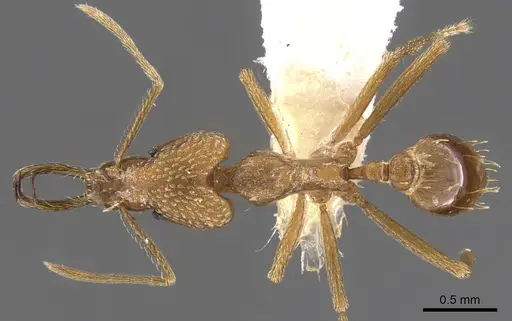
Literature
Loading distribution map...Loading products...