
Strumigenys terayamai
- Sci. Name
- Strumigenys terayamai
- Tribe
- Attini
- Subfamily
- Myrmicinae
- Author
- Bolton, 2000
- Distribution
- Found in 0 countries
Introduction
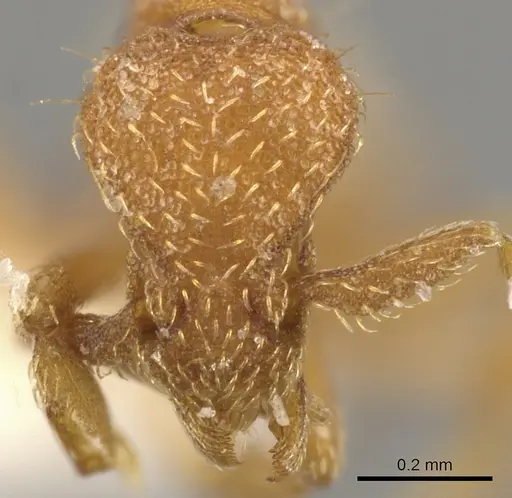
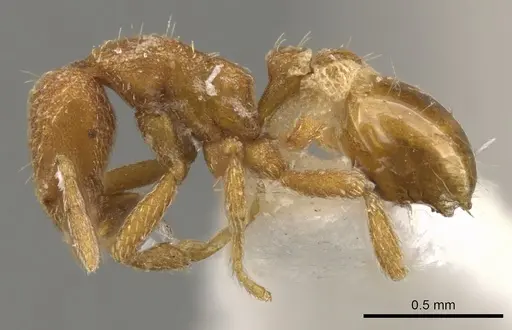
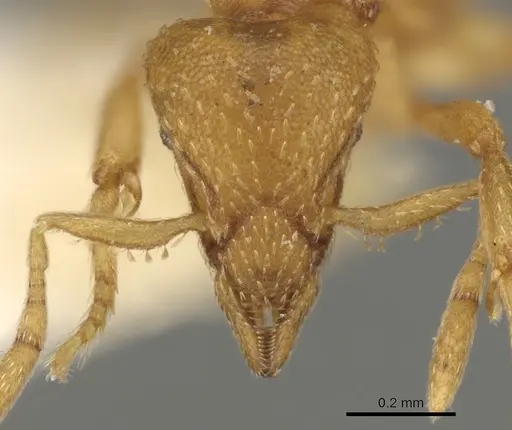
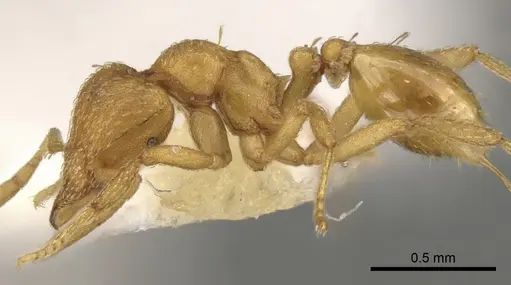
Strumigenys terayamai is a tiny predatory ant species with workers measuring just 2mm in length, with a yellowish-brown body color . It belongs to the trap-jaw ant group (tribe Attini), known for specialized mandibles that snap shut rapidly to capture prey. The workers have very small eyes, subtriangular mandibles, and distinctive spongiform appendages on the petiole and postpetiole. The species is distinguished from its close relative Strumigenys masukoi by having simple and club-shaped hairs on the mesosoma rather than flagellate hairs . This ant is extremely rare both in the hobby and in the wild - it is only known from a single location: Mt. Yamizo in Tochigi Prefecture, Japan .
Quick Summary
- Difficulty: Expert
- Origin & Habitat: Mt. Yamizo in Tochigi Prefecture, Japan (Palaearctic region), a single mountain location, making this one of the rarest Strumigenys species in captivity [1][2].
- Colony Type: Colony structure is unconfirmed. Based on typical Strumigenys patterns, likely single-queen (monogyne) colonies.
- Size & Growth:
- Queen: Unknown, not described in available literature [1].
- Worker: 2mm in total length [1].
- Colony: Unknown, based on the genus, likely stays under 100 workers (inferred).
- Growth: Slow (inferred from genus).
- Development: Unknown for this species. Based on related Strumigenys, estimated 8-12 weeks (inferred). (Strumigenys typically produce nanitic (first) workers slowly, with extended development times compared to many Myrmicinae.)
- Antkeeping:
- Temperature: Likely prefers cool temperate conditions (18-24°C), avoid heat above 26°C (inferred from temperate origin).
- Humidity: High, keep the nest substrate consistently moist but not waterlogged. Provide a gradient with slightly drier areas (inferred from typical Strumigenys habitat).
- Diapause: Likely yes, this species comes from a temperate region with distinct seasons. Expect a winter rest period at 10-15°C (inferred from origin).
- Nesting: In nature, Strumigenys typically nest in rotting wood, under stones, or in leaf litter. In captivity, a small Y-tong or plaster nest with narrow chambers works well. The tiny worker size (2mm) means chambers should be appropriately scaled.
- Behavior: Strumigenys are specialized predators known for their trap-jaw mandibles. They hunt springtails and other tiny arthropods. Workers are slow-moving and methodical foragers. They are not aggressive toward humans but possess a functional stinger (though very small and not medically significant). Escape prevention is critical due to their tiny 2mm size, they can squeeze through remarkably small gaps. They are peaceful toward colony members but will defend against intruders.
- Common Issues: escape prevention is critical, at 2mm, they can squeeze through the tiniest gaps and fine mesh is essential, specialized diet means they may refuse standard ant foods, live springtails are the ideal prey, slow growth can frustrate beginners, colonies develop very slowly, rare species means limited availability and high prices if available, damp conditions required, too dry and colonies will fail
Housing and Nest Setup
Strumigenys terayamai requires appropriately scaled housing due to its tiny 2mm worker size [1]. A small Y-tong or plaster nest with narrow chambers works best, avoid large, open spaces that can stress these small ants. The nest should have tight-fitting lids and all connections should use fine mesh (at least 0.3mm) to prevent escapes. Keep the nest substrate consistently moist but not flooded. A water tube attached to the nest provides humidity. Place the nest in a quiet area away from vibrations and direct sunlight. Because this species comes from a single mountain in Japan [1], maintaining stable, cool conditions is important, room temperature (20-24°C) is ideal. This species is extremely rare in the antkeeping hobby, so finding captive colonies for sale will be difficult.
Feeding and Diet
Strumigenys are specialized predators that hunt tiny arthropods, primarily springtails (Collembola). In captivity, live springtails should be the primary food source, these are the natural prey and most readily accepted. Other tiny live prey like booklice (psocids), minute soil mites, and fruit fly larvae may also be accepted. Do not rely on sugar water or honey as Strumigenys are not typically attracted to sweet liquids. Feed small amounts of prey every few days, removing any uneaten prey after 24 hours. The trap-jaw mandibles work best on soft-bodied prey small enough to be overwhelmed. Some keepers report success with tiny pieces of mealworm or cricket, but live prey is always preferred for these specialized predators.
Temperature and Seasonal Care
This species comes from Tochigi Prefecture in central Japan [1], a temperate region with distinct seasons. Keep temperatures in the range of 20-24°C, avoid exceeding 26°C as this species prefers cooler conditions. During winter (roughly November through March), expect reduced activity and provide a cool period around 10-15°C for hibernation. This mimics the natural seasonal cycle they would experience in the wild on Mt. Yamizo. Reduce feeding during the cold period and keep the nest slightly drier. Do not attempt to keep them active year-round as this can stress the colony. Room temperature apartments or homes in temperate climates work well for this species.
Behavior and Temperament
Strumigenys terayamai workers are slow, methodical foragers rather than rapid runners. They use their trap-jaw mandibles to capture springtails and other tiny prey, when triggered, the mandibles snap shut in milliseconds. Workers are not aggressive toward humans but possess a functional stinger, though it is very small and not medically significant. The main concern for keepers is their tiny size, they are excellent escape artists and require excellent escape prevention at all times. Use fluon on nest rims, fine mesh on all openings, and check connections regularly. Colonies are small and peaceful, with no tendency to bite or sting handlers.
Colony Development
Colony growth in Strumigenys is slow compared to many common ant species. A founding queen will produce her first nanitic workers over several months, with development from egg to worker taking an estimated 8-12 weeks under optimal conditions (inferred from related species). Colonies remain small even at maturity, likely under 100 workers (inferred). Queens are not particularly large (exact size unconfirmed) and likely rely on stored fat reserves during claustral founding. The slow growth rate means this species requires patient keepers who understand that Strumigenys are long-term projects, not quick-growing colonies. Do not overfeed or disturb the nest excessively during the founding phase.
Frequently Asked Questions
How long does it take for Strumigenys terayamai to produce first workers?
Development time is not specifically documented for this species, but based on related Strumigenys, expect 8-12 weeks from egg to first nanitic worker at optimal temperature (around 22°C). Strumigenys are notably slow developers compared to many ant species.
What do Strumigenys terayamai ants eat?
They are specialized predators that need live springtails as their primary food. Other tiny live prey like booklice, minute mites, and fruit fly larvae may be accepted. They are not typically interested in sugar water or honey. Do not attempt to keep them on a diet of standard ant pellets or protein shake.
Can I keep Strumigenys terayamai in a test tube?
A test tube can work for a founding queen or very small colony, but due to their tiny 2mm size, escape prevention is critical. If using a test tube, ensure the cotton plug is tight and consider adding a fluon barrier. For established colonies, a small Y-tong or plaster nest with appropriately scaled chambers is better.
Are Strumigenys terayamai good for beginners?
No. This is an expert-level species due to several factors: their specialized diet (live springtails required), extremely tiny size requiring excellent escape prevention, slow growth rate, and rarity in the antkeeping hobby. They are also from a temperate climate requiring seasonal cooling for hibernation. Beginners should start with more forgiving species like Lasius or Camponotus.
Do Strumigenys terayamai need hibernation?
Yes, likely. This species comes from Tochigi Prefecture in Japan [1], a temperate region with distinct seasons. Expect to provide a cool period (10-15°C) during winter months (roughly November through March) with reduced activity and minimal feeding.
How big do Strumigenys terayamai colonies get?
Colony size is unknown but likely very small, probably under 100 workers at maturity. This is typical for Strumigenys, which produce fewer workers but each one is highly specialized for predation. Do not expect large, bustling colonies.
Why are my Strumigenys terayamai dying?
Common causes include: too dry conditions (they need consistently damp substrate), wrong temperature (too hot above 26°C or too cold below 18°C), inadequate prey (they need live springtails, not dead insects or sugar), and escape-related losses due to inadequate barriers. Check these parameters first.
Can I keep multiple queens together?
Combining unrelated queens has not been documented for this species. Based on typical Strumigenys behavior, it is not recommended, they are likely single-queen colonies. If you obtain multiple foundresses, house them separately.
Where is Strumigenys terayamai found in the wild?
This is one of the rarest ant species in captivity, it is only known from a single location: Mt. Yamizo in Tochigi Prefecture, Japan. It was discovered in 1986 and remains endemic to this mountain [1][2].
What makes Strumigenys terayamai different from other Strumigenys?
It belongs to a unique species group (terayamai group) and is only known from one mountain in Japan. It can be identified by its simple and club-shaped hairs on the mesosoma (versus flagellate hairs in the similar Strumigenys masukoi) [2]. It is also extremely rare in both the wild and in captivity.
When should I move my colony to a formicarium?
Wait until the colony has at least 20-30 workers before moving. Strumigenys prefer stable, cramped conditions and do poorly with large open spaces. A small Y-tong or plaster nest is preferable to a large naturalistic setup. Move gently and minimize disturbance.
Report an Issue
The current care sheet is based fully on literature. See inconsistencies, or something that's incorrect? Please , it will be resolved after review from an admin. Contributing to the blogs tab also helps providing information, to make us be able to further improve the caresheets. Thank you for your support!
References

This caresheet is licensed under CC BY-SA 4.0 .
Community Blogs
CASENT0900153
View on AntWeb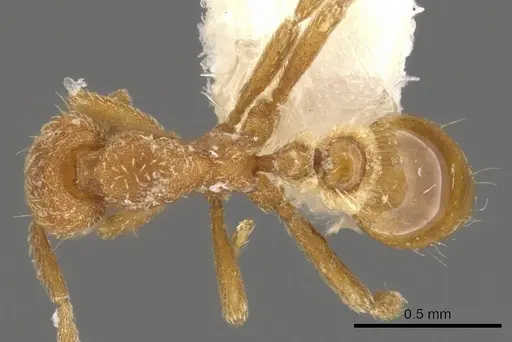
CASENT0900158
View on AntWeb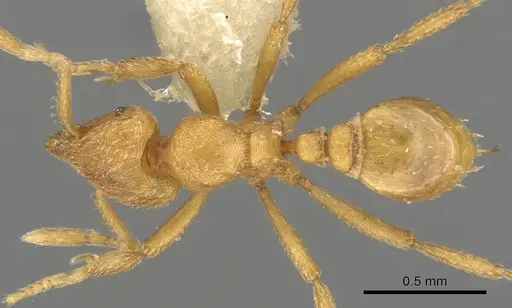
Literature
Loading distribution map...Loading products...