
Strumigenys sisyrata
- Sci. Name
- Strumigenys sisyrata
- Tribe
- Attini
- Subfamily
- Myrmicinae
- Author
- Brown, 1968
- Distribution
- Found in 1 countries
Introduction
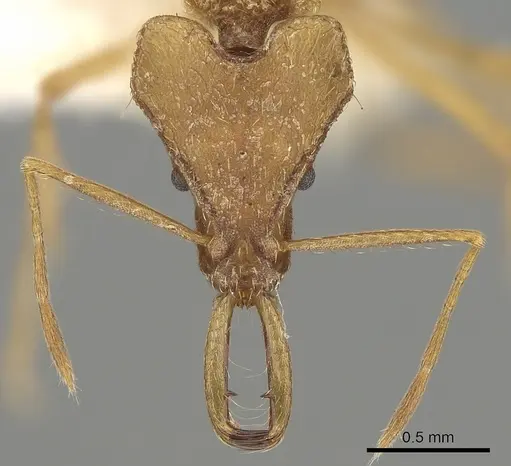
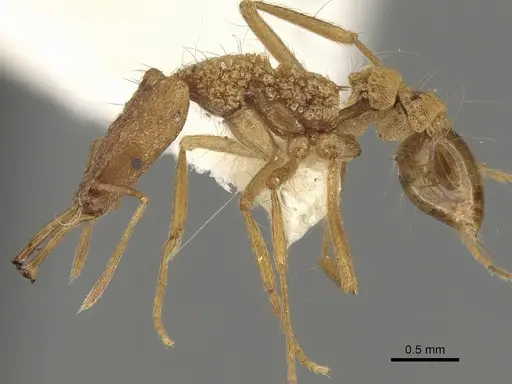
Strumigenys sisyrata is a small predatory ant species known for its trap-jaw mandibles, which snap shut at high speeds to capture prey. Workers are tiny (2-4mm, inferred from the genus) and typically pale to reddish-brown. This species is a habitat specialist found only in primary forest environments in Xishuangbanna, China .
Quick Summary
- Difficulty: Hard
- Origin & Habitat: Xishuangbanna, China, restricted to primary forest. Not found in secondary forest or rubber plantations [1].
- Colony Type: Likely monogyne (single queen) based on typical Strumigenys patterns, but unconfirmed for this species.
- Size & Growth:
- Queen: ~4-5mm inferred from Strumigenys genus
- Worker: ~2-4mm inferred from Strumigenys genus
- Colony: Up to several hundred workers (estimated from genus)
- Growth: Slow
- Development: Estimated 8-12 weeks based on related Strumigenys species (Actual timing for this species is undocumented.)
- Antkeeping:
- Temperature: Tropical species, keep at 22-26°C. Based on primary forest habitat, stable warm conditions are likely important. Specific preferences unconfirmed.
- Humidity: High humidity is essential. Keep nest substrate consistently moist but not waterlogged. Specific humidity range unconfirmed.
- Diapause: Unlikely, tropical species from southern China probably does not require diapause.
- Nesting: Prefers naturalistic setups with good moisture retention. Y-tong (AAC) or plaster nests are likely suitable. Dark, tight chambers are preferred. Specific nesting preferences undocumented.
- Behavior: Specialized predator of tiny arthropods (e.g., springtails). Timid and non-aggressive toward humans. Escape prevention is critical due to small size. Specific temperament for this species is unconfirmed.
- Common Issues: humidity too low, requires consistently moist nest environment., refusing to eat, often only accepts live prey like springtails., slow growth, normal for this genus, do not be alarmed., stress from disturbance, sensitive to light and handling.
Housing and Setup
Provide a humid, naturalistic setup. Y-tong (AAC) or plaster nests hold moisture well. The nest should have tight, dark chambers, these ants prefer snug spaces and avoid large open areas. Keep the nest area dark, dim conditions encourage activity. The outworld should also maintain humidity, but exact levels are not documented. A water reservoir or moist substrate in the nest helps maintain moisture. A small water tube can be provided but is not essential if the nest is moist enough.
Feeding and Diet
This species is a specialized predator that primarily hunts springtails and other tiny arthropods. Offer live prey, springtails are ideal. They may accept other small live prey like fruit flies, but this is not confirmed. Sugar water or honey is not typically accepted. Feed small amounts 2-3 times per week. Prey movement triggers their trap-jaw mechanism, so prey must be live.
Temperature and Seasonal Care
Keep your colony at 22-26°C. As a tropical species from southern China [1], they do not require hibernation. They may slow down in winter if room temperatures drop. A heating cable on one side can create a gradient. Avoid cold drafts and keep temperature stable.
Behavior and Colony Dynamics
Strumigenys ants are fascinating to watch due to their hunting behavior. Workers slowly approach prey, then snap their mandibles shut with incredible speed. Colonies are small and slow-growing. Queens can be long-lived. Workers are not aggressive and rely on their cryptic lifestyle. They are most active in low light (evening/night). Specific behavior for this species is undocumented.
Handling and Observation
These ants are sensitive to disturbance. Minimize handling. When moving the colony, do so gently. Their trap-jaw mechanism poses no threat to humans. For observation, use red light or dim conditions, bright light causes them to retreat. Photography with minimal flash is best. Regular disturbance can stress the colony and may lead to queen death.
Frequently Asked Questions
What do Strumigenys sisyrata ants eat?
They are specialized predators that primarily eat live springtails. They may accept other tiny live arthropods, but this is not confirmed. Sugar water is not accepted.
How long does it take for Strumigenys sisyrata to raise first workers?
Estimated 8-12 weeks from egg to first worker based on related Strumigenys species. The exact timing for this species is unknown.
What size colony do Strumigenys sisyrata reach?
Colonies likely reach up to several hundred workers at maximum (estimated from the genus). Exact colony size for this species is undocumented.
Can I keep Strumigenys sisyrata in a test tube?
Test tubes can work for founding, but established colonies likely prefer naturalistic or plaster nests that hold humidity. If using test tubes, keep the cotton moist and cover the tube to create dark conditions.
Are Strumigenys sisyrata good for beginners?
They are considered advanced due to specific humidity and dietary needs. Their reliance on live prey and high humidity makes them challenging for beginners.
Do Strumigenys sisyrata need hibernation?
Probably not, as a tropical species from southern China [1], they do not require a true diapause. They may slow down in cooler months but can be kept at room temperature year-round.
Why is my Strumigenys sisyrata colony dying?
Common causes include low humidity (nest too dry), lack of live prey (they refuse dead food), and stress from disturbance. Ensure the nest is consistently moist and offer live springtails.
What humidity do Strumigenys sisyrata need?
High humidity is essential, keep the nest substrate consistently moist but not waterlogged. Exact percentages are unconfirmed, but they come from humid primary forest [1].
When should I move Strumigenys sisyrata to a formicarium?
Wait until the colony has at least 20-30 workers and is actively foraging. Moving too early can stress the queen. A small Y-tong or plaster nest is suitable. Note: specific colony size recommendations are based on general antkeeping practice, not research on this species.
Report an Issue
The current care sheet is based fully on literature. See inconsistencies, or something that's incorrect? Please , it will be resolved after review from an admin. Contributing to the blogs tab also helps providing information, to make us be able to further improve the caresheets. Thank you for your support!
References

This caresheet is licensed under CC BY-SA 4.0 .
Community Blogs
CASENT0280752
View on AntWeb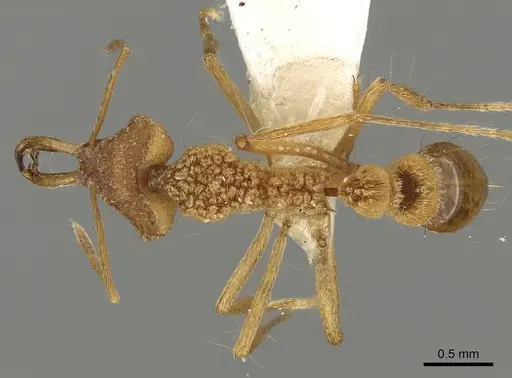
Literature
Loading distribution map...Loading products...