
Silvestri’s Pygmy Snapping Ant
Strumigenys silvestrii
- Sci. Name
- Strumigenys silvestrii
- Tribe
- Attini
- Subfamily
- Myrmicinae
- Author
- Emery, 1906
- Common Name
- Silvestri’s Pygmy Snapping Ant
- Distribution
- Found in 6 countries
Introduction
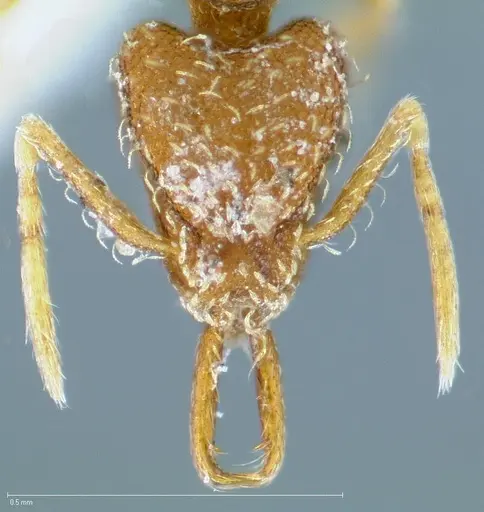
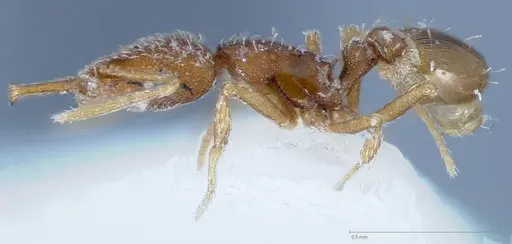
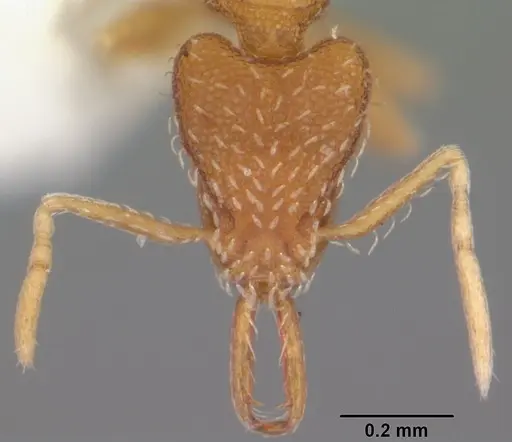
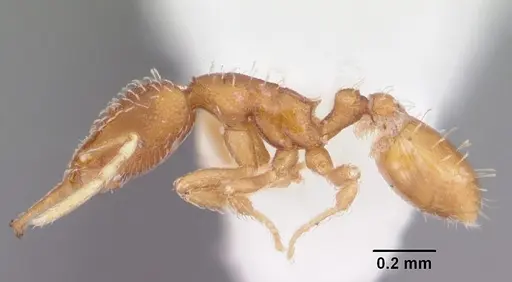
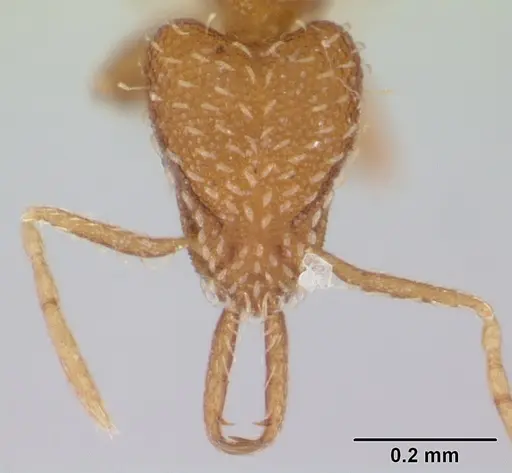
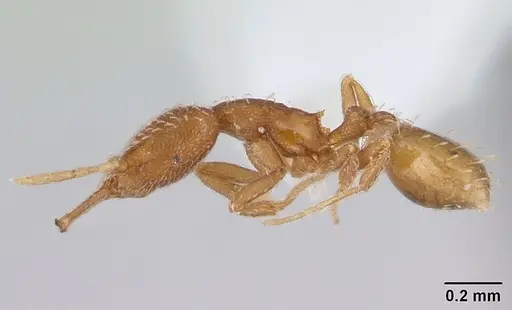
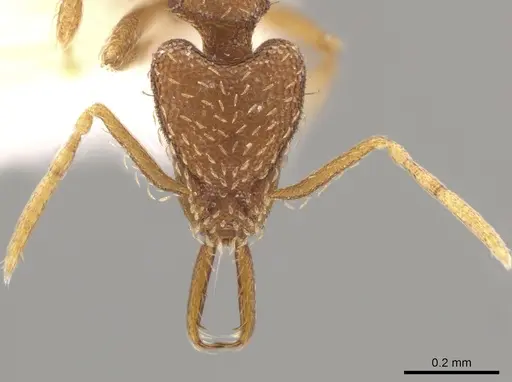
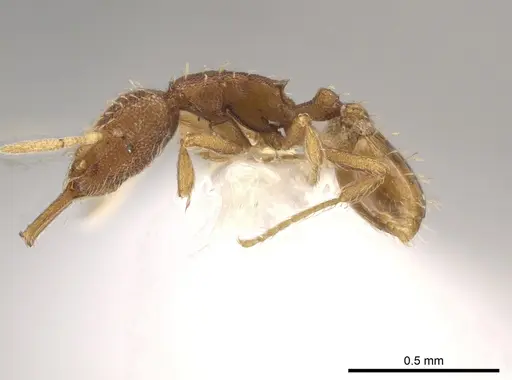
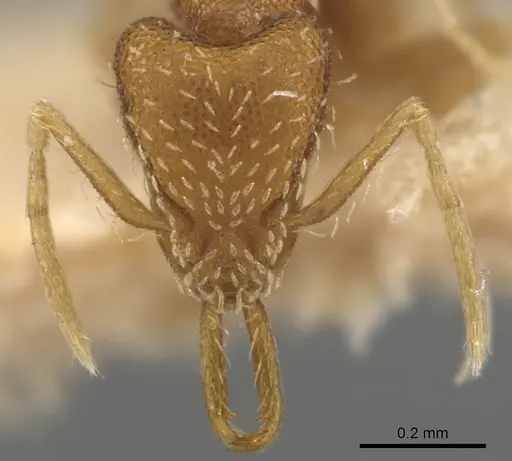
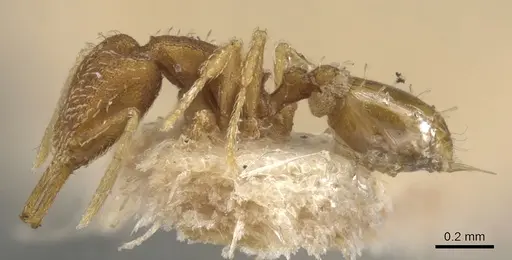
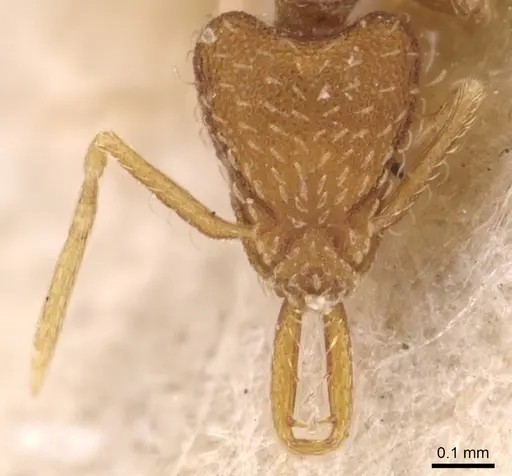
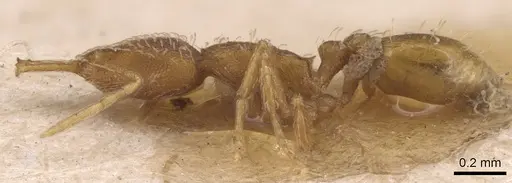
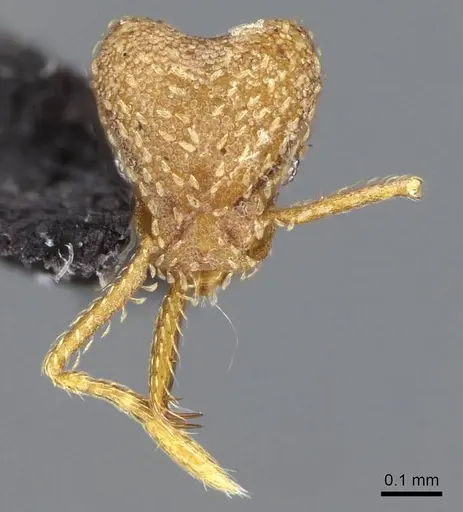
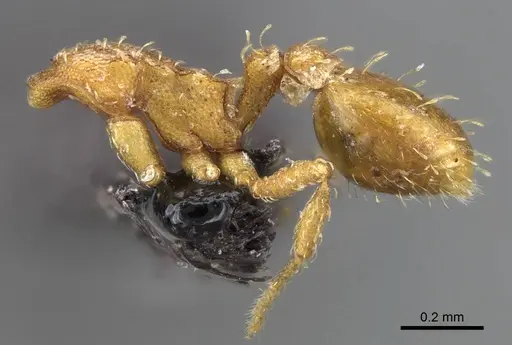
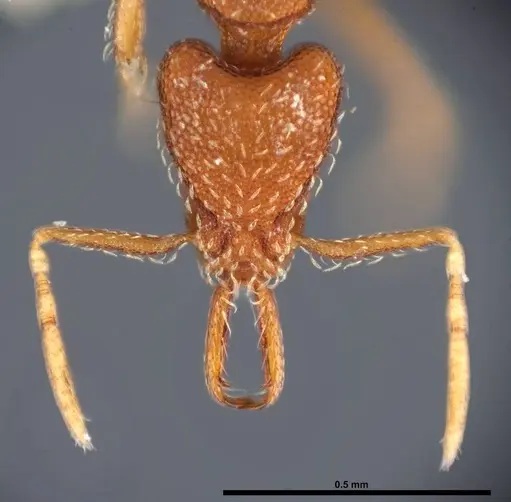
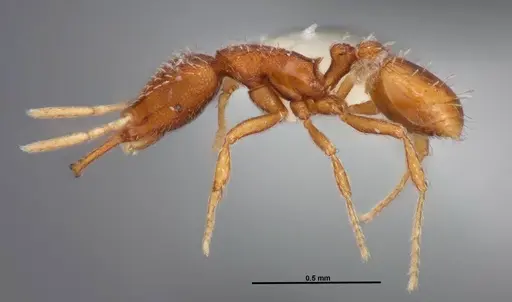
Strumigenys silvestrii is a tiny predatory ant native to tropical and subtropical South America, now introduced across the southeastern United States, Mexico, the Caribbean, Portugal, Madeira, and Macau . Workers are only 1.6-2.0 mm long and have a distinctive look: a narrow, heart-shaped head, six-segmented antennae that end in a two-segmented club, and long trap-jaw mandibles with three apical teeth and a minute denticle near the midpoint . Their body is reddish-brown, with fine, flattened hairs on the head and scapes . In the US, it is found in drier, more open habitats than most native Strumigenys, often under stones or in pitfall traps where leaf litter is sparse .
Quick Summary
- Difficulty: Hard
- Origin & Habitat: Native to tropical and subtropical South America (Argentina, Brazil, Paraguay, Guyana). Introduced to the southeastern United States (Florida to Texas and north to North Carolina, plus California), Mexico, Caribbean islands, Portugal, Madeira, and Macau [2][3][6]. Typically inhabits drier, more open areas with little leaf litter, but also occurs in urban vacant lots, hardwood forests, and coastal habitats [2][4].
- Colony Type: Likely single-queen (monogyne) based on related tramp species, but colony structure for this species is not well studied [5].
- Size & Growth:
- Queen: ~2 mm [1]
- Worker: 1.6-2.0 mm [1][2]
- Colony: Likely small, dozens to a few hundred workers, based on similar Strumigenys tramp species [5]
- Growth: Slow
- Development: Estimated 6-10 weeks at 24-26 °C, inferred from related Strumigenys (Development is slow, queen lays few eggs and larvae need live springtails to grow.)
- Antkeeping:
- Temperature: Maintain 22-26 °C. A heating cable on one side of the nest creates a gradient. As a warm‑climate species, avoid prolonged temperatures below 18 °C [2].
- Humidity: Keep the nest substrate lightly moist but allow some drying between waterings. This species prefers drier conditions than many Strumigenys, so avoid waterlogging [2].
- Diapause: No. As a tropical/subtropical ant, it does not require hibernation. Activity may slow in winter, you can reduce feeding and let temperatures drop slightly to 18-20 °C if needed [2].
- Nesting: Y-tong (AAC) or plaster nests with narrow chambers work well. A naturalistic setup with a shallow soil layer (about 1 cm) and flat stones or bark pieces also mimics their microhabitat under stones in open areas [2].
- Behavior: Extremely cryptic and slow‑moving. Workers freeze completely when disturbed, then resume movement after a pause [4]. They forage individually, hunting springtails and other tiny soil arthropods with their trap‑jaw mandibles. Not aggressive to humans, their bite is barely perceptible. Escape prevention is critical: these ants can squeeze through gaps smaller than 0.5 mm, so use fine mesh (≤0.3 mm) and fluon barriers [4].
- Common Issues: specialized diet, they need live springtails (Collembola) and rarely accept standard ant foods., tiny size makes escape prevention challenging, use fine mesh and tight barriers., slow growth and cryptic behavior make it hard to monitor colony health., they freeze when disturbed, this is normal, not illness., wild‑caught colonies may carry parasites that can affect captive populations.
Housing and Nest Setup
Strumigenys silvestrii needs careful housing due to its tiny size. A Y‑tong (AAC) nest with narrow chambers works well, these ants feel secure in tight spaces. A thin plaster nest or a naturalistic setup with a shallow soil layer (about 1 cm) and flat stones or bark also mimics their microhabitat under stones in open areas [2]. Avoid setups that force them to cross large open spaces to reach food, place the outworld close to the nest or use a short foraging tube. Escape prevention is critical: they can squeeze through gaps under 0.5 mm, so use fine mesh (≤0.3 mm) on all openings and apply fluon or another reliable barrier [4].
Feeding and Diet
This is the most challenging part of keeping S. silvestrii. They are specialized predators that hunt springtails (Collembola) and other tiny soil arthropods using their trap‑jaw mandibles [4]. They rarely accept sugar sources or standard protein foods. Your main food must be live springtails, which you can culture separately and add in small numbers to the outworld. Other tiny prey like booklice (psocids), small soil mites, or newly hatched pinhead crickets may be tried, but springtails are essential [4]. Do not rely on honey, sugar water, or commercial ant foods, these are typically refused. Feed small numbers of springtails every few days and remove uneaten prey after 24-48 hours to prevent mold.
Temperature and Seasonal Care
Keep the colony at 22-26 °C, mimicking their warm Neotropical origin. A heating cable on one side of the nest creates a gentle temperature gradient. Place the heating on top of the nest to avoid drying out the substrate too quickly [2]. As a tropical species, they do not need hibernation. If room temperature drops in winter, you can reduce feeding and let temperatures fall to 18-20 °C, but avoid dramatic cooling, they are not cold‑hardy. Monitor colony activity and adjust feeding accordingly.
Behavior and Observation
Strumigenys silvestrii is one of the most cryptic ants you can keep. Workers move slowly and will freeze completely when they detect vibration or disturbance, this is normal defensive behavior, not illness [4]. They forage individually rather than in trails, hunting through leaf litter or substrate for springtails. Their trap‑jaw mandibles are lightning‑fast when capturing prey, but the ants themselves seem sluggish. Because they are so reclusive, observing them requires patience and good lighting. They are not aggressive toward keepers, and their tiny size means even a bite is barely noticeable.
Colony Growth and Expectations
Expect slow growth. Strumigenys colonies typically remain small, related tramp species like S. membranifera, S. emmae, and S. rogeri reach only dozens to a few hundred workers [5]. A founding queen may take many months to produce her first workers, and growth after that is gradual. Do not overfeed or dramatically raise temperatures, this will not speed things up and may harm the colony. A healthy mature colony might reach 100-200 workers over several years. The queen lays few eggs at a time, and each larva requires live springtails to develop. Patience is essential.
Frequently Asked Questions
Can I keep Strumigenys silvestrii in a test tube?
Yes, but with modifications. A standard test tube setup works for founding colonies as long as escape prevention is excellent, these tiny ants can squeeze through gaps that a larger ant would not fit through. Use tightly packed cotton wool and consider a fluon barrier. However, test tubes dry out quickly, so monitor moisture carefully. Many keepers find Y‑tong nests better for established colonies because they provide more secure, tight‑fitting chambers [4].
What do Strumigenys silvestrii eat?
They eat live springtails (Collembola) and other tiny soil arthropods. This is non‑negotiable, they are specialized predators and rarely accept anything else. You will need to culture your own springtail colony to provide a reliable food source. Other tiny prey like booklice, small mites, or very small insects may be tried experimentally, but springtails should form the bulk of their diet. Standard ant foods like honey, sugar water, and protein bars are typically refused [4].
How long until first workers?
Estimated 6-10 weeks from egg to worker at optimal temperature (24-26 °C), but this is inferred from typical Strumigenys development because this species has not been studied in detail. Growth is slow, a founding queen may take several months to produce her first workers, and the colony stays small afterward. Patience is essential.
Are Strumigenys silvestrii good for beginners?
No. This is an expert‑level species because of its specialized diet, you must culture live springtails or obtain them reliably, as the ants will not survive on standard ant foods. Their tiny size also makes escape prevention tricky. Only attempt this species after you have experience with easier ants and can maintain live springtail cultures [4].
Do they need hibernation?
No. As a tropical/subtropical species, they do not require true hibernation. Activity may slow in winter, if your room temperature drops, you can reduce feeding and let temperatures fall to 18-20 °C, but avoid sudden chilling, they are not cold‑hardy [2].
Why do my Strumigenys silvestrii freeze and stop moving?
This is normal behavior. These ants are extremely cryptic and freeze completely when they detect vibration or disturbance, it is a defensive strategy, not illness [4]. If you see them motionless, watch a while, they should resume movement. Avoid disturbing the nest frequently or tapping the glass, as this causes chronic stress.
How big do colonies get?
Small. Based on related tramp species, colonies likely reach only dozens to a few hundred workers at maturity. Do not expect the large colonies you might get from Lasius or Camponotus. A healthy mature colony might have 100-200 workers after several years [5].
Can I keep multiple queens together?
Not recommended. Colony structure is not well studied for this species, but most Strumigenys are monogyne (single queen). Combining unrelated foundresses is likely to result in fighting. If you acquire a queen, house her alone until workers emerge, then maintain as a single‑queen colony.
Report an Issue
The current care sheet is based fully on literature. See inconsistencies, or something that's incorrect? Please , it will be resolved after review from an admin. Contributing to the blogs tab also helps providing information, to make us be able to further improve the caresheets. Thank you for your support!
References

This caresheet is licensed under CC BY-SA 4.0 .
Community Blogs
CASENT0005677
View on AntWeb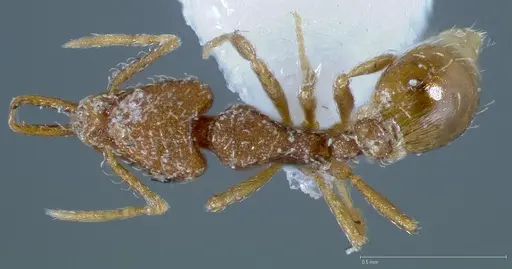
CASENT0104531
View on AntWeb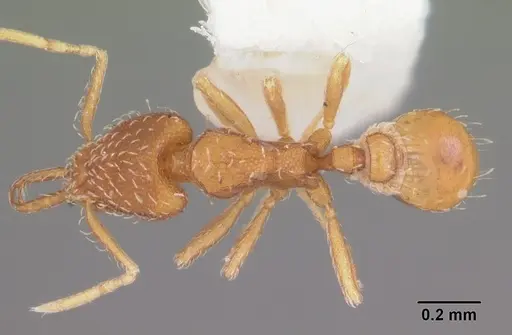
CASENT0178128
View on AntWeb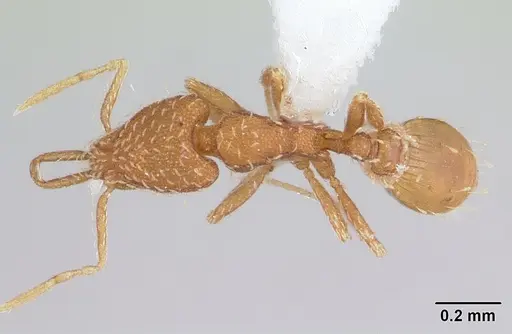
CASENT0640928
View on AntWeb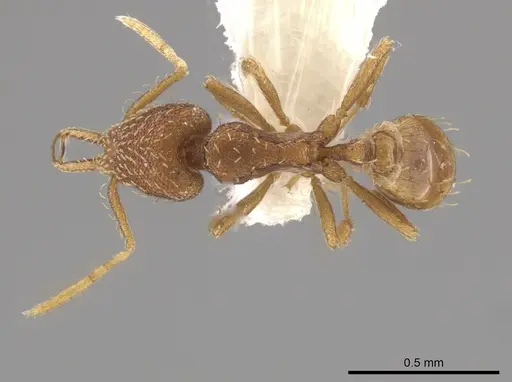
CASENT0900476
View on AntWeb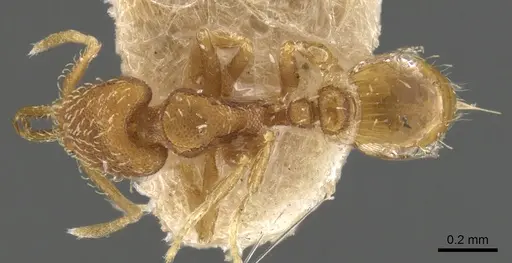
CASENT0904937
View on AntWeb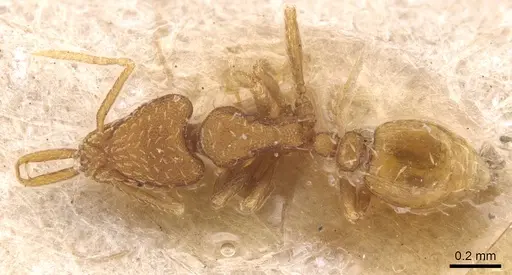
CASENT0914751
View on AntWeb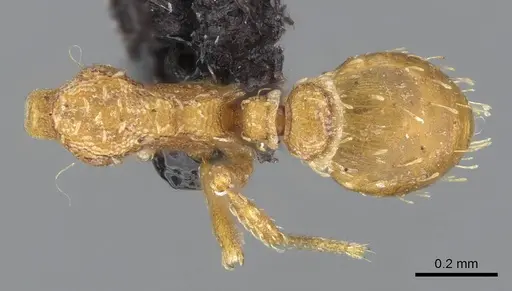
FMNHINS0000078527
View on AntWeb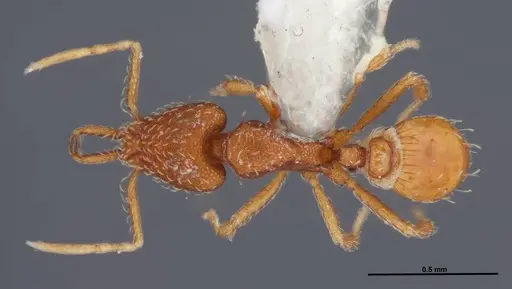
Literature
Loading distribution map...Loading products...