
Strumigenys sauteri
- Sci. Name
- Strumigenys sauteri
- Tribe
- Attini
- Subfamily
- Myrmicinae
- Author
- Forel, 1912
- Distribution
- Found in 4 countries
Introduction
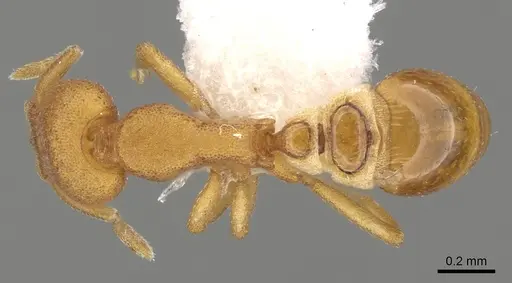
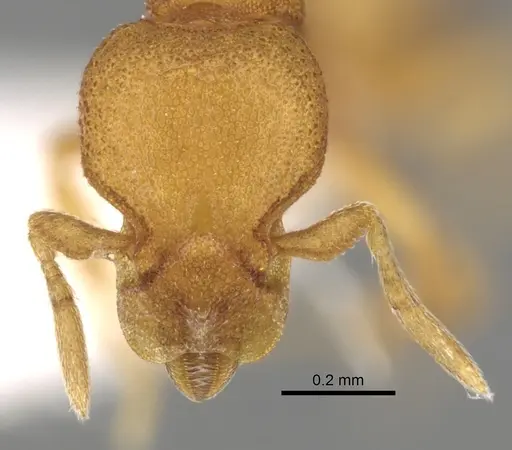
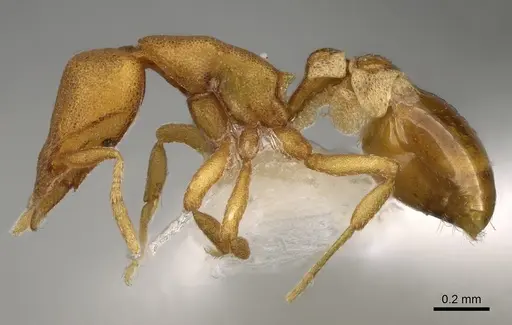
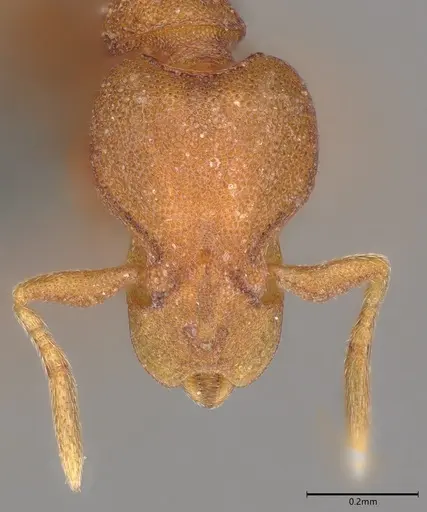
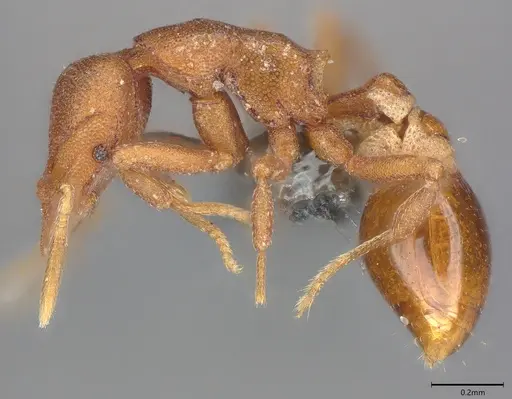
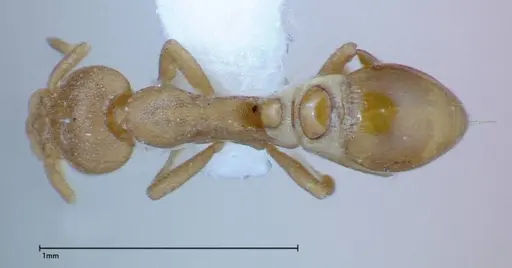
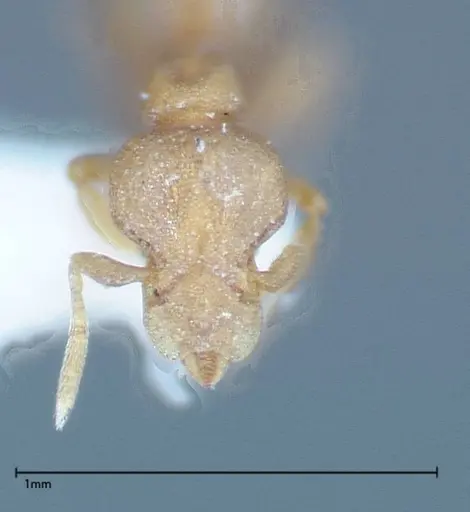
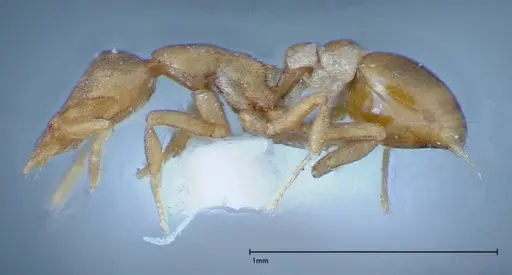
Strumigenys sauteri is a tiny predatory ant with workers measuring just 1.75 mm . It belongs to the dacetine ants (tribe Attini), known for short mandibles specialized for hunting micro-arthropods like springtails . Originally described from Taiwan in 1912 , this species has been recorded across southern China, Japan (Ryukyu Islands), Thailand, and Vietnam . Workers are reddish-yellow with distinctive short, narrow triangular mandibles and a heart-shaped head . Its adaptability is notable: while first collected from rainforest leaf litter, it now thrives in diverse habitats including grasslands, shrublands, plantations, urban forest remnants, secondary forests, and Feng Shui woods in Hong Kong .
Quick Summary
- Difficulty: Hard
- Origin & Habitat: Native to Taiwan, southern China, Japan (Ryukyu Islands), Thailand, and Vietnam. Found in diverse habitats from rainforest to urban areas at elevations of 19-1360 m [4][3]. A leaf-litter dwelling species typically collected from forest floor samples.
- Colony Type: Colony structure is not well documented. Based on related Strumigenys species, likely monogyne (single queen) with small colony sizes typical of the genus.
- Size & Growth:
- Queen: Unknown, inferred from worker size, likely around 2-2.5 mm based on related Strumigenys species.
- Worker: 1.75 mm [1]
- Colony: Likely under 100 workers (typical for Strumigenys), exact maximum unknown.
- Growth: Slow
- Development: Direct data unavailable, based on small myrmicine ants, estimated 6-10 weeks. (Temperature dependent.)
- Antkeeping:
- Temperature: Keep at 22-26°C, this subtropical/tropical species prefers warm, stable conditions [3]. Avoid prolonged temperatures below 20°C.
- Humidity: High humidity is essential, these leaf-litter ants need consistently moist substrate. Keep the nest substrate moist but not waterlogged.
- Diapause: No, this is a subtropical/tropical species that does not require hibernation. Maintain warm conditions year-round [3].
- Nesting: Naturalistic setups with leaf litter and small chambers work best. Y-tong (AAC) or plaster nests with very small chambers and high humidity can also work. Avoid large chambers.
- Behavior: Docile and non-aggressive. Workers are slow-moving and hunt individually in the leaf litter layer. They possess a sting (typical of Myrmicinae) but rarely use it against keepers. Escape prevention is critical due to their tiny size (1.75 mm). Use fine mesh and tight seals.
- Common Issues: escape prevention is critical, they can squeeze through tiny gaps., specialized diet: they need live springtails or micro-arthropods, not standard ant food., high humidity requirements can promote mold if ventilation is poor., slow growth requires patience., wild-caught colonies may carry unknown parasites, quarantine recommended.
Housing and Nest Setup
These ants require careful housing due to their tiny size and leaf-litter lifestyle. Natural setups with damp soil, leaf litter, and small hiding spots mimic their natural environment [5]. A Y-tong (AAC) nest with very small chambers or a plaster nest with high humidity can work. Cover all ventilation holes with fine mesh, standard ant mesh may not stop them. The outworld should be simple as they rarely wander far. Use a hydration system to keep the substrate consistently moist but not flooded.
Feeding and Diet
Feeding is the most challenging aspect. As short-mandibulate dacetines, they are specialized predators of micro-arthropods [2]. Their mandibles are designed for catching tiny, soft-bodied prey like springtails [1]. The main food should be live springtails. Other acceptable live prey: booklice, tiny isopods. Do not rely on sugar sources or standard ant feed. Offer small amounts frequently, a few springtails every few days. Remove uneaten prey to prevent mold. A well-fed colony will hunt constantly, so maintain prey supply.
Temperature and Humidity
Keep temperatures at 22-26°C, avoiding prolonged drops below 20°C. This species comes from subtropical to tropical regions [3]. A heating cable on one side can create a gradient, but prevent drying out. Humidity should be high: keep the nest substrate consistently moist but not waterlogged. Monitor condensation on walls as a sign of good humidity. Avoid placement near AC or heating vents.
Colony Development
Colonies grow slowly and remain small, likely under 100 workers at maximum (estimated from genus patterns). How queens found colonies is not documented. If using a wild-caught queen, provide a small humid chamber and do not disturb. Once workers emerge, they will begin hunting. Direct development data is unavailable, based on related species, first workers may appear 6-10 weeks from egg at optimal temperature. Patience is essential. [1]
Behavior and Temperament
Docile and non-aggressive. Workers are slow-moving and hunt individually. They possess a sting but rarely use it against keepers (typical for Myrmicinae). Their tiny size means they can slip through small gaps, excellent escape prevention is mandatory. Watch for workers near lid edges and seal all connections.
Frequently Asked Questions
Can I keep Strumigenys sauteri in a test tube?
Test tubes are not ideal. They need high humidity and a setup mimicking leaf litter. A small Y-tong or plaster nest with tiny chambers works better. If using a test tube, ensure very small diameter and excellent escape prevention [5].
What do Strumigenys sauteri eat?
They are specialized predators of live springtails and other micro-arthropods. Their short mandibles are adapted for tiny prey [2][1]. Do not rely on sugar water or standard ant food.
How long does it take for first workers to appear?
Direct data is unavailable. Based on related Strumigenys species, first workers may appear 6-10 weeks after egg-laying at optimal temperatures (22-26°C). This is an estimate.
Are Strumigenys sauteri good for beginners?
No. Their specialized diet, high humidity needs, tiny size, and slow growth make them challenging. Best for experienced keepers.
How big do Strumigenys sauteri colonies get?
Estimated under 100 workers, based on genus patterns. Exact maximum not documented.
Do Strumigenys sauteri need hibernation?
No. This is a subtropical/tropical species [3]. Keep warm year-round at 22-26°C.
Why are my Strumigenys sauteri dying?
Common causes: escape, low humidity, wrong diet (need live prey), temperature stress (below 20°C), or mold. Check each parameter.
When should I move them to a formicarium?
Wait until the colony has at least 20-30 workers and is stable. Use a small formicarium with high humidity.
Can I keep multiple queens together?
Not recommended. This species is likely monogyne, combining queens is not documented.
Report an Issue
The current care sheet is based fully on literature. See inconsistencies, or something that's incorrect? Please , it will be resolved after review from an admin. Contributing to the blogs tab also helps providing information, to make us be able to further improve the caresheets. Thank you for your support!
References

This caresheet is licensed under CC BY-SA 4.0 .
Community Blogs
Literature
Loading distribution map...Loading products...