
Strumigenys ruta
- Sci. Name
- Strumigenys ruta
- Tribe
- Attini
- Subfamily
- Myrmicinae
- Author
- Bolton, 2000
- Distribution
- Found in 0 countries
Introduction
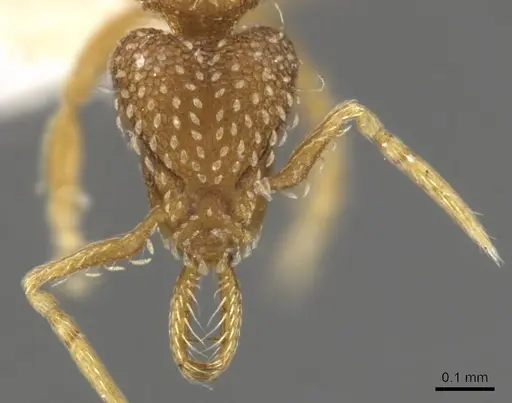
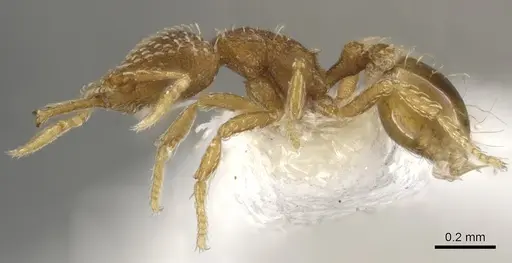
Strumigenys ruta is a tiny predatory ant, with workers measuring just 1.5 mm total length . It belongs to the dacetine group of the tribe Attini. Workers have short mandibles (mandibular index less than 60) and distinctive hairs: spoon-shaped hairs on the head, a pair of erect flagellate hairs on the mesonotum, and thick, flattened flagellate hairs on the first gastral tergite . The disc of the postpetiole is densely punctate to reticulate-punctate . This species is known only from Colombia (Putumayo) and Brazil . They inhabit leaf litter in tropical forests, where they hunt tiny arthropods .
Quick Summary
- Difficulty: Expert
- Origin & Habitat: Neotropical region – Colombia (Putumayo) and Brazil. Found in the leaf litter of tropical forests and cocoa plantations, collected using Winkler traps [5][4].
- Colony Type: Unconfirmed. Based on related Strumigenys species, colonies are likely monogyne (single queen) and small.
- Size & Growth:
- Queen: Unknown – queens have not been described in the literature [1].
- Worker: 1.5 mm total length [1].
- Colony: Unknown – based on patterns of litter-dwelling Strumigenys, likely under 100 workers.
- Growth: Unknown
- Development: Unconfirmed – no data exists for this species. Based on related dacetine ants, development may take 2–4 months at warm temperatures. (All development data is inferred from related species.)
- Antkeeping:
- Temperature: Likely needs warm conditions (24–28°C) based on its Neotropical distribution. Provide a thermal gradient so workers can self-regulate.
- Humidity: Requires consistently moist substrate to mimic a damp tropical forest floor, but not waterlogged. Use a moisture gradient.
- Diapause: No – tropical species, maintain warm conditions year-round.
- Nesting: Tight chambers scaled to their tiny size. Use a small plaster, Y-tong, or 3D-printed nest. Avoid tall open spaces. High humidity is critical – use a connected water reservoir.
- Behavior: Cryptic, slow-moving predators. Workers are non‑aggressive and prefer to flee. They have a functional stinger (subfamily Myrmicinae) but it is not medically significant. Escape prevention is critical due to their 1.5 mm size – they can slip through standard barriers.
- Common Issues: escape prevention is critical due to tiny 1.5 mm size – use fine mesh (≤0.5 mm)., no captive biology data exists – all care is inferred from genus patterns., slow growth and small colony size make establishment difficult., high humidity needs can cause mold if ventilation is poor., specialized diet of live micro‑prey (springtails) requires keeper commitment to culturing.
Appearance and Identification
Strumigenys ruta workers are among the smallest ants kept in captivity, measuring only 1.5 mm total length [1]. They have short mandibles (mandibular index below 60), a pair of erect flagellate hairs on the mesonotum, and thick, flattened flagellate hairs on the first gastral tergite. The head bears spoon‑shaped ground hairs, and the postpetiole disc is densely punctate to reticulate‑punctate [2][3]. These traits distinguish them from close relatives like Strumigenys dyseides and Strumigenys skia [1].
Natural History and Habitat
This species is known only from Colombia (Putumayo) and Brazil, in the tropical rainforests of the Amazon basin [4][3]. They inhabit the leaf‑litter layer, living in the moist decomposing organic material. In Brazil they were collected from both cocoa farms and native forest remnants using Winkler traps [5], suggesting they tolerate some habitat modification but prefer intact forest. Dacetine ants are specialized predators, hunting tiny soil arthropods. Nothing specific is known about the biology of Strumigenys ruta [1].
Housing and Nest Setup
Due to their tiny size and cryptic habits, Strumigenys ruta require careful housing. Use a small nest with tight chambers scaled to their 1.5 mm body – a plaster, Y‑tong, or 3D‑printed nest works well. The nest must maintain high humidity: keep the substrate consistently moist but not waterlogged. A water reservoir connected to the nest helps. Escape prevention is critical – use fine mesh (0.5 mm or finer) on all openings. Avoid tall, open enclosures, these ants feel safest in confined spaces. A small outworld area can be provided for foraging, but keep it simple. [1]
Feeding and Diet
Dacetine ants are obligate predators of tiny arthropods. For Strumigenys ruta, the primary food should be live springtails (e.g., Folsomia candida cultures). Other tiny live prey such as booklice, minute soil mites, or fruit fly larvae may be accepted. Sugar sources like honey water are not taken – do not rely on them. Feed small prey every few days and remove uneaten remains to prevent mold. The specialized diet requires a keeper’s commitment to culturing live prey [1].
Temperature and Seasonal Care
As a Neotropical species, Strumigenys ruta needs warm, stable temperatures year‑round – aim for 24–28°C in the nest area. Provide a slight gradient using a low‑output heating cable on one side. Room temperature may be insufficient. Unlike temperate ants, this species does not require hibernation. Maintain warm conditions without winter cooling. Extended drops below 20°C may stress or kill the colony. Keep the nest moist – their native habitat is the constantly damp tropical forest floor [5][4].
Behavior and Temperament
These are non‑aggressive, cryptic ants. Workers move slowly and spend most time hunting in the leaf litter. They have a functional stinger (subfamily Myrmicinae), but it is not medically significant and they rarely use it – their mandibles are designed for capturing tiny prey, not for defense. Colonies are likely small (under 100 workers) and relatively inactive. The main challenge is escape prevention: at 1.5 mm, they can slip through standard barriers. Use fine mesh and check for gaps. They do not form raiding columns or show aggressive swarming [1].
Frequently Asked Questions
How long does it take for Strumigenys ruta to raise first workers?
The egg‑to‑worker timeline is unconfirmed – no captive data exists. Based on related Strumigenys, expect 2–4 months at warm temperatures (26–28°C). Dacetine ants typically develop slowly.
Can I keep Strumigenys ruta in a test tube?
A standard test tube is too large. They need tight chambers scaled to their 1.5 mm size. A small plaster, Y‑tong, or 3D‑printed nest with moist substrate is better. High humidity without flooding is key.
What do Strumigenys ruta ants eat?
They are specialized predators that need live tiny prey. Primary food is live springtails (e.g., Folsomia candida). Other tiny arthropods like booklice, minute mites, and fruit fly larvae may be accepted. They do not take sugar water or dead prey.
Are Strumigenys ruta good for beginners?
No. This is an expert‑level species. No captive biology data exists, they require specialized live prey (springtails), need high humidity and warm temperatures, and their tiny size makes escape prevention difficult. Not recommended for beginners.
How big do Strumigenys ruta colonies get?
Colony size is unconfirmed but likely small – probably under 100 workers based on typical litter‑dwelling Strumigenys patterns. They never reach the size of common species like Lasius or Camponotus.
Do Strumigenys ruta need hibernation?
No. As a tropical species, they do not require hibernation. Keep them warm year‑round (24–28°C). Extended temperatures below 20°C may kill the colony.
Why are my Strumigenys ruta dying?
Possible causes: temperature too low (
When should I move Strumigenys ruta to a formicarium?
Do not move them to a large formicarium. They do best in small, tight spaces – a small plaster, Y‑tong, or 3D‑printed nest with chambers sized for 1.5 mm ants. Large foraging areas are not needed.
Can I keep multiple queens together?
This is unconfirmed for S. ruta. Based on related Strumigenys, they likely form single‑queen colonies. Combining unrelated queens has not been documented and is not recommended.
Report an Issue
The current care sheet is based fully on literature. See inconsistencies, or something that's incorrect? Please , it will be resolved after review from an admin. Contributing to the blogs tab also helps providing information, to make us be able to further improve the caresheets. Thank you for your support!
References

This caresheet is licensed under CC BY-SA 4.0 .
Community Blogs
CASENT0900480
View on AntWeb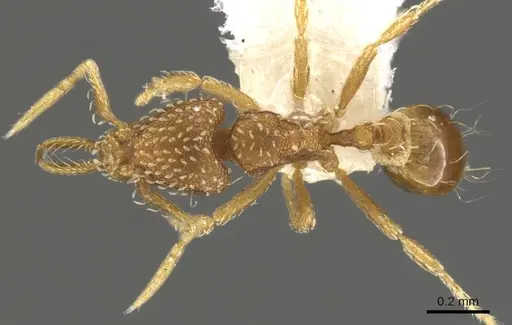
Literature
Loading distribution map...Loading products...