
Strumigenys princeps
- Sci. Name
- Strumigenys princeps
- Tribe
- Attini
- Subfamily
- Myrmicinae
- Author
- Kempf & Brown, 1969
- Distribution
- Found in 1 countries
Introduction
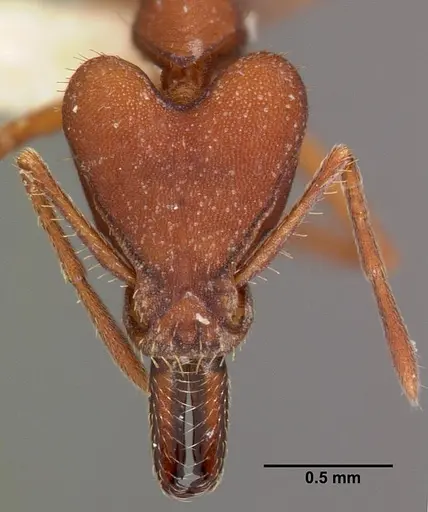
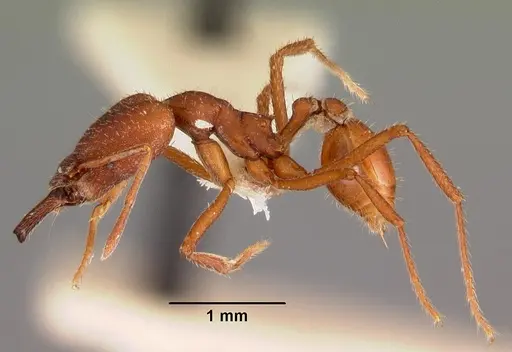
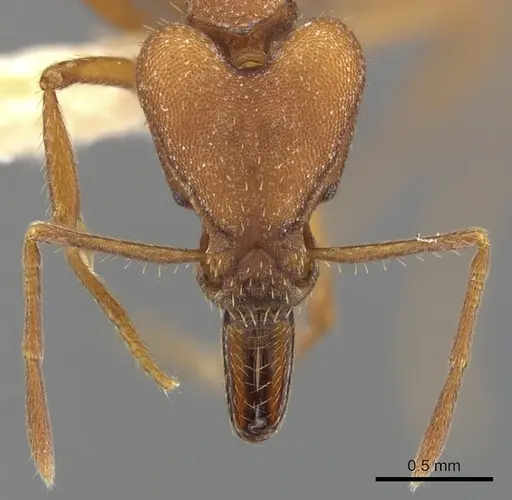
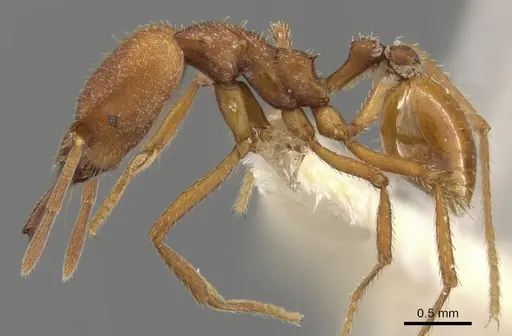
Strumigenys princeps is a small predatory ant native to the Brazilian Amazon rainforest. Workers measure 4.2-4.6 mm in total length and have a distinctive dense reticulate-punctate sculpture on the head, making them appear finely textured . This species belongs to the Strumigenys precava group and is the largest member of that group. They lack the long flowing hairs seen in some related species and have reduced spongiform appendages on the waist segments . The type colony was found in a rotten palm stump in deep shade within second growth rainforest, about 100 meters from a river bank . These ants are specialized predators, using their trap-jaw mandibles to capture small prey like springtails. As members of the tribe Attini, they share ancestry with fungus-growing ants but have evolved into obligate predators. The type colony contained several hundred workers with brood and alate females, suggesting colonies can reach moderate sizes .
Quick Summary
- Difficulty: Expert
- Origin & Habitat: Brazil (Amazonas region), second growth rainforest in deep shade, typically nesting in rotting palm stumps near river banks [1][2].
- Colony Type: Likely monogyne based on the type colony which contained a single queen and alate females, but not confirmed.
- Size & Growth:
- Queen: ~5-6 mm, inferred from Strumigenys genus patterns, but no direct measurements available.
- Worker: 4.2-4.6 mm total length [1]
- Colony: Up to several hundred workers [1]
- Growth: Unknown, but likely moderate for a specialized predator.
- Development: Unknown, no species-specific data exists. (Development time is unknown. Keep in mind that tropical species can develop continuously at warm temperatures.)
- Antkeeping:
- Temperature: Keep at 24-28°C, they are tropical ants requiring warm, stable conditions. A gentle gradient allows workers to regulate their temperature preference. Avoid temperatures below 20°C [1].
- Humidity: High humidity (70-85%) is essential. Their natural habitat is deep shade in rainforest with constant moisture. Keep the nest substrate consistently damp but not waterlogged [1].
- Diapause: No diapause required, being tropical, they need year-round warm conditions. Do not expose to temperatures below 20°C for extended periods [1].
- Nesting: Provide a humid nest setup like plaster or a naturalistic setup with moist substrate. They prefer enclosed dark spaces. Test tubes can work if the water reservoir is properly managed to maintain humidity.
- Behavior: Strumigenys princeps is a specialized predator with trap-jaw mandibles designed for capturing small arthropods like springtails. They are not aggressive toward larger threats and will retreat rather than engage. Workers are small (4.2-4.6 mm) so escape prevention is important, they can slip through small gaps. They are shy and reclusive, spending most of their time foraging in the substrate. Unlike some Strumigenys that form large colonies, this species maintains moderate-sized colonies of several hundred workers.
- Common Issues: specialized diet, they require live springtails or other tiny live prey, making them difficult to feed., high humidity needs, colonies often fail in dry conditions or when humidity fluctuates., escape risk due to small size, fine mesh and tight barriers are essential., tropical temperature requirements, cannot tolerate cool temperatures or drafts., development timeline unknown, lack of data makes it hard to predict colony growth.
Housing and Nest Setup
Strumigenys princeps requires a humid nest environment that mimics their natural rainforest habitat. Plaster nests or nests with water reservoirs work well for maintaining consistent moisture. The nest chambers should be appropriately scaled to their 4-5 mm worker size, not too large or the ants may feel exposed. A naturalistic setup with a moist soil layer and hiding structures like cork bark or leaf litter also works, provided humidity stays high. The outworld should have a water source and the entire setup should be kept in a warm area away from drafts or air conditioning. Use fine mesh on any ventilation, these tiny ants can escape through surprisingly small gaps. The type colony nested in a rotten palm stump in deep shade, so provide dark, enclosed spaces [1].
Feeding and Diet
This species is an obligate predator requiring live small arthropods. Their primary food source in the wild is springtails (Collembola), which they capture using their specialized trap-jaw mandibles [1]. In captivity, you must culture a steady supply of springtails or provide other tiny live prey such as booklice (psocids), minute soil mites, or very small fruit fly larvae. They will not accept dead prey or sugar sources, this is not a species that can be fed like typical ants. Feed small prey items every 2-3 days, adjusting based on colony size and consumption rate. A well-fed colony will have workers that actively forage, while hungry colonies may appear sluggish.
Temperature and Seasonal Care
As a tropical species from the Brazilian Amazon, Strumigenys princeps requires warm temperatures year-round. Maintain the nest area at 24-28°C with minimal fluctuation. Temperatures below 20°C for extended periods can weaken or kill colonies. A small heating cable on one side of the nest can create a temperature gradient, allowing workers to choose their preferred zone. Place the heating element on top of the nest rather than underneath to avoid drying out the substrate. No hibernation or winter rest is needed, these ants expect constant warmth. Room temperature may suffice if your home stays in the low-to-mid 20s°C range, otherwise provide supplemental heating [1].
Colony Growth and Development
Little is known about the founding behavior of Strumigenys princeps. The type colony contained a queen, workers, and alate females, suggesting single-queen colonies [1][2]. Founding type is unconfirmed, it may be claustral or semi-claustral. Growth rate is unknown but likely moderate. The type colony had several hundred workers, indicating mature colonies reach moderate sizes. Patience is required, as colonies grow steadily over months and years.
Behavior and Foraging
Strumigenys princeps is a shy, reclusive species that prefers to stay hidden within the nest and substrate. Workers forage individually, using their trap-jaw mandibles to snap shut on prey items like springtails. They are not aggressive and will retreat from threats rather than engage. Unlike some ants that form visible foraging trails, these ants are cryptic and their activity may go unnoticed unless you observe closely. Their small size (4.2-4.6 mm) means they can easily slip through gaps in standard ant keeping equipment, always use fine mesh and check for escape routes. Workers have a distinctive appearance with dense cephalic sculpture and reduced spongiform appendages, making them easily identifiable under magnification [1].
Frequently Asked Questions
Can I keep Strumigenys princeps in a test tube?
Test tubes can work but require careful humidity management. The water reservoir must be sized correctly to maintain moisture without flooding. A better choice is a plaster or acrylic nest that holds humidity more consistently. If using test tubes, wrap the portion containing the colony in paper towel to help maintain humidity and provide darkness.
What do Strumigenys princeps eat?
They are specialized predators requiring live small arthropods. Their primary food is springtails (Collembola), which you should culture or purchase regularly. They will not accept dead prey, sugar, or honey. Other acceptable live prey includes tiny booklice, minute soil mites, and very small fruit fly larvae [1]. This is not a species for keepers who want easy feeding.
How long does it take for first workers to emerge?
Unknown, no species-specific data exists for Strumigenys princeps. The development timeline is not documented. Patience is required when starting a colony.
Are Strumigenys princeps good for beginners?
No, this is an expert-level species. Their specialized live-prey diet, high humidity requirements, and tropical temperature needs make them challenging. They are not recommended for anyone new to ant keeping. Even experienced keepers often struggle with their feeding requirements.
How big do Strumigenys princeps colonies get?
The type colony contained several hundred workers, suggesting mature colonies reach up to several hundred workers [1]. They are not among the largest Strumigenys species but can still form substantial colonies over time. Growth is moderate and requires patience.
Do Strumigenys princeps need hibernation?
No, they are tropical ants from the Brazilian Amazon and do not require any winter cooling. Keep them warm year-round at 24-28°C. Exposure to temperatures below 20°C for extended periods can be harmful or fatal [1].
Why are my Strumigenys princeps dying?
Common causes include: too dry conditions (they need constant humidity), lack of live prey (they will starve without springtails), temperatures too cool or fluctuating, or escapes due to small size. Check all husbandry parameters and ensure you have a reliable springtail culture. Wild-caught colonies may also carry parasites.
When should I move them to a formicarium?
Wait until the colony has at least 20-30 workers and is actively foraging. Moving too early can stress the queen. Ensure the formicarium can maintain humidity, plaster or acrylic nests with water reservoirs are ideal. The transition should be gradual, allowing workers to explore the new space.
Can I keep multiple queens together?
Strumigenys princeps is believed to be monogyne based on the type colony, which contained a single queen [1][2]. Combining unrelated queens is not recommended and likely results in fighting. Only keep one queen per colony unless proven otherwise.
Report an Issue
The current care sheet is based fully on literature. See inconsistencies, or something that's incorrect? Please , it will be resolved after review from an admin. Contributing to the blogs tab also helps providing information, to make us be able to further improve the caresheets. Thank you for your support!
References

This caresheet is licensed under CC BY-SA 4.0 .
Community Blogs
CASENT0102579
View on AntWeb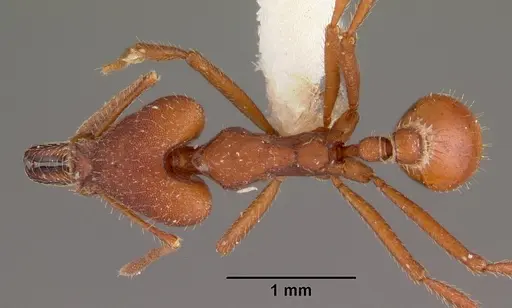
CASENT0900443
View on AntWeb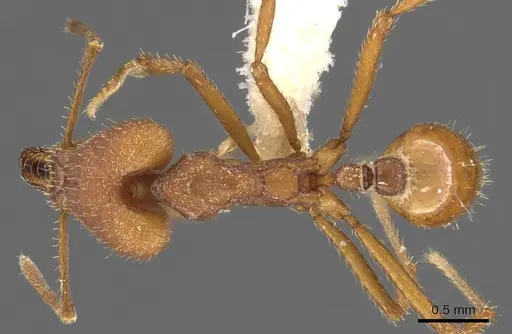
Literature
Loading distribution map...Loading products...