
Strumigenys prex
- Sci. Name
- Strumigenys prex
- Tribe
- Attini
- Subfamily
- Myrmicinae
- Author
- Bolton, 2000
- Distribution
- Found in 2 countries
Introduction
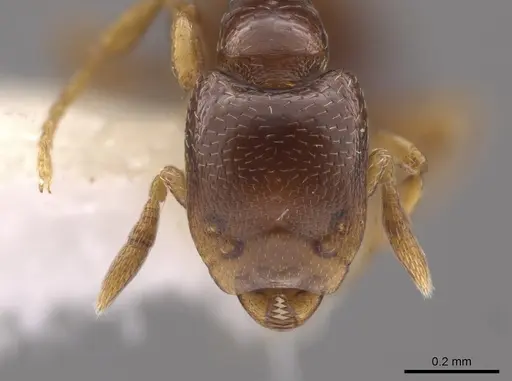
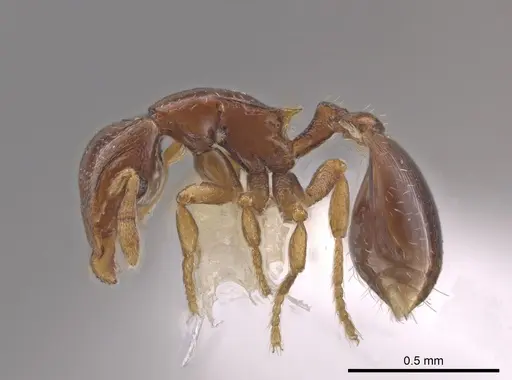
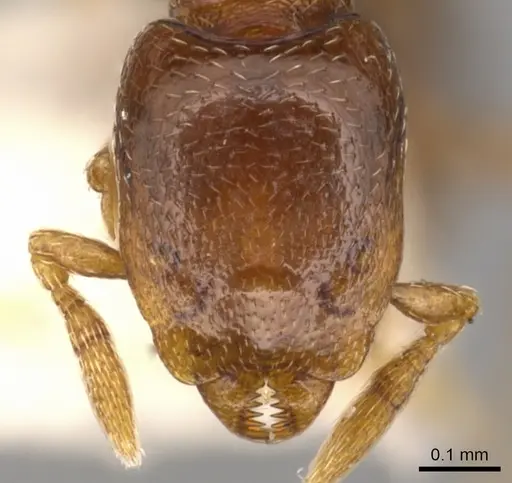
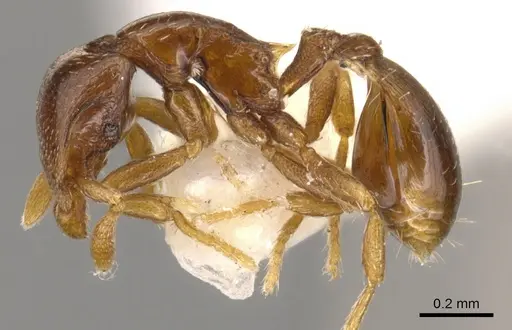
Strumigenys prex is a tiny predatory ant measuring just 1.7-1.8mm in total length, making it one of the smallest members of the azteca-complex within the excisa group . Workers have a distinctive appearance with a constricted head, smoothly rounded pronotal humeri (lacking the angular humeral hairs found in related species), and reduced lateral lobes on the waist segments . The species is native to the Neotropical region, found in Belize, Guatemala, and southern Mexico, where it inhabits mesic (damp) forest habitats, particularly in Cecropia-palm forest floor litter . This ant belongs to the trap-jaw genus Strumigenys, they use specialized mandibles to capture small prey.
Quick Summary
- Difficulty: Hard
- Origin & Habitat: Neotropical region, Belize, Guatemala, and southern Mexico. Inhabits mesic (damp) lowland forest habitats, particularly Cecropia-palm forest where they live in leaf litter [1][3].
- Colony Type: Colony structure is unconfirmed. Based on genus patterns, likely single-queen (monogyne) colonies with relatively small colony sizes typical of litter-dwelling Strumigenys species.
- Size & Growth:
- Queen: Queen undescribed, based on genus patterns, likely similar to worker size or slightly larger.
- Worker: 1.7-1.8mm total length [1].
- Colony: Likely small, under 100 workers based on typical litter-dwelling Strumigenys patterns and the tiny worker size.
- Growth: Slow, typical of predatory ants that require live prey for each larva.
- Development: Unconfirmed, based on related Strumigenys species, likely several weeks to months at warm temperatures. (Development likely slow due to specialized predatory diet requirements.)
- Antkeeping:
- Temperature: Based on their Neotropical origin, keep at 24-28°C. A gentle heat gradient allows them to regulate temperature.
- Humidity: High humidity required, think damp forest floor. Keep substrate consistently moist but not waterlogged. These forest litter ants need humid conditions to prevent desiccation.
- Diapause: Unlikely, as Neotropical species from lowland forests, they probably do not require a winter dormancy period. Maintain warm conditions year-round.
- Nesting: Naturalistic setup with moist substrate (soil/leaf litter mixture) works best. Y-tong or plaster nests with small chambers can work if humidity is maintained. They are tiny and need appropriately scaled nesting spaces.
- Behavior: Trap-jaw ants with specialized predatory behavior. Workers are slow-moving but use their trap-jaw mandibles to capture small prey [3]. They are not aggressive toward humans but possess a functional sting, it is not medically significant. Escape prevention is critical due to their extremely small size, they can squeeze through standard barrier gaps. Foraging is done individually through leaf litter [1][3].
- Common Issues: escape prevention is critical due to tiny 1.7mm size, they can slip through standard mesh and gaps, colonies are slow-growing and require patience, may take months to reach even 20 workers, live prey requirement makes them difficult to feed, need constant supply of springtails or micro-arthropods, high humidity needs can lead to mold problems if ventilation is poor, wild-caught colonies may have parasites or fail to adapt to captive conditions
Housing and Nest Setup
Strumigenys prex requires careful housing due to their tiny size and humidity needs. A naturalistic setup with a moist soil and leaf litter mixture works best, this mimics their natural forest floor habitat and provides hunting grounds for their predatory lifestyle [1]. If using a formicarium, Y-tong (AAC) or plaster nests with small, tight chambers scaled to their 1.7mm size are appropriate. The nest area must remain consistently humid but never waterlogged, standing water drowns colonies. Use a water reservoir or moisture gradient to maintain damp conditions. Because they are so small, even standard test tube setups require excellent escape prevention, check that any connections and barriers are truly sealed.
Feeding and Diet
Strumigenys prex is a specialized predatory ant that requires live small prey. In the wild, they hunt micro-arthropods in leaf litter, using their trap-jaw mandibles to capture prey much smaller than themselves [3][2]. In captivity, their primary food should be live springtails, these are the ideal size and provide proper nutrition. Other small live prey like tiny isopods, booklice, and collembola can also be offered. They are unlikely to accept sugar sources or dead prey, their hunting behavior is specifically triggered by movement. Feed small amounts of live prey every few days, removing any uneaten prey after 24 hours. A constant supply of springtails in a naturalistic setup allows the ants to hunt naturally.
Temperature and Humidity
As Neotropical ants from mesic forests in Belize, Guatemala, and Mexico, Strumigenys prex needs warm and humid conditions. Keep the nest area at 24-28°C, this is warm but not extreme, matching their lowland forest habitat. A heating cable on one side of the nest can create a temperature gradient, but avoid direct heat that dries out the substrate. Humidity is critical, maintain high humidity, with the substrate feeling damp to the touch. Mist occasionally if needed, but avoid water droplets that could drown these tiny ants. Good ventilation is necessary to prevent mold while maintaining humidity, aim for gentle air flow, not stagnant conditions.
Behavior and Temperament
Strumigenys prex is a calm, non-aggressive ant that poses little danger to keepers. They have trap-jaw mandibles designed for capturing tiny prey [2]. They also possess a functional sting, but it is not medically significant to humans. Workers move slowly through leaf litter, hunting individually rather than in groups. Their small size and cryptic lifestyle means they are rarely seen unless you actively search for them. Colonies are likely small and slow-growing, with workers living several months each. The main behavioral concern for keepers is their escape risk, at 1.7mm, they can slip through gaps that seem sealed. Always use fine mesh and check all connections for tiny gaps.
Frequently Asked Questions
How long does it take for Strumigenys prex to produce first workers?
The exact timeline is unconfirmed. Based on related Strumigenys species, development likely takes several weeks to months at optimal warm temperatures (24-28°C). Growth is slow due to their specialized predatory diet, each larva requires live prey, which takes time to hunt and consume.
Can I keep Strumigenys prex in a test tube setup?
Yes, but with important caveats. Test tubes can work if you maintain high humidity and provide a hunting area with live prey. However, their tiny 1.7mm size means escape prevention must be excellent, use cotton plugs that are packed tightly and consider additional barriers. The tube must be kept upright to prevent water flooding the colony.
What do Strumigenys prex ants eat?
They are obligate predators that require live small prey. Springtails are the ideal food, offer them regularly, either in a hunting area or dropped directly near the ants. They will not accept dead prey, sugar water, or other conventional ant foods. Their trap-jaw mandibles only activate in response to live, moving prey [3][2].
Are Strumigenys prex good for beginners?
No, this species is not recommended for beginners. Their care is challenging due to the live prey requirement, high humidity needs, tiny size making escape likely, and slow colony growth. They are best suited for experienced antkeepers who can provide consistent springtail cultures and maintain stable humid conditions.
How big do Strumigenys prex colonies get?
Based on typical litter-dwelling Strumigenys patterns and their tiny 1.7mm worker size, colonies likely remain small, probably under 100 workers at maturity. They are not large colony builders like some Myrmicinae. Expect slow growth over many months to reach even modest numbers.
Do Strumigenys prex need hibernation or diapause?
No, they do not require hibernation. As Neotropical ants from warm, damp lowland forests in Belize and Guatemala, they expect consistent warm temperatures year-round. Keep them at 24-28°C continuously without seasonal temperature drops.
Why are my Strumigenys prex dying in captivity?
Common causes include: lack of live prey (they will starve if only given dead food), low humidity causing desiccation, escape through tiny gaps, temperature too cold or too hot, and stress from wild-caught origins. Ensure you have a thriving springtail culture and check that humidity and temperature are within proper ranges.
When should I move Strumigenys prex to a formicarium?
Given their small size and humidity requirements, keeping them in a naturalistic setup with a moist soil layer is often better than moving to a formicarium. If you do move them, wait until the colony has at least 20-30 workers and is actively hunting. Ensure the formicarium maintains high humidity and has appropriately small chambers.
Can I keep multiple Strumigenys prex queens together?
Combining unrelated queens has not been documented for this species and is not recommended. Based on typical Strumigenys patterns, they likely have single-queen colonies. Attempting to combine foundresses usually results in fighting and colony loss.
Report an Issue
The current care sheet is based fully on literature. See inconsistencies, or something that's incorrect? Please , it will be resolved after review from an admin. Contributing to the blogs tab also helps providing information, to make us be able to further improve the caresheets. Thank you for your support!
References

This caresheet is licensed under CC BY-SA 4.0 .
Community Blogs
CASENT0648871
View on AntWeb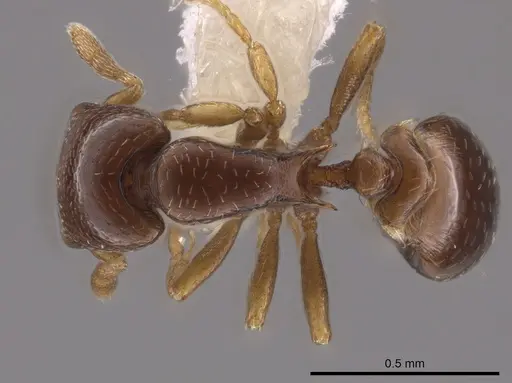
CASENT0900209
View on AntWeb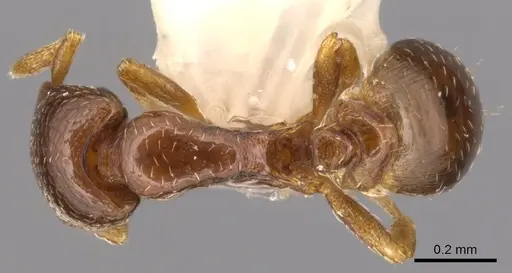
Literature
Loading distribution map...Loading products...