
Strumigenys nimbrata
- Sci. Name
- Strumigenys nimbrata
- Tribe
- Attini
- Subfamily
- Myrmicinae
- Author
- Bolton, 1983
- Distribution
- Found in 3 countries
Introduction
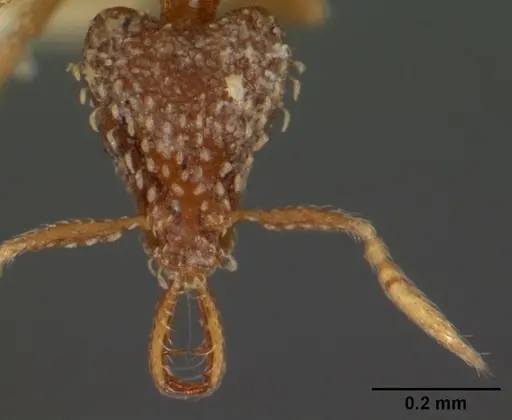
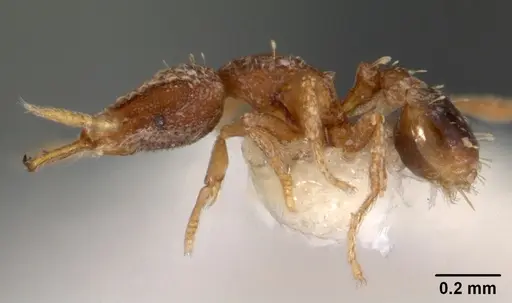
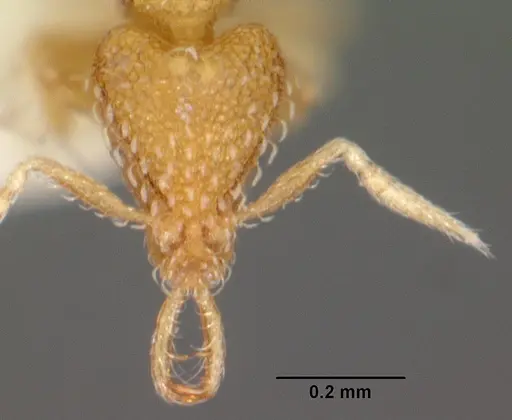
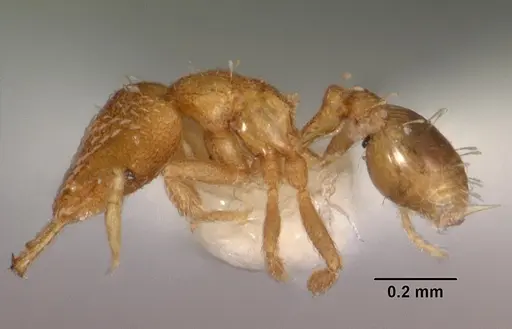
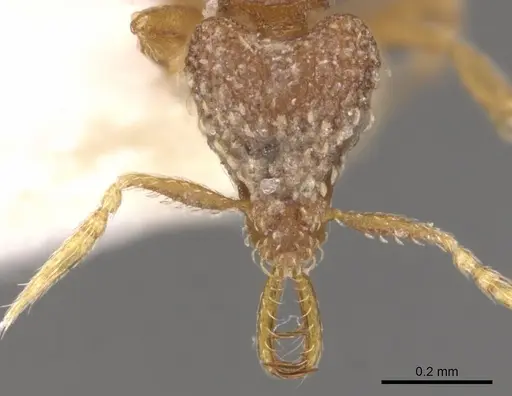
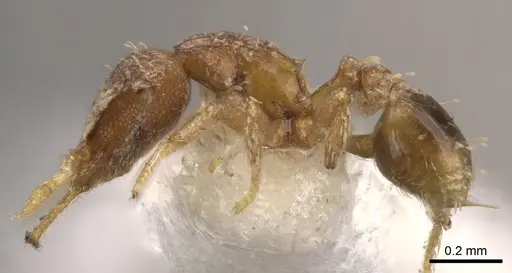
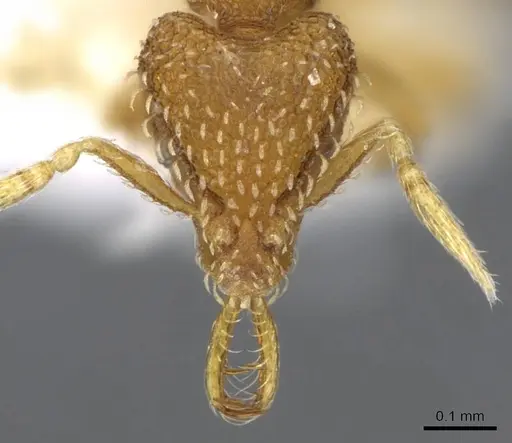
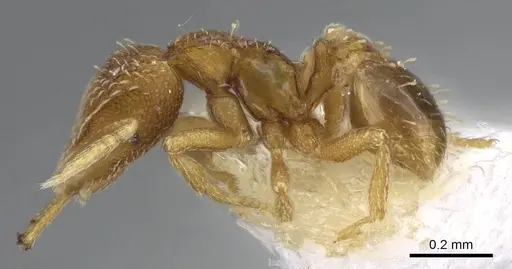
Strumigenys nimbrata is a tiny ant from West Africa, measuring just 1.5-1.8 mm in total length . They belong to the dacetine group, known for specialized trap-jaw mandibles that snap shut to catch small prey. Workers are yellow to brownish-yellow, have very reduced antenna segments (looking like only 3 instead of the usual 5), and tiny eyes with just 4-6 lenses . This species was described by Bolton in 1983 and has only been found in Ivory Coast, Ghana, and Gabon . These ants live in the leaf litter layer of rainforests, where they hunt tiny arthropods like springtails. Their specialized hunting style and need for constant humidity make them a challenge to keep in captivity. Little is known about their wild biology because they are so rarely collected.
Quick Summary
- Difficulty: Hard
- Origin & Habitat: West Africa: Ghana, Ivory Coast, and Gabon. Collected from littoral rainforest and primary forest leaf litter samples [1][2].
- Colony Type: Unconfirmed. Based on genus patterns, likely single-queen, but no data is available for this species.
- Size & Growth:
- Queen: Size data unavailable [1]
- Worker: 1.5-1.8 mm total length [1]
- Colony: Unknown, likely under 100 workers based on Strumigenys genus patterns
- Growth: Slow
- Development: Unknown, estimated 8-12 weeks at 24-26°C based on related Strumigenys species (Development time is unconfirmed for this species. The estimate comes from other Strumigenys.)
- Antkeeping:
- Temperature: 24-26°C, these tropical rainforest ants need stable warmth. Avoid letting it drop below 20°C or go above 30°C. Use a gentle heat gradient if your room is cooler.
- Humidity: High humidity is critical. Keep the nest substrate consistently damp, but not waterlogged. A test tube with a water reservoir works well.
- Diapause: No, as a tropical species, they do not require winter diapause. Keep conditions stable year-round.
- Nesting: Test tubes are ideal for their tiny size. Use fine mesh (0.5 mm) on ventilation to prevent escape. Avoid large open spaces, they prefer tight, humid chambers.
- Behavior: Shy and non-aggressive. Workers are slow-moving and hunt individually using their trap-jaw mandibles. They do not form trails or defend food sources. Escape prevention is critical due to their tiny size, they can slip through standard barriers. They are not dangerous to humans.
- Common Issues: escape prevention: their extreme small size means you need fine mesh and airtight seals on all openings., specialized live prey: they only accept live springtails or similarly tiny arthropods, no dead food or sugar., slow colony growth: expect months to establish, patience is required., high humidity needs: can cause mold if ventilation is poor, balance moisture and airflow., limited information: very few records exist, so captive care relies on inference from related species.
Housing and Setup
Because they are under 2 mm, Strumigenys nimbrata needs housing that prevents escape. A test tube with a water reservoir is the simplest and best setup, the small diameter matches their size and holds humidity well. Pack the cotton firmly so water doesn't flood the nest. The outworld should be small, large open spaces make it hard for them to find prey. Cover all ventilation holes with fine mesh (holes no bigger than 0.5 mm), and seal every connection. Standard fluon barriers won't stop ants this tiny. You can also use a thin layer of moist substrate, but watch for mold. [1]
Feeding and Diet
These ants are obligate predators, they need live prey. In the wild they eat springtails and other tiny soil dwellers. In captivity, live springtails (Collembola) are the best choice. You can also try booklice, tiny mites, or fruit fly larvae, but success isn't guaranteed. Do not offer sugar water, honey, or dead insects, they will ignore them and starve. Give small prey items (smaller than the ant's head) every 2-3 days, and remove leftovers after 24 hours to prevent mold. An established springtail culture in the outworld provides a steady food supply. [1]
Temperature and Humidity
As a West African rainforest species, S. nimbrata needs warm, humid conditions. Keep the nest at 24-26°C. If your room is cooler, use a heat cable on one side of the nest to create a gentle gradient, but never place heat directly under the test tube, that can dry out or overheat the colony. Humidity is the top priority: these ants live in constantly moist leaf litter. The test tube water reservoir should be large enough to keep humidity high for weeks. The substrate should feel damp but not wet. Poor humidity is deadly. [1]
Colony Development
Colony growth is expected to be slow, typical of Strumigenys. The queen is small (exact size unconfirmed). Founding behavior is unknown, the queen may seal herself in, but this is not confirmed. She will lay a few eggs and raise the first workers from her stored reserves. First workers may take 8-12 weeks to appear, based on related species. After that, growth remains gradual, mature colonies probably stay under 100 workers. Don't expect rapid expansion, patience is key. Colonies may take over a year to reach even 20 workers. [1]
Behavior and Temperament
Strumigenys nimbrata is shy and non-aggressive. Workers move slowly and spend most of their time hunting in the leaf litter. They use their trap-jaw mandibles to catch prey, when triggered, the mandibles snap shut very fast. They don't defend food sources or raid other colonies. If threatened, they usually flee. Workers forage alone, using their antennae to sense prey vibrations and chemicals. They do not form visible trails. Their small size and secretive ways make them interesting but not a display species, you may see very little activity. [1]
Defense Mechanism
Like most Myrmicinae ants, Strumigenys nimbrata has a functional stinger. It uses it to inject venom, but the sting is not medically significant to humans, much weaker than fire ants. They rely more on fleeing and their tiny size to avoid threats. Their trap-jaw mandibles are mainly for catching prey, not defense. No species-specific studies exist on their venom or sting behavior.
Frequently Asked Questions
Can I keep Strumigenys nimbrata in a test tube?
Yes, test tubes are ideal. Their small size and need for humidity make test tubes perfect. Use a standard test tube with a water reservoir. Make sure the cotton is packed tight to prevent flooding. Cover any ventilation holes with fine mesh (0.5 mm). Test tubes work for founding and early colony growth. [1]
What do Strumigenys nimbrata eat?
Only live prey. They will not accept dead insects, sugar water, or honey. The best food is live springtails (Collembola). Other tiny live arthropods like booklice or fruit fly larvae might work, but springtails are most reliable. Prey must be smaller than the ant's head. [1]
How long does it take for Strumigenys nimbrata to produce first workers?
The exact time is unconfirmed for this species. Based on related Strumigenys, expect 8-12 weeks from egg to first worker at 24-26°C. The queen raises the first brood alone. First workers (nanitics) will be very small. Growth is slow. [1]
Are Strumigenys nimbrata ants good for beginners?
No. They are extremely small (under 2 mm), need live prey, high humidity, and are slow-growing. Escape prevention is critical. This species is best for experienced keepers who can provide specialized conditions. [1]
How big do Strumigenys nimbrata colonies get?
Colony size is unknown for this species. Based on other Strumigenys, mature colonies probably stay under 100 workers. They are not a large-colony species. [1]
Do Strumigenys nimbrata need hibernation?
No. As a West African tropical species, they don't experience cold winters. They don't need diapause. Just keep normal conditions year-round. You might see reduced activity during dry seasons, but no special treatment needed. [1]
Why are my Strumigenys nimbrata dying?
Common causes: low humidity (they need consistently damp conditions), wrong food (must be live prey, not dead insects or sugar), escape (they slip through standard barriers), temperature issues (too hot or too cold), or mold from poor ventilation. Check all these. Wild-caught colonies might also have parasites. [1]
Can I keep multiple Strumigenys nimbrata queens together?
The colony structure is unconfirmed for this species. Based on typical Strumigenys, they are likely single-queen (monogyne), but this isn't confirmed. Do not attempt to combine unrelated queens, keep them separate unless you see evidence of polygyny. [1]
When should I move Strumigenys nimbrata to a formicarium?
You likely never need to. Test tubes work well for their entire life because they prefer small, humid spaces. If you do move them, use a small naturalistic setup with moist substrate, but watch for escape and mold. Many keepers keep Strumigenys in test tubes indefinitely. [1]
What temperature is best for Strumigenys nimbrata?
24-26°C. This is warm, but appropriate for a tropical rainforest species. Use a heat cable on one side to create a gradient if needed. Never let it go below 20°C or above 30°C. Stable warmth matters more than exact precision. [1]
Where is Strumigenys nimbrata found in the wild?
This species is only known from West Africa: Ghana, Ivory Coast, and Gabon. They live in littoral rainforest and primary forest leaf litter, in the humid layer of decaying vegetation on the forest floor. [1][2]
Report an Issue
The current care sheet is based fully on literature. See inconsistencies, or something that's incorrect? Please , it will be resolved after review from an admin. Contributing to the blogs tab also helps providing information, to make us be able to further improve the caresheets. Thank you for your support!
References

This caresheet is licensed under CC BY-SA 4.0 .
Community Blogs
CASENT0102150
View on AntWeb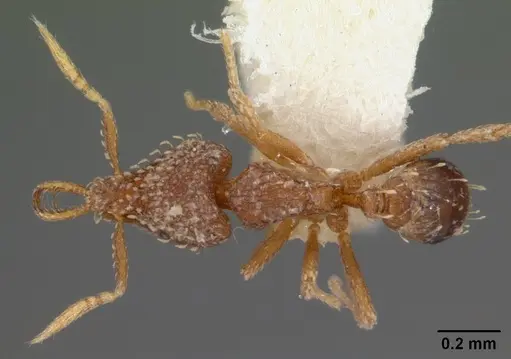
CASENT0102569
View on AntWeb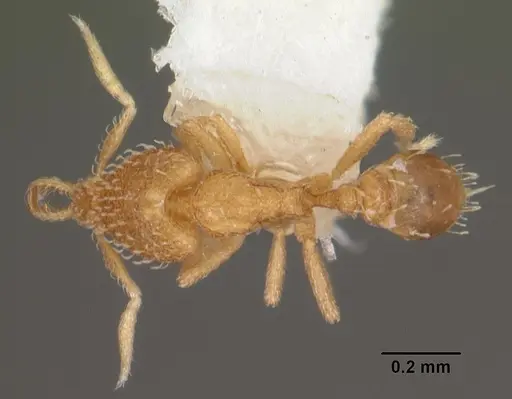
CASENT0840688
View on AntWeb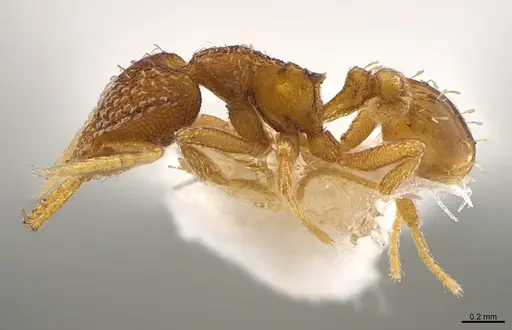
CASENT0900636
View on AntWeb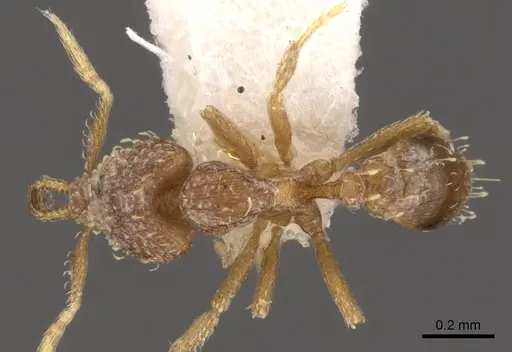
CASENT0914770
View on AntWeb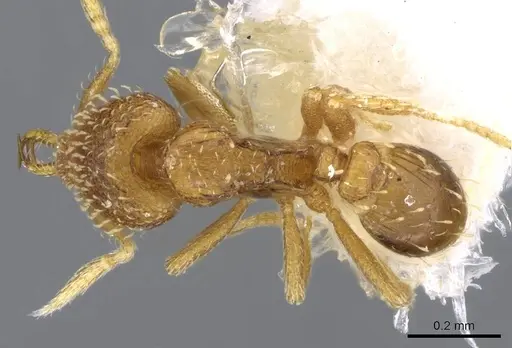
Literature
Loading distribution map...Loading products...