
Strumigenys nanzanensis
- Sci. Name
- Strumigenys nanzanensis
- Tribe
- Attini
- Subfamily
- Myrmicinae
- Author
- Lin & Wu, 1996
- Distribution
- Found in 5 countries
Introduction
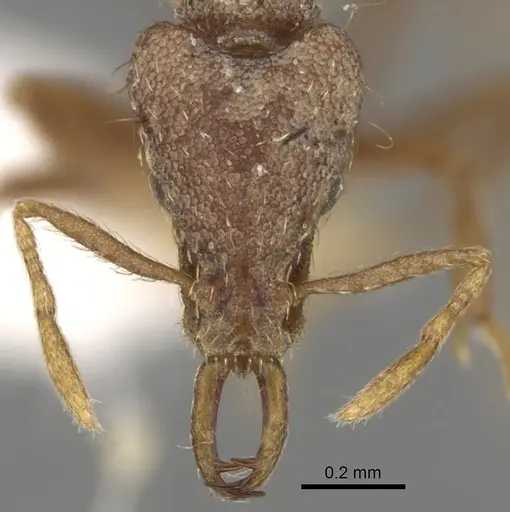
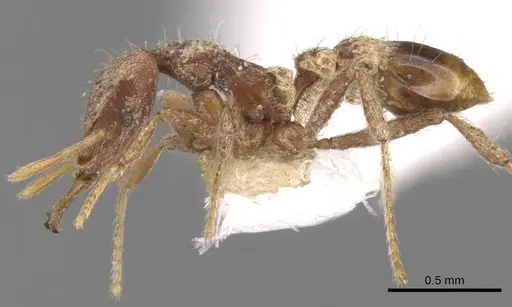
Strumigenys nanzanensis is a tiny predatory ant from the tribe Attini (formerly Dacetini). Workers are 2.2-2.6 mm in total length, with elongated mandibles and striking spongiform tissues on the propodeum and petiole . These ants belong to the godeffroyi-group, and their most distinctive feature is a pair of long, fine hairs near the occipital margin that are abruptly angled or looped forward . The propodeal teeth are weak and often completely buried in a broad spongiform lamella, and the petiole node has an anterior areolate process that varies geographically . Native to the Oriental and Sino-Japanese regions, they are found from Bhutan and India across southern China, Taiwan, and Southeast Asia, living in rainforest litter, secondary forests, and rubber plantations at elevations of 20-240 m . What is most remarkable about S. nanzanensis is its specialized hunting style. Like other Strumigenys, it is an obligate predator of small soil arthropods - mainly springtails - and uses its trap-like mandibles to ambush prey in the leaf litter. The spongiform tissues on the body contain exocrine glands, likely used for chemical signaling . In Hong Kong, winged queens fly from April to mid-May . Despite being a common species in museum collections, very little is known about its colony life in the wild, making it a challenging but fascinating ant for dedicated keepers.
Quick Summary
- Difficulty: Expert
- Origin & Habitat: Oriental and Sino-Japanese regions: Bhutan, mainland China (Hong Kong, Jiangxi, Yunnan), India (Sikkim, West Bengal), Indonesia (Borneo, Lesser Sunda Islands), Malaysia, Singapore, Taiwan, Thailand [4][5][8][9]. Inhabits rainforest leaf litter, secondary forests, and rubber plantations at 20-240 m elevation [4][5][6].
- Colony Type: Colony structure is not documented. Based on related Strumigenys species, they are likely monogyne (single queen), but this is unconfirmed.
- Size & Growth:
- Queen: Not documented in available literature, expect slightly larger than workers, roughly 2.5-3 mm based on related Strumigenys species.
- Worker: 2.2-2.6 mm total length [1][2].
- Colony: No data available. Most Strumigenys species have small colonies, likely under 100 workers, but this is purely speculative.
- Growth: Slow (inferred from small body size and limited literature).
- Development: Unknown, not studied in this species. (No reliable data exists. Keepers must observe and adapt.)
- Antkeeping:
- Temperature: 24-28°C, tropical species, needs stable warmth. Room temperature may be too cool, use a small heating cable on one side of the nest.
- Humidity: High humidity (70-80%). Substrate should be consistently moist but not waterlogged. The natural habitat (rainforest litter) indicates a humid environment is critical. Monitor for condensation and avoid drying out [5][6].
- Diapause: No, tropical distribution suggests no hibernation required. Keep warm year-round.
- Nesting: Use a Y-tong (AAC) or plaster nest with very small chambers (2-3 mm passages). Alternatively, a naturalistic setup with moist soil/sand mixture works well. Test tubes are ideal for founding. Avoid large open spaces, they prefer tight, enclosed chambers.
- Behavior: Strumigenys nanzanensis is a specialized predator, does not accept general ant foods. It possesses a functional stinger (subfamily Myrmicinae) but is not aggressive toward keepers, the sting is unlikely to be medically significant. Their tiny size (under 3 mm) makes escape a major risk, use fine mesh (
- Common Issues: specialized diet: they require live springtails or similar tiny prey, without a constant supply the colony starves, escape: 2-3 mm ants can slip through most standard ant setups, use fine mesh (0.5 mm or smaller) and tight lids, mold: high humidity plus leftover prey leads to rapid fungal growth, remove uneaten food and ensure ventilation, slow growth: extremely slow colony development tests patience, overfeeding to speed growth causes mold, wild-caught parasites: no data, but risk exists, quarantine new colonies
Housing and Nest Setup
Due to their tiny size, Strumigenys nanzanensis requires small, tight nesting spaces. A Y-tong (AAC) nest with chambers no larger than 2-3 mm in width works well, as does a plaster nest with narrow tunnels. Alternatively, you can use a naturalistic setup with a moist soil/sand mixture that mimics forest leaf litter, they feel secure in enclosed, earth-like environments. For founding, a small test tube with a water reservoir and cotton plug provides the humidity and darkness they need. When the colony grows (perhaps 20-30 workers), transition to a small formicarium. Escape prevention is absolutely critical: use fine mesh (0.5 mm or smaller) on ventilation holes and ensure the lid seals tightly. These ants can squeeze through seams that hold larger species. Avoid acrylic nests, as they are difficult to keep humid and may stress the ants.
Feeding and Diet
Feeding is the biggest challenge with S. nanzanensis. They are obligate predators of tiny, soft-bodied arthropods, primarily springtails (Collembola). You must establish a continuous culture of springtails to keep the colony alive. In addition to springtails, they may accept booklice (psocids) or very small isopods, but these should be offered only if they are smaller than the ants themselves. They will NOT eat standard ant foods such as mealworms, crickets, honey water, or sugar solutions, their elongated mandibles are specialized for catching small prey. Offer live prey every 2-3 days, and remove any leftovers after 24 hours to prevent mold. Some keepers report success with tiny pieces of freeze-dried insects, but live springtails remain the only reliable staple [3]. Research has shown that the spongiform tissues contain exocrine glands, which might be involved in prey handling or chemical communication [7].
Temperature and Humidity
This species comes from tropical and subtropical regions, so it needs warm, stable conditions. Keep the nest at 24-28°C, a small heating cable on one side of the nest can create a gentle gradient. Room temperature in many homes (20-22°C) is too cool and will slow metabolism and development. Humidity should be high, around 70-80%. The natural habitat (rainforest litter and rubber plantations) is constantly moist but not waterlogged [5][6]. Keep the substrate damp, and use a water tube connected to the nest to maintain moisture. Avoid placing the setup near drafts from air conditioners or heaters. Monitor condensation: if test tubes or walls are dry, increase humidity by misting the outworld or adding a larger water reservoir.
Colony Development and Growth
Virtually nothing is known about colony development in S. nanzanensis. Based on related Strumigenys species, growth is expected to be very slow, the queen lays small numbers of eggs, and larvae develop gradually. Do not expect rapid expansion, a mature colony likely contains fewer than 100 workers, although even that is a guess. The first workers (nanitics) will be tiny. Avoid overfeeding in an attempt to speed growth, excess food causes mold, which can kill a small colony. Be patient and let the colony set its own pace. If you observe the queen feeding on prey, she is likely not fully claustral, some Strumigenys species are semi-claustral, but for this species the founding method is unconfirmed. Watch for signs of stress or mold and adjust conditions accordingly.
Behavior and Handling
S. nanzanensis is a non-aggressive ant. It belongs to the subfamily Myrmicinae and tribe Attini, meaning it possesses a functional stinger. However, it is not defensive toward humans and the sting is unlikely to be medically significant. Workers are slow, deliberate hunters that ambush springtails in the leaf litter rather than chasing prey. They are not climbers and rarely venture into open areas. Their most notable behavior is the areolate process (spongiform tissue) on the petiole and propodeum, which has been shown to contain exocrine glands and may produce pheromones [7]. They also have a mesopleural excavation with bristle hairs (the 'hairwheel') that collects dirt particles, not a glandular structure [10]. These ants are fascinating to observe under magnification, but their specialized needs make them unsuitable for beginners. Handle only when necessary (e.g., cleaning), and use a gentle aspirator or fine brush.
Common Problems and Solutions
The most common problem is starvation due to a lack of suitable prey, you must maintain a steady culture of springtails. The second most common issue is escape, their tiny size allows them to get through ventilation meshes larger than 0.5 mm. Use metal or nylon mesh with openings smaller than 0.5 mm, and seal all gaps with silicone or tape. Mold is a third issue: remove uneaten prey within 24 hours and ensure some ventilation while maintaining humidity. Overheating (above 30°C) can kill them, and temperatures below 22°C may cause the queen to stop laying. If the colony is failing, first check temperature (24-28°C), then humidity (damp substrate), then food (plenty of live springtails). Wild-caught colonies may carry internal parasites, quarantine new acquisitions if possible. Finally, resist the urge to disturb the nest frequently, stress can cause the queen to eat her eggs.
Frequently Asked Questions
Can I keep Strumigenys nanzanensis in a test tube?
Yes, test tubes work well for founding colonies. Use a small tube (e.g.,16 × 150 mm) with a water reservoir and cotton plug to maintain humidity. Keep it at 24-28°C in a dark, quiet place. Once the colony reaches 20-30 workers, you can move them to a small Y-tong or plaster nest with appropriately sized chambers. However, there is no published data on optimal housing for this species, so observe their behavior and adjust.
What do Strumigenys nanzanensis eat?
They eat live, tiny prey, primarily springtails (Collembola), which are their natural prey in the wild. You must culture your own springtail colony to provide a constant food source. They may also accept booklice (psocids) or very small isopods. They will NOT eat standard ant foods like mealworms, crickets, honey, or sugar water. Their elongated mandibles are specialized for catching soft-bodied prey [3].
How long does it take for the first workers to emerge?
The development timeline is unknown for this species, no studies have been published on egg-to-worker development. Based on related tropical Strumigenys, it may take 6-10 weeks at warm temperatures, but this is a guess. Keep conditions stable and observe.
Are Strumigenys nanzanensis good for beginners?
No, they are not recommended for beginners. Their specialized diet (requiring live springtails), high humidity needs, tiny escape risk, and unknown colony dynamics make them very challenging. Only experienced keepers who can provide live prey year-round should attempt to keep this species.
How big do Strumigenys nanzanensis colonies get?
Colony size has never been documented in the wild or captivity. Based on other Strumigenys species, colonies are likely small, probably under 100 workers, but this is speculative. There are no reports of large colonies.
Do Strumigenys nanzanensis need hibernation?
No, they do not need hibernation. They are a tropical/subtropical species from regions like Hong Kong, Taiwan, and southern China, where temperatures remain warm year-round. Keep them at 24-28°C throughout the year. Cold diapause would likely kill the colony.
Why are my Strumigenys nanzanensis dying?
Common causes include: lack of appropriate live prey (must have springtails or similar tiny arthropods), low humidity (substrate too dry), temperatures below 22°C or above 30°C, escape (they slip through small gaps), and mold from overfeeding or poor ventilation. Wild-caught colonies may also carry internal parasites. Check each factor systematically.
When should I move my colony to a formicarium?
Move to a small Y-tong or plaster nest when the colony reaches about 20-30 workers, and the test tube becomes too crowded. The new nest should have very small chambers (2-3 mm) and maintain the same temperature and humidity. Use a gradual transition by connecting the test tube to the new nest and letting them move on their own.
Can I keep multiple queens together?
This has never been documented for this species. Related Strumigenys are typically monogyne, but no studies confirm this. Combining unrelated queens is risky and may lead to fighting. Stick to single-queen colonies unless you are doing controlled experiments.
What temperature should I keep Strumigenys nanzanensis at?
Keep them at 24-28°C. Room temperature is usually too cool. Use a small heating cable on one side of the nest to create a gentle gradient, or keep the whole setup in a warm cabinet. Avoid temperatures below 22°C or above 30°C.
Is Strumigenys nanzanensis invasive anywhere?
No, they are not considered invasive. Their native range is the Oriental and Sino-Japanese regions. There are no records of established introduced populations outside this area. However, given their tiny size, they could potentially be transported in soil or plant material, so never release them into non-native environments.
Report an Issue
The current care sheet is based fully on literature. See inconsistencies, or something that's incorrect? Please , it will be resolved after review from an admin. Contributing to the blogs tab also helps providing information, to make us be able to further improve the caresheets. Thank you for your support!
References

This caresheet is licensed under CC BY-SA 4.0 .
Community Blogs
CASENT0280740
View on AntWeb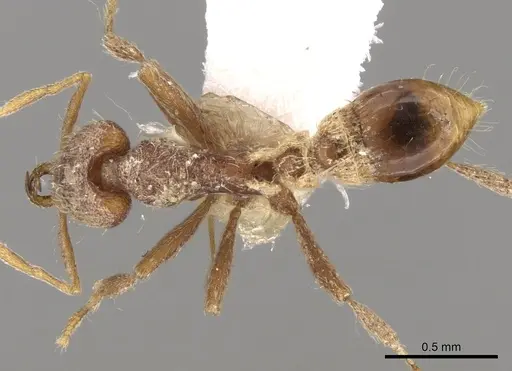
Literature
Loading distribution map...Loading products...