
Strumigenys mumfordi
- Sci. Name
- Strumigenys mumfordi
- Tribe
- Attini
- Subfamily
- Myrmicinae
- Author
- Wheeler, 1932
- Distribution
- Found in 1 countries
Introduction
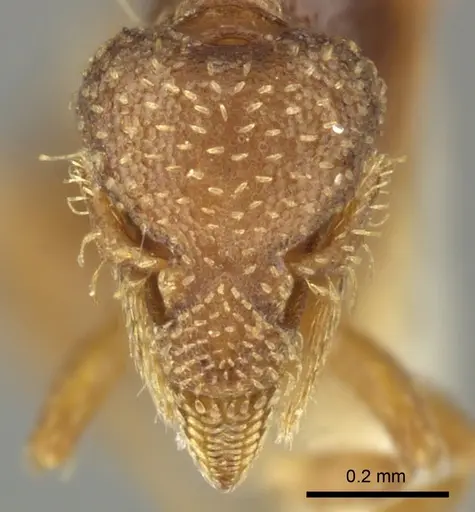
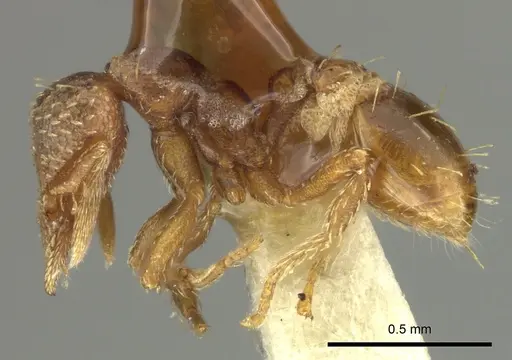
Strumigenys mumfordi is an extremely tiny ant, measuring only about 1mm in length, native to the Marquesas Islands in French Polynesia . This species belongs to the Strumigenys capitata group and is recognized by its distinctive apicoscrobal hairs that are weakly clavate at the tip, contrasting with the long flagellate pronotal humeral hairs . The anterior pair of standing hairs on the head is absent, though the occipital row of four standing hairs remains distinct. The species is considered endemic to French Polynesia, known only from specimens collected on Ua Pou and Nuku Hiva at elevations between 750-1250m . Unfortunately, absolutely no biological data exists for this species - what we know comes from just a handful of museum specimens studied decades ago.
Quick Summary
- Difficulty: Expert
- Origin & Habitat: Endemic to the Marquesas Islands in French Polynesia, specifically found on Ua Pou and Nuku Hiva at higher elevations (750-1250m) [1]. The type specimens were collected from Hakahetau Valley on Ua Pou, suggesting they prefer humid, shaded microhabitats typical of tropical island highlands [2].
- Colony Type: Colony structure is completely unconfirmed. Only two museum specimens have ever been studied, and no live colonies have been documented [1]. Based on related Strumigenys species, the genus typically forms small colonies with single queens, but this cannot be confirmed for S. mumfordi specifically [2].
- Size & Growth:
- Queen: Unknown, no queens have been described [1]
- Worker: Approximately 1mm [2]
- Colony: Unknown, no colony observations exist [1]
- Growth: Unknown, based on related Strumigenys, likely slow [2]
- Development: Unconfirmed, no breeding data exists (Related Strumigenys species typically develop from egg to worker in 4-8 weeks at tropical temperatures, but this is an estimate for the genus, not specific to S. mumfordi [2])
- Antkeeping:
- Temperature: No specific data exists. Based on the Marquesas Islands location (tropical), aim for warm conditions around 24-28°C, similar to other Pacific Strumigenys species [2]. Provide a temperature gradient so ants can self-regulate.
- Humidity: No specific data exists. The higher elevation collection sites (750-1250m) suggest they tolerate slightly cooler, more humid conditions than lowland tropical ants [1]. Keep nest substrate consistently moist but not waterlogged, think damp forest floor microhabitat.
- Diapause: Unlikely, being from a tropical island, they probably do not require a diapause period [2]. However, some seasonal slow-down may occur during cooler months.
- Nesting: No nesting data exists for this species. Related Strumigenys typically nest in rotting wood, under stones, or in leaf litter [2]. In captivity, a small plaster or Y-tong setup with fine chambers works well for their tiny size. Keep nesting material consistently moist.
- Behavior: Strumigenys are specialized predatory ants with trap-jaw mandibles used to capture small prey like springtails and other micro-arthropods [2]. Workers are extremely small and slow-moving. They possess a functional stinger but it is not medically significant to humans. Escape prevention is critical, at 1mm, they can squeeze through the tiniest gaps. Use fine mesh barriers and ensure all connections are sealed.
- Common Issues: no biological data exists, all care recommendations are genus-level estimates [1], escape prevention is critical due to their tiny 1mm size, specialized diet means they need small live prey, they cannot tackle larger insects [2], no established captive breeding means this species is essentially unavailable to hobbyists, extreme rarity means finding colonies to keep would be nearly impossible
Species Status and Availability
Strumigenys mumfordi is one of the rarest ants in the world to keep, if it can be kept at all. This species has only ever been documented from two museum specimens collected in 1929,and no biological observations have ever been published [1]. The species was not collected during a comprehensive 2014 survey of French Polynesian ants, suggesting it may be extremely rare or locally extinct [1]. Even Bolton, who redescribed the species in 2000,noted that the two known specimens may actually represent two different species [2]. For all practical purposes, this ant is not available in the antkeeping hobby and no established care protocols exist. If you are interested in keeping Strumigenys, consider more common species like Strumigenys membranifera or Strumigenys argures.
Related Species Care (Best Guesses)
Since no data exists for Strumigenys mumfordi specifically, we can only extrapolate from what we know about the genus Strumigenys as a whole [2]. These are tiny, specialized predators that hunt springtails and other micro-arthropods using their trap-jaw mandibles [2]. They are not like typical ants that will accept various protein sources, they need small, live prey. In captivity, springtails are the ideal food, though they may also accept fruit flies and other tiny insects. Sugar sources are typically not accepted. Related species are slow-growing and form small colonies, typically under 100 workers [2]. They prefer humid conditions and will often abandon nests that dry out. If you were to keep this species, you would need to replicate these conditions precisely.
Legal and Ethical Considerations
Strumigenys mumfordi is endemic to French Polynesia and may be endangered or possibly extinct [1]. Even if specimens were discovered, collecting them would require permits from French Polynesian authorities, and exporting them would likely be prohibited under CITES and local wildlife protection laws. The species exists primarily as a scientific curiosity rather than a potential captive species. For antkeepers interested in rare Pacific species, it would be far more practical to work with established breeding programs for common Strumigenys species that are already in the hobby.
Frequently Asked Questions
Can I keep Strumigenys mumfordi as a pet ant?
No. This species is essentially unavailable to hobbyists. Only two museum specimens have ever been documented, collected in 1929,and no live colonies have ever been observed [1]. The species was not found during a 2014 survey of French Polynesian ants, suggesting it may be extremely rare or locally extinct.
What does Strumigenys mumfordi eat?
This is completely unconfirmed, no feeding observations exist for this species. However, all known Strumigenys are specialized predators that hunt small arthropods, primarily springtails, using their trap-jaw mandibles [2]. They do not forage for sugar or scavenge like typical ants.
How big do Strumigenys mumfordi colonies get?
Unknown. No colony observations exist for this species. Based on related Strumigenys species, colonies are typically small, usually under 100 workers [2].
Where does Strumigenys mumfordi live?
Only known from the Marquesas Islands in French Polynesia, specifically from two specimens collected on Ua Pou and Nuku Hiva at elevations between 750-1250m [1].
Is Strumigenys mumfordi a good beginner ant?
This species is not available for keeping at all, so the question is moot. Even if it were available, its extreme rarity and complete lack of biological data would make it an expert-only species, if it could be kept at all.
What temperature do Strumigenys mumfordi need?
No specific data exists. Based on the Marquesas Islands location (tropical Pacific), related species do well at 24-28°C [2]. Provide a gradient so ants can self-regulate.
Can I find Strumigenys mumfordi in the wild?
Extremely unlikely. The species was only known from two specimens collected in 1929 and was not found during a comprehensive 2014 ant survey of French Polynesia [1]. It may be locally extinct or extremely rare and localized.
Do Strumigenys mumfordi need hibernation?
Unlikely. Being from a tropical island in the Pacific, they probably do not require a diapause period [2]. However, some seasonal slow-down during cooler months may occur.
How long do Strumigenys mumfordi live?
Unknown, no lifecycle data exists for this species. Related Strumigenys species likely have lifespans measured in years for queens and months for workers, but this is a genus-level estimate, not specific to S. mumfordi [2].
Report an Issue
The current care sheet is based fully on literature. See inconsistencies, or something that's incorrect? Please , it will be resolved after review from an admin. Contributing to the blogs tab also helps providing information, to make us be able to further improve the caresheets. Thank you for your support!
References

This caresheet is licensed under CC BY-SA 4.0 .
Community Blogs
CASENT0249105
View on AntWeb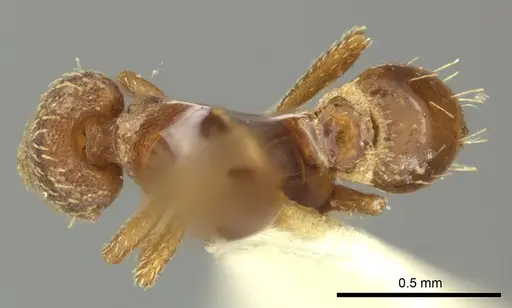
Literature
Loading distribution map...Loading products...