
Strumigenys mandibularis
- Sci. Name
- Strumigenys mandibularis
- Tribe
- Attini
- Subfamily
- Myrmicinae
- Author
- Smith, 1860
- Distribution
- Found in 2 countries
Introduction
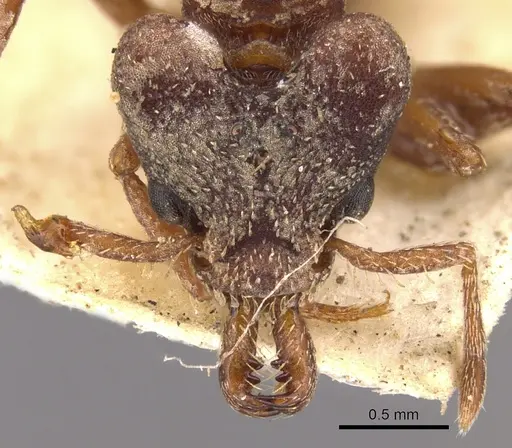
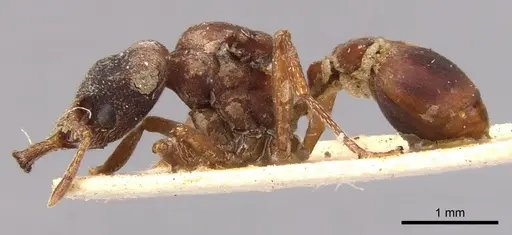
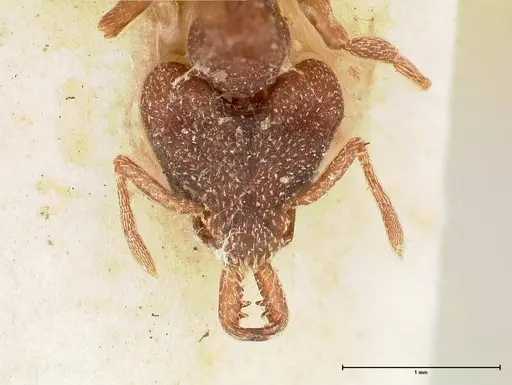
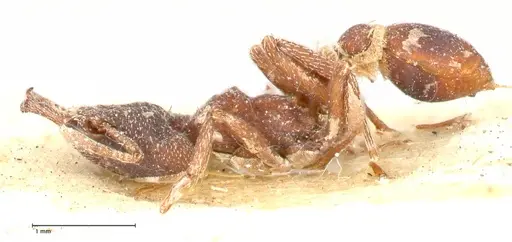
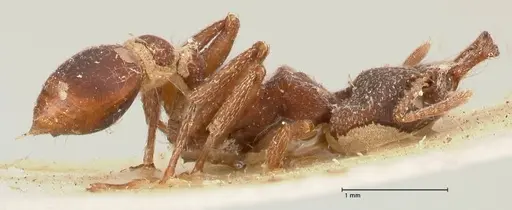
Strumigenys mandibularis is one of the largest species in the genus Strumigenys, known for its remarkably broad head and powerful mandibles. The species has a distinctive appearance with a flat pronotum, raised mesonotum with triangular prominences, and densely sculptured body surfaces including fine longitudinal striations on the gaster . This rare ant has been collected only a few times , from Brazil (São Paulo, Amazonas, Pará) and reportedly from Nepal in the Indomalaya region . It is the type species of the genus Strumigenys . The genus Strumigenys belongs to the tribe Attini, but unlike fungus-growing ants, these predators specialize in hunting springtails and other tiny soil arthropods using their trap-jaw mandibles.
Quick Summary
- Difficulty: Expert
- Origin & Habitat: Known from tropical Brazil (Amazon Basin, Atlantic Forest regions) and possibly Nepal. Found in forest environments, typically in leaf litter and rotting wood habitats [7][3][1].
- Colony Type: Colony structure is unconfirmed. Based on typical Strumigenys behavior, likely single-queen colonies with small worker populations.
- Size & Growth:
- Queen: Size data unavailable
- Worker: Size data unavailable
- Colony: Likely under 200 workers (inferred from genus patterns)
- Growth: Unknown, likely slow like other Strumigenys species
- Development: Estimated 6-10 weeks based on related Strumigenys species (inferred from genus-level data) (Development time is unconfirmed for this species. Strumigenys generally have slow development compared to many Myrmicinae.)
- Antkeeping:
- Temperature: Based on Brazilian tropical habitat, aim for 22-26°C. Provide a temperature gradient allowing the colony to choose optimal conditions.
- Humidity: High humidity required, forest floor dwellers need consistently moist substrate. Keep nest substrate damp but not waterlogged.
- Diapause: Unknown, Brazilian species may have reduced activity in cooler months but likely does not require true hibernation. Consider a slight cooling period (15-18°C) for 2-3 months in winter if colony shows reduced activity.
- Nesting: Provide a naturalistic setup with moist substrate (soil/plaster mix), leaf litter, and small chambers. Y-tong nests with tight chambers also work well for their small size. They prefer dark, humid enclosed spaces.
- Behavior: Strumigenys are specialized predators using trap-jaw mandibles to capture springtails and other tiny arthropods. They are shy and not aggressive, colonies will flee rather than attack. Escape prevention is critical due to their tiny size, use fine mesh and tight-fitting barriers. Activity level is low, they are slow-moving and spend most time in nest chambers.
- Common Issues: very rare in the hobby, finding a colony is extremely difficult, slow growth and small colony sizes mean colonies take years to establish, specialized diet requirements, need constant supply of springtails or micro-arthropods, escape prevention is essential due to tiny worker size, very little species-specific biological data available, much care is inferred from genus
Housing and Nest Setup
Strumigenys mandibularis requires a humid, naturalistic setup that mimics forest floor conditions. A naturalistic terrarium with moist soil substrate, leaf litter, and small hiding spots works well. The substrate should remain damp but never waterlogged, aim for moisture levels where the soil feels like a wrung-out sponge. Add small pieces of rotting wood or cork bark to provide natural shelter. Because they are tiny, even small gaps can be escape routes, use a well-sealed enclosure with fine mesh on any ventilation holes. Y-tong (AAC) nests with very small chambers can also work, but ensure the chambers are appropriately scaled to their small size. Provide a small water reservoir connected to the nest area to maintain humidity through evaporation [1].
Feeding and Diet
Strumigenys mandibularis is a specialized predator that hunts springtails and other tiny soil arthropods. In captivity, their primary food should be live springtails, this is non-negotiable for keeping them healthy long-term. They will not accept sugar water or typical ant baits because their mandibles are specialized for hunting small, soft-bodied prey, not for carrying sweet liquids or large prey items. You can also offer other micro-arthropods like booklice (psocids), tiny mites, and fruit fly larvae as supplementary food. Feed small amounts every few days, removing any uneaten prey within 24 hours to prevent mold. A well-established culture of springtails in the outworld can provide a continuous food source. Never feed them large insects or protein jelly, their tiny size and specialized mouthparts cannot handle these [1].
Temperature and Seasonal Care
Keep the colony at 22-26°C, which matches their tropical Brazilian habitat. A slight temperature gradient from warm (26°C) to cooler (22°C) allows the ants to self-regulate. Avoid temperatures above 30°C or below 18°C for extended periods. Since this species comes from regions near the equator, they may not require a true hibernation period. However, if you notice reduced activity during winter months (fewer workers emerging, less interest in food), you can provide a cooler period at 15-18°C for 2-3 months. This mimics seasonal variation without forcing full hibernation. Monitor the colony closely during any temperature adjustments, sudden changes can be harmful [1].
Behavior and Colony Dynamics
Strumigenys mandibularis colonies are small and secretive. Workers are slow-moving and spend most of their time inside the nest tending to brood. They are not aggressive and will not defend the colony aggressively, if threatened, they are more likely to retreat than to attack. Their trap-jaw mandibles are used for hunting springtails, not for defense. Colonies grow slowly, expect a newly established queen to produce only up to 30 workers in the first few months, with growth gradually accelerating as the colony reaches that size [1]. Maximum colony size is likely under 200 workers. The queen is relatively large for the genus and should be clearly visible during the founding stage. Workers are distinctive with their very broad heads and elongated mandibles [1].
Finding and Acquiring Colonies
Strumigenys mandibularis is extremely rare in the antkeeping hobby. This species has been collected only a few times in the wild, and colonies are virtually never available from commercial suppliers. If you wish to keep this species, your best option is to carefully search in suitable habitat (leaf litter in Brazilian forests) using Winkler extractors or by hand-sorting soil samples. This requires significant effort and likely travel to Brazil. Alternatively, more common Strumigenys species like S. louisianae or S. ornata are easier to find and provide good practice for keeping this genus. Do not purchase wild-caught colonies if you cannot provide appropriate care, these ants are sensitive and have specific requirements that must be met for survival [3][1].
Frequently Asked Questions
How long does it take for Strumigenys mandibularis to produce first workers?
The exact timeline is unconfirmed for this species, but based on related Strumigenys species, expect 6-10 weeks from egg to first worker at optimal temperature (24-26°C). Founding queens may take longer than established colonies to produce their first workers [1].
Can I keep Strumigenys mandibularis in a test tube setup?
A test tube can work for founding colonies, but you must maintain high humidity and provide access to live prey. A naturalistic setup with moist substrate is better long-term. If using test tubes, ensure the water reservoir is adequate and the cotton is kept damp [1].
What do Strumigenys mandibularis eat?
They are specialized predators that require live springtails as their primary food source. They will not accept sugar water, honey, or large prey items. Other tiny soft-bodied arthropods like booklice and fruit fly larvae can be offered as supplements [1].
Are Strumigenys mandibularis good for beginners?
No. This is an expert-level species due to their specialized diet requirements (live springtails), need for high humidity, escape-prone tiny size, and extremely rare availability. Start with easier species like Lasius niger or Camponotus before attempting Strumigenys [1].
How big do Strumigenys mandibularis colonies get?
Colony size is unconfirmed but likely reaches only dozens to around 200 workers based on typical Strumigenys colony sizes. They are not large colonies like some Myrmicinae [1].
Do Strumigenys mandibularis need hibernation?
Hibernation is not required for this Brazilian tropical species. However, if the colony shows reduced activity in winter, a slight cooling period (15-18°C) for 2-3 months may be beneficial. Do not force full hibernation [1].
Why are my Strumigenys mandibularis dying?
Common causes include: lack of live springtail prey (they will starve if only given other foods), too dry conditions (they require humid environments), escape through tiny gaps, and temperature stress (too hot or too cold). Review all care parameters and ensure the colony has constant access to appropriate live prey [1].
When should I move Strumigenys mandibularis to a formicarium?
Move only when the colony is established with around 30 workers and the test tube or founding setup is becoming crowded. Strumigenys prefer small, tight chambers, do not give them large open spaces. A naturalistic setup often works better than acrylic formicariums [1].
Can I keep multiple queens together in Strumigenys mandibularis?
This is not recommended. Strumigenys are typically single-queen species, and combining unrelated queens has not been documented. Multiple queens are likely to fight. Only keep one queen per colony [1].
What makes Strumigenys mandibularis special compared to other ants?
This is one of the largest Strumigenys species known, with remarkably broad heads and powerful elongated mandibles. It is also extremely rare, known from only a handful of records in Brazil and possibly Nepal. Its trap-jaw hunting mechanism and specialized springtail predation make it fascinating for ant enthusiasts [1].
Where can I find Strumigenys mandibularis in the wild?
This species has been recorded from São Paulo, Amazonas, and Pará in Brazil, and possibly Nepal. It is found in forest leaf litter and rotting wood. Finding them requires careful sorting of soil and leaf litter samples, typically using Winkler extractors. They are extremely rare even in their native habitat [3][4][1].
Report an Issue
The current care sheet is based fully on literature. See inconsistencies, or something that's incorrect? Please , it will be resolved after review from an admin. Contributing to the blogs tab also helps providing information, to make us be able to further improve the caresheets. Thank you for your support!
References

This caresheet is licensed under CC BY-SA 4.0 .
Community Blogs
CASENT0900424
View on AntWeb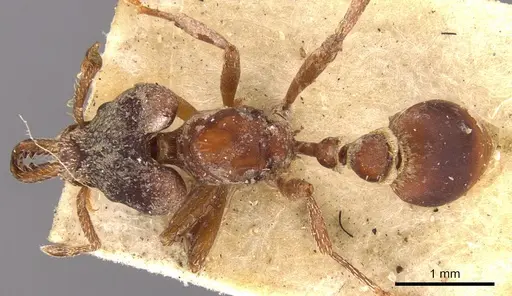
FOCOL0663
View on AntWeb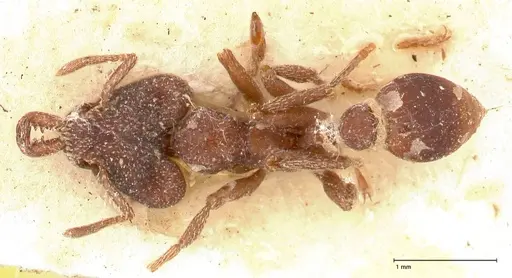
Literature
Loading distribution map...Loading products...