
Strumigenys lilloana
- Sci. Name
- Strumigenys lilloana
- Tribe
- Attini
- Subfamily
- Myrmicinae
- Author
- Brown, 1950
- Distribution
- Found in 1 countries
Introduction
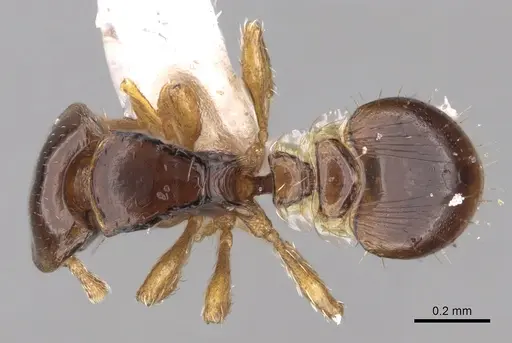
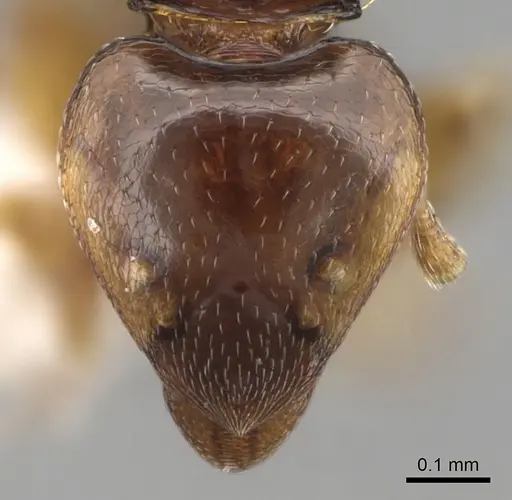
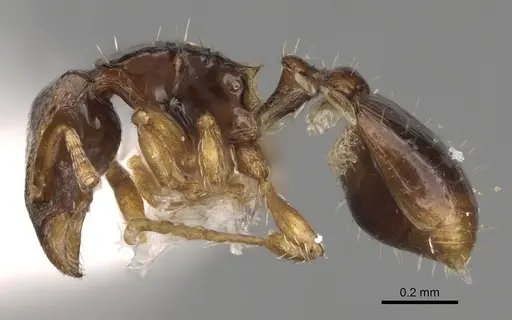
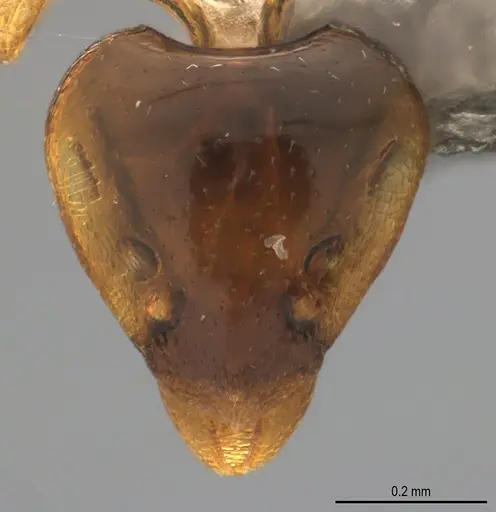
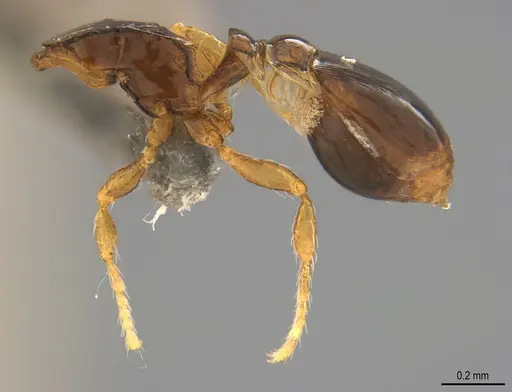
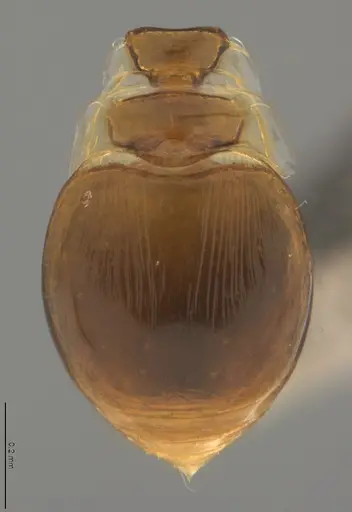
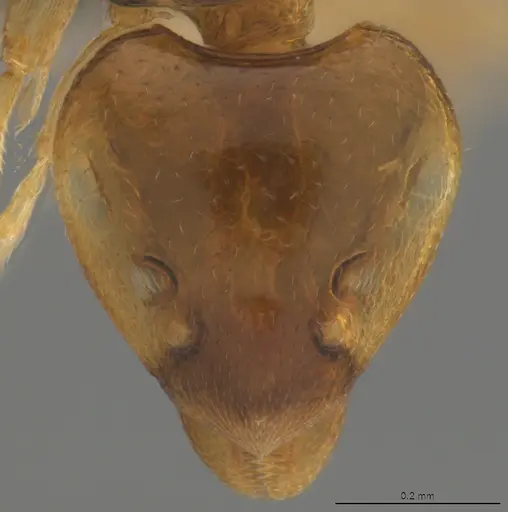
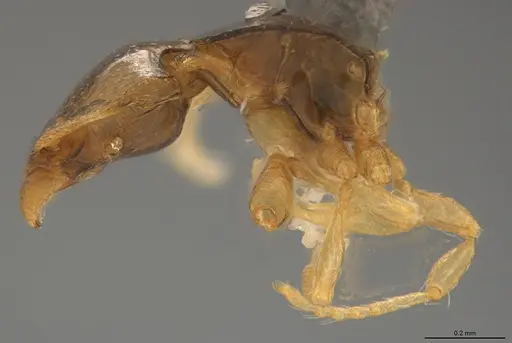
Strumigenys lilloana is a tiny predatory ant from the Neotropical region, found in Argentina and Brazil . Workers are 1.9-2.3 mm long, with a dark brown body, lighter yellowish petiole and postpetiole, and a broad, heart-shaped head . Their mandibles have a row of sharp teeth used to capture tiny prey. Almost nothing is known about the biology of this species, the literature states this gap explicitly . It belongs to the Strumigenys lilloana group, characterized by 6-segmented antennae and the preocular carina completely hidden by the expanded frontal lobe . They probably inhabit humid microhabitats on the forest floor, such as rotting wood and leaf litter.
Quick Summary
- Difficulty: Hard
- Origin & Habitat: Neotropical region: Argentina (Tucumán province) and Brazil (Bahia, Minas Gerais, Piauí, Mato Grosso do Sul) [2][3][4][1]. Found in seasonally dry tropical forests and other humid forest floor habitats [2].
- Colony Type: Unknown, no data on colony structure exists in the literature.
- Size & Growth:
- Queen: Unknown, size data unavailable.
- Worker: 1.9-2.3 mm [1]
- Colony: Not documented, likely small based on similar Strumigenys species (under 100 workers).
- Growth: Unknown
- Development: Unconfirmed, no specific data available. (No development data exists for this species. Development likely depends on stable warm and humid conditions.)
- Antkeeping:
- Temperature: Keep at a warm tropical range, roughly 24-28°C. Provide a temperature gradient so the ants can self-regulate. Avoid prolonged temperatures below 22°C.
- Humidity: High humidity is critical. Keep the nest substrate consistently moist but not waterlogged. The substrate should feel damp to the touch. Use a water reservoir or a water tube to maintain moisture through capillary action.
- Diapause: Likely no true diapause required, given their tropical distribution. Maintain warm conditions year-round, activity may slow during cooler periods.
- Nesting: Small Y-tong (AAC), plaster, or soil-based nest. Due to their tiny size, chambers should be tight and scaled down. Naturalistic terrarium setups with damp substrate work well. Avoid excessive ventilation.
- Behavior: Strumigenys lilloana has a functional sting (subfamily Myrmicinae, tribe Attini) which is not medically significant to humans. Their main weapon is the quick-snapping mandibles used to capture micro-prey. They are likely docile toward keepers but may nip if handled. Escape risk is very high due to their tiny size, use fine mesh on all openings. They are slow-moving and spend much time hunting in the substrate.
- Common Issues: escape through tiny gaps is likely without fine mesh barriers and tight lids, high moisture needs can cause mold if ventilation is poor, balance moisture and airflow, predatory diet requires a reliable supply of live micro-prey (e.g., springtails), which can be hard to sustain, extremely limited biological knowledge makes troubleshooting difficult if problems arise, slow colony growth may discourage keepers expecting rapid expansion
Housing and Nest Setup
A small Y-tong (AAC) nest or a naturalistic terrarium with moist substrate works best for Strumigenys lilloana. Because workers are under 2.5 mm, chambers should be tight and snug, wide enough for movement but not cavernous. The substrate must stay consistently damp (not waterlogged). A water tube or reservoir connected to the nest provides moisture through capillary action. Avoid too much ventilation, which dries out the setup. Use very fine mesh (e.g.,0.2 mm aperture) on any openings, these ants can escape through gaps that stop larger species. [1]
Feeding and Diet
Strumigenys lilloana is a specialized predator. In the wild, it likely feeds on tiny soil-dwelling arthropods such as springtails (Collembola) [1]. In captivity, live springtails should be the main food, they are the ideal prey that triggers the ants’ hunting behavior. You can culture springtails yourself to ensure a steady supply. Other acceptable prey includes tiny isopods, booklice (psocids), and other micro-arthropods. They are unlikely to accept sugar water, honey, or dead protein. Feed small live prey every 2-3 days, remove any leftovers to prevent mold.
Temperature and Humidity
This species comes from the tropical regions of Argentina and Brazil [1][2]. Keep the nest area at 24-28°C to mimic its natural climate. A heating cable on one side of the setup creates a gentle gradient. Humidity is critical: the substrate must stay moist but not sodden. Use a water tube or reservoir to maintain constant moisture. Condensation on the nest walls is a good sign. Avoid placing the setup near air conditioners or heaters that cause rapid fluctuations.
Understanding Their Predatory Grip and Sting
Strumigenys ants have strong mandibles that snap shut quickly to capture prey, often called a trap-jaw mechanism [1]. They also possess a functional sting (subfamily Myrmicinae, tribe Attini), though it is not medically significant to humans. When hunting, they detect vibrations and chemical cues, then rapidly close their mandibles to seize the victim. This is why live prey is essential: they won’t recognize dead food. The sting is used for subduing prey and defense. In captivity, you can observe them waiting in ambush near springtail-rich areas.
Colony Establishment
How Strumigenys lilloana queens found new colonies is completely unknown, the literature lacks any information [1]. Wild-caught colonies are the most reliable way to obtain this species. When acquiring a colony, look for active workers and a laying queen. Quarantine new colonies for a few weeks to check for parasites or health issues. Because the biology is so poorly studied, be prepared for challenges and unexpected outcomes.
Frequently Asked Questions
How long does it take for Strumigenys lilloana to develop from egg to worker?
This is unknown, no development data exists for this species.
What do Strumigenys lilloana ants eat?
They are obligate predators that require live micro-prey. The ideal food is live springtails. They may also accept other tiny arthropods like booklice. They will not eat sugar water, honey, or dead protein. Live prey is needed to trigger their hunting behavior.
Are Strumigenys lilloana good for beginners?
No. Their unknown founding behavior, high humidity needs, and specialized live-prey diet make them unsuitable for beginners. They are best left to experienced keepers who can manage these demands.
How big do Strumigenys lilloana colonies get?
No data exists on colony size. Based on related Strumigenys, colonies likely stay small (probably under 100 workers) but this is unconfirmed.
Can I keep multiple Strumigenys lilloana queens together?
This has not been studied. The safest approach is to assume colonies are single-queen and house them separately. Do not combine unrelated queens without documented evidence.
What temperature do Strumigenys lilloana need?
Aim for 24-28°C, consistent with their tropical distribution. Provide a gentle gradient so ants can choose their preferred spot.
Do Strumigenys lilloana need hibernation or diapause?
No, they are tropical and unlikely to require a diapause. Keep them warm year-round, they may slow down during cooler periods, but a rest period is not needed.
Why are my Strumigenys lilloana dying?
Likely causes: the nest dried out (critically low humidity), lack of live prey (they refuse dead food), temperature too cold (below 22°C), or escaped through tiny gaps. Also check for mold from overwatering. Review each parameter and adjust.
When should I move Strumigenys lilloana to a formicarium?
Because their needs are still poorly understood, it's best to start them in a small nest that retains moisture well. Move only when the colony has several workers and you need more space. Use a nest that maintains high humidity.
How do I breed Strumigenys lilloana?
Captive breeding has not been documented. The biology is too poorly known to provide a protocol. If you attempt to breed them, focus on optimal conditions: high humidity, warmth, and abundant live prey. Be patient and document everything.
Report an Issue
The current care sheet is based fully on literature. See inconsistencies, or something that's incorrect? Please , it will be resolved after review from an admin. Contributing to the blogs tab also helps providing information, to make us be able to further improve the caresheets. Thank you for your support!
References

This caresheet is licensed under CC BY-SA 4.0 .
Community Blogs
Literature
Loading distribution map...Loading products...