
Strumigenys lantaui
- Sci. Name
- Strumigenys lantaui
- Tribe
- Attini
- Subfamily
- Myrmicinae
- Author
- Tang <i>et al.</i>, 2019
- Distribution
- Found in 1 countries
Introduction
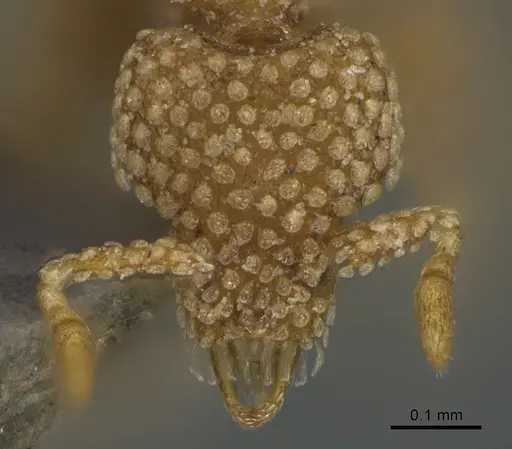
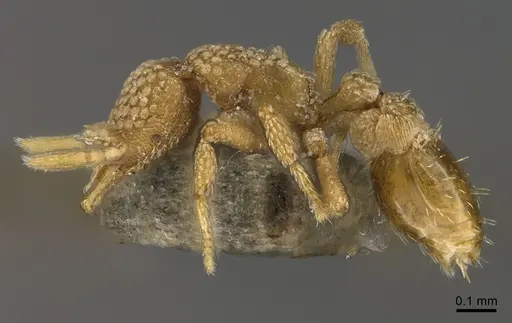
Strumigenys lantaui is a minute predatory ant measuring just 1.6-1.7mm in total length, making it one of the smallest ants in the Myrmicinae subfamily . Workers have distinctive 4-segmented antennae and are covered in large appressed spatulate hairs across the head, mesosoma, and legs . The species was described in 2019 from specimens collected in Hong Kong, specifically on Lantau Island at Penny's Bay, making it endemic to a single location . This ant is a challenge for even experienced keepers. As a newly described species with an extremely limited known range, there is no established captive husbandry information. The species was collected from leaf-litter at the inner edge of secondary forest, indicating it lives in cryptic microhabitats on the forest floor . Strumigenys are specialized predators that typically hunt tiny soil micro-arthropods like springtails and mites, requiring a specialized feeding approach in captivity. Because so little is known about this species, keeping it is entirely experimental.
Quick Summary
- Difficulty: Expert
- Origin & Habitat: Endemic to Lantau Island, Hong Kong, where it inhabits leaf-litter in secondary forest at low elevation (9m) [1].
- Colony Type: Colony structure is unconfirmed, this newly described species has no published colony data.
- Size & Growth:
- Queen: Unknown, queens have not been described in the scientific literature
- Worker: 1.6-1.7mm total length [1]
- Colony: Unknown, no colony size data available
- Growth: Unknown
- Development: Unknown, no development data exists for this species (Development timeline has not been studied. Based on related Strumigenys species, expect several months from egg to worker at optimal temperatures.)
- Antkeeping:
- Temperature: Temperature requirements are unconfirmed. Based on its Hong Kong habitat (subtropical), aim for roughly 22-26°C. Start in this range and observe colony activity.
- Humidity: Based on leaf-litter collection habitat, likely requires high humidity, think damp forest floor conditions. Keep substrate consistently moist but not waterlogged.
- Diapause: Unknown, no seasonal studies exist for this species. Hong Kong has mild winters, so a true diapause may not be required.
- Nesting: In nature they live in leaf-litter and soil. In captivity, a naturalistic setup with moist substrate (soil and leaf litter) or a small plaster nest with very tight, miniaturized chambers would likely work. Their tiny size means chambers must be very small-scale.
- Behavior: These ants are extremely small and cryptic. They possess a functional stinger (as Myrmicinae), but it is tiny and harmless to humans, they are not aggressive. Strumigenys species are specialist predators that hunt tiny micro-arthropods using their trap-jaw mandibles. Expect slow, deliberate movement and cryptic behavior. Escape prevention is critical: at 1.6mm they can squeeze through the tiniest gaps.
- Common Issues: escape prevention is critical, at 1.6mm they easily pass through standard barrier materials, no established captive diet protocols, may refuse standard ant foods and require live micro-prey, extremely limited range and recent description means husbandry is entirely speculative, wild-caught colonies may have parasites specific to this species, slow growth and small colony sizes make them vulnerable to stress
Discovery and Rarity
Strumigenys lantaui was described in 2019,making it one of the most recently discovered ant species available to keepers [1]. The entire known global range consists of a single location on Lantau Island in Hong Kong, Penny's Bay at just 9 meters elevation [1]. This extreme endemism means the species has never been found anywhere else despite dedicated surveys in surrounding regions [2]. The species was collected using leaf-litter extraction methods, confirming it lives deep within the forest floor litter layer where it hunts prey among decomposing material [1]. For antkeepers, this means both an exciting opportunity to keep something truly unique and a significant challenge, there is no established husbandry knowledge to draw from.
Identification and Appearance
Workers are tiny at only 1.6-1.7mm total length, with a distinctive 4-segmented antenna that sets this species apart from most other Strumigenys in the region [1][2]. The head and body are covered in large appressed spatulate hairs, these are flat, spoon-shaped hairs visible even under modest magnification [2]. The mandibles are narrow and elongate without a preapical tooth, unlike some related species. The mesonotum, in profile, does not form a differentiated surface between the pronotum and propodeum, helping distinguish it from similar species [1]. Orbicular hairs are present on the dorsal surface of the scapes, head, pronotum, and mesonotum [1]. This is a cryptic species that blends into leaf-litter habitat, you will need good magnification to observe the key identification features.
Feeding and Diet
Strumigenys ants are specialized predators that use their trap-jaw mandibles to capture tiny prey. In the wild, they likely hunt springtails, mites, and other micro-arthropods found in forest floor litter [1]. In captivity, you should attempt to replicate this diet with live micro-prey. Offer small live springtails as a primary food source, these are the closest match to their natural prey. Other tiny live prey like booklice (psocids), minute soil mites, and fruit fly larvae may also be accepted. Do not expect them to accept sugar water, honey, or seed-based foods, Strumigenys are obligate predators. Feed small amounts every few days and remove uneaten prey to prevent mold. Given their tiny size, prey items should be no larger than 1mm. No specific feeding studies exist for this species, so be prepared to experiment.
Housing and Nesting
In nature, these ants live in leaf-litter and soil at the forest floor. For captivity, a naturalistic setup with moist substrate (like a mixture of soil and leaf litter) works best, this mimics their natural environment and provides hunting grounds for live prey. Alternatively, a small plaster nest or 3D-printed nest with very tight, miniaturized chambers can work if you maintain high humidity. The key requirement is scale, chambers and passages must be tiny to accommodate 1.6mm ants. Use very fine mesh for any ventilation holes (standard ant mesh is too coarse). A small outworld connected to the nest allows you to observe foraging behavior and offer prey. Avoid acrylic nests entirely, they are not suitable for this species. [1]
Temperature and Humidity
Since this species comes from subtropical Hong Kong, aim for temperatures in the 22-26°C range, this is warm but not hot. Room temperature in most homes should work, but you may need a small heating mat in cooler climates. Humidity should be high, these are forest floor ants from a region with significant rainfall. Keep the nest substrate consistently moist but never waterlogged. Some condensation on nest walls is acceptable and even desirable. Avoid both drying out and stagnant air that promotes mold. A small water reservoir connected to the nest helps maintain humidity stability. [1]
Challenges and Considerations
This is not a species for beginners. The combination of tiny size, specialized predatory diet, and complete lack of captive husbandry information makes Strumigenys lantaui an expert-level challenge. You should expect trial and error in establishing feeding protocols, and colonies may fail despite your best efforts. Escape prevention is absolutely critical, standard barriers like fluon may not work at this scale, consider multiple barriers and very fine mesh. Wild-caught colonies may carry parasites or pathogens that are poorly understood. If you acquire this species, document your observations carefully, any successful husbandry information would be valuable for the antkeeping community. Consider connecting with other specialists who work with rare Strumigenys species. [1]
Frequently Asked Questions
How long does it take for Strumigenys lantaui to develop from egg to worker?
The development timeline has not been studied for this species. Based on related Strumigenys species, expect roughly 2-4 months from egg to first worker at optimal temperatures around 24°C. The exact duration is unknown and would require careful observation of an established colony.
Can I keep Strumigenys lantaui in a test tube setup?
A test tube setup may work for founding colonies, but standard test tubes are likely too large for these tiny 1.6mm ants. You would need to create a very small, humid chamber within the test tube. A naturalistic setup with moist substrate is probably better since it allows live prey to move through the substrate as they would in the wild.
What do Strumigenys lantaui ants eat?
Strumigenys ants are specialized predators. They likely eat tiny micro-arthropods like springtails, mites, and booklice in the wild. In captivity, offer live springtails as a primary food. Other tiny live prey may be accepted. They almost certainly will not accept sugar water, honey, or seeds, these are obligate predators.
Are Strumigenys lantaui ants dangerous?
No, these ants are not dangerous to humans. They possess a stinger (as Myrmicinae), but it is tiny and unable to penetrate human skin. They are not aggressive and will not seek to sting.
Do Strumigenys lantaui ants need hibernation?
Diapause requirements are unknown for this species. Hong Kong has mild winters, so a true hibernation may not be necessary. If you keep them in a temperate climate, you may need to maintain room temperature year-round rather than providing a cold period.
How big do Strumigenys lantaui colonies get?
Colony size is unknown, no data exists on maximum colony size for this species. Based on related Strumigenys species, colonies are likely small, possibly under 100 workers. Their cryptic leaf-litter lifestyle suggests they maintain smaller colonies than open-nesting species.
Are Strumigenys lantaui good for beginners?
No, this species is not suitable for beginners. It is an expert-level species due to its tiny size, specialized predatory diet with no established captive protocols, and the complete lack of husbandry information. The extremely limited known range also means wild colonies are rarely available.
How do I prevent Strumigenys lantaui from escaping?
Escape prevention is critical. At 1.6mm they can squeeze through gaps that larger ants cannot. Use multiple barriers including fluon on test tube rims, and ensure all ventilation holes use very fine mesh (like silk mesh or tight-fitting cotton). Check connections between nest and outworld frequently.
Can I keep multiple queens of Strumigenys lantaui together?
Colony structure is unconfirmed for this species. There is no data on whether they are single-queen or multi-queen. Until more is known, keep only one queen per setup.
Where is Strumigenys lantaui found in the wild?
This species is only known from a single location: Penny's Bay on Lantau Island, Hong Kong [1]. It was collected from leaf-litter at the inner edge of secondary forest at just 9 meters elevation. This makes it one of the most geographically restricted ant species known.
Report an Issue
The current care sheet is based fully on literature. See inconsistencies, or something that's incorrect? Please , it will be resolved after review from an admin. Contributing to the blogs tab also helps providing information, to make us be able to further improve the caresheets. Thank you for your support!
References

This caresheet is licensed under CC BY-SA 4.0 .
Community Blogs
ANTWEB1009620
View on AntWeb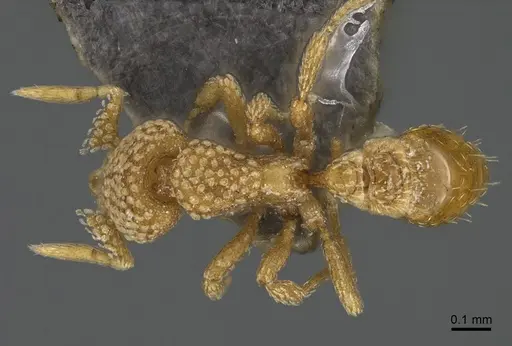
Literature
Loading distribution map...Loading products...