
Strumigenys hyalina
- Sci. Name
- Strumigenys hyalina
- Tribe
- Attini
- Subfamily
- Myrmicinae
- Author
- Bolton, 2000
- Distribution
- Found in 1 countries
Introduction
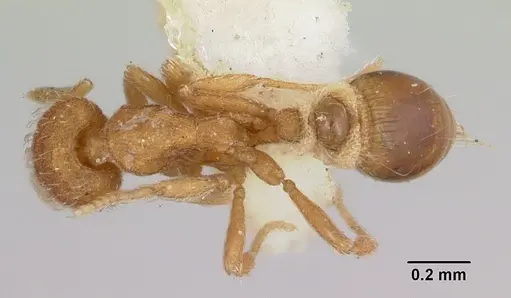
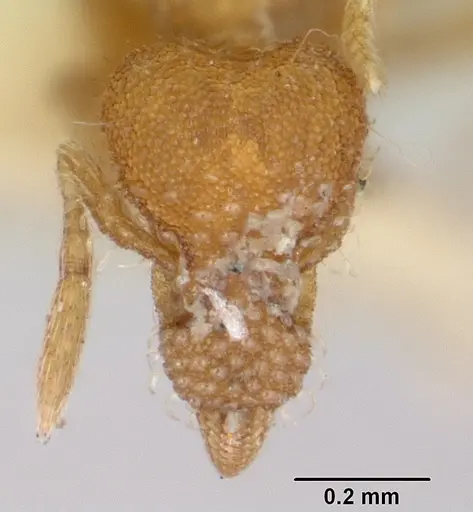
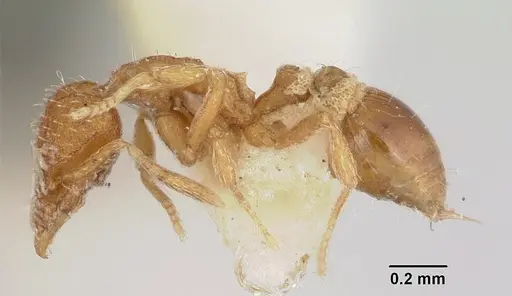
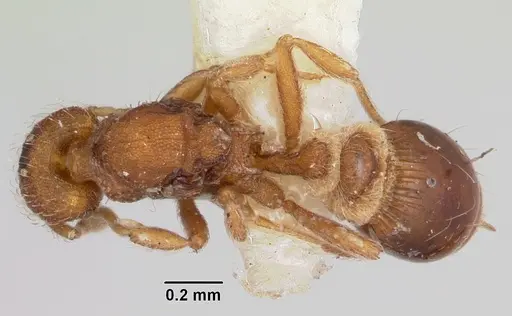
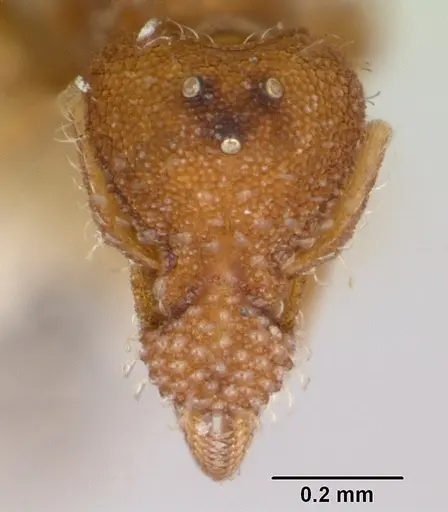
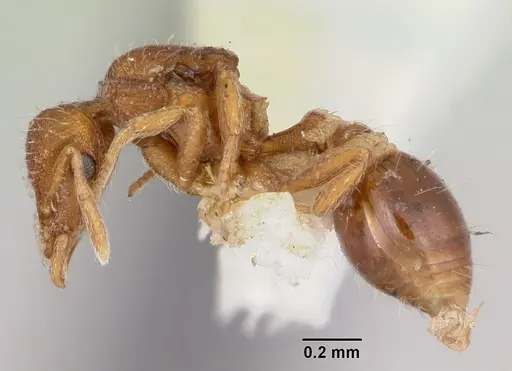
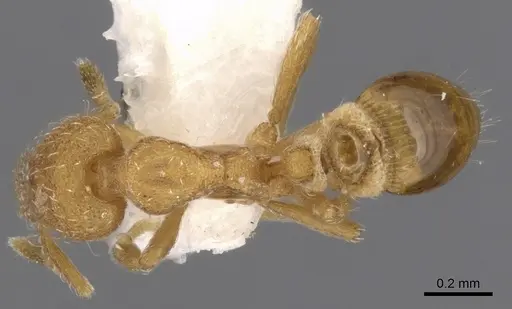
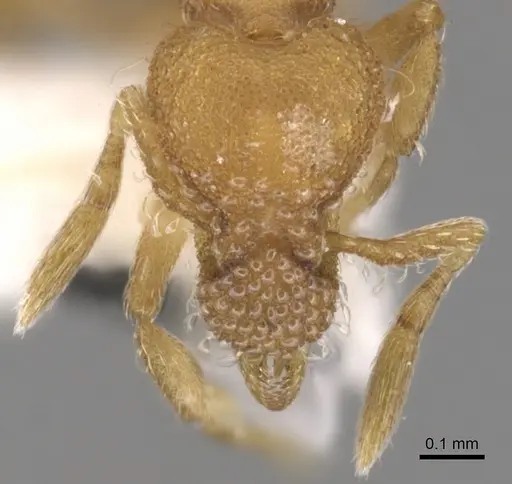
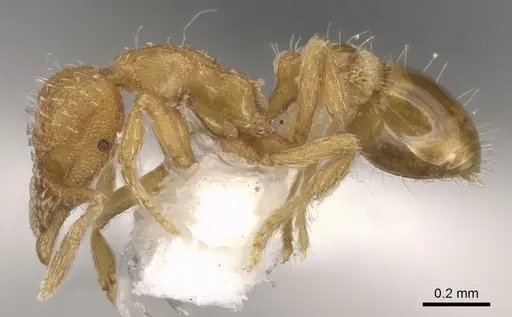
Strumigenys hyalina is a tiny ant, with workers measuring about 2.0mm in total length . Its most striking feature is the broad, spoon-shaped hairs on the face that look translucent and scale-like under magnification, hence the name 'hyalina' (meaning glassy) . The mandibles have a distinct long gap between the basal tooth and the rest, which is longer than the basal tooth itself, helping separate it from similar species like Strumigenys abdita and Strumigenys bunki . Workers are yellowish to light brown, typical of leaf-litter ants. This species is extremely rare in both the wild and the hobby. It is known from only a handful of specimens collected in Ohio, Mississippi, and Alabama, almost all from bottomland hardwood forests where they were sifted from leaf litter . As a specialized predator of tiny soil arthropods, S. hyalina is not for beginner ant keepers, virtually nothing is known about its colony life or care in captivity.
Quick Summary
- Difficulty: Expert
- Origin & Habitat: Eastern United States (Ohio, Mississippi, Alabama) [2][3][4]. Found in bottomland hardwood forests, specifically in leaf litter collected by Berlese funnel [2][3].
- Colony Type: Unknown. Only scattered workers and a single queen have ever been collected [1]. Colony structure has not been studied, but related Strumigenys species are typically monogyne (single-queen).
- Size & Growth:
- Queen: Size data unavailable, described from a paratype but no body length reported [1].
- Worker: ~2.0mm (total length) [1].
- Colony: Unknown, only individual specimens have been found in the wild [2][3].
- Growth: Unknown
- Development: Unknown [1] (No captive colonies have been documented, so development time can only be guessed from related Strumigenys species.)
- Antkeeping:
- Temperature: Based on their southeastern US range, aim for 20-24°C. Avoid extremes. Winter rest likely needed (see diapause).
- Humidity: High humidity is essential, these ants live in moist forest-floor leaf litter. Keep the nest substrate damp but not waterlogged, and provide a gradient with slightly drier areas.
- Diapause: Likely yes. Given the temperate climate of their range, reduce temperature to 10-15°C for 2-3 months in winter to mimic natural conditions [1].
- Nesting: Naturalistic or very small-scale setups work best. Use a shallow container with moistened soil and leaf litter to replicate leaf-litter habitat. Y-tong or plaster nests with narrow chambers can work, but escape-proofing must be perfect (see behavior).
- Behavior: Cryptic, docile, and slow-moving. As a tiny predator, it likely hunts springtails and other micro-arthropods. Not aggressive to humans, but escape risk is extreme due to minute size, even standard test tube barriers may fail. They spend most of their time inside the leaf litter layer.
- Common Issues: escape prevention is critical, they can slip through tiny gaps, use fine mesh and fluon on all container rims., no captive breeding records exist, obtaining a colony is extremely difficult and relies on field collection., specialized prey needed, they almost certainly require live springtails as a primary food source., high humidity can cause mold if ventilation is poor., extreme rarity and lack of husbandry data make all care advice speculative.
Housing and Nest Setup
Housing Strumigenys hyalina requires careful attention to their tiny size. A naturalistic setup works best: use a shallow container (like a large Petri dish or small plastic box) filled with moistened soil and a thick layer of decaying leaf litter. This mimics their natural forest-floor habitat and provides hunting ground for their prey. The substrate should stay consistently damp but never waterlogged, and adding dead leaves on top helps maintain humidity and gives these shy ants cover.
Because of their minute size, workers are just 2mm long, escape prevention is absolutely essential. Use a fluon barrier on the container walls, ensure all ventilation holes are covered with fine mesh (smaller than 0.5mm gaps), and regularly check seals. Even small cracks can let these ants escape. If using a test tube, keep the entrance very narrow, a cotton plug with a tiny hole works, but a naturalistic setup with a covered outworld is safer.
Given the complete lack of captive breeding records, experimentation is necessary, start with a small, simple setup that is easy to monitor and adjust based on the ants' behavior. [2][1]
Feeding and Diet
Strumigenys hyalina is a specialized predator of tiny soil arthropods. Based on related species, its diet likely consists primarily of springtails (Collembola) [1]. In captivity, you must provide a steady supply of live springtails, these are essential. Other tiny live prey such as potworms (enchytraeids), booklice, or mites may also be accepted, but springtails are the most reliable.
Offer small prey items every few days, removing any uneaten leftovers after 24 hours to prevent mold. Sugar sources like honey water are likely not needed, as Strumigenys are primarily predatory, but you can offer a tiny drop occasionally to see if they take it. Do not rely on dead or dried insects, these ants require live, moving prey.
Culturing springtails is a must if you want to keep this species. A simple culture with charcoal, water, and rice hulls will provide a continuous food supply.
Temperature and Seasonal Care
Based on their southeastern US range (Ohio, Mississippi, Alabama), Strumigenys hyalina is used to moderate temperatures with distinct seasons [2][3]. Keep the nest at a stable 20-24°C year-round, which matches typical room temperature. Avoid extremes: above 28°C could stress them, and below 15°C may be harmful outside of hibernation.
A winter rest period (diapause) is likely beneficial. Reduce the temperature to 10-15°C for 2-3 months during winter, mimicking the natural cold season. During this time, activity will drop, so reduce feeding or stop altogether. Keep the substrate slightly drier but not bone-dry to prevent mold. Resume normal temperatures and feeding in spring.
Finding and Acquiring Colonies
Strumigenys hyalina is one of the rarest ants in the United States and virtually never appears in the ant-keeping trade [2][3]. Wild specimens have only been found in a handful of locations: Catawba Beach, Ohio, Noxubee National Wildlife Refuge and Washington County, Mississippi, and Jackson County, Alabama [4]. They inhabit bottomland hardwood forests and are collected by sifting leaf litter through a Berlese funnel [2][3].
If you want to keep this species, you would need to perform careful field collection, but given its extreme rarity and the specialized habitat, this requires significant effort and expertise. Always check local laws and obtain permission before collecting. Given the difficulty, consider starting with a more commonly available Strumigenys species (e.g., Strumigenys membranifera) to gain experience with the genus.
Frequently Asked Questions
How long does it take for Strumigenys hyalina to develop from egg to worker?
This is unknown, no breeding colonies have ever been documented in captivity or studied in the wild [1]. Based on related Strumigenys species, development likely takes several weeks to months, but this is purely speculative.
Can I keep Strumigenys hyalina in a test tube?
You can try a test tube setup, but the opening must be very small to prevent escape. A naturalistic setup with leaf litter often works better for these cryptic ants. Regardless, escape prevention is critical due to their tiny size.
Are Strumigenys hyalina good for beginners?
No, this is an expert-level species. They are extremely rare, require specialized live prey (springtails), need very high humidity, and virtually no captive care information exists. Related Strumigenys species with more available care data would be better choices.
How big do Strumigenys hyalina colonies get?
Unknown, only a few workers and one queen have ever been collected, so no mature colony has been observed [2][3]. Based on other Strumigenys, colonies are likely small, perhaps a few dozen to a few hundred workers at most, but this is speculation.
Do Strumigenys hyalina need hibernation?
Likely yes, given their temperate North American distribution, a winter rest period is probably necessary. Reduce temperatures to 10-15°C for 2-3 months during winter.
What do Strumigenys hyalina eat?
They are specialized predators that hunt tiny soil arthropods. In captivity, they require live springtails as a primary food source. Other tiny live prey like potworms may be accepted, but springtail cultures are essential.
Where can I find Strumigenys hyalina?
This species is extremely rare, known from only a few specimens in Ohio, Mississippi, and Alabama [2][3][4]. They inhabit bottomland hardwood forests and are collected by sifting leaf litter. Finding them requires targeted sampling in appropriate habitat.
Can I keep multiple Strumigenys hyalina queens together?
This is unknown, only a single queen has ever been documented (a paratype), and colony structure has not been studied [1]. Combining unrelated queens is not recommended given the complete lack of information about their social behavior.
Why are my Strumigenys hyalina dying?
Without established captive colonies, we cannot confirm specific causes. Likely issues include: inadequate prey (they need live springtails, not dead insects), incorrect humidity (too dry or too wet), temperature stress, or escape-related losses. Their extreme rarity in captivity suggests significant husbandry challenges remain to be discovered.
Report an Issue
The current care sheet is based fully on literature. See inconsistencies, or something that's incorrect? Please , it will be resolved after review from an admin. Contributing to the blogs tab also helps providing information, to make us be able to further improve the caresheets. Thank you for your support!
References

This caresheet is licensed under CC BY-SA 4.0 .
Community Blogs
Literature
Loading distribution map...Loading products...