
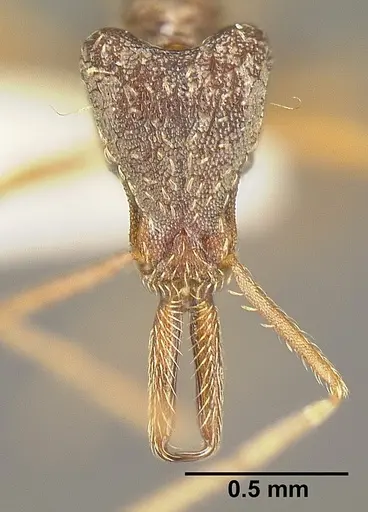
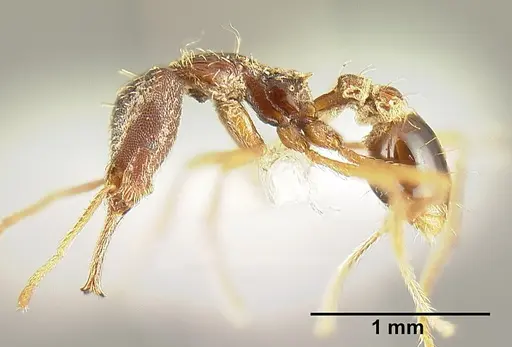
Strumigenys humata
- Sci. Name
- Strumigenys humata
- Tribe
- Attini
- Subfamily
- Myrmicinae
- Author
- Lattke & Goitía, 1997
- Distribution
- Found in 2 countries
Introduction
Strumigenys humata is an ant speciesof the genusStrumigenys , belonging to the subfamily Myrmicinae and tribe Attini . It is documented in 2 countries , including Costa Rica, Honduras . Queens are semi-claustral and forage during colony founding.
Frequently Asked Questions
What do Strumigenys humata ants eat?
These tiny trap-jaw ants are specialist predators, primarily feasting on small arthropods, especially springtails (Collembola). Providing a steady supply of live springtails is crucial for their well-being and colony growth. They might occasionally accept other tiny, soft-bodied insects if springtails aren't available, but Collembola are definitely their favorite.
Are Strumigenys humata difficult to keep?
They're considered a 'Medium' difficulty species, making them more suitable for ant keepers with some experience. Their specialized diet and high humidity requirements mean they need more specific care than your average beginner-friendly species. If you're up for the challenge and can meet their needs, they are incredibly rewarding to observe!
How big do Strumigenys humata colonies get?
Strumigenys humata colonies are on the smaller side. You can expect a mature colony to range from a few dozen up to a few hundred workers, typically between 15 and 400 individuals. They won't be filling up giant formicariums like some other species.
What kind of nest is best for Strumigenys humata?
Given their natural habitat in wet leaf litter and soil, a small formicarium that allows for high humidity is ideal. Think natural setups with fine soil and a layer of leaf litter, or even specialized acrylic or Ytong nests designed for tropical species. The key is consistent moisture and a dark, secure environment.
Do Strumigenys humata sting?
No, Strumigenys humata are not known to sting. Their primary defense mechanism is often 'playing dead' (thanatosis) when they feel threatened, which is quite fascinating to witness!
What humidity do Strumigenys humata need?
High humidity is non-negotiable for these ants! Aim for levels between 80-90%. They come from very moist environments, so keeping their nest and foraging area consistently humid is vital for their survival and the health of their brood.
Do Strumigenys humata need diapause (hibernation)?
No, as a species originating from tropical regions, Strumigenys humata does not require a period of diapause or hibernation. They thrive year-round with stable warmth and humidity.
How fast do Strumigenys humata colonies grow?
Their colony growth rate is generally slow. Don't expect rapid expansion or a massive population boom. Patience is a virtue when keeping these delicate and specialized ants.
Where are Strumigenys humata found naturally?
They are native to the Neotropical region, specifically found in countries like Costa Rica, Honduras, Panama, and Venezuela. They inhabit wet forest leaf litter and cloud forest environments.
Are Strumigenys humata trap-jaw ants?
Yes, they are part of the Strumigenys genus, which is famous for its 'trap-jaw' mandibles. While their mandibles are more 'tongue-like' in form, they still use a rapid snapping mechanism to capture their tiny prey.
What kind of substrate should I use for their nest?
For their nest, a substrate that retains moisture well is best. Consider a mix of fine soil, loam, or even coco fiber. Adding a thin layer of sterilized leaf litter on top can also provide a natural foraging area and help maintain humidity.
Can I keep multiple Strumigenys humata queens together?
Strumigenys humata is a monogyne species, meaning colonies are typically founded and maintained by a single queen. Keeping multiple queens together is generally not recommended as they are likely to fight until only one remains.
Why are my Strumigenys humata playing dead?
This is a natural defensive behavior called thanatosis. When disturbed or stressed, these ants might 'play dead' by becoming motionless. It's their way of avoiding predators. Try to minimize disturbances to help them feel secure.

This caresheet is licensed under CC BY-SA 4.0 .
Community Blogs
CASENT0617628
View on AntWeb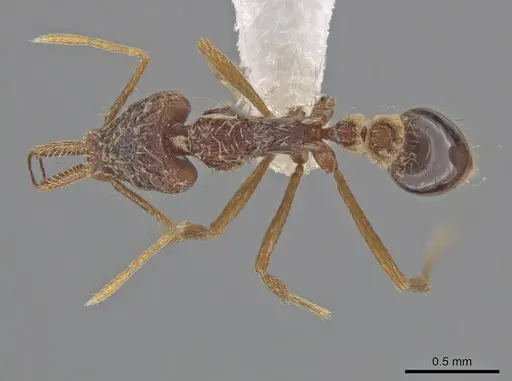
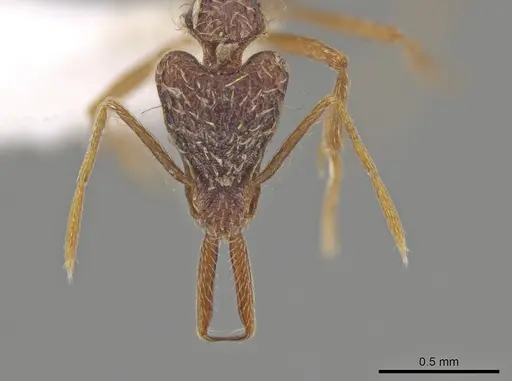
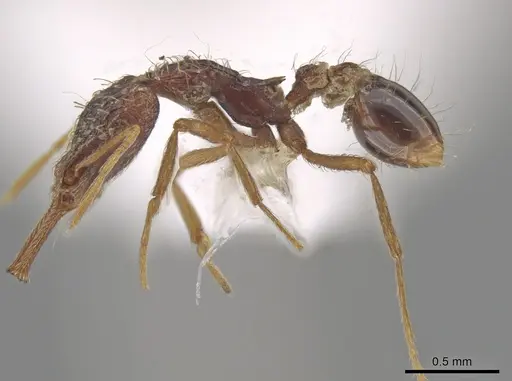
INBIOCRI001283978
View on AntWeb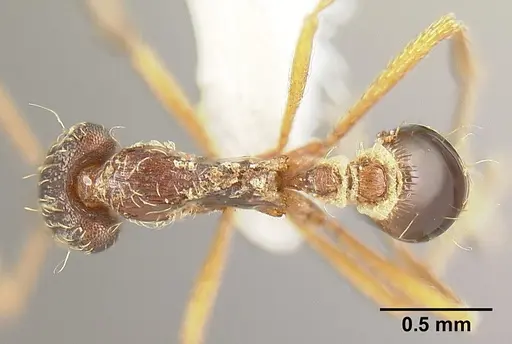
Literature
Loading distribution map...Loading products...