
Strumigenys hubbewatyorum
- Sci. Name
- Strumigenys hubbewatyorum
- Tribe
- Attini
- Subfamily
- Myrmicinae
- Author
- Booher <i>et al.</i>, 2019
- Distribution
- Found in 1 countries
Introduction
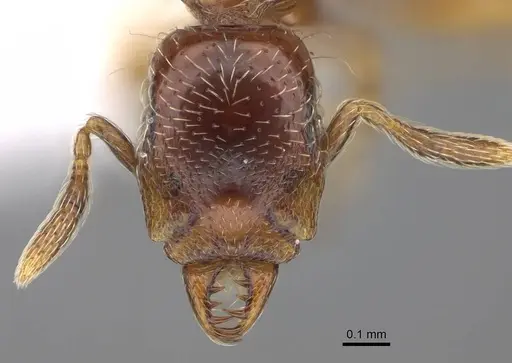
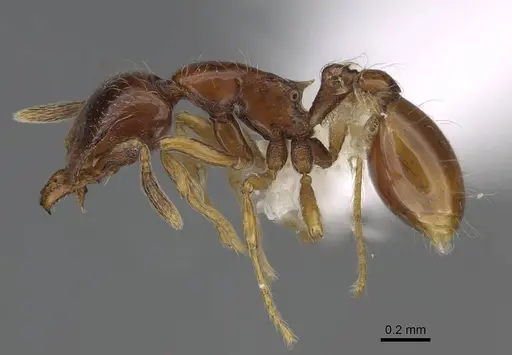
Strumigenys hubbewatyorum is a tiny predatory ant from the leaf litter of Cuba's high-elevation wet forests. Workers measure about 2.2-2.4 mm in total length . They have a dark reddish-brown color and long antennae. This species was described in 2019 . They are specialized predators with elongated mandibles for capturing small arthropods like springtails.
Quick Summary
- Difficulty: Expert
- Origin & Habitat: Endemic to Cuba, found only at two high-elevation locations (540 m and 1026 m) in mature wet forest habitats in southeast and central Cuba [1].
- Colony Type: Unknown – no data on colony structure exists for this species. Based on Strumigenys genus patterns, likely monogyne but unconfirmed.
- Size & Growth:
- Queen: Unknown – only workers have been described [1].
- Worker: 2.21-2.36 mm total length [1].
- Colony: Unknown – likely small, typical of Strumigenys (under 200 workers estimated) [1].
- Growth: Inferred slow based on Strumigenys genus patterns.
- Development: Unknown – no data for this species. Based on related Strumigenys, estimate 6-10 weeks. (No specific development data exists.)
- Antkeeping:
- Temperature: Keep around 20-24 °C. The high-elevation Cuban habitat suggests preference for cooler conditions [1]. Avoid temperatures above 26 °C.
- Humidity: High humidity essential. Keep substrate moist but not waterlogged. These leaf litter ants require constant humidity [1].
- Diapause: Unknown – the high-elevation tropical habitat may not require diapause. No published data.
- Nesting: Naturalistic setup with moist soil and leaf litter. They are leaf litter specialists and do poorly in artificial nests. A shallow container with sifted soil and decaying leaves works [1].
- Behavior: Shy and non-aggressive, rely on fleeing for defense. Active hunters of tiny arthropods. Require escape prevention due to tiny size (2.2-2.4 mm). They have a functional sting but rarely use it on humans. They are slow-moving foragers that spend their time searching through leaf litter.
- Common Issues: escape prevention is critical – their tiny size allows them to slip through standard barriers., specialized diet requires live springtails or similar micro-prey, dead food will be ignored., high humidity must be maintained or workers dehydrate quickly., wild-caught colonies may have parasites, best to acquire from captive-bred sources., extremely rare in culture – hard to obtain.
Housing and Setup
Strumigenys hubbewatyorum is a leaf litter specialist and needs a naturalistic setup rather than a traditional formicarium. A shallow plastic container filled with 2-3 inches of moist, sifted soil works well. Add a layer of decaying leaves and twigs on top to mimic the forest floor environment they naturally inhabit [1]. The substrate should stay moist but never waterlogged. Use fine mesh (0.5 mm or smaller) on any ventilation holes because workers are tiny and can squeeze through standard barriers. A thin layer of petroleum jelly around the rim adds an extra escape barrier.
Feeding and Diet
This species is a specialized predator that requires live prey. Their primary food in the wild is springtails and other tiny soil-dwelling arthropods. In captivity, you need to culture live springtails specifically for feeding. Other accepted prey may include fruit flies, booklice, and similar micro-arthropods, but springtails should be the main food. They have elongated mandibles designed to capture small, fast-moving prey [1]. Do not rely on sugar sources or dead insects – these ants are obligate predators. Feed small amounts every few days and remove uneaten prey after 24 hours to prevent mold. A well-established springtail culture is essential before acquiring this species.
Temperature and Humidity
Keep temperatures around 20-24 °C. The high-elevation Cuban habitat (540-1026 m) suggests they prefer cooler conditions than most tropical ants [1]. Avoid temperatures above 26 °C, which can stress and kill the colony. Room temperature is often fine, but monitor with a thermometer. Humidity is critical – these ants die quickly in dry conditions. Keep the substrate consistently moist, checking daily. A shallow water dish can help, but ensure it's shallow enough that the tiny ants cannot drown. Condensation on the container walls is a good sign of adequate humidity. Avoid direct airflow from heaters or air conditioning.
Behavior and Temperament
Strumigenys hubbewatyorum workers are shy and non-aggressive. When disturbed, they flee rather than defend. They are slow-moving foragers that search through leaf litter for prey. Their relatively large eyes help them spot movement [1]. Workers measure about 2.2-2.4 mm and can slip through surprisingly small gaps – always use excellent escape prevention. Colonies are likely small, probably under 200 workers at maturity (estimated). Growth is slow, so be patient – a founding colony may take a year or more to reach 50 workers. These are observation ants, not interactive pets. They have a functional sting but rarely use it on humans, it is less medically significant than a bee sting.
Acquiring This Species
Strumigenys hubbewatyorum was described only in 2019 and is extremely rare in the antkeeping hobby [1]. It is endemic to only two locations in Cuba. Wild collection is not practical for most keepers, and established captive colonies are essentially nonexistent outside of research facilities. If available, expect a high price. Do not purchase wild-caught queens – this species is known from only two localities and collecting could threaten wild populations. The best approach is to wait for future captive breeding efforts or to seek related Strumigenys species that are more commonly available.
Legal Considerations
Strumigenys hubbewatyorum is endemic to Cuba and may be subject to export restrictions. Cuba has strict regulations on native wildlife, and this species is not commonly available in the international ant trade. If you somehow obtain a colony, do not release it in non-native areas – Strumigenys species could become invasive in suitable climates. Never release any ant colony outside its native range. [1]
Frequently Asked Questions
Can I keep Strumigenys hubbewatyorum in a test tube?
No, test tubes are not suitable. This is a leaf litter specialist that needs a naturalistic setup with moist soil and decaying leaf matter. They forage through the substrate and cannot thrive in artificial nests [1].
What do Strumigenys hubbewatyorum ants eat?
They are specialized predators that need live springtails or other tiny micro-arthropods. They will not accept dead insects or sugar water. A springtail culture is essential for keeping this species alive.
How long until first workers in Strumigenys hubbewatyorum?
The exact timeline is unconfirmed, but based on related Strumigenys species, expect 6-10 weeks from egg to first worker at optimal temperature. Growth is slow – colonies build up gradually over many months.
Are Strumigenys hubbewatyorum good for beginners?
No. This is an expert-level species due to their specialized diet (live springtails required), tiny size (escape risk), high humidity needs, and extremely rare availability. They are not recommended for beginners.
How big do Strumigenys hubbewatyorum colonies get?
Colony size is unconfirmed, but likely small – probably under 200 workers at maturity. This is typical for Strumigenys, which maintain smaller colonies than many other ants.
Do Strumigenys hubbewatyorum need hibernation?
Unknown. The high-elevation Cuban habitat may experience seasonal temperature changes, but there is no specific data on diapause requirements. Keep temperatures stable in the 20-24 °C range.
Why are my Strumigenys hubbewatyorum dying?
The most common causes are: dry conditions (they need constant humidity), escape (their tiny size allows them to slip through barriers), starvation (they need live prey, not dead insects), and stress from overheating. Ensure high humidity, fine mesh barriers, and a steady supply of live springtails.
When to move to a formicarium?
Do not move them to a traditional formicarium. They should remain in a naturalistic setup with soil and leaf litter. Traditional formicariums do not provide the leaf litter environment they need to forage naturally [1].
Can I keep multiple queens together?
Not recommended. There is no data on colony founding for this species, and combining unrelated queens has not been studied. Given their rarity, do not risk valuable colonies on untested methods.
Report an Issue
The current care sheet is based fully on literature. See inconsistencies, or something that's incorrect? Please , it will be resolved after review from an admin. Contributing to the blogs tab also helps providing information, to make us be able to further improve the caresheets. Thank you for your support!
References

This caresheet is licensed under CC BY-SA 4.0 .
Community Blogs
CASENT0630256
View on AntWeb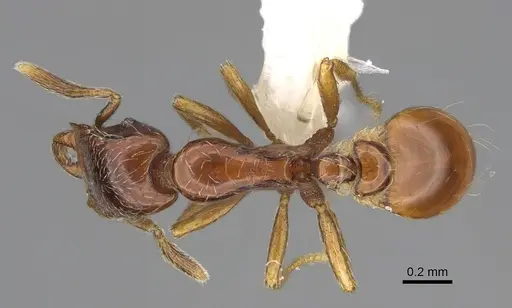
Literature
Loading distribution map...Loading products...