
Strumigenys hirsuta
- Sci. Name
- Strumigenys hirsuta
- Tribe
- Attini
- Subfamily
- Myrmicinae
- Author
- Tang <i>et al.</i>, 2019
- Distribution
- Found in 2 countries
Introduction
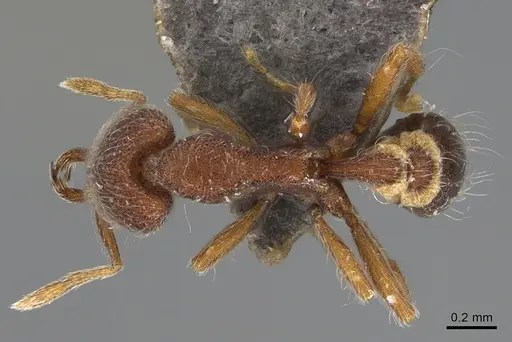
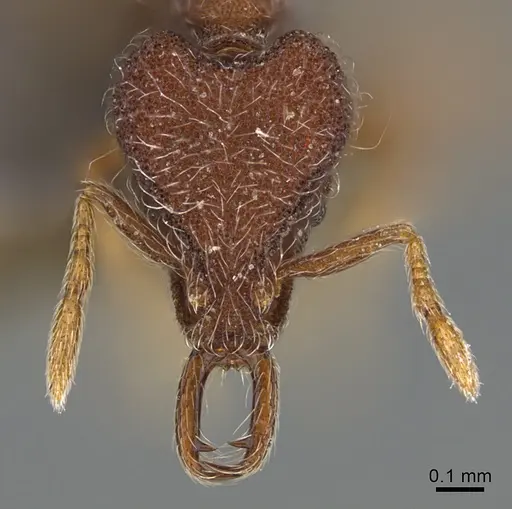
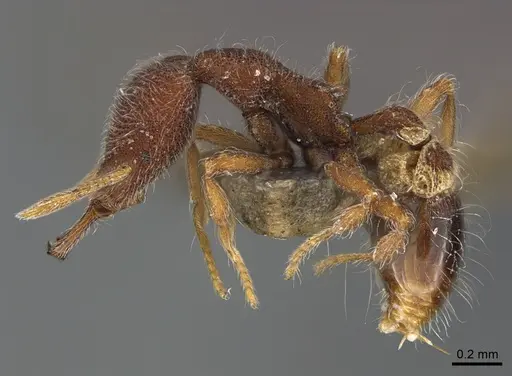
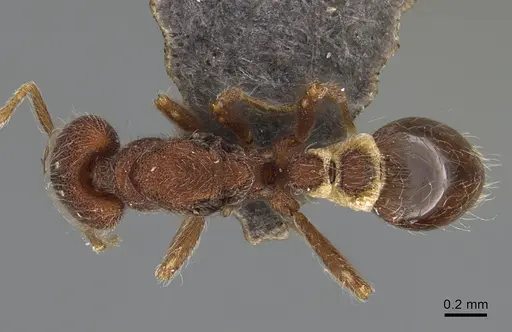
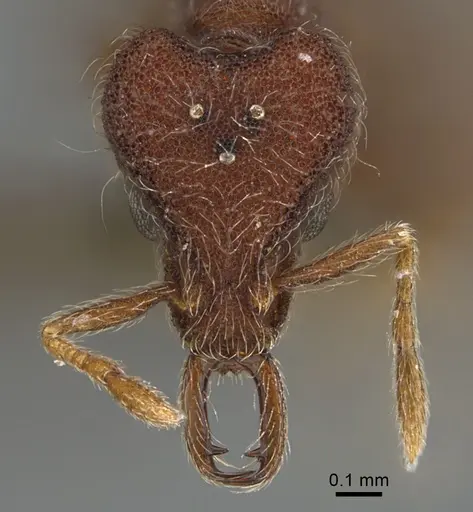
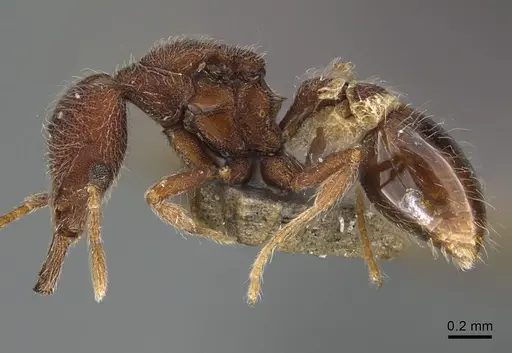
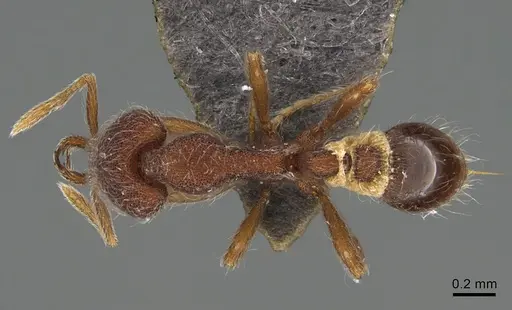
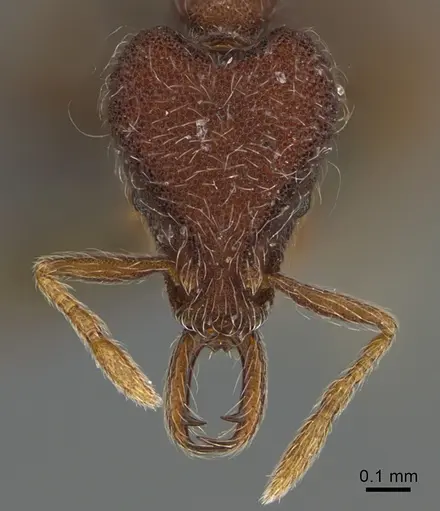
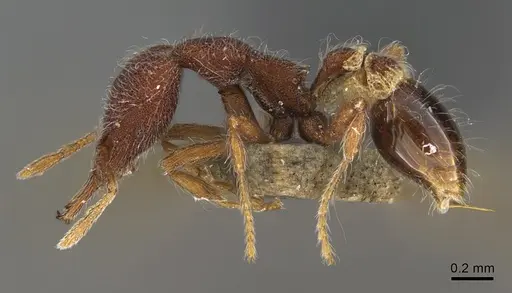
Strumigenys hirsuta is a tiny predatory ant from Hong Kong and southern China, described in 2019 . Workers are about 2.9-3.1 mm long, making them some of the smallest ants you'll come across . They belong to the caniophanes species group and have long, slender mandibles built for catching tiny prey. The name 'hirsuta' means 'hairy', referring to the many standing and twisted hairs that cover most of the body . The head and upper body have a dense, rough texture (reticulate-punctate), and the antennal scapes are noticeably short compared to related species . These ants are predators of springtails, mites, and other tiny soil arthropods. They live in disturbed secondary forests and forest patches from sea level up to 459 m elevation . Originally thought to be endemic to Hong Kong, they have since been found on Hainan Island, suggesting a wider range across southern China . Queens are a bit larger at 3.6 mm . Female alates have been caught in Malaise traps during June, so nuptial flights happen in early summer .
Quick Summary
- Difficulty: Medium
- Origin & Habitat: Hong Kong and southern China (Guangdong, Hainan). Found in disturbed secondary forests and forest remnants at elevations from 1-459 m [1][2][3].
- Colony Type: Unconfirmed, colony structure is not yet studied. Likely single-queen based on related Strumigenys species.
- Size & Growth:
- Queen: ~3.6 mm total length [1]
- Worker: ~2.9-3.1 mm total length [1]
- Colony: Likely under 200 workers (inferred from related species)
- Growth: Slow, typical for Strumigenys
- Development: Estimated 8-12 weeks at optimal temperature, based on related species [1] (Development is slow, colonies stay small. Exact timeline for this species hasn't been studied.)
- Antkeeping:
- Temperature: Warm conditions, roughly 22-26 °C, based on its subtropical origin. Provide a gentle gradient with a heating cable on one side of the nest. Avoid overheating [1].
- Humidity: High humidity, keep the nest substrate consistently damp but not waterlogged. Mist the outworld as needed, especially in dry climates. Ensure good ventilation to prevent mold [1].
- Diapause: Likely minimal or none. As a subtropical species from Hong Kong, it may slow down slightly in cooler months but does not need a cold diapause [1].
- Nesting: Y‑tong (AAC) or plaster nests work well. They need tight, small chambers that match their tiny size. A naturalistic setup with moist soil and leaf litter mimics their forest floor habitat.
- Behavior: Strumigenys hirsuta are calm and non‑aggressive, they flee or hide rather than fight. They actively hunt tiny prey like springtails using their specialized trap‑jaw mandibles. They do not tend aphids or eat sugar. Escape prevention is critical because workers are so small, they can fit through gaps as narrow as ~0.5 mm. Use Fluon barriers and fine mesh on ventilation holes. They have a functional sting but it is harmless to humans.
- Common Issues: escape: their tiny size lets them squeeze through gaps you wouldn't expect, use Fluon and fine mesh., starvation: they need a constant supply of live tiny prey, springtails are a staple., mold from high humidity: balance moisture with ventilation, remove uneaten prey., slow growth: colonies take months to build up, patience is needed., parasites from wild‑caught queens: may bring mites or other pathogens.
Housing and Nest Setup
Because Strumigenys hirsuta are so tiny (2.9-3.1 mm), their nest must be escape‑proof. Y‑tong (AAC) or plaster nests with very small chambers work best. Avoid oversized rooms, they stress the ants. For the outworld, use a shallow container with Fluon on all inner walls and cover any ventilation holes with fine mesh ( [1]
Feeding and Diet
Strumigenys hirsuta are obligate predators, they will not eat sugar water, honey, or seeds. Their main food should be live tiny arthropods like springtails (Collembola), which are the right size and nutrition [1]. Other accepted prey includes booklice, fruit flies, minute mealworms, and other small insects. Feed small portions 2-3 times per week. Remove any uneaten prey after 48 hours to stop mold. A well‑fed colony will have workers with full, round gasters. Do not offer large prey, their mandibles are designed for tiny targets, not big insects [1].
Temperature and Humidity
These subtropical ants need warm and damp conditions. Keep the nest around 22-26 °C, using a heating cable on top of the nest to create a gradient. Avoid heating from below because it dries out the substrate. Humidity should be high: the nest substrate must stay damp (like squeezed‑out sponge) but not waterlogged [1]. Check the moisture every few days and rehydrate if the surface starts to dry. In dry rooms, mist the outworld lightly once in a while. Good airflow prevents mold, but don't let drafts dry the nest [1].
Colony Development and Growth
Colonies grow slowly. A newly mated queen likely seals herself in a small chamber and raises her first workers without foraging (claustral founding), though this hasn't been confirmed for this species [1]. The first workers appear after about 2-3 months at warm temperatures. The colony will stay small, probably under 200 workers when fully grown [1]. Queens are 3.6 mm, workers 2.9-3.1 mm. Nuptial flights happen in June, based on Malaise trap catches in Hong Kong [4]. Be patient, overfeeding can cause mold, so feed only what they can eat in a day or two.
Behavior and Temperament
Strumigenys hirsuta are shy and non‑aggressive. They prefer to hide or run away when disturbed. They hunt actively, using their long mandibles to snap shut on springtails and other micro‑arthropods [1]. They do not guard the nest entrance or show territorial behaviour. Workers are poor climbers on smooth surfaces but can escape through very small cracks, always use barriers. They have a functional sting, but it is tiny and harmless to humans. They never take sugar water or honeydew [1].
Frequently Asked Questions
Can I keep Strumigenys hirsuta in a test tube?
Test tubes are fine for starting a colony but they dry out fast and make feeding tricky. A small Y‑tong or plaster nest is better long‑term. If you use a test tube, seal the opening with cotton and watch humidity closely [1].
What do Strumigenys hirsuta eat?
Only live tiny arthropods. Springtails are the best staple. You can also give them fruit flies, booklice, or tiny mealworms. They will not touch sugar water, honey, or seeds [1].
How long until first workers appear?
About 8-12 weeks at 22-26 °C (based on related species). The exact time isn't known for this species, so be patient [1].
Are Strumigenys hirsuta good for beginners?
No. Their tiny size makes escape prevention hard, they need a constant supply of live prey, and high humidity can be tricky. They also grow slowly, which can be discouraging. Try a hardier beginner species first [1].
How big do colonies get?
Probably under 200 workers, like most Strumigenys. They never produce large numbers of ants [1].
Do they need hibernation?
No true hibernation needed. As a subtropical species from Hong Kong, they may slow down a little in cooler months but can stay active year‑round at stable temperatures [1].
Why are my ants dying?
Common reasons: escape (check for tiny gaps), starvation (are you offering live springtails?), low humidity (substrate should be damp), mold from poor ventilation, or parasites from wild colonies. Check each factor and adjust slowly [1].
When should I move them to a formicarium?
Wait until the colony has at least 10-15 workers before moving them. They are delicate early on, a small test tube or starter nest works well until then [1].
Can I keep multiple queens together?
No, colony structure is not fully known, but Strumigenys are usually single‑queen. Keeping multiple queens in one nest will likely lead to fighting [1].
Report an Issue
The current care sheet is based fully on literature. See inconsistencies, or something that's incorrect? Please , it will be resolved after review from an admin. Contributing to the blogs tab also helps providing information, to make us be able to further improve the caresheets. Thank you for your support!
References

This caresheet is licensed under CC BY-SA 4.0 .
Community Blogs
Literature
Loading distribution map...Loading products...