
Strumigenys guttulata
- Sci. Name
- Strumigenys guttulata
- Tribe
- Attini
- Subfamily
- Myrmicinae
- Author
- Forel, 1902
- Distribution
- Found in 1 countries
Introduction
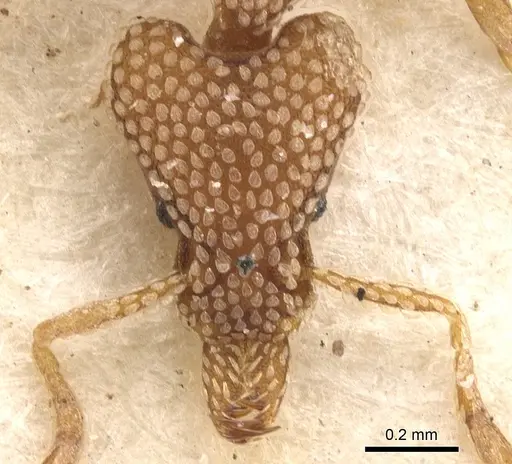
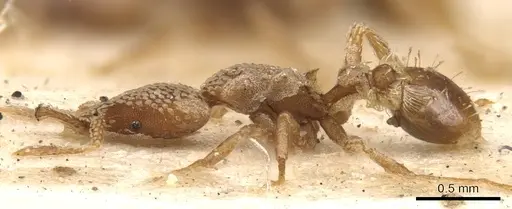
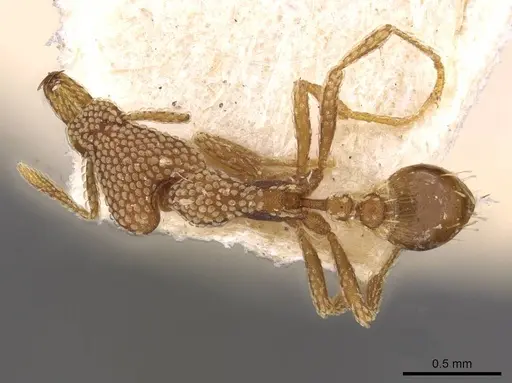
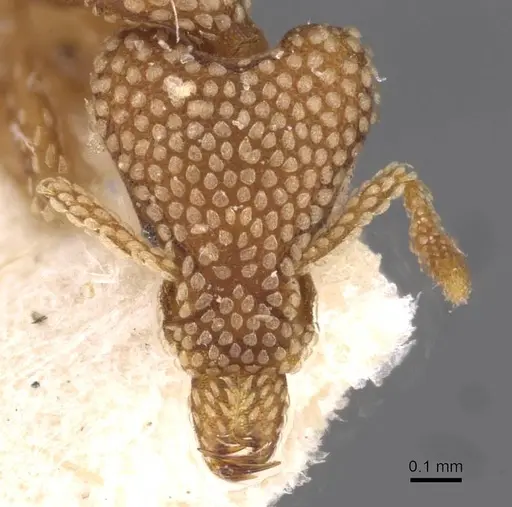
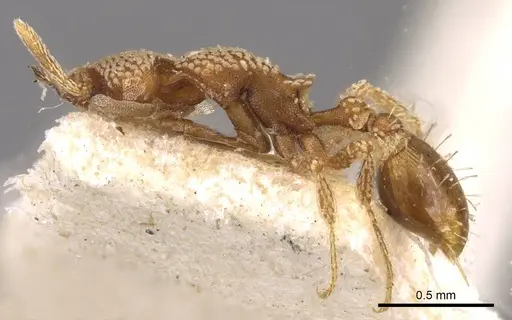
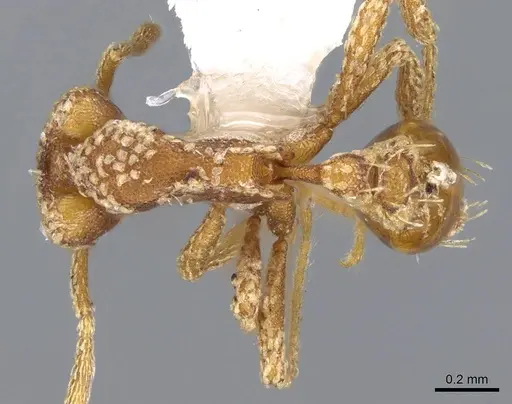
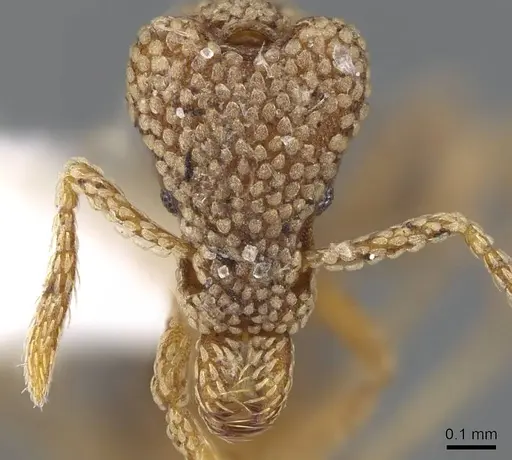
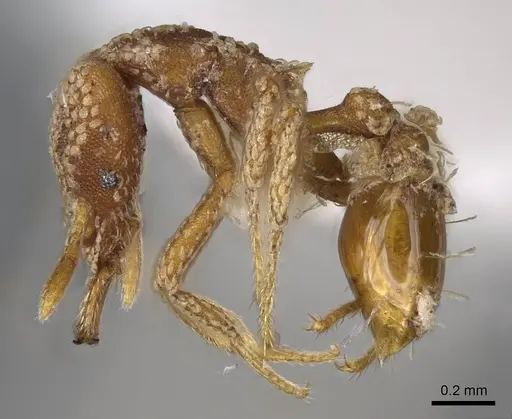
Strumigenys guttulata is a tiny predatory ant measuring 2.3-3.0 mm in total length, part of the Myrmicinae subfamily and Attini tribe . Workers have a broad translucent lamella on their mandibles and are covered in dense ground pilosity that partly hides their reticulate-punctate sculpture . They are a uniform medium rusty color, lighter than the related Strumigenys horvathi . This species is known only from central coastal Queensland, Australia, with records from Mackay, Byfield, and Cape York Peninsula (Iron Range) . They live in lowland rainforest and nest under rocks .
Quick Summary
- Difficulty: Hard
- Origin & Habitat: Central coastal Queensland, Australia, lowland rainforest, nesting under rocks [1]. Also recorded in the Eungella region at around 200-300 m elevation [2].
- Colony Type: Unconfirmed, the queen has not been described, so colony structure is unknown [1]. Based on typical Strumigenys, colonies are likely single-queen and small.
- Size & Growth:
- Queen: Unknown, queen not described [1].
- Worker: 2.3-3.0 mm total length [1].
- Colony: Unknown, likely under a few hundred workers, based on related Strumigenys.
- Growth: Unknown
- Development: Unconfirmed, probably 6-10 weeks based on related Strumigenys species. (Development time has not been directly studied for this species.)
- Antkeeping:
- Temperature: Keep around 22-26°C. They come from tropical Queensland rainforest and need warm, stable conditions. A gentle heating gradient helps them thermoregulate.
- Humidity: High humidity, think damp rainforest floor. Keep the nest substrate consistently moist but not waterlogged, with some slightly drier areas for choice.
- Diapause: Unlikely, as a tropical Australian species, they probably do not need true hibernation. A slight winter temperature drop (to 18-20°C) may be optional.
- Nesting: In the wild they nest under rocks in rainforest litter [1]. In captivity, a naturalistic setup with moist substrate and small chambers works well. Y‑tong or plaster nests with tight chambers scaled to their tiny size are suitable.
- Behavior: These ants are specialized springtail predators. They are slow-moving, non‑aggressive foragers that hunt through leaf litter. Their tiny size makes them excellent escape artists, you must use fine mesh barriers. They possess a functional sting but it is mild and not medically significant.
- Common Issues: escape prevention is critical, their tiny size means they squeeze through the smallest gaps., requiring live springtails makes feeding difficult, you must maintain steady cultures., high humidity needs can lead to mold if ventilation is poor., slow colony growth can frustrate keepers expecting rapid development., wild‑caught colonies may carry parasites that kill them in captivity.
Housing and Nest Setup
Because they are so tiny, Strumigenys guttulata needs carefully scaled housing. Use nests with tight chambers and narrow passages, avoid tall, open spaces that stress these ants. A naturalistic setup with moist rainforest‑type substrate works well, or a Y‑tong or plaster nest designed for small Myrmicinae. The nest must be kept humid but with adequate ventilation to prevent mold. Since they nest under rocks in the wild [1], include flat stones or similar surfaces in a naturalistic setup. Escape prevention is critical: use fine mesh on all openings and consider barrier methods like fluon on tube connections.
Feeding and Diet
Strumigenys guttulata is a specialized predator that hunts springtails and other micro‑arthropods in the wild. In captivity you must establish a springtail culture, this is their primary food, and they will not thrive on other foods alone. They may accept other tiny live prey like booklice, but springtails should form the bulk of their diet. They are too small to take typical ant foods like mealworms or crickets. Do not rely on sugar sources, while some Strumigenys may occasionally accept honeydew, their main nutrition comes from predation. Feed small amounts of live springtails every few days and remove uneaten prey to prevent mold.
Temperature and Humidity
Being from Queensland’s tropical rainforests, these ants need warm and humid conditions. Keep temperatures in the 22-26 °C range, use a heating cable on one side of the nest to create a gentle gradient if your room is cooler. They are found in lowland rainforest at around 200-300 m elevation [2], which suggests stable, warm, humid conditions. Humidity should be high, the nest substrate should feel consistently damp but not waterlogged. Provide a water tube for drinking. Avoid stagnant air (it causes mold) and excessive airflow (drying). A hygrometer helps you monitor conditions.
Colony Establishment
Because the queen of this species has never been described [1], getting a colony will likely mean catching a mated queen in the field or collecting a wild colony. If you find a dealate queen, house her in a small test tube with moist cotton, like you would for other small Myrmicinae. She will probably seal herself in and raise the first workers alone (claustral founding), but this is inferred from related species, not confirmed for S. guttulata. Wild colonies should be collected carefully from under rocks or leaf litter. Quarantine new colonies for several weeks and watch for parasites, wild‑caught colonies often carry mites or other pests that can wipe them out.
Behavior and Temperament
These ants are docile and non‑aggressive toward keepers. They are slow‑moving foragers that hunt individually through leaf litter, using their specialized mandibles to grab springtails. Workers are tiny and may be hard to see, watch carefully. They have a functional sting (like other Attini) but it is mild and not dangerous. Their small size means they can easily escape during colony transfers or if barriers fail. They are not territorial toward other colonies. The colony will probably stay small, with workers living several months each.
Frequently Asked Questions
How long does it take for Strumigenys guttulata to produce first workers?
The exact time is unconfirmed for this species. Based on related Strumigenys, expect 6-10 weeks from egg to first worker at optimal temperature (around 24-26 °C). Growth is typically slow and colonies remain small.
What do Strumigenys guttulata ants eat?
They are specialized springtail predators. You must keep a live springtail culture to feed them. Other tiny live prey like booklice may be accepted occasionally, but springtails should be the staple. They are too small for typical ant foods and won’t thrive on sugar water alone.
Can I keep Strumigenys guttulata in a test tube setup?
Yes, a test tube works well for founding colonies. Use a small tube with a water reservoir and keep it humid. Once the colony outgrows it (maybe 20-30 workers), move them to a small naturalistic setup or Y‑tong nest with properly scaled chambers.
Are Strumigenys guttulata good for beginners?
No, this species is not recommended for beginners. Their requirement for live springtail prey, tiny size making escape prevention difficult, and need for high humidity make them challenging. They are best for experienced keepers who can maintain live prey cultures.
How big do Strumigenys guttulata colonies get?
Colony size is not documented, but based on typical Strumigenys biology, colonies likely stay under a few hundred workers even when mature. They are litter‑dwelling ants that don’t form large colonies.
Do Strumigenys guttulata need hibernation?
Probably not, being from tropical Queensland, they likely don’t require true diapause. A slight temperature drop to 18-20 °C in winter may be appropriate if your room normally runs warmer, but it’s not essential.
Why are my Strumigenys guttulata dying?
Common causes include: lack of live springtail prey (starvation), escape through tiny gaps, mold from too much moisture without ventilation, and parasites from wild‑caught colonies. Ensure you have a thriving springtail culture and excellent escape prevention. Quarantine new colonies and watch for mites.
When should I move my colony to a formicarium?
Move them when the test tube becomes crowded or shows signs of stress. For this tiny species, a small Y‑tong or plaster nest with tight chambers works well. Don’t move too early, they prefer tight spaces and may abandon an oversized nest.
Can I keep multiple queens together?
This has not been documented for this species. The queen is unknown, so colony founding behavior is unconfirmed. Do not attempt combining unrelated queens, there is no evidence they accept pleometrosis.
Report an Issue
The current care sheet is based fully on literature. See inconsistencies, or something that's incorrect? Please , it will be resolved after review from an admin. Contributing to the blogs tab also helps providing information, to make us be able to further improve the caresheets. Thank you for your support!
References

This caresheet is licensed under CC BY-SA 4.0 .
Community Blogs

Literature
Loading distribution map...Loading products...