
Strumigenys godmani
- Sci. Name
- Strumigenys godmani
- Tribe
- Attini
- Subfamily
- Myrmicinae
- Author
- Forel, 1899
- Distribution
- Found in 6 countries
Introduction
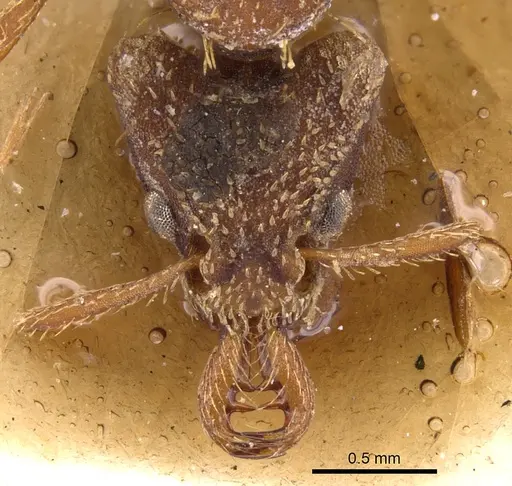
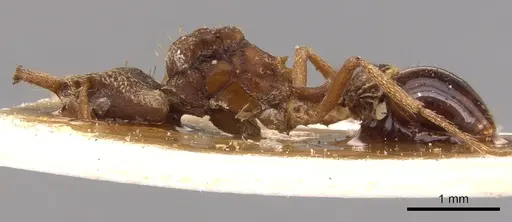
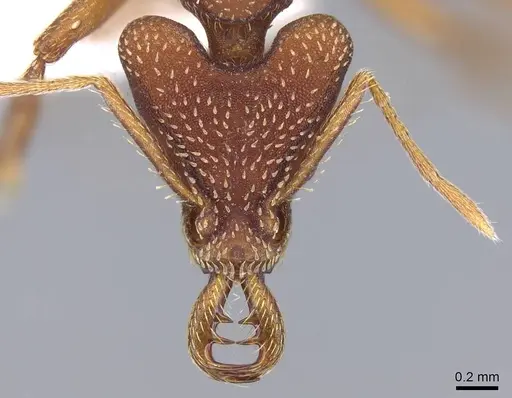
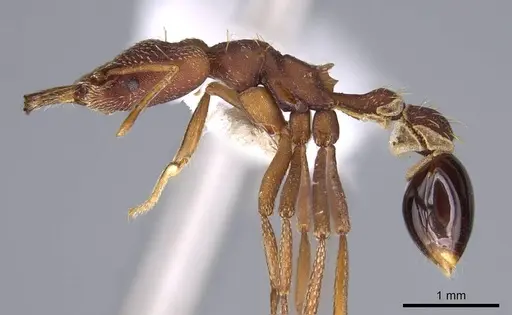
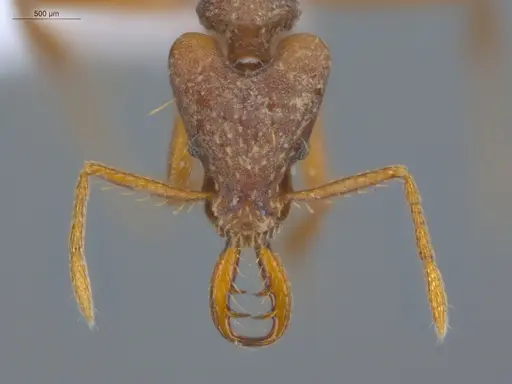
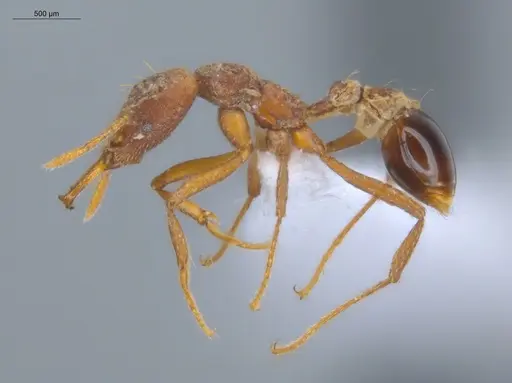
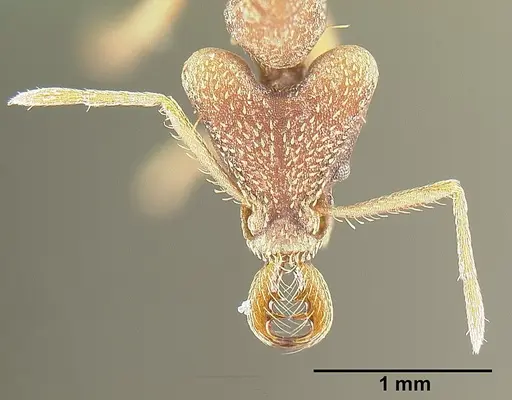
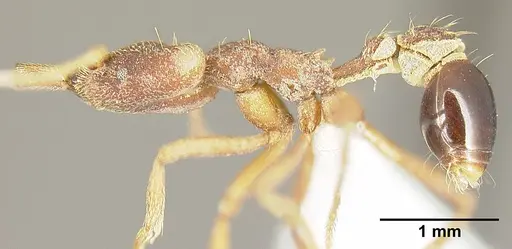
Strumigenys godmani is a large, striking ant from the Neotropical region. Workers measure 4.5-5.5 mm in total length, making them dramatically big for a Strumigenys species . They have a massive head and short, powerful mandibles . This ant is found from Costa Rica to Colombia, Ecuador, French Guiana, Guyana, Panama, and Venezuela . It lives in rainforest and cloud forest floors, often in rotten wood, under loose bark, or in leaf litter . In Colombia, it was recorded at 515 m elevation in Antioquia . Despite their size, they are uncommon in litter samples - they seem to occur at low density but are easy to spot during visual searches . Their mandibles are built for catching tiny prey like springtails, not as snap‑trap jaws but with a strong, crushing grip.
Quick Summary
- Difficulty: Medium
- Origin & Habitat: Neotropical region: Costa Rica, Panama, Colombia, Ecuador, French Guiana, Guyana, Venezuela [2][3][4]. Found in rainforest floors, cloud forest, and forest edges, from lowlands up to 515 m elevation [5][2]. Known nests occur in small rotten logs and under loose bark in damp forest habitats [2].
- Colony Type: Unconfirmed, likely monogyne (single queen) based on the holotype queen and the fact that workers are usually found alone [2].
- Size & Growth:
- Queen: ~5.4 mm (total length) [6].
- Worker: 4.5-5.5 mm (total length) [1].
- Colony: Unknown, workers are found singly in the wild, suggesting very small colonies [2].
- Growth: Unknown, likely slow due to specialized predation and low density.
- Development: No species‑specific data, based on related dacetine ants, development likely takes several weeks under optimal conditions. (Timeline is uncertain, the species has not been studied in captivity.)
- Antkeeping:
- Temperature: Keep warm and stable, roughly 22-26 °C, typical for lowland tropical forests. Avoid temperatures below 20 °C or above 30 °C. (Inferred from habitat, no experimental data available.)
- Humidity: Keep the nest substrate consistently moist but not waterlogged. A humidity gradient (drier in one corner, wet in another) works well. Mist the outworld occasionally to maintain ambient moisture.
- Diapause: No, this tropical species is active year‑round. A slight temperature drop in winter is harmless but not required.
- Nesting: Use a plaster, Y‑tong (AAC), or soil nest with a moisture chamber. Naturalistic setups with damp soil/peat mix and leaf litter work well. Dark, tight chambers are preferred, cover the nest to reduce light. A test tube setup is fine for founding, but the tube must stay humid.
- Behavior: Strumigenys godmani is a specialized predator with powerful mandibles. It has a functional sting (subfamily Myrmicinae, tribe Attini) but is not aggressive toward keepers unless handled roughly. Workers forage alone, hunting small arthropods. Because of their moderate size (4.5-5.5 mm), escape risk is low, but standard precautions like fluon on container rims are still wise.
- Common Issues: difficulty maintaining a constant supply of live springtails, they are obligate predators and rarely accept dead prey, high humidity requirements, colonies quickly die if the nest dries out, slow colony growth can lead to overfeeding or frustration, unknown founding behavior, wild‑caught queens may fail without special conditions, wild colonies may carry parasites, quarantine new specimens
Housing and Nest Setup
Strumigenys godmani thrives in a setup that mimics its natural habitat, a damp, dark forest floor. Use a container with a plaster or Y‑tong nest that has built‑in water chambers, or a naturalistic setup with a moist soil‑peat mix and a layer of leaf litter on top. Avoid acrylic nests because they cannot hold moisture well. The nest should offer a gradient from wet to dry so the ants can choose their preferred humidity. Keep the entire enclosure dim or dark, these ants are shy and will be more active when covered. For founding, a simple test‑tube setup placed inside a larger container with damp substrate works, but you must replace the water regularly. Provide a small outworld for feeding, just a clean plastic box with a thin layer of damp soil [2][5].
Feeding and Diet
Strumigenys godmani is an obligate predator of tiny, soft‑bodied arthropods. Their short, powerful mandibles are built for crushing springtails, booklice, and other micro‑fauna [1]. Provide live springtails (e.g., Folsomia candida) at least twice a week. Some individuals may also accept small fruit flies or psocids, but they will ignore sugar water and most dead prey. Do not offer mealworms or crickets, their mandibles cannot handle them. Remove uneaten prey after 24-48 hours to prevent mold. A steady culture of springtails is essential for keeping this species [2].
Temperature and Seasonal Care
This Neotropical species comes from warm, humid forests and does not need a winter cooling. Keep the temperature steady between 22 °C and 26 °C, a small heating mat on one side of the nest can create a gentle gradient, but make sure the main nest area stays in that range. Avoid prolonged temperatures below 20 °C. Humidity is far more important than exact temperature: the nest substrate must always feel damp to the touch, but there should never be standing water. If the air is dry, mist the outworld lightly once a day. No diapause is required, the colony will stay active year‑round [2].
Behavior and Colony Dynamics
Strumigenys godmani is a quiet, docile ant. Workers forage alone and hunt by slowly exploring the substrate. When disturbed, they usually flee rather than fight. They do have a functional sting (subfamily Myrmicinae) but rarely use it against a keeper. Colonies remain small, in the wild, workers are encountered singly, suggesting that the whole colony has only a couple of dozen to maybe a hundred individuals. Growth is very slow, taking perhaps a year to reach 50 workers. The queen is large (about 5.4 mm) and robust [6]. Because the founding method is unconfirmed, captive colonies may be difficult to start from a wild queen. Once established, they are hardy as long as humidity and food are consistent [2][1].
Frequently Asked Questions
How long does it take for Strumigenys godmani to produce first workers?
No species‑specific data exists. Based on related dacetine ants, development from egg to worker likely takes several weeks at 24-26 °C, but this is just an estimate.
Can I keep Strumigenys godmani in a test tube?
Yes, a test tube is fine for a founding queen or small colony. Keep the water reservoir full and place the tube inside a humid container (a plastic bin with damp paper towels). Cover the tube with something dark. When the colony reaches 30-50 workers, consider moving them to a plaster or soil nest that holds moisture better.
What do Strumigenys godmani eat?
They are strict predators of live, tiny arthropods. Springtails are the best option. They may also accept small fruit flies or booklice, but they rarely eat dead food and never need sugar. A reliable springtail culture is required.
Are Strumigenys godmani good for beginners?
Not ideal. They require constant humidity, live springtails year‑round, and warm temperatures. Their slow growth and uncertain founding behavior make them better suited for experienced keepers who can maintain a springtail culture.
How big do Strumigenys godmani colonies get?
Colony size is unknown. In the wild, workers are found singly, which suggests very small colonies, probably fewer than 100 workers at maturity. They do not seem to form large, populous nests.
Do Strumigenys godmani need hibernation?
No, they do not need hibernation. They are active all year. Just keep the temperature above 20 °C and maintain humidity. A slight seasonal drop is harmless.
Why are my Strumigenys godmani dying?
The most common causes are: the nest drying out (keep substrate damp), lack of live springtails (they starve), temperatures below 20 °C, or excessive disturbance. Check these first.
When should I move my colony to a formicarium?
Move them when the test tube becomes crowded or the water needs refilling frequently, usually around 30-50 workers. A plaster or Y‑tong nest with a moisture chamber works best.
Can I keep multiple Strumigenys godmani queens together?
Unknown. The species appears to be monogyne (single queen) in the wild, so it is safer to keep only one queen per nest. Attempting to combine queens may lead to fighting.
Report an Issue
The current care sheet is based fully on literature. See inconsistencies, or something that's incorrect? Please , it will be resolved after review from an admin. Contributing to the blogs tab also helps providing information, to make us be able to further improve the caresheets. Thank you for your support!
References

This caresheet is licensed under CC BY-SA 4.0 .
Community Blogs
CASENT0053040
View on AntWeb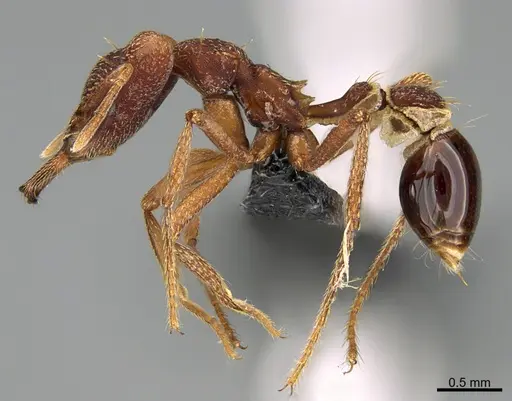
CASENT0640066
View on AntWeb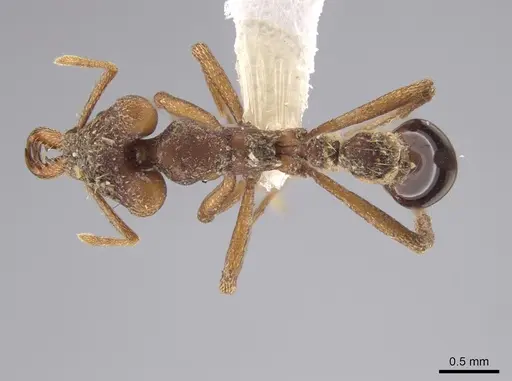
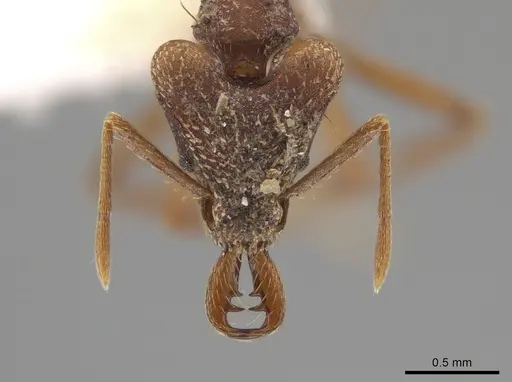
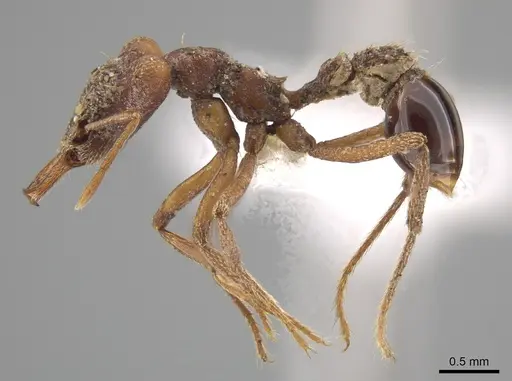
CASENT0900425
View on AntWeb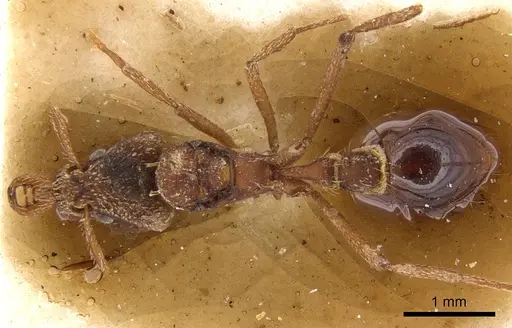
CASENT0914738
View on AntWeb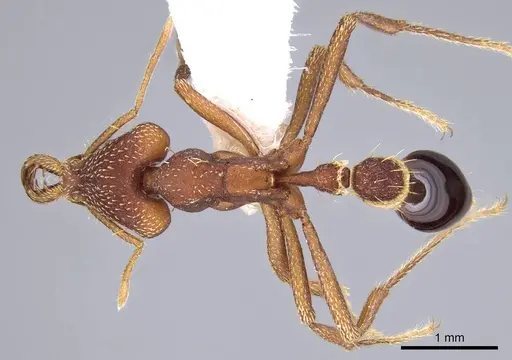
ECOFOG-TR17-0111-02
View on AntWeb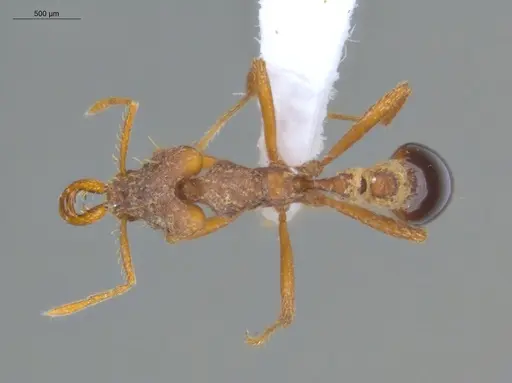
INBIOCRI001283960
View on AntWeb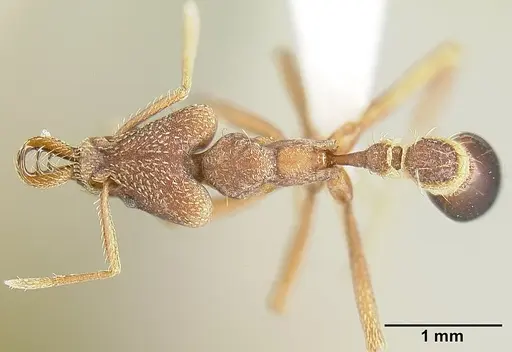
Literature
Loading distribution map...Loading products...