
Strumigenys friedae
- Sci. Name
- Strumigenys friedae
- Tribe
- Attini
- Subfamily
- Myrmicinae
- Author
- Forel, 1915
- Distribution
- Found in 1 countries
Introduction
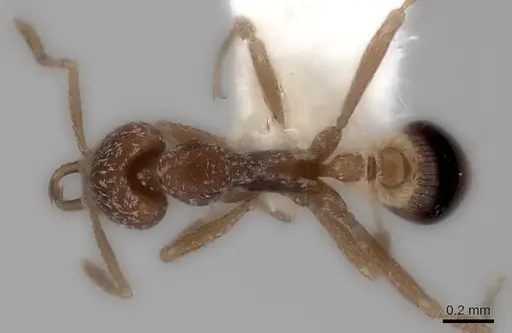
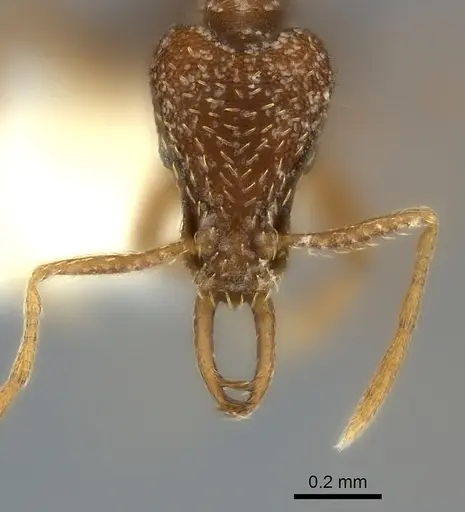
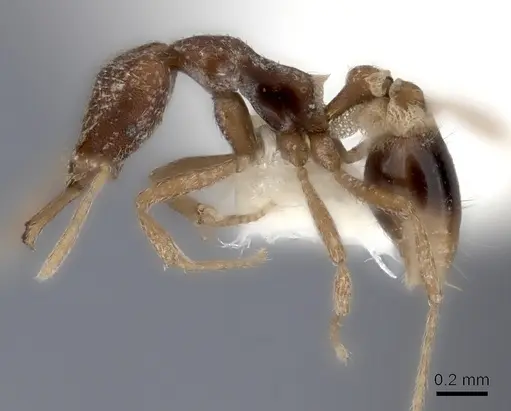
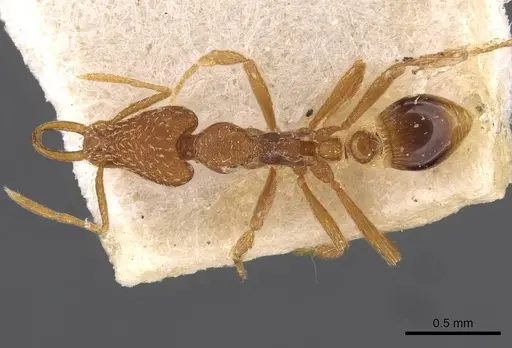
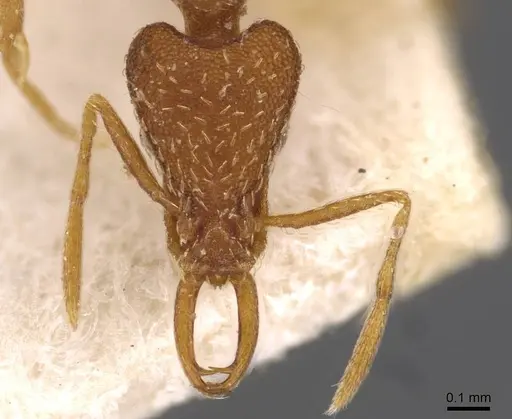
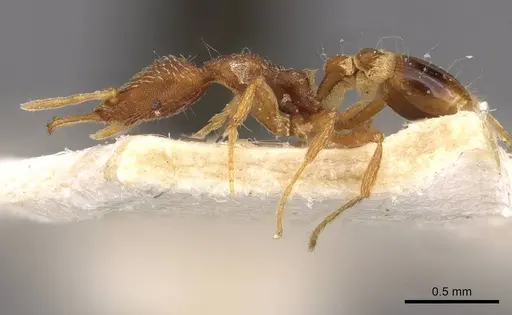
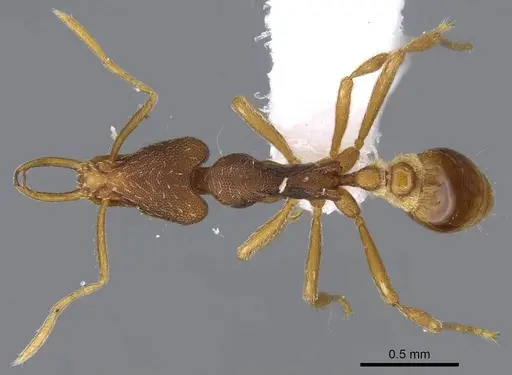
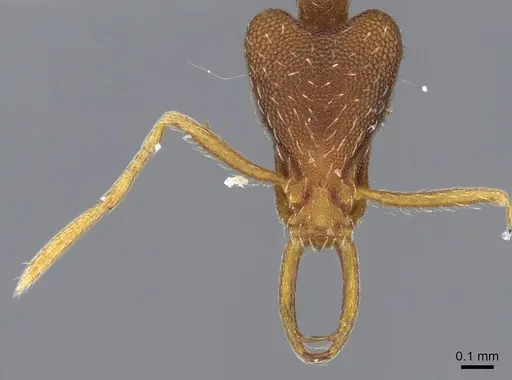
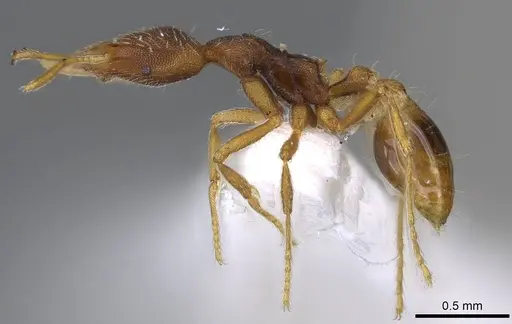
Strumigenys friedae is a tiny trap-jaw ant species from northern Australia's humid tropical regions. It belongs to the cryptic functional group, meaning it's small, slow-moving, and spends most of its time hidden in leaf litter, under stones, or in rotting wood . Workers measure roughly 2-3 mm, with the characteristic trap-jaw mandibles that snap shut at high speed to catch tiny prey. Their pale coloring and minuscule size make them easy to miss in the wild. As a Torresian species, S. friedae is adapted to warm, wet environments . What sets these ants apart is their ambush hunting strategy. Instead of chasing prey, they wait motionless until a springtail or mite comes close, then strike with lightning-fast mandibles. They are specialized predators of tiny soil arthropods, making them a fascinating but challenging species to keep in captivity.
Quick Summary
- Difficulty: Hard
- Origin & Habitat: Northern Australia (Torresian region), humid tropical forest leaf litter, under stones, and in rotting wood [1], habitat details inferred from the cryptic functional group.
- Colony Type: Queen number is unconfirmed for this species, by genus pattern Strumigenys are monogyne, but no species‑specific data exists.
- Size & Growth:
- Queen: ~3-4 mm, inferred from the Strumigenys genus (no specific measurements published).
- Worker: ~2-3 mm, inferred from the Strumigenys genus [1] (record noted but not a size measurement).
- Colony: Up to 100 workers, inferred from typical Strumigenys colony sizes, no species‑specific data.
- Growth: Slow, expected for specialized predators with small colony sizes.
- Development: Unknown, no species‑specific data, likely several weeks at warm temperatures. (Based on genus patterns, development is slow, precise durations are not documented.)
- Antkeeping:
- Temperature: Keep at 24-28°C, consistent with a tropical leaf‑litter microclimate. Use a gradient so ants can self‑regulate.
- Humidity: Keep the nest substrate consistently moist but not waterlogged. High humidity (70-85%) is typical for cryptic leaf‑litter species.
- Diapause: Unlikely, as tropical ants they probably do not require a true diapause, but may slow down during cooler periods. No direct study available.
- Nesting: Prefer naturalistic setups with moist substrate, small chambers, leaf litter, and rotting wood. Y‑tong (AAC) or plaster nests with tight chambers scaled to their tiny size work well. Avoid open acrylic nests.
- Behavior: This species is non‑aggressive towards humans. It possesses a functional stinger (as a member of Myrmicinae/Attini), but it is not medically significant and is rarely used in defense, they prefer to flee. Their trap‑jaw is for hunting, not defense. They move slowly and are cryptic. Escape prevention is critical: at 2-3 mm they can squeeze through minute gaps. Forage individually, ambushing tiny live prey (springtails, mites) in the substrate.
- Common Issues: escape prevention is critical, their tiny size lets them slip through standard barriers., require a constant supply of live micro‑prey (springtails, mites) which can be difficult to culture., very slow colony growth and small final size, can be frustrating for beginners., sensitive to drying out, humidity must be maintained consistently., wild‑caught colonies may carry parasites that can wipe out captive colonies.
Housing and Nest Setup
Strumigenys friedae requires a setup that mimics its natural leaf‑litter microhabitat. A naturalistic terrarium works best: a 2-3 cm layer of moist coco fiber, peat, or a soil mix, topped with leaf litter, small rotting wood pieces, and moss. The substrate should stay consistently moist but not waterlogged.
For the nest, use Y‑tong (AAC) or plaster nests with small, tight chambers. Avoid acrylic nests. A small water reservoir connected to the nest helps maintain humidity without flooding. Keep chambers sized appropriately for these tiny ants, they prefer cramped spaces.
Escape prevention is critical. Use fluon or PTFE on test tube rims, ensure all connections are sealed, and cover ventilation with fine mesh (at least 0.5 mm). Any gap is a potential escape route. [1]
Feeding and Diet
Strumigenys friedae is an obligate predator of live micro‑arthropods. Their trap‑jaw mandibles are designed to catch springtails (Collembola) and tiny mites. This species cannot survive on sugar water or prepared protein mixes.
Your primary food source should be live springtails. Culture your own colony for a steady supply. Acceptable alternatives include tiny booklice (psocids), fruit fly larvae, or very small pieces of freshly killed mealworm. Provide small amounts every 2-3 days, removing uneaten prey to prevent mold. Sugar is generally not accepted, some colonies may occasionally take a drop of honey, but do not rely on it.
Temperature and Humidity
As a tropical leaf‑litter ant, S. friedae needs warmth and high humidity. Maintain temperatures between 24-28°C. A gentle gradient (e.g., with a heating cable on one side) helps ants thermoregulate. Avoid sustained temperatures below 22°C or above 30°C.
Humidity is critical. Keep substrate moisture high (70-85% relative humidity). Achieve this by keeping the substrate moist, using a water reservoir, and limiting ventilation. Mist occasionally but avoid standing water.
Monitor your colony: if workers cluster and are sluggish, they may be too cold, if they avoid the nest and spend time on walls, it may be too dry. [1]
Behavior and Observation
The highlight of keeping S. friedae is watching them hunt. Foragers locate a springtail, freeze, and then snap their mandibles shut in milliseconds. This is not an aggressive species toward humans, if disturbed they will flee or play dead. They do possess a stinger (as a myrmicine), but it is not used for defense and is medically insignificant.
Colony activity is low, you will not see mass foraging or territorial fights. Instead, you will observe patient, individual hunting. This calm demeanor makes them good observation ants for patient keepers, but not for those wanting a bustling colony.
Colony Growth and Development
Colonies grow slowly. The first generation of workers (nanitics) will be smaller than later ones. A mature colony likely reaches 50-100 workers, but this is based on genus patterns, no species‑specific data exist. Be patient: overfeeding will not speed growth and can foul the nest. Consistent, appropriate prey and stable conditions are all they need.
Frequently Asked Questions
How long does it take for Strumigenys friedae to have first workers?
Unknown, no species‑specific data exists. Based on related Strumigenys, it likely takes several weeks at 26°C, but precise timing has not been studied.
Can I keep Strumigenys friedae in a test tube?
Test tubes work for founding, but you must provide a small hunting area with springtails. Keep the tube humid and warm. After the colony reaches 10+ workers, most keepers move them to a small naturalistic setup.
What do Strumigenys friedae eat?
They are obligate predators of live micro‑prey, primarily springtails and tiny mites. They cannot survive on sugar water or protein scraps alone. Culturing your own springtails is highly recommended.
Are Strumigenys friedae good for beginners?
No. They are not recommended for beginners due to their specialized diet (live springtails) and high humidity needs. Only experienced keepers who can provide these conditions reliably should attempt this species.
How big do Strumigenys friedae colonies get?
Likely up to 100 workers at maturity, but no species‑specific record exists. This small colony size is typical for the genus.
Do Strumigenys friedae need hibernation?
No species‑specific data, but as a tropical ant it probably does not require true diapause. Keep temperatures warm year‑round, they may slow down slightly during cooler periods.
Why are my Strumigenys friedae dying?
Common causes: drying out (humidity too low), lack of live prey, temperatures outside 24-28°C, stress from handling, or parasites from wild‑caught colonies. Check each factor and adjust accordingly.
When should I move Strumigenys friedae to a formicarium?
There is no rush, they prefer small spaces. Consider moving when the colony reaches 20-30 workers and you want better observation. A small Y‑tong or plaster nest with sealed joints works well.
Can I keep multiple Strumigenys friedae queens together?
Not recommended. Colony structure is not documented for this species, but Strumigenys are typically monogyne (single queen). Combining queens usually leads to fighting.
Report an Issue
The current care sheet is based fully on literature. See inconsistencies, or something that's incorrect? Please , it will be resolved after review from an admin. Contributing to the blogs tab also helps providing information, to make us be able to further improve the caresheets. Thank you for your support!
References

This caresheet is licensed under CC BY-SA 4.0 .
Community Blogs
Literature
Loading distribution map...Loading products...