
Strumigenys filirrhina
- Sci. Name
- Strumigenys filirrhina
- Tribe
- Attini
- Subfamily
- Myrmicinae
- Author
- Brown, 1950
- Distribution
- Found in 1 countries
Introduction
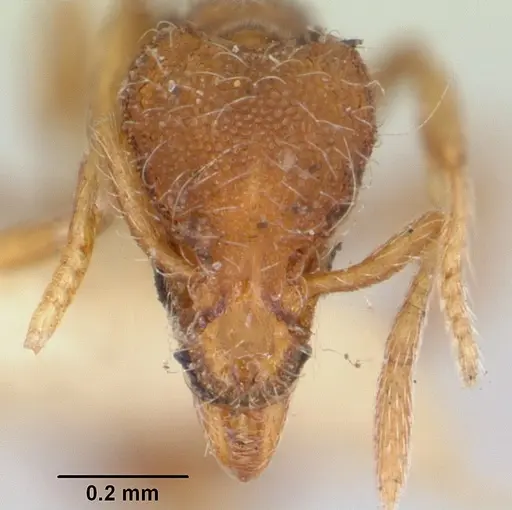
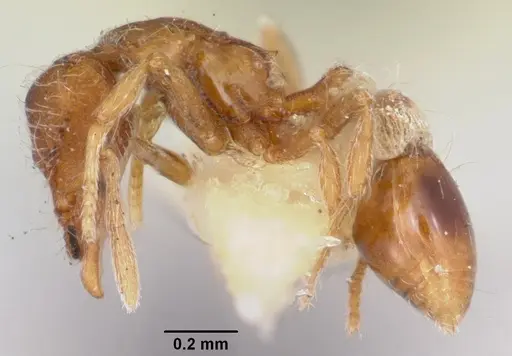
Strumigenys filirrhina is a tiny predatory ant native to the central United States, specifically documented from Missouri . Workers are among the smallest ants in North America, measuring about 2-3mm (inferred from genus). They belong to the Nearctic lineage of Strumigenys , a genus known for their extraordinary trap-jaw mandibles that snap shut in milliseconds to capture prey. These ants have a distinctive appearance with elongated mandibles, a small rounded head, and generally pale coloration. In the wild, they nest in soil, under stones, or in rotting wood in forested areas.
Quick Summary
- Difficulty: Hard
- Origin & Habitat: Central United States (Missouri), Nearctic region [1][2]. Found in forested habitats with moist soil conditions.
- Colony Type: Based on genus patterns, likely monogyne (single queen), but no specific data confirms this.
- Size & Growth:
- Queen: ~3-4mm, inferred from Strumigenys genus.
- Worker: ~2-3mm, inferred from Strumigenys genus.
- Colony: Up to 200 workers at maturity (estimated from genus patterns).
- Growth: Slow
- Development: Estimated 8-12 weeks based on related Strumigenys species at optimal temperature. (Development is typically slow for specialized predators. First workers (nanitics) will be smaller than mature workers.)
- Antkeeping:
- Temperature: Keep at 20-24°C. Room temperature is suitable for this Nearctic species. Avoid temperatures above 28°C.
- Humidity: High humidity required, keep nest substrate consistently moist but not waterlogged. These ants come from moist forest floor habitats.
- Diapause: Yes, as a Nearctic species from Missouri, a winter hibernation period is recommended. Reduce temperature to 10-15°C for 3-4 months during winter.
- Nesting: Y-tong (AAC) nests work well, or naturalistic setups with moist soil. They prefer tight, humid chambers scaled to their tiny size.
- Behavior: Docile toward humans but formidable predators. They possess a functional sting but are not aggressive toward people and rarely use it, their primary capture tool is the trap-jaw mandible for hunting tiny prey. Workers are slow-moving and cryptic. Escape prevention is critical due to their tiny size, they can squeeze through remarkably small gaps.
- Common Issues: tiny size makes escape prevention difficult, use fine mesh barriers., slow colony growth can lead to neglect during founding, be patient., specialized diet requires live prey, they cannot survive on dead food alone., wild-caught colonies may have parasites that cause colony collapse., overheating is a common killer, keep away from direct heat sources.
Housing and Nest Setup
Strumigenys filirrhina are tiny ants that require careful housing. A Y-tong (AAC) nest with narrow chambers works well, or you can use a naturalistic setup with moist soil in a small container. The key is providing tight, humid chambers that mimic their natural leaf-litter environment. Use a water reservoir connected to the nest to maintain humidity without flooding. For the outworld, keep it simple, a small container with a thin layer of moist substrate. Escape prevention is critical: these ants are incredibly small and can squeeze through gaps you wouldn't believe. Use fine mesh on any ventilation holes and ensure all connections are tight. A layer of fluon on the rim of the outworld helps prevent escapes.
Feeding and Diet
These are specialized predators that primarily hunt springtails. In captivity, you must provide live small prey, this is non-negotiable. Springtails are the ideal food source and should be available constantly. Other tiny live prey like booklice, grain mite nymphs, and fruit fly larvae can be offered as variety. They are unlikely to accept sugar water or honey, Strumigenys are obligate predators. Feed every 2-3 days, removing any uneaten prey after 24 hours. A well-fed colony will have workers that appear more active and robust. Never rely on dead prey or protein jelly, these ants simply won't accept it.
Temperature and Seasonal Care
Strumigenys filirrhina is a Nearctic species from Missouri, meaning it experiences cold winters. Keep the colony at room temperature (20-24°C) during the active season. This species does not require heating in most homes, standard room temperature is ideal. During winter (roughly November through March), you should simulate hibernation. Reduce temperature to 10-15°C by moving the colony to a cool basement, garage, or refrigerator. Do not feed during hibernation but keep the nest slightly moist. This winter rest period appears essential for colony health based on the species' native climate.
Behavior and Temperament
These are cryptic, ground-dwelling ants that spend most of their time hunting in the soil layer. Workers are slow-moving compared to many ants, methodically searching for prey. Their famous trap-jaw mandibles are used for hunting and as a defense mechanism. They possess a functional sting, but it is not medically significant and they rarely use it on humans. Colonies are peaceful and non-aggressive. You may rarely see foragers out in the open, they prefer to stay hidden. The main behavioral note is their escape risk: despite their small size, they are surprisingly active and will find any gap in your setup. Check your barriers regularly.
Frequently Asked Questions
How long does it take for Strumigenys filirrhina to produce first workers?
Expect 8-12 weeks from egg to first worker at room temperature. This is slow compared to many ants, but normal for Strumigenys. The queen seals herself in and raises the first brood alone without foraging.
Can I keep Strumigenys filirrhina in a test tube setup?
Yes, test tubes work well for founding colonies. Use a small test tube with a cotton barrier and keep it horizontal in a humid container. The queen will need a tiny hunting area once nanitics emerge, a small outworld with springtails.
What do Strumigenys filirrhina ants eat?
They are obligate predators that need live prey. Springtails are the ideal food, offer them constantly. Other tiny live prey like booklice, fruit fly larvae, or tiny mites can be offered as variety. They do not accept sugar or honey.
How big do Strumigenys filirrhina colonies get?
Based on genus patterns, mature colonies likely reach up to 200 workers. They are naturally small colonies that grow slowly. Do not expect large numbers like in Lasius or Camponotus.
Do Strumigenys filirrhina need hibernation?
Yes, as a Nearctic species from Missouri, they require a winter hibernation period. Reduce temperature to 10-15°C for 3-4 months during winter. This is essential for colony health.
Are Strumigenys filirrhina good for beginners?
No, they are not ideal for beginners. Their specialized diet (live springtails required), slow growth, tiny size (escape risk), and hibernation requirements make them a challenge. They are better suited for keepers with some experience.
Why are my Strumigenys filirrhina dying?
Common causes include: lack of live prey (they will starve if only given dead food), overheating (keep below 28°C), escape (check for tiny gaps), or parasites from wild colonies. Also ensure humidity is high, they die quickly in dry conditions.
Report an Issue
The current care sheet is based fully on literature. See inconsistencies, or something that's incorrect? Please , it will be resolved after review from an admin. Contributing to the blogs tab also helps providing information, to make us be able to further improve the caresheets. Thank you for your support!
References

This caresheet is licensed under CC BY-SA 4.0 .
Community Blogs
CASENT0105848
View on AntWeb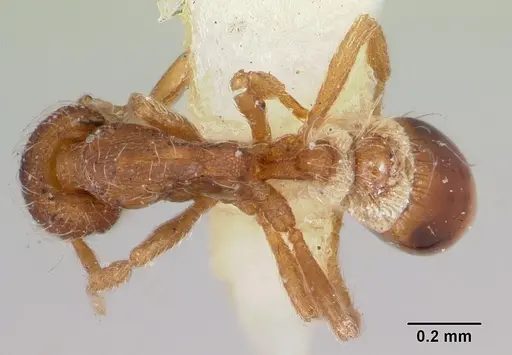
Literature
Loading distribution map...Loading products...