
Strumigenys fairchildi
- Sci. Name
- Strumigenys fairchildi
- Tribe
- Attini
- Subfamily
- Myrmicinae
- Author
- Brown, 1961
- Distribution
- Found in 2 countries
Introduction
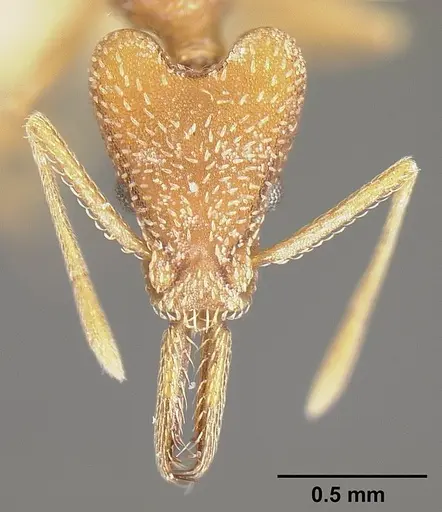
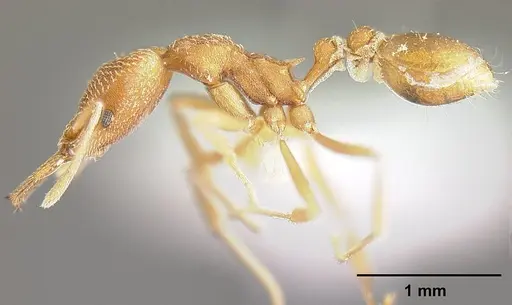
Strumigenys fairchildi is a small tropical ant, with workers measuring 3.7-4.1 mm in total length. They have a rusty yellow color and a finely striated gaster . These ants belong to the dacetine group (tribe Attini) and are specialized predators with modified trap‑jaw mandibles. They are found across the Neotropical region including Costa Rica, Panama, Ecuador, and French Guiana, always in wet forests. The species is arboreal - it nests in plant cavities above ground rather than in soil . The first worker was collected in Panama in 1961,walking on a rotten stick in leaf litter . Strumigenys fairchildi is known to be preyed on by the army ant Eciton hamatum, which tells us about their small size and place in the forest food web .
Quick Summary
- Difficulty: Expert
- Origin & Habitat: Wet tropical forests of Central and South America (Costa Rica, Panama, Ecuador, French Guiana). Collected in fogging samples and from live plant stems, showing an arboreal lifestyle [1].
- Colony Type: Colony structure is unconfirmed, not documented in scientific literature.
- Size & Growth:
- Queen: Unknown, queen has not been described in the literature.
- Worker: 3.7-4.1 mm [1]
- Colony: Unknown, no colony size estimates are available.
- Growth: Unknown
- Development: Unconfirmed, no development data exists for this species. (Related Strumigenys species typically have slow colony growth due to their specialized predatory lifestyle.)
- Antkeeping:
- Temperature: Keep warm and stable,24-28°C. This is a strict tropical ant, never let temperatures drop below 22°C [1].
- Humidity: High humidity is essential, these ants come from wet forest environments. Keep the nest substrate consistently moist but not waterlogged. Mist regularly and provide a water source. Aim for humid greenhouse conditions [1].
- Diapause: No, this is a tropical species that does not require hibernation. Maintain consistent warm, humid conditions year‑round [1].
- Nesting: Arboreal nesters in nature, they inhabit plant cavities, hollow stems, or rotting wood above ground. In captivity, use a plaster or 3D‑printed nest with small, tight chambers scaled to their tiny size (3.7-4.1 mm). Include moss, small leaf pieces, or rotting wood to simulate their natural habitat. The nest should have vertical space or climbing structures [1].
- Behavior: These ants are specialized predators with trap‑jaw mandibles for capturing small arthropod prey. They forage actively on vegetation, not on the ground. Because of their tiny size, escape prevention is critical, they can slip through very small gaps. They have a functional sting, but it is mild and not dangerous to humans. They are not aggressive toward humans but will defend the colony if disturbed. Handle with care (e.g., use fine mesh and tight lids).
- Common Issues: escape prevention is critical due to their small size (under 4mm), use fine mesh and tight‑fitting lids, high humidity can lead to mold if ventilation is inadequate, specialized live‑prey diet, they often refuse standard ant foods, so live springtails, fruit flies, etc. are essential, tropical species sensitive to temperature drops, even brief cold exposure can be fatal, rarely available in the hobby, so obtaining a colony is difficult
Housing and Nest Setup
Strumigenys fairchildi needs an arboreal‑style setup that mimics its natural plant‑dwelling habitat. Use a plaster or 3D‑printed nest with small, tight chambers, these ants feel secure in snug spaces. The chambers should be narrow, scaled to their tiny 3.7-4.1 mm size. Include small pieces of moss, leaf material, or rotten wood for enrichment. Because they are arboreal, the nest should have some vertical space or climbing structures. A water reservoir inside the nest helps maintain humidity without constant misting. Escape prevention is absolutely critical, these tiny ants can slip through gaps you would not notice. Use fine mesh on ventilation holes and ensure all lids fit tightly. The nest should be placed in a warm, stable location away from drafts [1].
Feeding and Diet
As dacetine ants, Strumigenys fairchildi are specialized predators. Their trap‑jaw mandibles are designed for capturing tiny prey such as springtails, mites, and small insects. They are obligate predators, they will likely reject sugar water, honey, or standard ant foods. In captivity, offer live small prey: springtails, fruit flies, and other tiny arthropods. Feed 2-3 times per week, adjusting based on colony consumption. Remove uneaten prey promptly to prevent mold. Always provide a clean water source. Because of their specialized diet, this species is very challenging to feed and is not recommended for beginners.
Temperature and Humidity
This is a strict tropical ant that requires warm, humid conditions year‑round. Maintain the nest at 24-28°C, never go below 22°C. Use a heating cable on one side of the nest to create a temperature gradient, but avoid direct heat that could dry them out. High humidity (around 70-85%) is essential. Use a water reservoir connected to the nest or mist regularly to keep the substrate damp but not waterlogged. Good ventilation is needed to prevent mold while maintaining humidity, balancing this is tricky. Place the setup in a stable, warm area away from air conditioning and drafts [1].
Behavior and Temperament
Strumigenys fairchildi is a specialized predator with fascinating trap‑jaw mandibles. They are not aggressive toward humans and usually flee when disturbed, but they will defend the colony if the nest is opened. Their small size makes them prey for larger ants, including the army ant Eciton hamatum, which explains their secretive, arboreal lifestyle [2]. Workers forage actively on vegetation, likely using chemical trails to recruit nestmates to prey. Watching them hunt is one of the most interesting aspects of keeping this species. They have a functional sting, but it is mild and not a concern for keepers.
Colony Establishment
Establishing a colony of Strumigenys fairchildi is extremely challenging. If you are lucky enough to get a queen, she needs a small, humid founding chamber. The founding behavior is unconfirmed for this species, we do not know if she is claustral or semi‑claustral. Based on related Strumigenys species, she may seal herself in and rely on fat reserves until the first workers emerge. The chamber should be tiny and snug, with damp substrate. Place it in a warm, dark spot and disturb it as little as possible. First workers (nanitics) will be very small and should begin hunting small prey soon after emergence. Growth will likely be slow, be patient and keep conditions stable. Do not disturb the queen during founding.
Legal and Ethical Considerations
Strumigenys fairchildi is a Neotropical species native to Central and South America. If you keep this ant outside its native range, never release it into the wild, it could become invasive or disrupt local ecosystems. Ensure your colony was obtained legally and ethically. Because of its specialized habitat needs and limited distribution, it is rarely available in the antkeeping hobby. If you do obtain one, you take on significant responsibility to maintain proper conditions for a demanding species [1].
Frequently Asked Questions
Can I keep Strumigenys fairchildi in a test tube?
A test tube can work for a founding queen, but you will need to move the colony to a proper nest soon after the first workers appear. Their small size and arboreal nature mean they need more vertical space and plant material than a standard test tube provides. A small plaster or 3D‑printed nest with tight chambers is more suitable for an established colony [1].
What do Strumigenys fairchildi ants eat?
They are obligate predators and need live small prey. Offer springtails, fruit flies, and tiny arthropods. They will likely reject sugar water, honey, or prepared ant foods, their trap‑jaw mandibles are built for hunting, not for collecting sweet liquids [1].
How long does it take for Strumigenys fairchildi to go from egg to worker?
The development timeline is unconfirmed for this species. Based on related Strumigenys, expect roughly 6-10 weeks at optimal tropical temperatures (26-28°C), but this is only a guess. Growth is probably slow due to their specialized predatory lifestyle.
Are Strumigenys fairchildi good for beginners?
No, this is an expert‑level species. Their requirements for constant high humidity, warm temperatures, a live‑prey diet, and rigorous escape prevention make them very challenging even for experienced keepers. They are also nearly impossible to find in the hobby [1].
Do Strumigenys fairchildi need hibernation?
No, they are strict tropical ants from wet forests and do not require any diapause. Keep warm and humid year‑round. Temperatures below 22°C can harm or kill them [1].
How big do Strumigenys fairchildi colonies get?
Colony size is unconfirmed. Based on related Strumigenys species, colonies are probably small, likely under 100-200 workers. They are not large colony builders.
Can I keep multiple Strumigenys fairchildi queens together?
This has not been studied. Based on related Strumigenys, they probably form single‑queen colonies. Combining unrelated queens is not recommended and may lead to fighting.
Why are my Strumigenys fairchildi dying?
Common causes: temperature too low (below 22°C), humidity too low or inconsistent, lack of live prey, mold from poor ventilation, or escape through tiny gaps. Check all conditions and make sure you are offering appropriate live prey. This species is very sensitive to environmental changes [1].
When should I move Strumigenys fairchildi to a formicarium?
Move them once the colony reaches 10-20 workers and the test tube becomes cramped. They prefer snug chambers, so do not use an oversized nest. Ensure the new setup maintains high humidity and has small passages sized for their tiny workers.
Report an Issue
The current care sheet is based fully on literature. See inconsistencies, or something that's incorrect? Please , it will be resolved after review from an admin. Contributing to the blogs tab also helps providing information, to make us be able to further improve the caresheets. Thank you for your support!
References

This caresheet is licensed under CC BY-SA 4.0 .
Community Blogs
CASENT0653708
View on AntWeb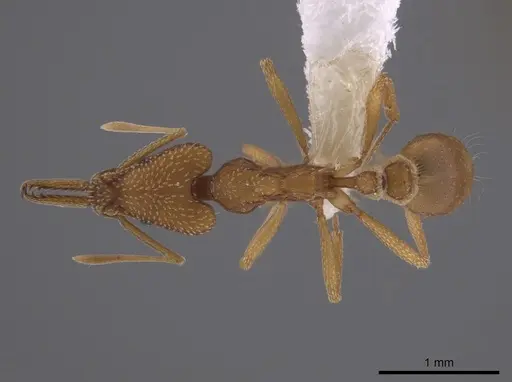
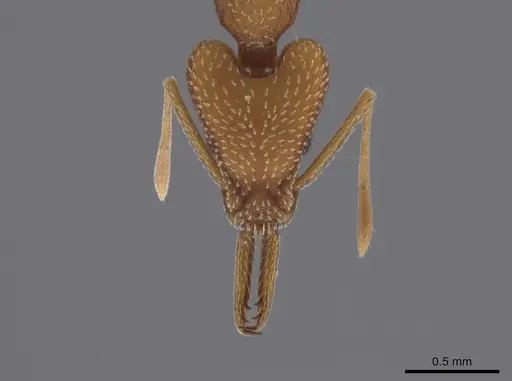
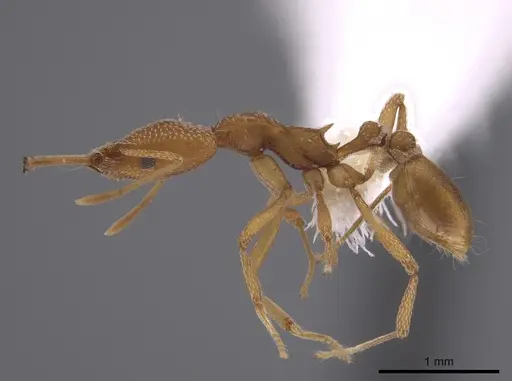
INBIOCRI001284019
View on AntWeb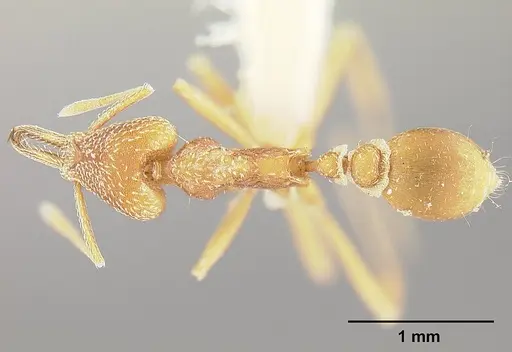
Literature
Loading distribution map...Loading products...