
Strumigenys exiguaevitae
- Sci. Name
- Strumigenys exiguaevitae
- Tribe
- Attini
- Subfamily
- Myrmicinae
- Author
- Baroni Urbani, 2007
- Distribution
- Found in 1 countries
Introduction
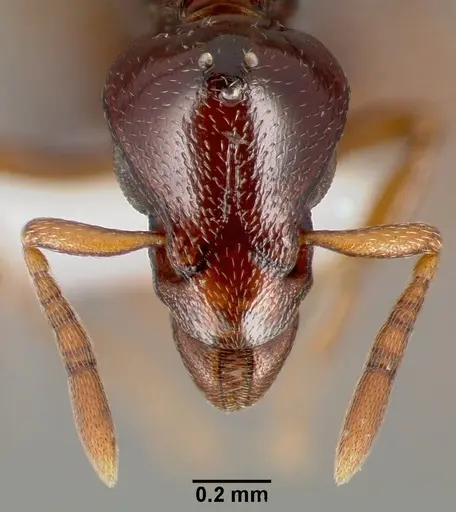
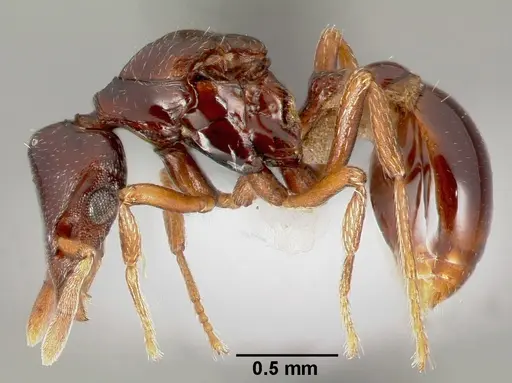
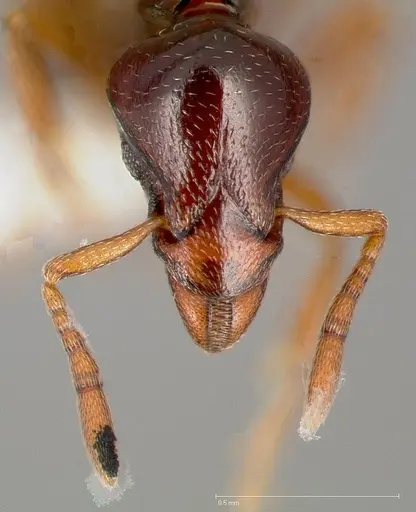
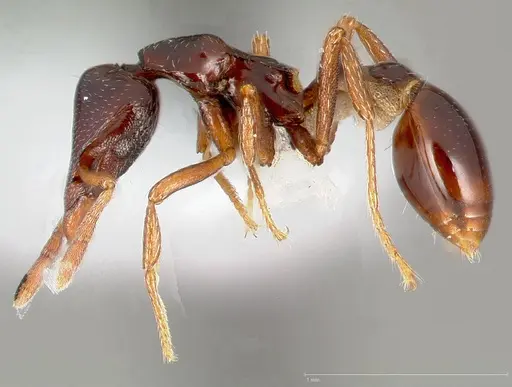
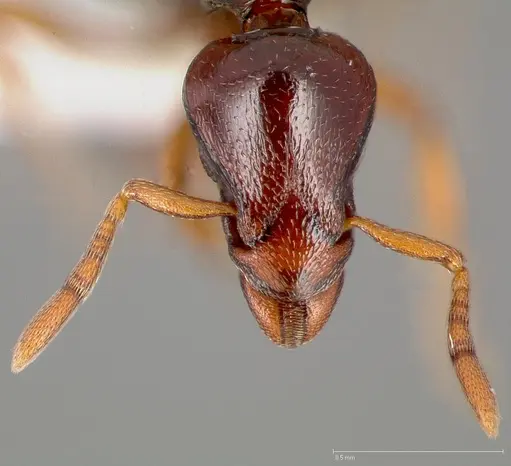
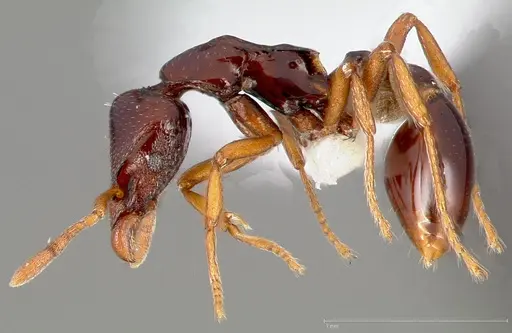
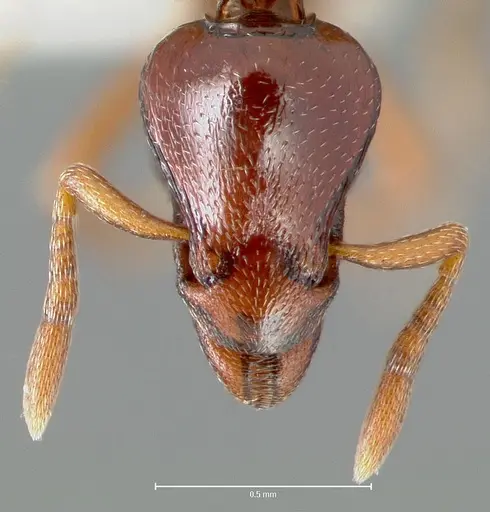
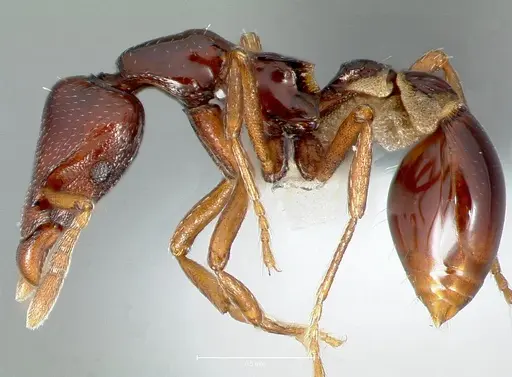
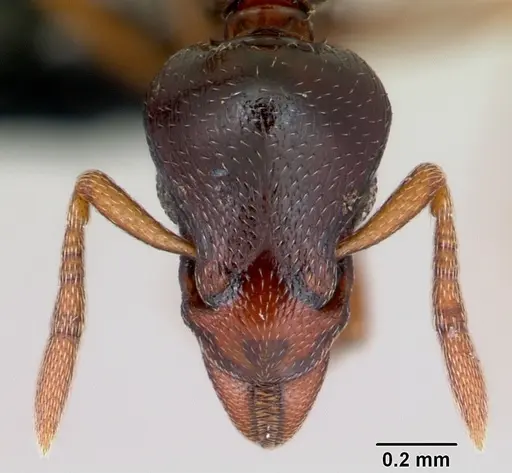
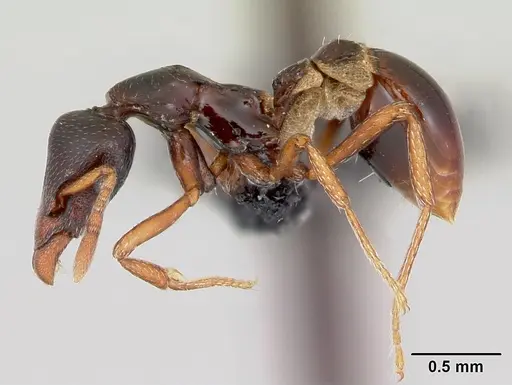
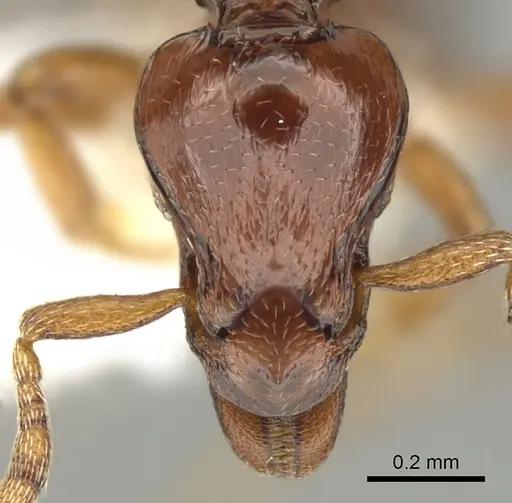
Strumigenys exiguaevitae is a tiny predatory ant endemic to Madagascar, with workers measuring 3.2-3.7mm total length . It belongs to the dacetine group of the tribe Attini (subfamily Myrmicinae). Workers have a uniquely high-domed head with four short erect hairs arranged in a square at the highest point of the vertex, a feature shared only with its close relative Strumigenys serket . Originally described as Pyramica hoplites in 2000,the species was renamed in 2007 because the name was already in use . It inhabits montane and rainforest habitats, living in leaf litter, rotting wood, and under moss on live trees .
Quick Summary
- Difficulty: Expert
- Origin & Habitat: Endemic to Madagascar, recorded from montane and rainforest habitats at elevations of 758-1250 m [1]. Collected from leaf litter, rotting wood, and under moss on live trees [1].
- Colony Type: Unconfirmed, no data available. Most Strumigenys species appear to have single-queen colonies, but this has not been studied for S. exiguaevitae.
- Size & Growth:
- Queen: Size data unavailable, no measurements for queens in the available literature.
- Worker: 3.2-3.7 mm total length [1]
- Colony: Unknown. Related Strumigenys species rarely exceed 100 workers, but no colony size data exists for this species.
- Growth: Unknown, likely slow based on typical dacetine biology, but unconfirmed.
- Development: Unknown, no data. Based on related dacetines, estimated 4-8 months at typical temperatures. (Development is not documented. Patience is required if attempting to raise this species.)
- Antkeeping:
- Temperature: Unknown. Inferred from its highland rainforest habitat: likely prefers cool conditions around 20-24°C. Avoid temperatures above 28°C.
- Humidity: Unknown but likely high, given its natural microhabitat in damp leaf litter and moss. Provide a humidity gradient with moist substrate, but do not waterlog.
- Diapause: Unknown. Madagascar’s highlands have a cooler dry season, but whether this species requires a true diapause is not documented.
- Nesting: Unknown. Based on natural collections (leaf litter, rotting wood, moss), a naturalistic setup with high humidity and decomposing organic material may be suitable. Y-tong or plaster nests could work, but no captive data exists.
- Behavior: Behavior is not well-documented. Like other Strumigenys, they are likely slow-moving, non-aggressive predators of micro-arthropods (e.g., springtails). They have a functional sting (subfamily Myrmicinae) but it is not medically significant to humans. Because workers are under 4 mm, excellent escape prevention is critical, they can squeeze through tiny gaps.
- Common Issues: escape prevention is critical due to tiny size, seal all gaps and use fine mesh., specialized live prey required, cannot survive on dead food or sugar, a springtail culture is essential., slow colony growth and high humidity needs make them prone to mold if ventilation is poor., no captive care data exists, any attempt is experimental and may result in colony failure., wild-caught colonies may carry parasites or diseases that cause collapse.
Housing and Nest Setup
No captive care data exists for this species. Based on its natural habitat (moist leaf litter, rotting wood, and moss), any setup should maintain very high humidity and include decomposing organic material. Y‑tong or plaster nests with a water reservoir are likely candidates, but experimental approaches are needed. Escape prevention is paramount, workers are under 4 mm and can slip through standard barriers. Use fine mesh (≤0.5 mm) on all ventilation points and seal all joints. Avoid direct sunlight and vibrations.
Feeding and Diet
Dietary preferences are unconfirmed. Related Strumigenys species are obligate predators of micro‑arthropods, especially springtails (Collembola). If this applies, live springtails will be the primary food. Other tiny prey such as booklice or fruit fly larvae may be accepted. Dead food, sugar water, and honey will likely be ignored. Establish a thriving springtail culture before acquiring this species. Feed small amounts every 2-3 days and remove uneaten prey after 24 hours to prevent mold.
Temperature and Seasonal Care
No precise temperature requirements are known. Given the cool highland rainforest habitat of Madagascar, temperatures around 20-24°C are a reasonable starting point. Avoid exceeding 28°C, which could be lethal. A slight winter cooling (15-18°C) may be natural but is unstudied. Use a heating cable only if room temperature drops below 18°C, and create a gradient across the nest. Avoid rapid fluctuations.
Behavior and Temperament
Little is documented. Workers are probably slow, deliberate foragers that hunt tiny prey in leaf litter. They are not aggressive toward humans and have a functional sting (subfamily Myrmicinae), but it is not medically significant, their first response is to flee. Because of their tiny size, escape prevention must be meticulous. Despite being challenging, they are fascinating to watch while hunting.
Colony Development
Colony development is undocumented. Based on other dacetines, a queen likely raises her first brood using stored reserves (claustral founding), but this has not been confirmed. Workers may take 4-8 months to appear, and colony growth will be very slow. Do not disturb the queen during founding. Patience is essential, and the first workers (nanitics) may be smaller than mature workers.
Frequently Asked Questions
Can I keep Strumigenys exiguaevitae in a test tube?
A test tube is not ideal, it cannot maintain the high humidity and substrate this species likely needs. A Y‑tong or plaster nest with a water reservoir is better. If you must use a test tube, add moist cotton and a small amount of leaf litter, but escape prevention will be very difficult.
What do Strumigenys exiguaevitae eat?
They probably need live springtails and other micro‑arthropods. They are not expected to accept dead food, honey, or sugar water. Establish a springtail culture before acquiring this species.
How long does it take for first workers to appear?
Unknown. Based on other dacetines, expect 4-8 months from egg to worker, but this is speculative. No data exists for this species.
Are Strumigenys exiguaevitae good for beginners?
No. Their unknown care requirements, need for live springtails, tiny size, and slow growth make them an expert‑only species. Beginners should start with easier ants like Lasius niger or Tetramorium caespitum.
Do Strumigenys exiguaevitae need hibernation?
Unknown. The highlands of Madagascar have a cooler dry season, but whether this species requires a true diapause is not documented. A slight cooling period (15-18°C) in winter may be beneficial, but is not confirmed.
Why are my Strumigenys dying?
Common potential causes: lack of live prey (they starve), incorrect temperature (too high or too low), low humidity (desiccation), escapes, and disturbance during founding. These are all speculative, no systematic data exists.
How big do Strumigenys exiguaevitae colonies get?
Unknown. Related Strumigenys species rarely exceed 100 workers, but there are no data for this species. Expect modest colony sizes even after years.
Can I keep multiple queens together?
Not documented. Most Strumigenys appear to be monogyne (single queen). Do not attempt to combine queens, they will likely fight.
When should I move them to a formicarium?
No evidence‑based recommendation. Wait until the colony has at least 20-30 workers and is actively foraging. A small Y‑tong or plaster nest may be used.
What temperature range is ideal for Strumigenys exiguaevitae?
Probably 20-24°C based on its cool highland habitat. Avoid exceeding 28°C. This is an estimate, no studies confirm it.
Is Strumigenys exiguaevitae invasive anywhere?
No. It is endemic to Madagascar and has never been recorded outside its native range [1][2].
Report an Issue
The current care sheet is based fully on literature. See inconsistencies, or something that's incorrect? Please , it will be resolved after review from an admin. Contributing to the blogs tab also helps providing information, to make us be able to further improve the caresheets. Thank you for your support!
References

This caresheet is licensed under CC BY-SA 4.0 .
Community Blogs
CASENT0005452
View on AntWeb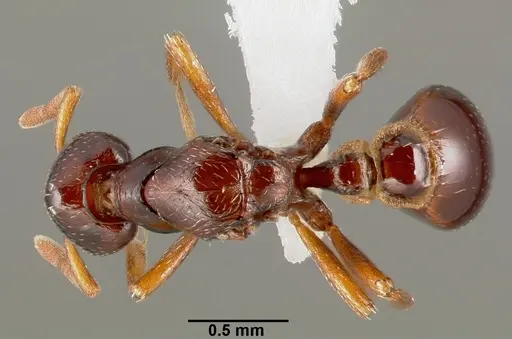
CASENT0005453
View on AntWeb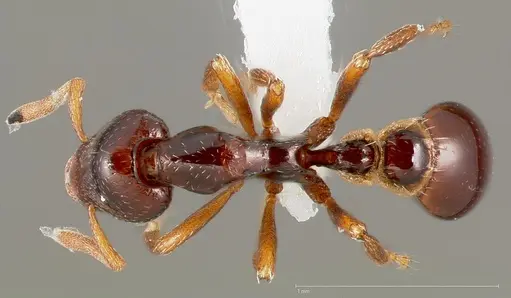
CASENT0005454
View on AntWeb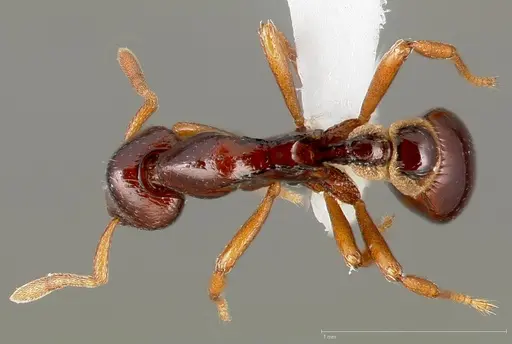
CASENT0005993
View on AntWeb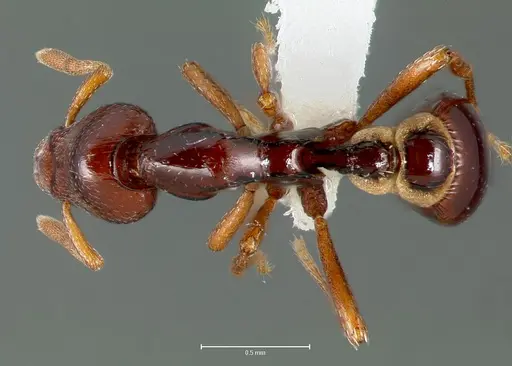
CASENT0456151
View on AntWeb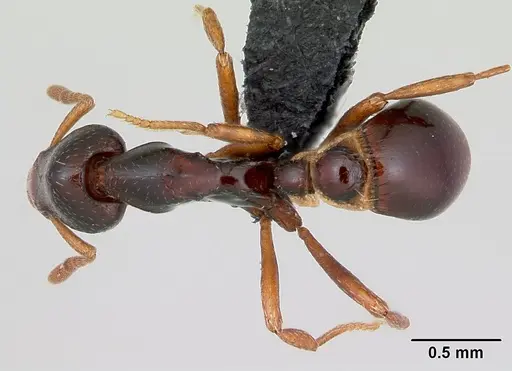
CASENT0900036
View on AntWeb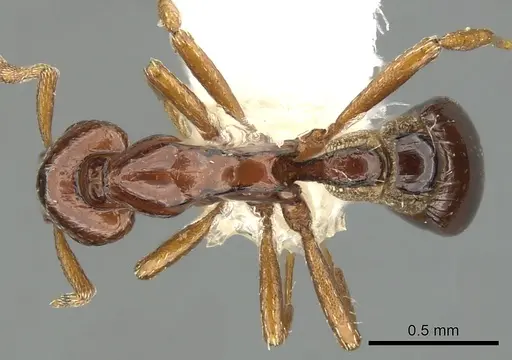

Literature
Loading distribution map...Loading products...