
Strumigenys excisa
- Sci. Name
- Strumigenys excisa
- Tribe
- Attini
- Subfamily
- Myrmicinae
- Author
- Weber, 1934
- Distribution
- Found in 5 countries
Introduction
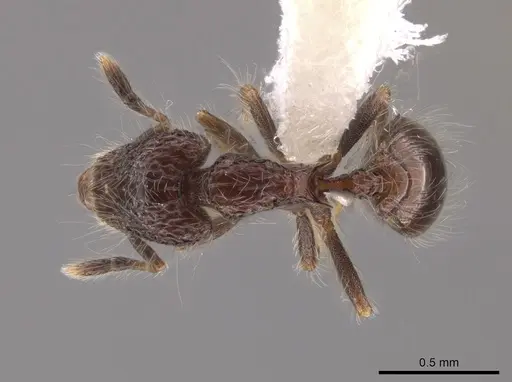
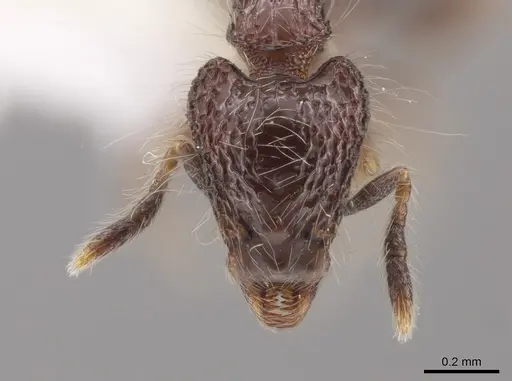
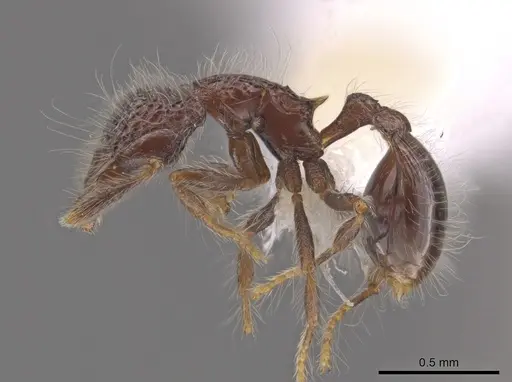
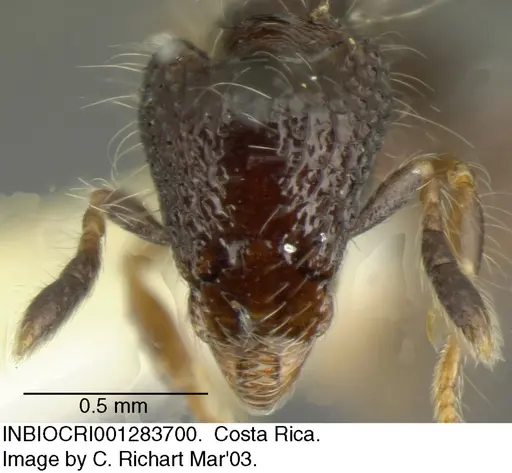
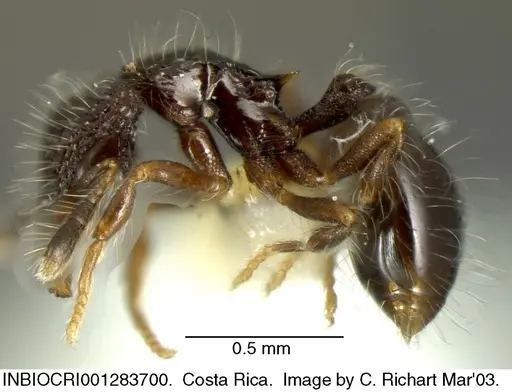
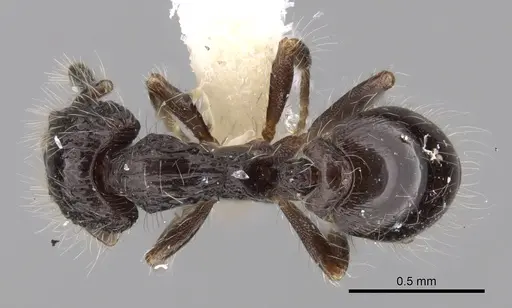
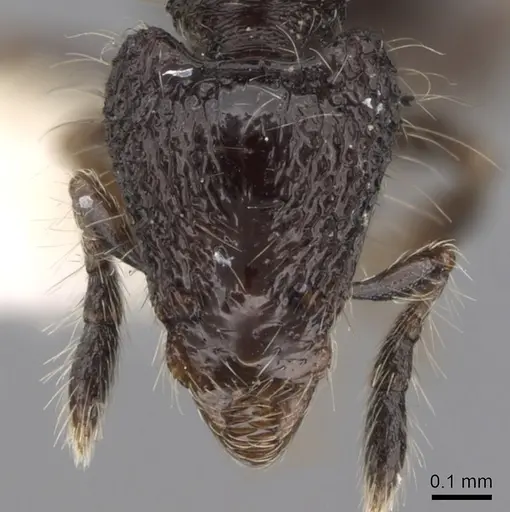
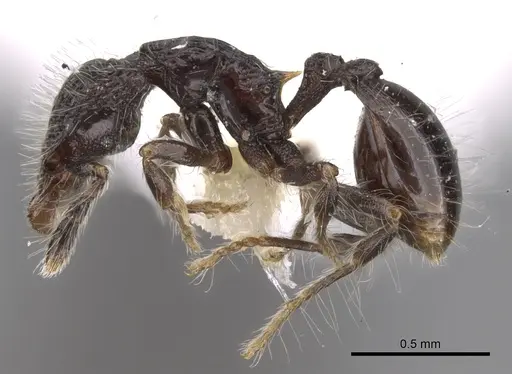
Strumigenys excisa is a tiny predatory ant measuring just 2.2–2.3 mm in total length . These ants belong to the trap-jaw ant group (Dacetini tribe), with short, downward-curving mandibles that snap shut rapidly to capture prey . They inhabit wet tropical forests of Central America, from Costa Rica to southern Mexico, living in forest floor leaf litter at elevations around 800 m . The species was first described from Nicaragua in 1934 , and is one of the most frequently collected Strumigenys in the region due to its wide range . What makes S. excisa unusual is that the type specimen was found in the stomach of a poison dart frog (Dendrobates tinctorius) . Like other Strumigenys, they are specialized predators that use their trap-jaw mandibles to hunt tiny prey like springtails and other micro-arthropods in the leaf litter .
Quick Summary
- Difficulty: Expert
- Origin & Habitat: Wet tropical forests of Central America (Costa Rica, Guatemala, Honduras, Belize, Nicaragua, Mexico). Found in forest floor leaf litter at elevations around 800 m [1][2].
- Colony Type: Based on genus patterns, likely monogyne (single queen), but unconfirmed. Colonies are expected to be small (under 100 workers) due to their tiny size and ground-dwelling litter habitat [3].
- Size & Growth:
- Queen: Unknown, estimated slightly larger than workers, roughly 2.5–3 mm (inferred from genus patterns)
- Worker: 2.2–2.3 mm [1]
- Colony: Under 100 workers (estimated)
- Growth: Slow, inferred from genus patterns
- Development: Estimated 8–12 weeks (inferred from related Dacetini species) (No specific data exists for this species, expect slow growth typical of small tropical ants.)
- Antkeeping:
- Temperature: Keep at 24–28 °C, they are tropical ants from wet forests. Provide a gentle gradient and avoid temperatures below 22 °C [1].
- Humidity: High humidity required, think damp forest floor. Keep substrate consistently moist but not waterlogged. These ants live in leaf litter where humidity stays naturally high [1].
- Diapause: No, they are tropical and do not require hibernation. Maintain warm, stable conditions year-round.
- Nesting: Use a naturalistic setup with fine, moisture‑retaining substrate (e.g., coco fiber or a soil mix). A Y-tong or plaster nest with small chambers can work, but they prefer a spacious outworld with leaf litter. Add pieces of decaying leaves, twigs, or small wood to hunt through.
- Behavior: These are shy, cryptic ants that spend most of their time hunting in leaf litter and soil. They are not aggressive and will flee from threats. Their tiny size (2.2 mm) makes escape prevention critical, they can squeeze through standard mesh. Use fine mesh (≤0.5 mm) and tight‑fitting lids. They are slow‑moving compared to larger ants but use their trap‑jaw mandibles to snap at tiny prey. Workers are rarely seen foraging in the open [1]. They have a functional stinger (as a myrmicine ant) but it is too small to sting humans effectively.
- Common Issues: escape prevention is critical, at 2.2 mm they slip through standard ant mesh easily, colonies are very small and grow slowly, which can frustrate beginners, high humidity can lead to mold if ventilation is poor, specialized diet means they may refuse standard ant foods, live micro‑prey is essential, wild‑caught colonies may arrive stressed or with parasites from their leaf litter habitat
Housing and Setup
Strumigenys excisa requires a setup that mimics their natural leaf litter habitat. A naturalistic terrarium‑style enclosure works best, use a shallow container filled with a moist substrate like coco fiber, peat moss, or a soil mix that holds humidity well. Add pieces of decaying leaves, twigs, and small bits of wood for the ants to hunt through. The substrate should be kept consistently damp but never waterlogged. Because they are tiny, a small outworld with a deep substrate layer (at least 5 cm) gives them space to forage. Test tube setups are not recommended for this species as they need to hunt through material. Use fine mesh (0.5 mm or smaller) on any ventilation holes, these ants can escape through standard ant mesh due to their small size [1].
Feeding and Diet
Strumigenys excisa is a specialized predator that hunts tiny micro‑arthropods in leaf litter [1]. Their primary diet should consist of live springtails (Collembola), which you can culture separately or purchase. They may also accept other tiny prey like micro‑mites, booklice (Psocoptera), and fruit fly larvae. Unlike many ants, they are not typically interested in sugar sources or honey. Do not feed them standard ant foods like mealworms or crickets, these are far too large for their tiny mandibles. Offer small live prey items frequently (every 2–3 days) and remove any uneaten prey after 24 hours to prevent mold. Some keepers report success with freshly killed prey offered on a small piece of wet paper towel [1].
Temperature and Humidity
As tropical wet forest ants, Strumigenys excisa needs warm, humid conditions [1]. Maintain temperatures between 24–28 °C, they are not tolerant of cool conditions and may become sluggish below 22 °C. Use a low‑wattage heat mat under one side of the enclosure to create a gentle temperature gradient. Humidity is critical, aim for 70–85% relative humidity inside their enclosure. The substrate should feel damp to the touch but not have standing water. Mist the enclosure regularly and use a moisture‑retaining substrate. A layer of leaf litter on top helps maintain humidity. Avoid placing the setup near air conditioning or in drafty areas, sudden temperature drops can stress these delicate ants [1].
Behavior and Colony Life
This is a cryptic, ground‑dwelling species that spends most of its time hunting through leaf litter and soil [1]. Workers are rarely seen out in the open and will quickly retreat when disturbed. They use their trap‑jaw mandibles to capture tiny prey, when triggered, the mandibles snap shut with remarkable speed [1]. Colonies remain small (likely under 100 workers) even at maturity, which is typical for litter‑dwelling Strumigenys. Queens are not particularly large compared to workers and are somewhat cryptic. These ants are not defensive and pose no threat to keepers, their stinger is too small to sting humans effectively. Their shy nature means you may not see much activity, which is normal for this species [1].
Finding and Acquiring Colonies
Strumigenys excisa is not commonly available in the antkeeping hobby since they are difficult to collect and maintain. If you want to keep this species, you would need to collect them yourself from Central American leaf litter (where legal) or find a specialized keeper who has successfully propagated a colony. When collecting, look for them in Winkler or Berlese samples of forest floor litter in wet tropical forests [1]. They are one of the more frequently collected Strumigenys in the region, so with effort they can be found [2][1]. Never release these ants outside their native range, they are not established in the US or other countries outside Central America and could become invasive [2].
Frequently Asked Questions
Can I keep Strumigenys excisa in a test tube?
No, test tubes are not suitable for this species. They are tiny, ground‑dwelling ants that need to hunt through leaf litter and soil. A naturalistic setup with moist substrate and decaying organic material is essential for their survival [1].
What do Strumigenys excisa ants eat?
They eat tiny live prey, primarily springtails (Collembola). They are specialized predators that cannot tackle larger insects. Offer live micro‑prey every few days. Sugar sources are typically not accepted [1].
How long does it take for Strumigenys excisa to develop from egg to worker?
Exact development time is unknown, but based on related Dacetini species, expect 8–12 weeks at optimal temperature (24–28 °C). Growth is slow and colonies remain small.
Are Strumigenys excisa good for beginners?
No, this is an expert‑level species. They require specialized housing with fine substrate, high humidity, live micro‑prey diet, and excellent escape prevention due to their tiny size. They are also rarely available in the hobby [1].
Do Strumigenys excisa need hibernation?
No, they are tropical ants from wet forests and do not require any hibernation or cooling period. Keep them warm (24–28 °C) year‑round [1].
How big do Strumigenys excisa colonies get?
Colony size is unconfirmed, but likely under 100 workers at maturity based on genus patterns for small, litter‑dwelling Strumigenys.
Why are my Strumigenys excisa dying?
Common causes include: temperature too low (below 22 °C), humidity too low, substrate drying out, lack of live prey, or escapes through tiny gaps. Check all parameters and ensure you are offering appropriate live micro‑prey [1].
When should I move Strumigenys excisa to a formicarium?
A formicarium is not recommended. These ants do best in naturalistic setups with deep, moist substrate where they can hunt naturally. A simple plastic container with substrate and leaf litter works better than any commercial formicarium [1].
Report an Issue
The current care sheet is based fully on literature. See inconsistencies, or something that's incorrect? Please , it will be resolved after review from an admin. Contributing to the blogs tab also helps providing information, to make us be able to further improve the caresheets. Thank you for your support!
References

This caresheet is licensed under CC BY-SA 4.0 .
Community Blogs
Literature
Loading distribution map...Loading products...