
Strumigenys euryale
- Sci. Name
- Strumigenys euryale
- Tribe
- Attini
- Subfamily
- Myrmicinae
- Author
- Bolton, 2000
- Distribution
- Found in 0 countries
Introduction
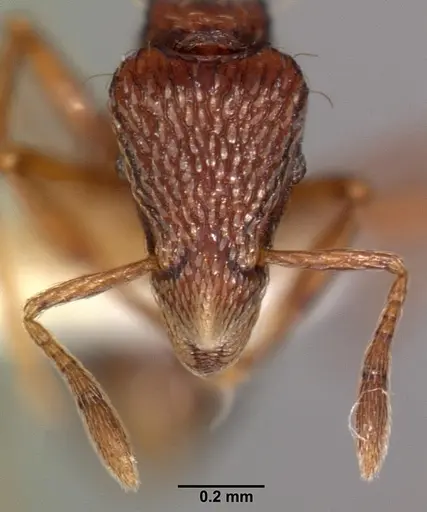
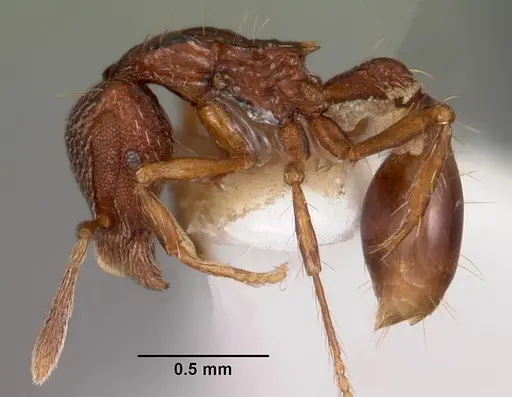
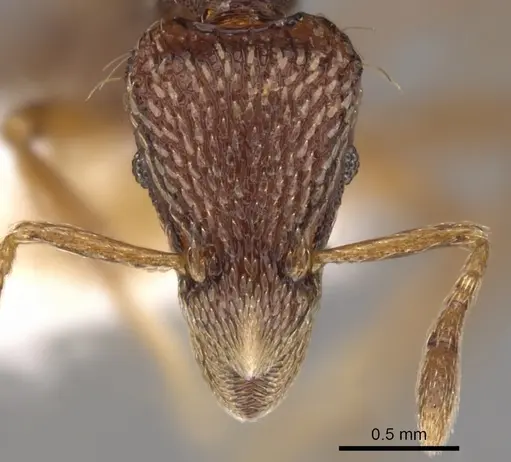
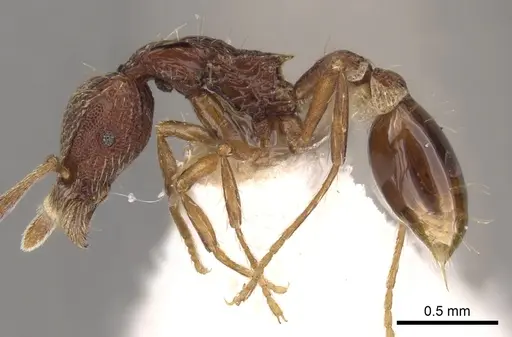
Strumigenys euryale is a minute predatory ant, workers measuring 2.8-3.0 mm in total length . This species is easily recognized by the high median crest on its clypeus, which is covered in dense spatulate hairs . It belongs to the Strumigenys leptothrix group. Its propodeum bears short spines subtended by carinae, and the propodeal lobes are low and rounded . The species is found in the Indomalaya region (Borneo, Indonesia, Malaysia, Philippines) at elevations of 1500-1600 m, where it inhabits leaf litter in humid montane forests . Workers forage both during the day and at night . As a member of the tribe Attini, Strumigenys euryale has a functional stinger, though it is not medically significant. The biology of this species is virtually unknown ; no information exists on its colony structure, queen morphology, or reproductive behavior. This makes it an extremely challenging species to keep, requiring careful experimentation and observation.
Quick Summary
- Difficulty: Expert
- Origin & Habitat: Indomalaya region (Borneo, Indonesia, Malaysia, Philippines), found in leaf litter in montane forests at 1500-1600 m elevation, e.g., Crocker Range and Mt. Kinabalu in Sabah, Borneo [1]. Forages in leaf litter both day and night [2].
- Colony Type: Unknown, no data on queen number or colony structure in the wild [1]
- Size & Growth:
- Queen: Unknown, not described in any literature [1]
- Worker: 2.8-3.0 mm total length [1]
- Colony: Unknown, no wild colony data available [1]
- Growth: Unknown, likely slow based on related Strumigenys species
- Development: Unknown, no direct data available, related Strumigenys species develop slowly due to specialized diet and small colony sizes (Development timeline unconfirmed for this species.)
- Antkeeping:
- Temperature: Unknown for this species directly, but given its high-elevation tropical habitat, moderate temperatures around 20-25°C are likely. Provide a thermal gradient and avoid extremes below 18°C or above 28°C [1].
- Humidity: High humidity required, think leaf litter in a moist tropical forest. Keep the substrate consistently moist but not waterlogged, use a moisture gradient so ants can choose [1].
- Diapause: Unknown, as a tropical montane species, it probably does not require a diapause period, but a slight reduction in temperature during the cooler months may be beneficial [1].
- Nesting: Provide a naturalistic setup with deep, humid leaf litter and small chambers scaled to the ants’ tiny size. Y-tong (AAC) or plaster nests with narrow passages work well. Avoid acrylic nests, use dark, enclosed spaces to mimic their preferred microhabitat [1].
- Behavior: Strumigenys euryale is a specialized predator of springtails and other micro-arthropods, using rapid snap-jaw mandibles to capture prey. Workers forage in leaf litter during both day and night [2]. They are timid and rely on fleeing rather than aggression. Their sting is functional but not medically significant. Escape prevention is critical due to their minute size, they can squeeze through the smallest gaps. They pose no threat to humans.
- Common Issues: escape prevention is critical due to their minute size, use fine mesh and tight-fitting lids, no biological data available, you will essentially be pioneering captive care for this species, high humidity requirements can lead to mold if ventilation is poor, balance moisture with airflow, specialized diet, they require live springtails or other micro-prey, standard ant foods will not sustain them, slow growth and small colony sizes mean patience is essential, don’t expect rapid expansion
Housing and Nest Setup
Because Strumigenys euryale is so small, you need carefully scaled housing. A Y-tong (AAC) or plaster nest with narrow chambers works well, or you can create a naturalistic setup with a deep layer of moist leaf litter where the ants can hunt. The nest chambers should be small, the workers are only about 3 mm long. Provide a water tube with a cotton plug, but ensure good drainage to prevent flooding. Since they come from humid montane forests [1], keep the substrate consistently moist with a moisture gradient. Use a small outworld container and seal all connections tightly, these ants can escape through gaps you might not even see. A terrarium-style setup with live moss and leaf litter mimics their natural environment.
Feeding and Diet
Strumigenys are specialized predators of springtails and other tiny soil arthropods. In captivity, you must provide live springtails as the primary food, this is essential. You can culture springtails at home or buy them from pet stores. Other tiny live prey like booklice (psocids), minute soil mites, or very small isopods may also be accepted. Do not expect them to eat sugar water, honey, or standard ant protein foods, these predators have evolved to hunt micro-prey. Offer small prey every few days and remove any leftovers after 24 hours to prevent mold. Watching the rapid snap of their mandibles as they capture prey is one of the main rewards of keeping this species.
Temperature and Humidity
28°C) or cold ( [1]
Behavior and Foraging
Strumigenys euryale workers forage in leaf litter both during the day and at night [2]. They are specialized predators that use rapid snap-jaw movements to capture springtails and other tiny prey. Workers likely hunt alone or in small groups, searching through the litter layer. They are not aggressive toward humans and prefer to flee if disturbed. Their sting is functional but not medically significant. Because of their tiny size (under 3 mm), they are vulnerable, so they need dark, humid hiding places. Minimize disturbances and observe from a distance. The hunting behavior, quick mandible snaps, is the most interesting aspect to watch.
Colony Establishment
Nothing is known about the biology of Strumigenys euryale [1], so establishing a colony will require experimentation. If you obtain a founding queen, provide a small test tube setup with high humidity and offer her tiny live springtails or pieces of springtail. Whether she is claustral or semi-claustral is unknown, she may need feeding during founding. The first workers (nanitics) will be extremely small and need live micro-prey immediately. Expect very slow growth, Strumigenys colonies typically remain small, often with at most a few hundred workers even when mature. Patience and careful observation are essential.
Frequently Asked Questions
What do Strumigenys euryale ants eat?
Strumigenys euryale is a specialized predator that requires live springtails as its main food. They use rapid snap-jaw movements to capture springtails and other tiny soil arthropods. They will not accept sugar water, honey, or standard ant foods. Other small live prey like booklice or minute mites may be accepted.
How big do Strumigenys euryale colonies get?
The maximum colony size for Strumigenys euryale is unknown [1]. Based on related Strumigenys species, colonies likely reach at most a few hundred workers. This species does not form large colonies.
What temperature do Strumigenys euryale ants need?
The temperature requirements are not directly known, but they come from montane forests at 1500-1600 m, so a moderate range of 20-25°C is likely [1]. Provide a thermal gradient and avoid extremes.
Are Strumigenys euryale good for beginners?
No, Strumigenys euryale is not suitable for beginners. This is an expert-level species because almost nothing is known about its biology, it requires specialized live prey (springtails), needs high humidity, and is extremely tiny, making escape prevention very difficult. Only experienced keepers should attempt it.
How long does it take for Strumigenys euryale to develop from egg to worker?
The exact development time is unknown [1]. Based on related Strumigenys species, it may take 6-10 weeks at optimal temperatures, but this is speculation. Expect slow development.
Do Strumigenys euryale need hibernation or diapause?
No. Being a tropical montane species, it probably does not require diapause. A slight temperature reduction during the cooler months may not be harmful, but it is not necessary [1].
Why are my Strumigenys euryale dying?
Common causes include: escape (they are tiny and can squeeze through very small gaps), starvation (they need live springtails, not regular ant food), low humidity (they require consistently moist conditions), temperature extremes (too hot or too cold), and poor ventilation (leading to mold). Also ensure you are providing a suitable dark nesting area.
Can I keep Strumigenys euryale in a test tube setup?
Yes, a test tube setup can work for founding colonies, but the chambers must be very small to match their tiny size. A Y-tong (AAC) nest with narrow passages is often more practical. Whichever setup you choose, ensure excellent escape prevention, these ants can pass through gaps of 1 mm or less.
Where is Strumigenys euryale found in the wild?
Strumigenys euryale is found in the Indomalaya region: Borneo, Indonesia, Malaysia, and the Philippines [1]. They inhabit leaf litter in montane forests at elevations of 1500-1600 m, such as the Crocker Range and Mt. Kinabalu in Sabah, Borneo [1].
Report an Issue
The current care sheet is based fully on literature. See inconsistencies, or something that's incorrect? Please , it will be resolved after review from an admin. Contributing to the blogs tab also helps providing information, to make us be able to further improve the caresheets. Thank you for your support!
References

This caresheet is licensed under CC BY-SA 4.0 .
Community Blogs
CASENT0102601
View on AntWeb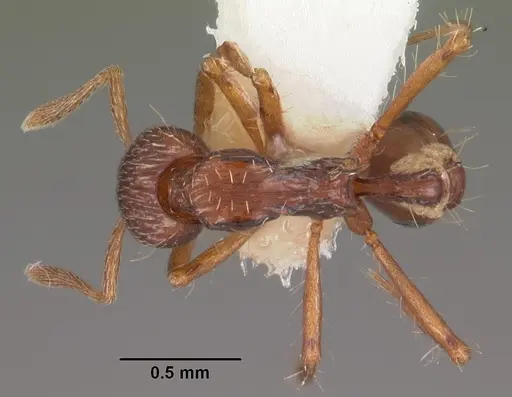
CASENT0900128
View on AntWeb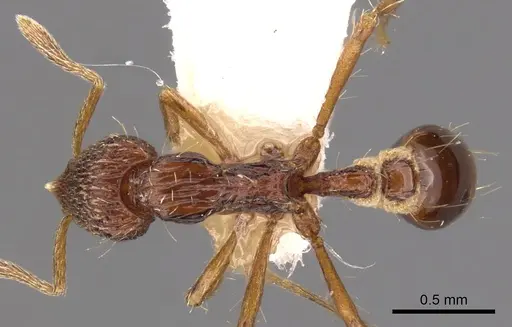
Literature
Loading distribution map...Loading products...