
Strumigenys erikae
- Sci. Name
- Strumigenys erikae
- Tribe
- Attini
- Subfamily
- Myrmicinae
- Author
- Longino, 2006
- Distribution
- Found in 1 countries
Introduction
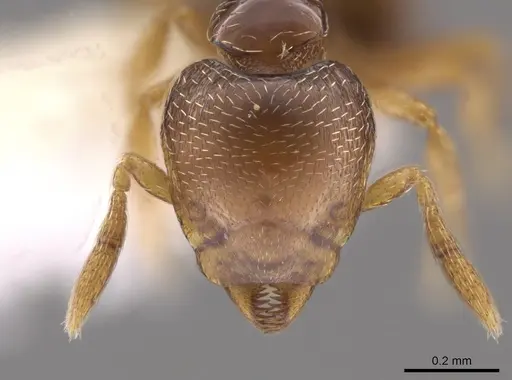
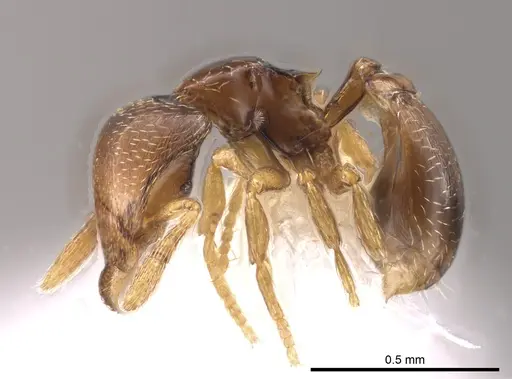
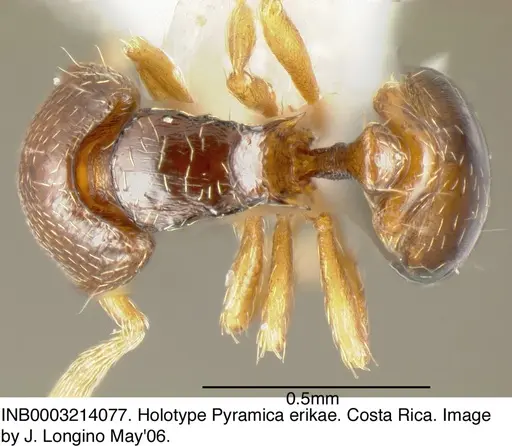
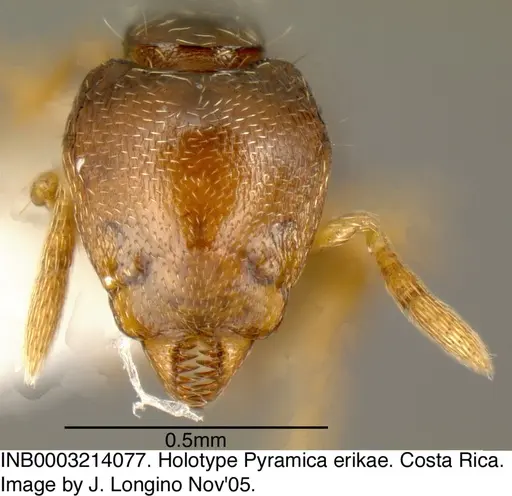
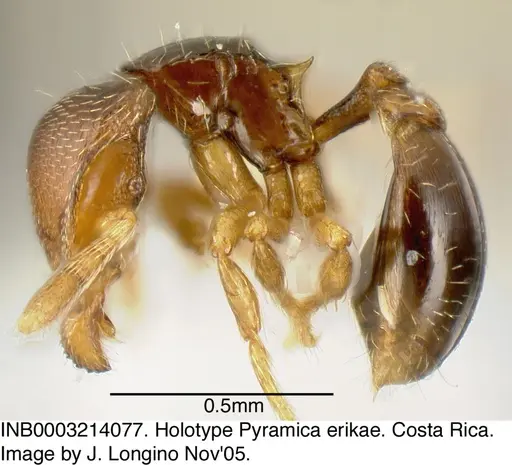
Strumigenys erikae is an extremely tiny ant from the rainforests of Costa Rica . Workers are very small (total length not documented but typical for leaf-litter Strumigenys), with short, downward-curving mandibles that snap shut to capture prey . The species has a uniquely fused body structure (strongly ankylosed mesosoma) that sets it apart from related ants . These ants live in mature cloud forest at around 1100 m elevation, where they hunt tiny invertebrates in the leaf litter layer . This is one of the rarest ant species known - originally described from just two workers . They are ground-dwelling ants that prefer the damp, stable environment of the forest floor . Like other Strumigenys, they likely use their trap‑jaw mandibles to ambush micro‑prey, though specific hunting behavior has never been documented.
Quick Summary
- Difficulty: Expert
- Origin & Habitat: Costa Rica, mature cloud forest at 1100 m elevation. Collected from sifted leaf litter on the forest floor [1] [2].
- Colony Type: Colony structure is unconfirmed, this species is known from only a handful of specimens. Based on related Strumigenys, likely single‑queen colonies.
- Size & Growth:
- Queen: Undescribed, only workers have been collected [1]
- Worker: Size data unavailable. Workers are very small, typical for leaf‑litter Strumigenys (head length ~0.56 mm).
- Colony: Unknown, only two workers known from the type series [1]
- Growth: Unknown
- Development: Unconfirmed, no captive data exists (No direct data for this species. Estimates based on related small tropical Myrmicinae are speculative.)
- Antkeeping:
- Temperature: This species comes from a cool mid‑elevation cloud forest. Keep around 22‑24 °C and avoid temperatures above 28 °C [1].
- Humidity: Very high humidity required, the nest substrate should be consistently moist but not waterlogged. Provide a water reservoir.
- Diapause: Unlikely, being a tropical species from stable cloud forest conditions, it probably does not need a diapause period [1].
- Nesting: A naturalistic setup with very small chambers works best. The tiny size means they need tight, appropriately scaled nesting spaces. Use Y‑tong, plaster, or small soil nests.
- Behavior: Very shy and non‑aggressive. These are specialized predators that hunt tiny springtails and micro‑arthropods in the leaf litter. They flee rather than engage if threatened. Escape prevention is critical due to their extremely small size, they can squeeze through standard insect mesh. They are slow‑moving but can deliver a quick snap with their trap‑jaw mandibles when catching prey [1].
- Common Issues: extreme rarity makes obtaining colonies nearly impossible, only two workers have ever been collected [1], tiny size means escape prevention must be excellent, standard mesh won't work, use fine cloth or PTFE barriers, virtually no captive breeding data exists, this species has never been established in captivity, high humidity requirements can lead to mold problems if ventilation is poor, specialized diet of live micro‑prey makes feeding challenging, they need springtails, booklice, or similar
Housing and Nest Setup
Housing Strumigenys erikae presents unique challenges because of their extreme small size. You need chambers and passages scaled to their tiny dimensions, standard ant nest sizing is far too large. A Y‑tong (AAC) nest with the smallest available chambers, or a custom plaster nest with fine‑scale tunnels, would work best. The nest must maintain very high humidity while allowing some ventilation to prevent mold. Because they are escape artists, use fine mesh (e.g.,100‑mesh or finer) and seal all connections. A naturalistic setup with a deep layer of damp forest‑floor substrate (soil and leaf litter) can also work, though it makes observation harder. The outworld should be simple and easy to clean, with a small water test tube for hydration. [1]
Feeding and Diet
Strumigenys erikae is a specialized predator, like others in the genus. They likely hunt small springtails, mites, and other micro‑arthropods found in forest floor litter. In captivity, you should offer live micro‑prey such as springtails, tiny isopods, and booklice. Frozen fruit flies may be accepted if moved in front of them to simulate movement. They are not likely to accept sugar water or honey, Strumigenys are not typically interested in carbohydrates. Feed small prey every few days, removing uneaten food after 24 hours to prevent mold. The key is offering live prey small enough for their tiny mandibles and moving enough to trigger their hunting response [1].
Temperature and Humidity
This species comes from Costa Rican cloud forests at 1100 m elevation, where temperatures are moderate and humidity is consistently high [1]. Keep your colony at room temperature, ideally around 22‑24 °C. Avoid temperatures above 28 °C, which could stress or kill them. Humidity should be very high, the nest substrate should feel perpetually damp. Use a water tube or reservoir connected to the nest to maintain humidity through evaporation. Avoid placing the nest near heating elements that could dry it out. If you see workers clustering near the water source, your humidity is too low.
Behavior and Temperament
Strumigenys erikae is extremely shy and non‑aggressive. They are not defensive toward humans and will not attack or sting (though they do possess a functional stinger, like other Myrmicinae). Their primary defense is hiding in the leaf litter, and their small size helps them avoid predators. When hunting, they use their trap‑jaw mandibles to snap shut on prey, this is fascinating to observe but means they need live, moving prey to trigger the hunt. They are slow‑moving ants that spend most of their time foraging through the substrate. Because they are so small and reclusive, you may not see much activity, that is normal. They do not fight with colony members and should form well‑structured colonies if kept alive. [1]
Acquisition and Ethical Considerations
Strumigenys erikae is one of the rarest ants in the hobby, it has never been successfully established in captivity. The species is known from only a few specimens collected in Costa Rican cloud forests [1]. It appears restricted to specific rainforest preserves [3]. If you ever encounter this species for sale, it would almost certainly be wild‑caught. Given how rare and poorly understood it is, keeping it is not recommended for anyone except the most experienced specialist antkeepers working with researchers. Instead, consider more commonly available Strumigenys species like Strumigenys margaritae or Strumigenys membranifera, which have established captive populations. Supporting conservation of Costa Rican cloud forests is a better way to appreciate this species than attempting to keep it.
Frequently Asked Questions
Can I keep Strumigenys erikae in a test tube?
A test tube setup could work for a founding colony, but standard test tubes are far too large for these tiny ants. You would need to create a custom small‑scale setup with appropriately sized chambers. The test tube should have a very small water reservoir and be kept horizontally or at an angle so the ants can access moisture. High humidity is critical, consider using a small piece of damp cotton instead of a large water chamber.
How long does it take for Strumigenys erikae to develop from egg to worker?
This has never been documented, no Strumigenys erikae colony has ever been established in captivity. Any timeline would be pure speculation.
Are Strumigenys erikae good for beginners?
No. This species is absolutely not suitable for beginners, it is one of the most difficult ants to keep. They are extremely rare, require specialized micro‑prey diets, need very high humidity, and have never been successfully kept in captivity. Even expert antkeepers should not attempt this species. Instead, consider more common Strumigenys that are established in the hobby.
What do Strumigenys erikae eat?
Based on genus patterns, they are specialized predators of micro‑arthropods. You would need to offer live springtails, mites, booklice, and other very small invertebrates. They are unlikely to accept sugar water, honey, or dead protein. The prey must be small enough for their tiny mandibles and moving to trigger their hunting response.
Can I keep multiple queens together?
This is unknown, the colony structure of this species has never been studied. Based on related Strumigenys, they are typically single‑queen colonies. Do not attempt combining unrelated queens as it has never been studied and would likely result in fighting.
How big do Strumigenys erikae colonies get?
Unknown, only two workers have ever been collected in the wild [1]. This species appears to be naturally rare or very difficult to collect. Any colony size estimate would be pure guesswork.
Do Strumigenys erikae need hibernation?
No. Being a tropical cloud forest species from Costa Rica, they do not require a diapause or hibernation period. Keep them at a stable warm temperature year‑round, ideally around 22‑24 °C [1].
Why are my Strumigenys erikae dying?
Without any established captive colonies, we cannot say what specifically causes mortality. Likely causes include wrong temperature (too hot or too cold), humidity issues (too dry or too wet leading to mold), starvation (lack of appropriate live micro‑prey), or stress from handling. This species is so poorly known that keeping it alive would be extremely challenging even for experts.
Where does Strumigenys erikae live in the wild?
This species is only known from mature cloud forests in Costa Rica at around 1100 m elevation. It has been collected from sifted leaf litter on the forest floor. It appears restricted to specific rainforest preserves [3] and is one of the rarest ant species in Costa Rica [1].
Report an Issue
The current care sheet is based fully on literature. See inconsistencies, or something that's incorrect? Please , it will be resolved after review from an admin. Contributing to the blogs tab also helps providing information, to make us be able to further improve the caresheets. Thank you for your support!
References

This caresheet is licensed under CC BY-SA 4.0 .
Community Blogs
CASENT0648809
View on AntWeb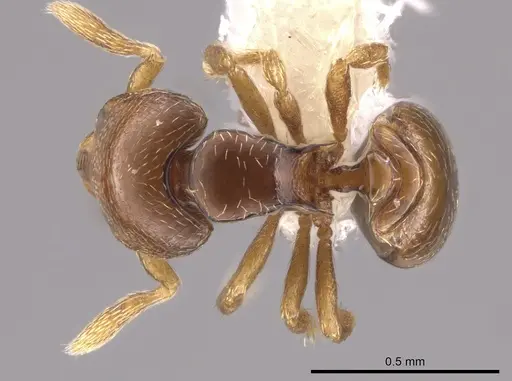
INB0003214077
View on AntWeb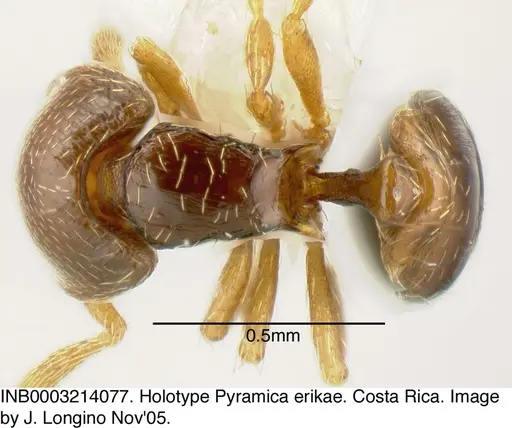
Literature
Loading distribution map...Loading products...