
Tree-hole Mustache Ant
Strumigenys epinotalis
- Sci. Name
- Strumigenys epinotalis
- Tribe
- Attini
- Subfamily
- Myrmicinae
- Author
- Weber, 1934
- Common Name
- Tree-hole Mustache Ant
- Distribution
- Found in 6 countries
Introduction
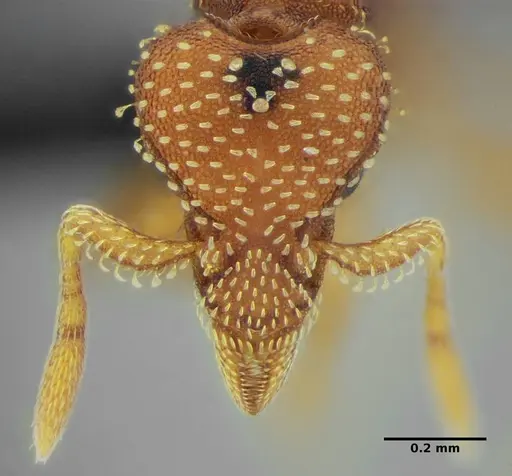
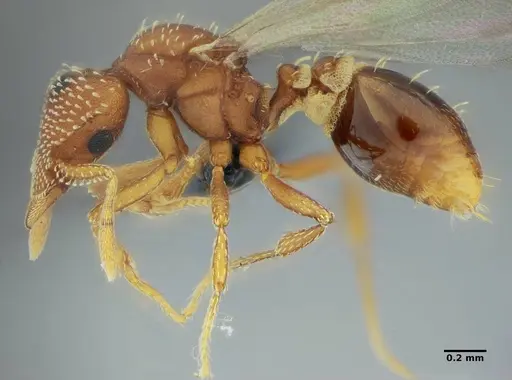
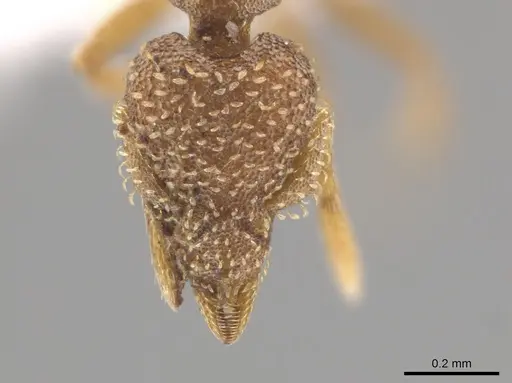
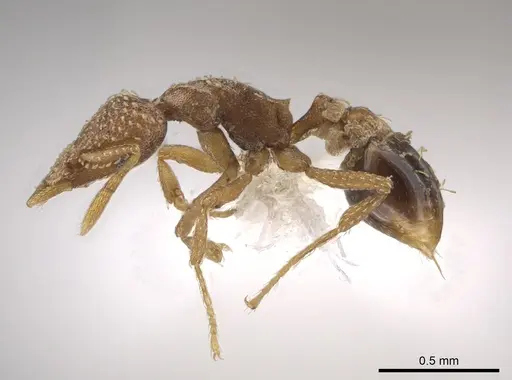
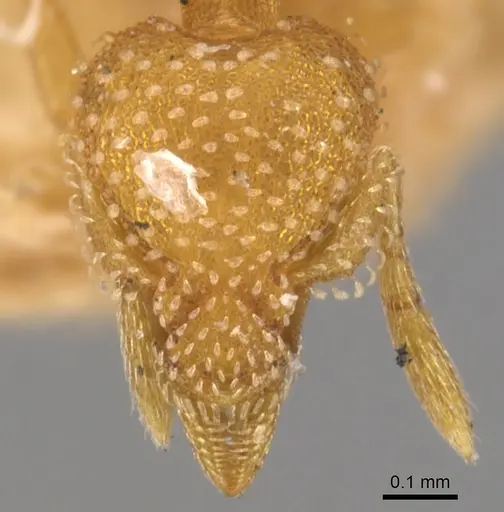
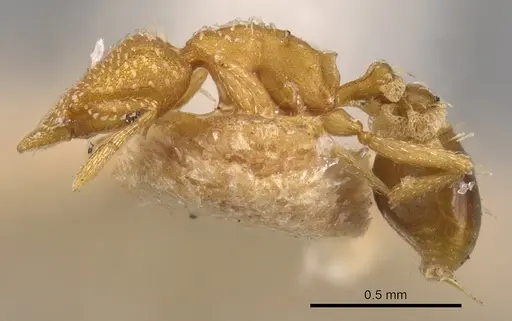
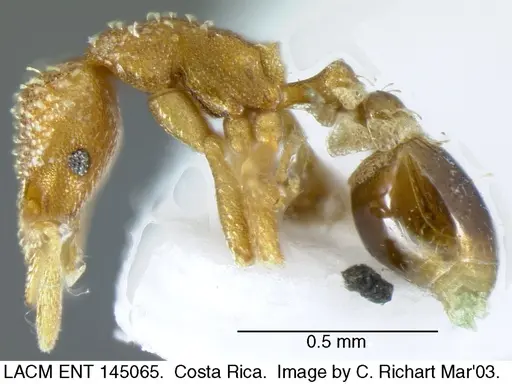
Strumigenys epinotalis is a tiny predatory ant, measuring just 1.9-2.1 mm in total length . It belongs to the subfamily Myrmicinae and tribe Attini, and workers are reddish-brown with a completely punctate (finely pitted) mesosoma, spoon-shaped hairs on the pronotum, and a distinctive spongy crest on the underside of the petiole . This species is a member of the schulzi group, which tend to have larger eyes and live in plants . First described from Costa Rica in 1934,it is now known from Mexico through Central and South America (Brazil, Ecuador, French Guiana, Paraguay, Argentina) and has recently turned up in the southeastern United States (Florida, Louisiana, Alabama, Mississippi), likely as an introduced species . It is almost always found in epiphytic bromeliads or other plant cavities, often in wet forests .
Quick Summary
- Difficulty: Expert
- Origin & Habitat: Native to Central and South America: Costa Rica, Mexico, Panama, Ecuador, Brazil, French Guiana, Paraguay, Argentina. Introduced to the southeastern United States (Florida, Louisiana, Alabama, Mississippi). Almost exclusively arboreal in wet forests, nesting in epiphytic bromeliads (Tillandsia) and hollow twigs [2][3][1].
- Colony Type: Colony structure is poorly documented. Based on related schulzi-group species, colonies are likely single‑queen (monogyne) with relatively small worker numbers, but this has not been confirmed.
- Size & Growth:
- Queen: Size data unavailable (no total length measurement in the literature) [1]
- Worker: 1.9-2.1 mm total length [1]
- Colony: Unknown, but likely under 100 workers based on similar arboreal Strumigenys
- Growth: Moderate
- Development: Unknown in captivity, likely several weeks based on related dacetine ants (No captive studies exist. Keep at stable warm temperature to encourage development.)
- Antkeeping:
- Temperature: 22-26°C is a safe range given their tropical origin. A gentle gradient can be provided, but avoid extended periods below 20°C [2].
- Humidity: Very high humidity is critical. Keep the nest substrate consistently moist but not waterlogged. Regular misting is advised. These ants come from wet forest habitats and will dry out quickly in a dry setup [2][3].
- Diapause: Likely no true diapause needed because of their tropical origin, but activity may slow if your home gets cooler in winter, just maintain normal temperature.
- Nesting: They are arboreal specialists that naturally live in plant cavities and bromeliads [2][3]. Use a vertical setup with small test tubes, cork bark, or a naturalistic formicarium with fine‐mesh ventilation. The nest must stay moist.
- Behavior: Strumigenys epinotalis is a stealthy predator that hunts tiny arthropods (springtails, mites) using its trap‑jaw mandibles [2]. Workers are very small and can squeeze through tiny gaps, excellent escape prevention is essential. They have a functional stinger (like most myrmicines) but it is not medically significant. Colonies are not aggressive and do not raid or slave‑make.
- Common Issues: escape through standard mesh, use mesh with openings under 0.5 mm and check all connections., desiccation, they need continuously high humidity, if the nest dries out the colony will die quickly., wrong food, they are obligate predators of very small live prey, sugar or dead insects will not sustain them., overheating or cold, keep stable between 22-26°C, extremes will kill them., mold from over‑humidification, avoid standing water and remove uneaten prey after 24 hours.
Housing and Nest Setup
Because Strumigenys epinotalis is an arboreal species that lives in plant cavities and bromeliads [2][3], your setup should reflect that. Small test tubes with a water reservoir work for founding colonies, but naturalistic setups with cork bark or a vertical formicarium are better for larger colonies. The nest must stay moist, use a hydration system or mist regularly. Escape prevention is critical: workers are only about 2 mm long and can get through standard mesh. Use fine mesh (openings under 0.5 mm) on all openings and seal any gaps with silicone or cotton. They do best in a humid environment, so avoid open dry outworlds, instead use a sealed setup with ventilation only through fine mesh.
Feeding and Diet
Strumigenys epinotalis is a specialized predator that hunts tiny arthropods. Its trap‑jaw mandibles are designed for catching small prey like springtails, mites, and other micro‑arthropods [2]. In captivity, live springtails are the most reliable food. You can also offer fruit fly larvae, booklice, or very small isopods. They do not accept sugar or other carbohydrate sources, they are obligate carnivores. Feed every 2-3 days, offering just enough live prey that is consumed within a day. Remove any leftover food to prevent mold in the humid nest.
Temperature and Humidity
Keep the colony at 22-26°C. This tropical species does not tolerate prolonged cold, avoid temperatures below 20°C. A small heating cable on one side can create a gradient so the ants can choose their preferred spot. Humidity must be very high, the nest substrate should stay moist (but not wet). Mist the setup daily if needed. These ants come from wet forests and bromeliads that hold water, so a dry nest will quickly kill them [2][3].
Behavior and Temperament
Workers are stealthy, solitary hunters that rely on their enlarged eyes to spot movement [2]. They have a functional stinger (like most myrmicine ants), but it is tiny and not painful to humans, they are completely harmless. Colonies are not aggressive toward each other or other ant species in the limited encounters documented. Their main defense is hiding. The biggest challenge for keepers is their tiny size: they can escape through any gap over about 0.3 mm. Use airtight connections and fine mesh. In the introduced U.S. range they are not considered pests and do not seem to harm native species [1].
Colony Establishment
Strumigenys epinotalis is rarely available in the hobby, so finding a queen or small colony is difficult. Founding behavior has not been directly observed, but based on other Strumigenys, the queen likely seals herself in a small chamber (claustral founding) and lives off her fat reserves until the first workers emerge. Keep the founding chamber moist and completely undisturbed. First workers (nanitics) are smaller than mature workers. Development time is unknown in captivity, expect several weeks at stable temperature. Colony growth is slow at first but speeds up once workers start hunting. [1][2]
Legal and Ethical Considerations
Strumigenys epinotalis is considered exotic and likely introduced to the United States [1][4]. Do NOT release this ant outdoors anywhere in North America, it could establish and compete with native species. Check local regulations before acquiring, in some native-range countries it may be protected. Only buy from reputable sources that use captive‑bred stock, not wild‑collected specimens from protected areas.
Frequently Asked Questions
Can I keep Strumigenys epinotalis in a test tube?
Yes, small test tubes work fine for starting a colony. Make sure the opening is plugged with cotton and covered with fine mesh. Keep the tube moist and offer live prey. A small vertical outworld will be needed once the colony grows.
What do Strumigenys epinotalis eat?
They only eat live, tiny arthropods. Springtails are the best staple. They may also take fruit fly larvae, booklice, or very small isopods. They do not eat sugar, seeds, or dead insects.
How long does it take for the first workers to emerge?
Unknown in captivity. Based on related dacetine ants, development from egg to worker likely takes several weeks at 22-26°C. No exact timeline has been published.
Are Strumigenys epinotalis good for beginners?
No. This is an expert-level species. Their tiny size makes escape prevention very demanding, they require constant high humidity, and they need a steady supply of live micro‑prey. They are also rarely available commercially.
How big do Strumigenys epinotalis colonies get?
Colony size has not been documented. Based on similar arboreal Strumigenys species, mature colonies probably contain fewer than 100 workers. They do not reach the large colony sizes of many popular ant species.
Do I need to hibernate Strumigenys epinotalis?
No. As a tropical species, it does not require a cold diapause. Just keep the colony at normal room temperature (22-26°C) year‑round.
Why are my Strumigenys epinotalis dying?
Most likely causes: they escaped (check all seals), the nest is too dry (needs very high humidity), they are not getting suitable live prey (springtails are best), or the temperature is too cold or too hot. Also avoid letting uneaten food rot in the humid nest.
When should I move my colony to a formicarium?
Wait until you have at least 15-20 workers. Because they are so tiny, a small test tube setup often works better than a large formicarium. If you use a formicarium, make sure chambers are very small and the nest stays moist.
Report an Issue
The current care sheet is based fully on literature. See inconsistencies, or something that's incorrect? Please , it will be resolved after review from an admin. Contributing to the blogs tab also helps providing information, to make us be able to further improve the caresheets. Thank you for your support!
References

This caresheet is licensed under CC BY-SA 4.0 .
Community Blogs
ANTWEB1032842
View on AntWeb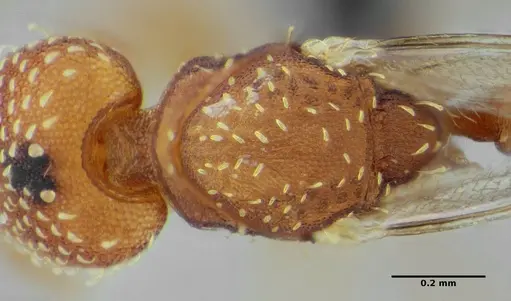
CASENT0624026
View on AntWeb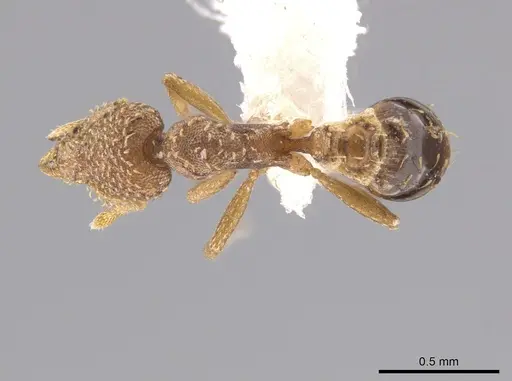
CASENT0900217
View on AntWeb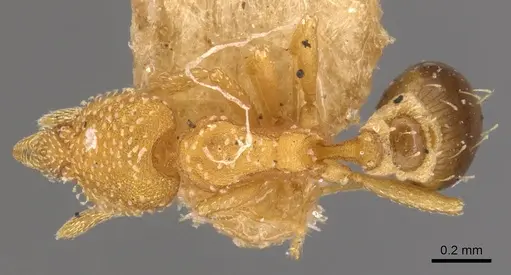
LACMENT145065
View on AntWeb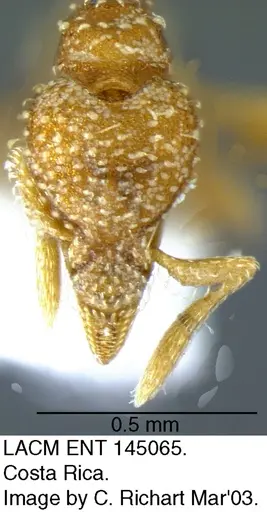
Literature
Loading distribution map...Loading products...