
Strumigenys ekasura
- Sci. Name
- Strumigenys ekasura
- Tribe
- Attini
- Subfamily
- Myrmicinae
- Author
- Bolton, 2000
- Distribution
- Found in 1 countries
Introduction
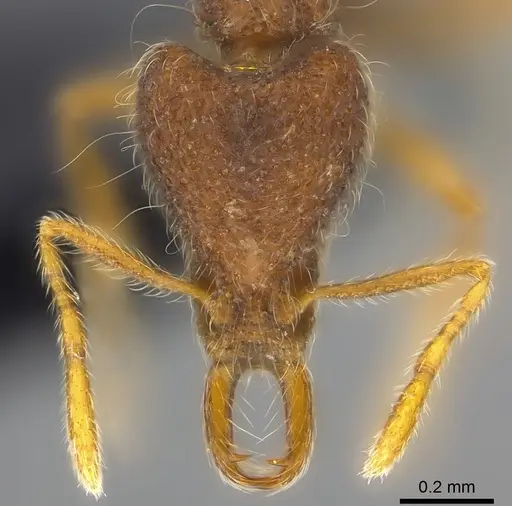
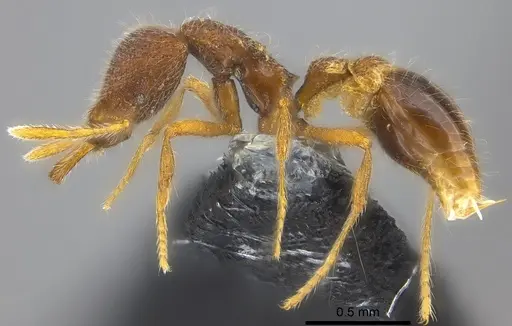
Strumigenys ekasura is a tiny trap-jaw ant endemic to Fiji, measuring 2.3mm in total length . Workers have long mandibles and are covered in abundant free-standing flagellate pilosity (fine, hair-like structures). They have a sculptured postpetiolar disc and noticeable basigastral pilosity on the gaster . This species belongs to the smythiesii complex within the Strumigenys godeffroyi group and looks most similar to S. anorak, S. daithma, and S. chernovi . It lives across most major Fijian islands, including Gau, Kadavu, Koro, Moala, Vanua Levu, and Viti Levu, inhabiting lowland forest leaf litter .
Quick Summary
- Difficulty: Hard
- Origin & Habitat: Fiji, endemic to the islands, found in lowland forest habitats across most major islands except Taveuni and Ovalau [3][4]. Collected via litter sampling in secondary rainforest at elevations around 20m [2].
- Colony Type: Unknown colony structure, founding and colony behavior unconfirmed for this species. Based on typical Strumigenys patterns, likely single-queen colonies.
- Size & Growth:
- Queen: Unconfirmed, no queen measurements documented [1][2]
- Worker: 2.3mm total length [1][2]
- Colony: Unknown, no colony size data available
- Growth: Unknown, no development data available
- Development: Estimated 6-10 weeks based on related Strumigenys species (typical for small Myrmicinae in tropical conditions) (No direct development data exists for this species. Estimates based on genus-level patterns for small tropical ants.)
- Antkeeping:
- Temperature: Keep around 24-28°C, these are lowland tropical ants from Fiji. Use a heating gradient if room temperature is below this range.
- Humidity: High humidity preferred, they inhabit leaf litter in humid forest floors. Keep substrate consistently moist but not waterlogged.
- Diapause: No diapause required, Fiji has a tropical climate with minimal seasonal temperature variation. Maintain warm conditions year-round.
- Nesting: Use a naturalistic setup with moist substrate (soil/leaf litter mix) or a Y-tong/plaster nest with tight chambers scaled to their tiny 2.3mm size. They prefer tight, humid spaces similar to their natural leaf litter habitat.
- Behavior: Strumigenys are trap-jaw ants with specialized mandibles that snap shut rapidly to capture prey. These are tiny, cryptic ants that forage in leaf litter and soil. They are predatory on small invertebrates (springtails, mites, small insects). As Myrmicinae, they possess a functional stinger, but it is not a significant threat to humans. Escape prevention is critical due to their very small size, use fine mesh barriers. They are generally non-aggressive toward keepers but will defend the nest.
- Common Issues: escape through tiny gaps at 2.3mm size requires fine mesh barriers., no captive breeding data exists, wild colonies may have difficulty adapting to captivity., high humidity can lead to mold problems if ventilation is poor., specialized predatory diet on tiny live prey can be hard to source consistently., unknown sensitivity to stress due to lack of husbandry experience with this species.
Housing and Nest Setup
Strumigenys ekasura are tiny ants at only 2.3mm that naturally inhabit leaf litter in Fijian lowland forests [2]. For captivity, use a naturalistic setup with a soil/leaf litter substrate that stays consistently moist, or a Y-tong/plaster nest with very small, tight chambers scaled to their minute size. The nest should have high humidity but with some ventilation to prevent mold. Because of their tiny size, escape prevention must be excellent, use fine mesh (0.5mm or smaller) on any openings. A small outworld area can be attached for feeding. Keep the nest dark or covered, as these cryptic ants prefer dim conditions [3][4].
Feeding and Diet
Strumigenys ekasura are predatory ants with specialized trap-jaw mandibles for hunting small invertebrates [1][2]. In captivity, offer small live prey such as springtails, minute soil mites, and very small insects (fruit fly larvae, tiny crickets). They likely accept protein sources similar to other Strumigenys species, small, soft-bodied prey that can be overwhelmed by their trap-jaw mechanism. Sugar acceptance is uncertain, while some Strumigenys occasionally attend aphids for honeydew, this species' diet in the wild likely focuses primarily on predatory hunting of micro-arthropods in leaf litter. Feed small prey items every few days, removing uneaten prey to prevent mold. Do not rely on sugar water or honey as primary food sources, these ants are specialized predators.
Temperature and Climate
As a lowland forest species endemic to Fiji, Strumigenys ekasura requires warm, stable tropical conditions [4]. Maintain temperatures between 24-28°C year-round, they have no diapause requirement due to Fiji's tropical climate. Room temperature may be sufficient if your home stays in this range, otherwise use a heating cable on one side of the nest to create a gentle gradient. Avoid temperature fluctuations and cold drafts. High humidity (70-85%) mimics their natural leaf litter habitat. Use a digital thermometer/hygrometer to monitor conditions. These ants are adapted to stable, warm, humid conditions year-round.
Behavior and Temperament
Strumigenys ekasura are cryptic, ground-dwelling ants that forage in leaf litter and soil. Their defining feature is the trap-jaw mechanism, specialized mandibles that can snap shut at extremely high speeds to capture prey [1][2]. Workers are not aggressive toward humans but will defend the nest if threatened. Due to their tiny 2.3mm size, they are not easily spotted and spend most of their time hidden in the nest or moving slowly through substrate. They do not form large colonies, expect modest colony sizes based on typical Strumigenys patterns. Activity levels are moderate, they are not particularly active in the open but will forage through substrate. Their small size makes escape a constant risk, inspect all connections and openings regularly.
Acquiring and Establishing Colonies
Strumigenys ekasura is endemic to Fiji and has not been documented in the antkeeping hobby outside its native range [5][6][3]. Wild colonies can only be collected in Fiji by those with appropriate permits, as exporting native species may be restricted. If available, wild-caught colonies should be carefully transferred to appropriate housing with minimal stress. These tiny ants are sensitive to environmental changes and may take time to acclimate. Do not disturb founding colonies excessively. There is no captive breeding data for this species, so wild colonies represent the only source. Expect high mortality during transport and initial establishment, this is normal for cryptic, specialized predators.
Frequently Asked Questions
How long does it take for Strumigenys ekasura to produce first workers?
The exact development timeline is unknown for this species. Based on related Strumigenys and typical small Myrmicinae patterns, expect approximately 6-10 weeks from egg to worker at optimal tropical temperatures (24-28°C). No specific data exists for this species.
Can I keep Strumigenys ekasura in a test tube?
Test tubes are not ideal for this species. Due to their tiny 2.3mm size and preference for humid leaf litter environments, a naturalistic setup with moist substrate or a small Y-tong/plaster nest works better. Test tubes can be used for temporary housing but may not provide adequate humidity control or foraging space.
What do Strumigenys ekasura eat?
They are predatory ants that hunt small invertebrates. Offer live springtails, minute soil mites, tiny insects, and fruit fly larvae. Sugar sources may be accepted occasionally but should not be the primary food. Their trap-jaw mandibles are specialized for capturing small, soft-bodied prey.
Are Strumigenys ekasura good for beginners?
No, this species is not recommended for beginners. They are difficult to acquire (endemic to Fiji), require high humidity and specific temperatures, need specialized live prey, and have no captive breeding data. Their tiny size also makes them challenging to house and observe. Consider more established species like Lasius or Camponotus first.
Do Strumigenys ekasura need hibernation?
No, these are tropical ants from Fiji with no seasonal temperature variation. They do not require diapause or hibernation. Maintain warm, stable conditions (24-28°C) year-round.
How big do Strumigenys ekasura colonies get?
Colony size is unknown, no scientific data exists on maximum colony size for this species. Based on typical Strumigenys patterns and their small size (2.3mm), colonies likely remain modest, probably under 100-500 workers. They are not large colony formers.
Why are my Strumigenys ekasura dying?
Common causes include: escape (their tiny size allows them to slip through small gaps), improper humidity (too dry or too wet leading to mold), temperature stress (below 24°C or major fluctuations), starvation (refusal of inappropriate prey), and transport stress from wild-caught colonies. Ensure fine mesh barriers, stable warm humid conditions, and appropriate small live prey.
Can I keep multiple queens together?
The colony structure of this species is unconfirmed. Combining unrelated queens has not been documented and is not recommended. Based on typical Strumigenys patterns, they likely establish single-queen colonies. Do not attempt to house multiple foundresses together without specific evidence.
When should I move Strumigenys ekasura to a formicarium?
Move established colonies only after they are actively foraging and showing stable brood development. For wild-caught colonies, allow 2-4 weeks of acclimation in simple housing before any transfer. A naturalistic setup with moist substrate is preferred over traditional formicaria for this leaf-litter species.
Report an Issue
The current care sheet is based fully on literature. See inconsistencies, or something that's incorrect? Please , it will be resolved after review from an admin. Contributing to the blogs tab also helps providing information, to make us be able to further improve the caresheets. Thank you for your support!
References

This caresheet is licensed under CC BY-SA 4.0 .
Community Blogs
CASENT0184678
View on AntWeb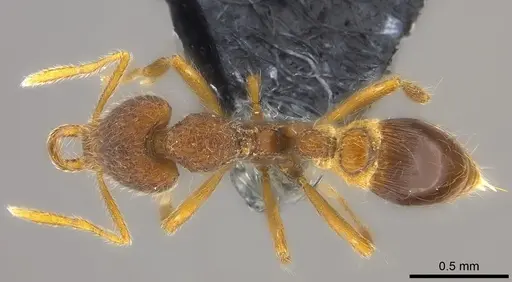
Literature
Loading distribution map...Loading products...