
Strumigenys dubitata
- Sci. Name
- Strumigenys dubitata
- Tribe
- Attini
- Subfamily
- Myrmicinae
- Author
- Bolton, 2000
- Distribution
- Found in 1 countries
Introduction
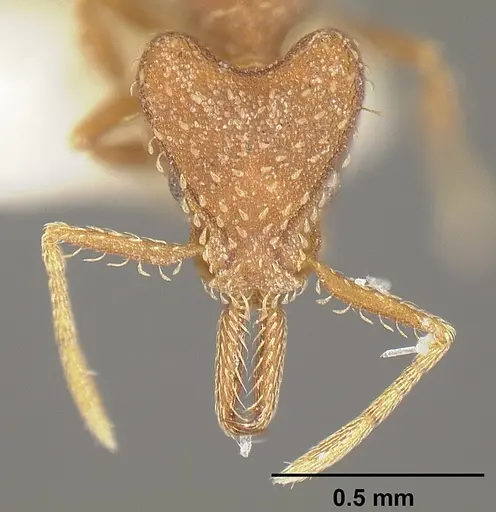
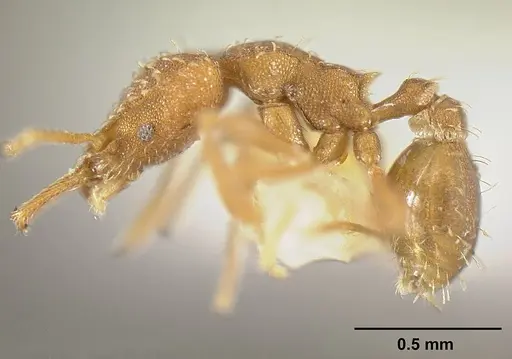
Strumigenys dubitata is a tiny ant, with workers measuring about 2.4-2.6mm in total length – one of the smallest ants you can keep . They have a finely granular, opaque gaster (abdomen) and two pairs of short standing hairs on the head: one near the occipital margin and another near the vertex . The species is native to Costa Rica's Guanacaste Province, found in dry forest leaf litter at elevations of 40-300m . This ant belongs to the Strumigenys louisianae group and the tribe Attini. Most Attini are fungus-growers, but Strumigenys are specialized predators that hunt tiny arthropods rather than cultivate fungus .
Quick Summary
- Difficulty: Hard
- Origin & Habitat: Native to Costa Rica's Guanacaste Province in tropical dry forest habitats at 40-300m elevation [2]. Found in dry forest litter samples [1].
- Colony Type: Colony structure is unconfirmed. Based on typical Strumigenys patterns, likely single-queen (monogyne) colonies, though this has not been directly documented for this specific species.
- Size & Growth:
- Queen: Unconfirmed – queen has not been described for this species
- Worker: 2.4-2.6mm [1]
- Colony: Unknown – no colony size data available for this species
- Growth: Unknown – no development data available for this species
- Development: Unconfirmed – no direct development data exists. Based on related Strumigenys species and their small size, development likely takes 4-8 weeks at optimal temperature. (Estimate based on genus-level patterns for tiny Myrmicinae, direct data unavailable for Strumigenys dubitata)
- Antkeeping:
- Temperature: Keep at 24-28°C – these are tropical ants from Costa Rica's dry forests that need warm conditions year-round [2]. A gentle gradient is beneficial.
- Humidity: Moderate to low humidity – they come from dry forest litter where conditions are relatively dry compared to rainforest floor. Allow the nest to dry partially between waterings [1].
- Diapause: No – being a tropical species from Costa Rica, they do not require hibernation or winter dormancy [2][1]. Keep them warm year-round.
- Nesting: Use a test tube setup or small ytong nest with very tight chambers scaled to their tiny 2.5mm size [1]. They nest in leaf litter and soil in the wild, so a naturalistic setup with fine substrate works well.
- Behavior: Strumigenys are specialized predators that hunt tiny arthropods, primarily springtails (Collembola) [1]. They use their distinctive trap-jaw mandibles to capture prey. Workers are small and slow-moving, foraging individually through leaf litter. They are not aggressive and have a functional sting, but it is not dangerous to humans. Escape prevention is critical due to their extremely small size – they can squeeze through the tiniest gaps [1].
- Common Issues: escape prevention is critical – at only 2.5mm, they can squeeze through standard mesh and gaps in lids, specialized diet – they require live springtails or other tiny live prey, they will likely not accept sugar or dead food, slow colony growth – tiny colonies develop slowly and beginners may lose patience, test tube flooding – small water reservoirs can drown colonies if overfilled, wild-caught colonies may have parasites that kill them in captivity
Housing and Escape Prevention
Strumigenys dubitata are among the smallest ants in the hobby at just 2.4-2.6mm, which creates unique housing challenges. Standard test tubes work well, but you must use excellent escape prevention – these ants can squeeze through gaps that seem impossible for their size. Apply fluon (ant barrier) to all rim edges and use tightly fitting lids. If using a formicarium, ensure all connections are sealed and use fine mesh (at least 0.5mm or smaller) for any ventilation. A test tube setup is often the easiest starting point – use a small diameter tube with a cotton plug for the water reservoir. The nest area should have chambers sized appropriately for their tiny workers – avoid large, open spaces [1].
Feeding and Diet – Critical
This is the most important aspect of keeping Strumigenys dubitata successfully. Unlike most ant species, Strumigenys are specialized predators that hunt tiny arthropods, primarily springtails (Collembola) [1]. They will likely not accept sugar water, honey, or dead protein, but this has not been explicitly studied for this species. Your primary food source should be live springtails cultured separately. You can establish a springtail culture in a jar with moist charcoal or leaf litter. Other acceptable prey includes tiny isopods, booklice, and other minute arthropods that fit their 2.5mm size. Feed every 2-3 days, offering as many springtails as the colony will consume within 24 hours. Remove uneaten prey to prevent mold. Do not attempt to keep this species without a reliable live food source – they are not suitable for keepers who cannot provide live prey [1].
Temperature and Seasonal Care
As a tropical species from Costa Rica's Guanacaste Province, Strumigenys dubitata requires warm temperatures year-round with no hibernation period [2]. Maintain temperatures between 24-28°C in the nest area. You can use a heating cable on one side of the nest to create a gentle gradient, but avoid direct heat that could dry out the nest too quickly. Room temperature in the low-to-mid 20s°C is often acceptable if your home is naturally warm. Monitor colony activity – if workers become sluggish, increase temperature slightly. Since they come from dry forest habitats, they can tolerate somewhat drier conditions than typical rainforest ants, but still need access to moisture [1].
Nesting Preferences
In the wild, Strumigenys dubitata lives in dry forest leaf litter and soil samples [1]. For captivity, a test tube setup works well for founding colonies and small established colonies. The cotton ball should be snug but not compressed, and the water reservoir should be small to prevent flooding – these tiny ants can easily drown in standing water. For larger colonies, a small ytong nest with appropriately sized chambers works. The substrate or nest material should retain some moisture but allow for drying between waterings. Avoid overly humid conditions that can cause mold in their small living spaces. Provide a small outworld for foraging where you can place prey items [1].
Behavior and Temperament
Strumigenys dubitata workers are slow-moving and non-aggressive. They forage individually rather than in groups, hunting through leaf litter for tiny prey. Their trap-jaw mandibles are specialized for capturing springtails and similar small arthropods [1]. They have a functional sting but it is not dangerous to humans – they rarely use it in defense. These ants are completely harmless to keepers and pose no danger. However, their tiny size means they are easily lost or crushed during colony maintenance. Handle gently and work carefully when transferring colonies. They are fascinating to watch as they hunt their tiny prey with precision. Colony reproduction details are unknown for this species [1].
Frequently Asked Questions
Can I keep Strumigenys dubitata in a test tube?
Yes, a test tube setup works well for this tiny species. Use a standard test tube with a snug cotton plug and small water reservoir – be careful not to overfill as these tiny ants can easily drown. Apply fluon to the rim for escape prevention. The test tube should be kept warm (24-28°C) and in darkness to mimic their natural leaf litter habitat [1].
What do Strumigenys dubitata eat?
They eat live springtails and other tiny arthropods. Based on known Strumigenys biology, they are specialized predators that hunt springtails (Collembola) in the wild and will likely not accept sugar, honey, or dead protein [1]. You must culture live springtails separately to feed your colony. Other acceptable prey includes tiny isopods and minute insects that fit their 2.5mm size.
How long does it take for Strumigenys dubitata to develop from egg to worker?
The exact development time is unconfirmed for this species. Based on related Strumigenys species and their tiny size, development likely takes 4-8 weeks at optimal temperature (around 26°C). Expect slow growth – these are very small ants with correspondingly long development times compared to larger species.
Are Strumigenys dubitata good for beginners?
No, this species is not recommended for beginners. They require specialized care including live springtail cultures, excellent escape prevention due to their tiny 2.5mm size, and warm tropical conditions year-round. They are also slow-growing and require patience. This species is best suited for experienced antkeepers who can provide the specific prey items they need.
Do Strumigenys dubitata need hibernation?
No, they do not need hibernation. Being a tropical species from Costa Rica, they require warm temperatures year-round (24-28°C). Do not attempt to cool them down for winter – this could kill the colony. Keep them at room temperature or slightly above throughout the year [2].
How big do Strumigenys dubitata colonies get?
The maximum colony size is unknown – no colony size data exists for this species. Based on their tiny 2.5mm size and typical Strumigenys colony patterns, colonies likely remain relatively small, probably under 100-200 workers. They are slow-growing and individual colonies do not reach the massive sizes seen in some other ant species.
Why are my Strumigenys dubitata dying?
Common causes include: lack of live springtail prey (they will starve if only given sugar or dead food), escape through tiny gaps (their 2.5mm size allows escapes through seemingly impossible openings), drowning in test tube water reservoirs, temperatures below 24°C (they need warmth), and mold from overwatering. Ensure you have an established springtail culture and excellent escape prevention before acquiring this species [1].
When should I move Strumigenys dubitata to a formicarium?
You can keep them in a test tube indefinitely if the colony remains small. Consider moving to a small ytong nest when the colony reaches around 30-50 workers and the test tube becomes crowded. Ensure any formicarium has appropriately sized chambers for their tiny 2.5mm workers and maintains the same warm, moderately dry conditions they require [1].
Can I keep multiple queens together in Strumigenys dubitata?
This has not been documented for this species. Based on typical Strumigenys behavior, they likely form single-queen colonies. Do not attempt to combine unrelated queens – there is no data on whether they can found colonies pleometrotically (multiple queens starting together) or whether multiple queens will tolerate each other.
Report an Issue
The current care sheet is based fully on literature. See inconsistencies, or something that's incorrect? Please , it will be resolved after review from an admin. Contributing to the blogs tab also helps providing information, to make us be able to further improve the caresheets. Thank you for your support!
References

This caresheet is licensed under CC BY-SA 4.0 .
Community Blogs
CASENT0900448
View on AntWeb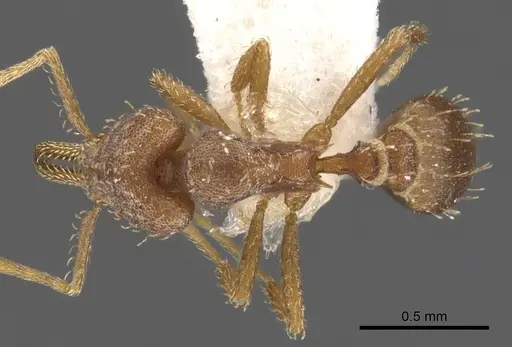
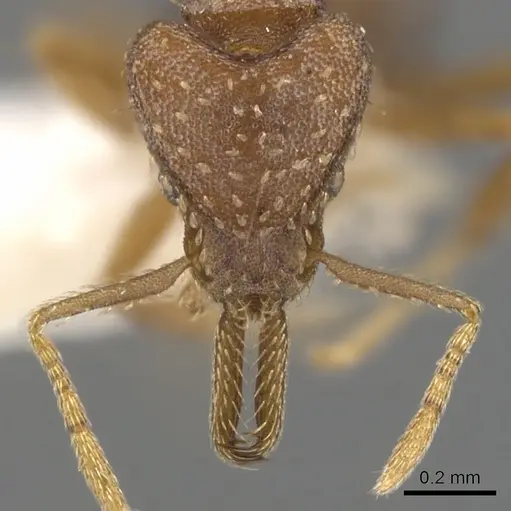
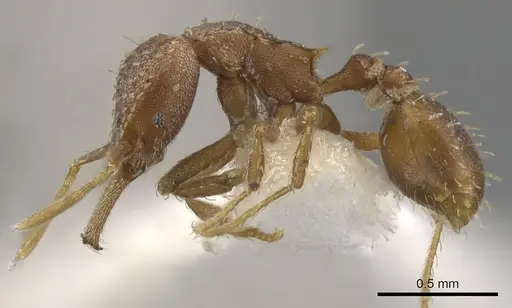
INBIOCRI001283963
View on AntWeb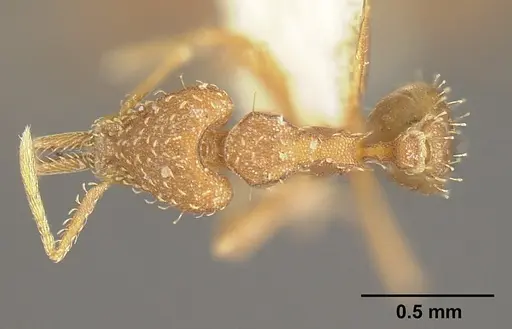
Literature
Loading distribution map...Loading products...