
Strumigenys deltisquama
- Sci. Name
- Strumigenys deltisquama
- Tribe
- Attini
- Subfamily
- Myrmicinae
- Author
- Brown, 1957
- Distribution
- Found in 2 countries
Introduction
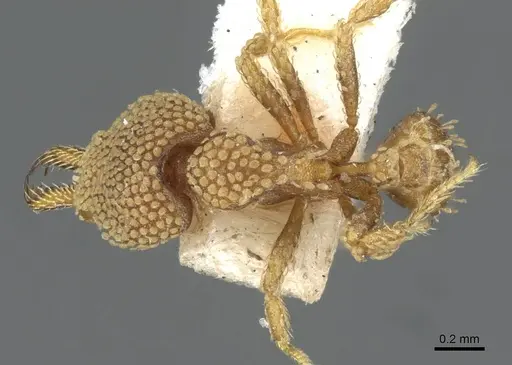
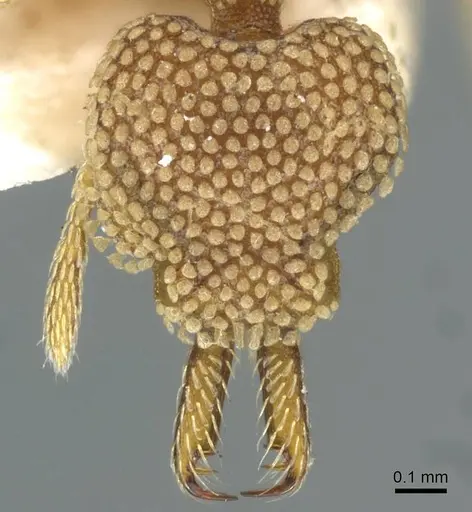
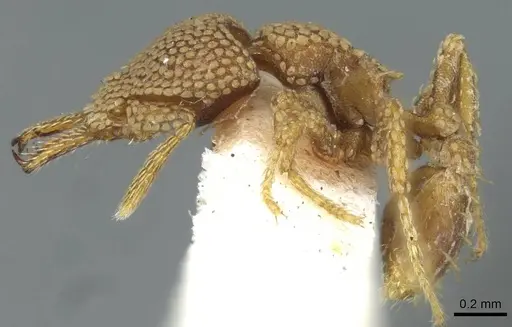
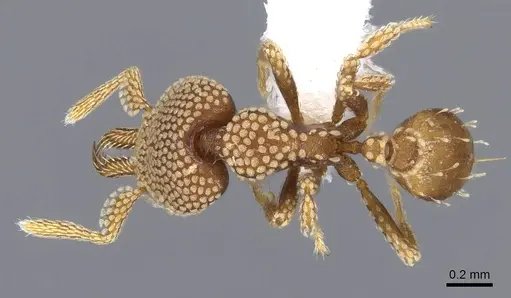
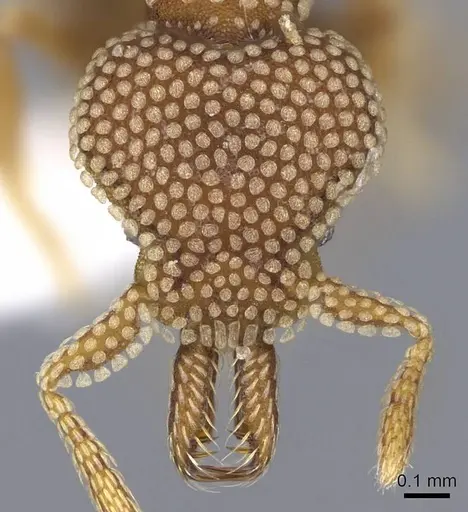
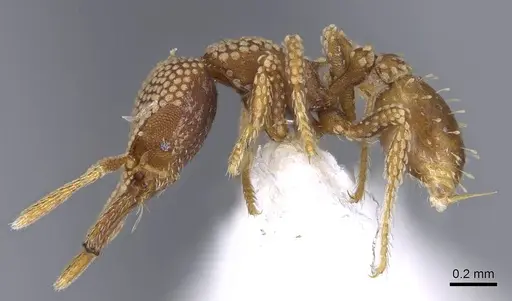
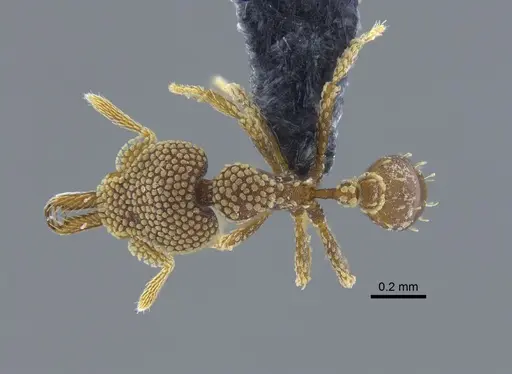
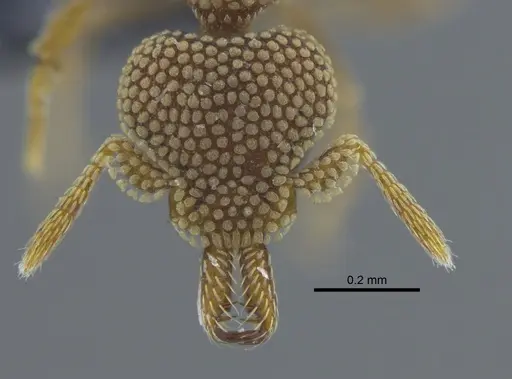
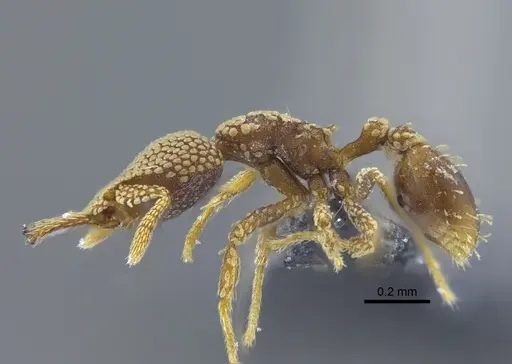
Strumigenys deltisquama is a tiny Neotropical ant measuring 2.5-2.7mm in total length . This species belongs to the dacetine ant group (tribe Attini) and is known for its unusual mandibular structure and dense covering of scale-like hairs. Workers have a broad head covered in thick, yellowish, squamose (scale-like) hairs, and a uniform light reddish-brown body . Their mandibles are highly specialized: each has a straight translucent lamella along the inner margin ending near the tip, and a single intercalary tooth at the fork . This species is found across Central America and northern South America, including Mexico, Panama, Costa Rica, and Colombia . In Colombia, it has been recorded in the departments of Caldas, Guajira, Santander, Sucre, Bolívar, and Magdalena . The type specimens were collected on Barro Colorado Island in Panama, an area covered with rainforest, but some specimens have also been found in dry forest habitats, suggesting some ecological flexibility . It is considered one of the most easily identified Neotropical Strumigenys due to its unique combination of a broad head, short flattened wide scapes, dense squamose pilosity, and the distinctive mandibular structure .
Quick Summary
- Difficulty: Expert
- Origin & Habitat: Neotropical region: Mexico, Panama, Costa Rica, and Colombia. Found in both rainforest (type locality) and dry forest habitats [1][2][3].
- Colony Type: Unknown. Colony structure (monogyne or polygyne) has not been documented for this species.
- Size & Growth:
- Queen: Unknown. The queen has not been described.
- Worker: 2.5-2.7mm total length [1]
- Colony: Unknown. No colony size data is available from research.
- Growth: Slow, inferred from related dacetine species, but no specific data exists.
- Development: Unknown. Specific development timeline has not been documented for this species. (Based on general dacetine biology, development is likely slow, but no confirmed data.)
- Antkeeping:
- Temperature: Unknown. Inferred from tropical origin: likely warm, roughly 22-26°C. Avoid temperatures below 20°C.
- Humidity: Keep the nest substrate consistently moist but not waterlogged. Humidity needs are unclear but given its leaf-litter habitat, high humidity is important.
- Diapause: No diapause required. This is a tropical species, so keep warm year-round.
- Nesting: Naturalistic setups with moist substrate and leaf litter are recommended due to its small size and leaf-litter foraging habits. Y-tong (AAC) nests with tight chambers may work if scaled to their size.
- Behavior: Temperament is unknown but based on the subfamily (Myrmicinae, tribe Attini), workers possess a functional stinger, though it is not dangerous to humans. Due to their tiny size (2.5mm), escape prevention is critical, they can squeeze through very small gaps. They are specialized predators and likely move slowly through leaf litter.
- Common Issues: escape prevention is critical due to their tiny 2.5mm size, use fine mesh (≤0.5mm) and seal all gaps, high humidity is essential, dry conditions will kill colonies quickly, slow growth can be frustrating for keepers, requires a steady supply of live small prey (springtails), larger prey or dead food may not be accepted, detailed care data is lacking, wild-caught colonies may have unknown vulnerabilities
Housing and Nest Setup
Strumigenys deltisquama is a leaf-litter dwelling species [1]. The best setup recreates its natural microhabitat: a shallow container with a mix of soil and leaf litter that stays consistently moist. A Y-tong (AAC) nest with very tight, narrow chambers can work if they are scaled to the ants' tiny size. Because workers are only 2.5mm, standard ant keeping equipment may have gaps that allow escape. Use fine mesh (≤0.5mm) on any ventilation holes. Keep the nest area dark and humid, the outworld can be slightly drier but still damp. Avoid large open spaces, they prefer to forage within the substrate.
Feeding and Diet
This ant is a specialized predator. In the wild, Strumigenys species hunt small, soft-bodied arthropods such as springtails (Collembola) and tiny isopods [1]. In captivity, you must provide live small prey, this is essential. Live springtails are the most reliable food source. You can also offer tiny isopods, booklice, or fruit fly larvae. Dead prey or larger insects are unlikely to be accepted. Feed every 2-3 days, removing any uneaten prey. The colony will not consume sugar sources or seeds. A well-fed colony will have active workers with visible gasters.
Temperature and Humidity
Specific temperature and humidity data are lacking. Based on its tropical origin, maintain warm temperatures around 22-26°C. Below 20°C, activity may drop significantly. Humidity is critical for these leaf-litter ants. Keep the nest substrate consistently moist but not waterlogged. Mist the setup regularly, and ensure good ventilation to prevent mold and mite outbreaks. A moisture gradient, drying the outworld slightly while keeping the nest damp, can help.
Colony Development
No research data is available on colony development for Strumigenys deltisquama. Based on general dacetine ant biology, a newly mated queen (if claustral) seals herself in a small chamber to raise her first brood. Development is likely slow, possibly taking several months from egg to worker. Once established, colonies remain small. Do not disturb a founding queen unnecessarily. Patience is essential with this species. [1]
Behavior and Temperament
These ants are tiny and typically move slowly. Based on the subfamily (Myrmicinae, tribe Attini), workers possess a functional stinger, but it is not dangerous to humans. Their specialized mandibles are used solely for capturing tiny prey. They are not aggressive toward keepers. The main challenge is their tiny size, which makes escape likely without proper barriers. Use magnification to observe their intricate pilosity and mandibular structure.
Frequently Asked Questions
Can I keep Strumigenys deltisquama in a test tube?
A test tube setup may work for a founding queen, but you will eventually need a naturalistic setup. The tiny size means test tubes must have small water reservoirs and tightly packed cotton to prevent escape and drowning. Most keepers find naturalistic terrariums more successful for long-term keeping.
What do Strumigenys deltisquama ants eat?
They are strict predators requiring live small prey. Their primary food is live springtails (Collembola). They may also accept tiny isopods, booklice, or fruit fly larvae. They do not accept dead prey or larger insects. This species cannot tackle prey larger than itself.
How long does it take for first workers to emerge?
No specific data exists for this species. Based on related dacetine ants, development from egg to worker may take 8-12 weeks at optimal temperature, but this is speculative. Patience is essential, do not disturb the founding queen.
Are Strumigenys deltisquama good for beginners?
No, this species is not recommended for beginners. Their requirements are specific: they need live small prey, high humidity, and warm temperatures. Their tiny size makes escape prevention challenging, and their slow growth can be frustrating. They are best suited for experienced keepers.
How big do Strumigenys deltisquama colonies get?
Colony size is unknown. No reliable data exists in the scientific literature. Based on the tiny worker size (2.5mm), colonies are likely small, but this is speculative.
Do Strumigenys deltisquama need hibernation?
No, they do not require hibernation. This is a tropical species from Central and South America. Keep them warm year-round at 22-26°C. Attempting to hibernate them could be fatal.
Why are my Strumigenys deltisquama dying?
Common causes include: insufficient humidity (dryness kills them quickly), unsuitable food (they require live small prey), temperatures below 20°C, or escape through tiny gaps. Ensure the setup maintains high humidity and provides appropriate live prey. Wild-caught colonies may also carry unknown stresses.
When should I move them to a formicarium?
A naturalistic setup is generally better than a traditional formicarium for this species. If you do use a formicarium, wait until the colony has at least 20-30 workers and shows consistent activity. The chambers must be very small and well-sealed to prevent escape.
Can I keep multiple queens together?
Polygyny has not been documented for this species. It is best to house queens separately. Combining unrelated queens is not recommended.
Report an Issue
The current care sheet is based fully on literature. See inconsistencies, or something that's incorrect? Please , it will be resolved after review from an admin. Contributing to the blogs tab also helps providing information, to make us be able to further improve the caresheets. Thank you for your support!
References

This caresheet is licensed under CC BY-SA 4.0 .
Community Blogs
Literature
Loading distribution map...Loading products...