
Strumigenys decipula
- Sci. Name
- Strumigenys decipula
- Tribe
- Attini
- Subfamily
- Myrmicinae
- Author
- Bolton, 2000
- Distribution
- Found in 1 countries
Introduction
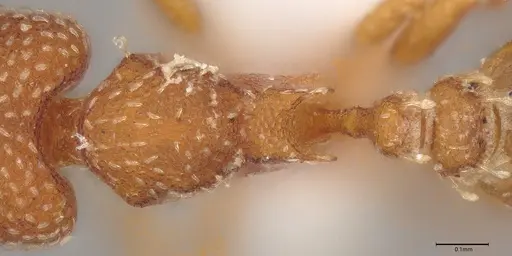
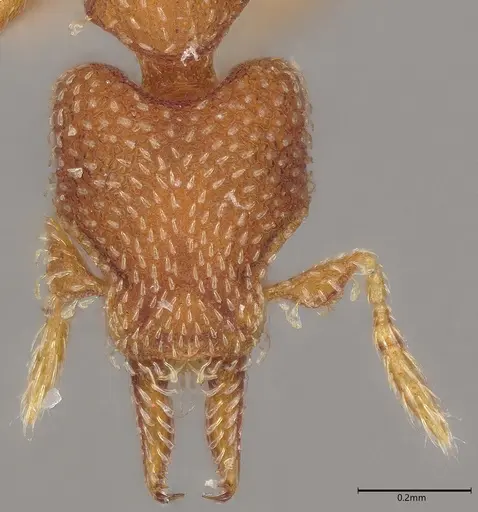
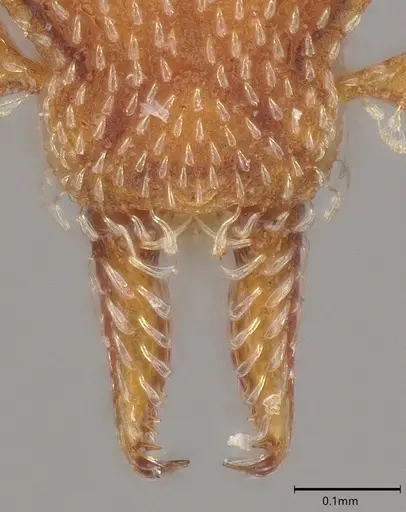
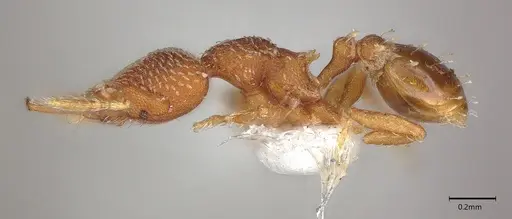
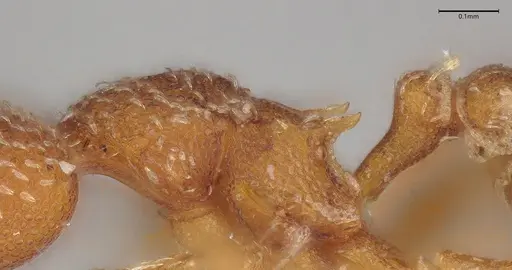
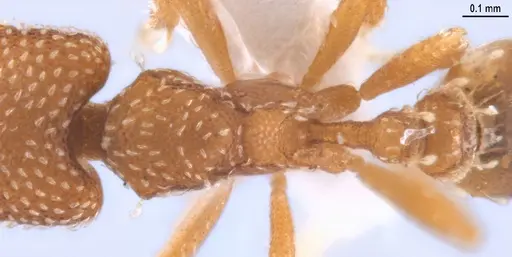
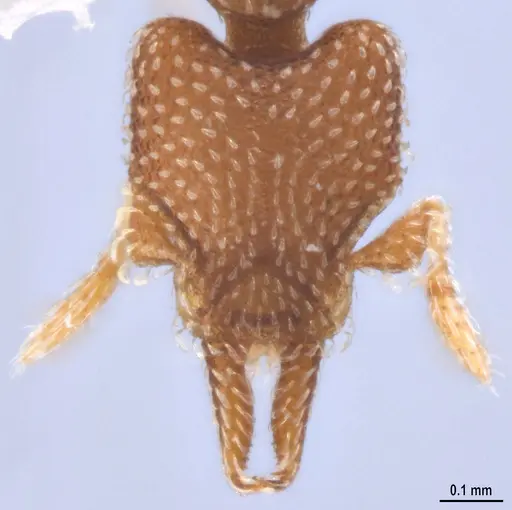
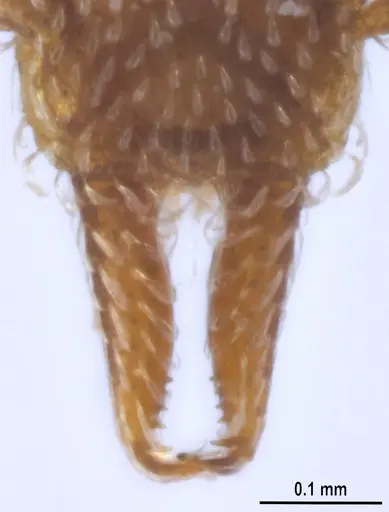
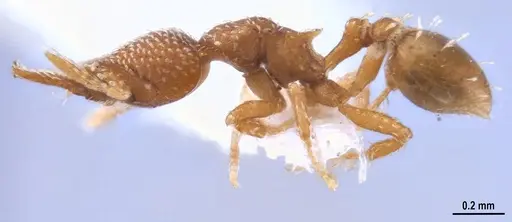
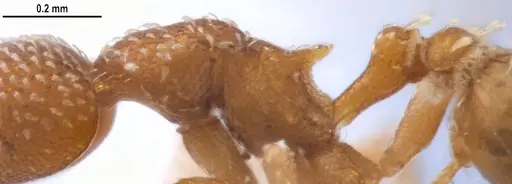
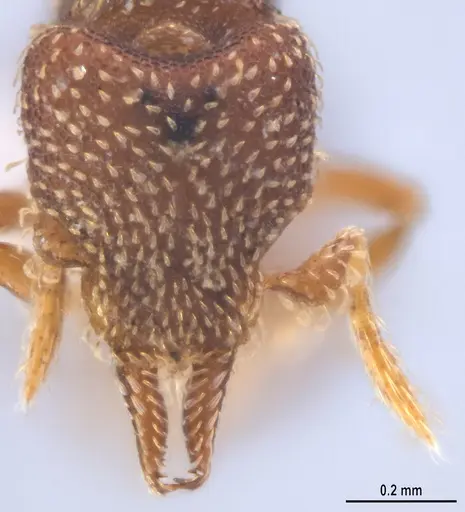
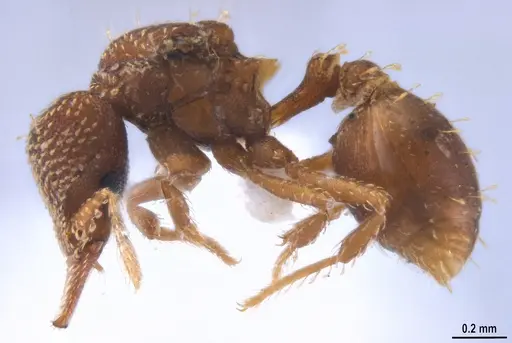
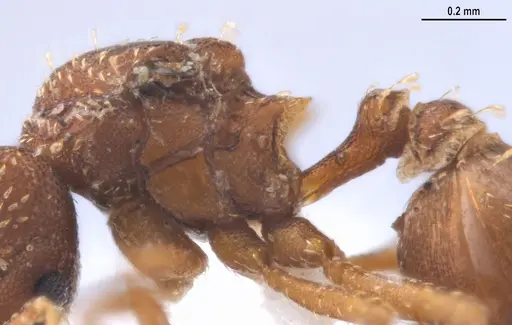
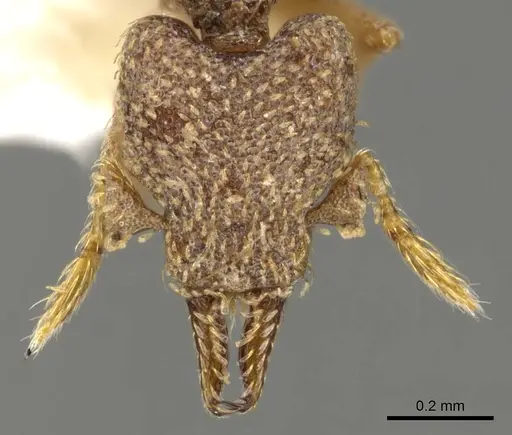
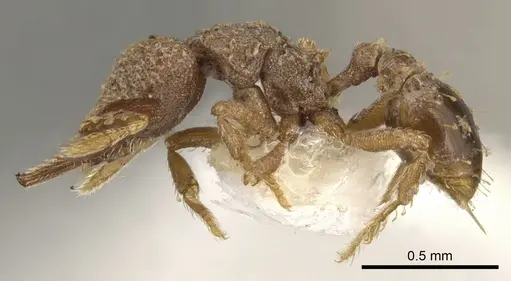
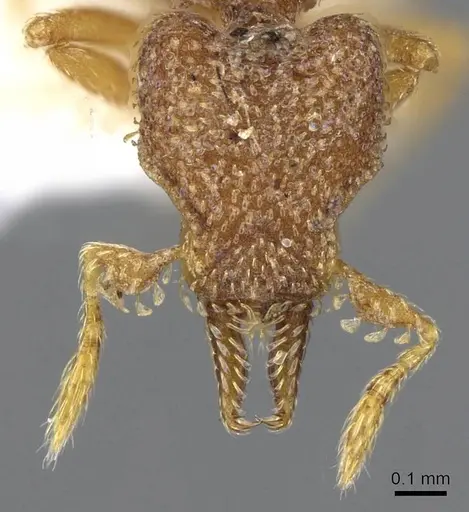
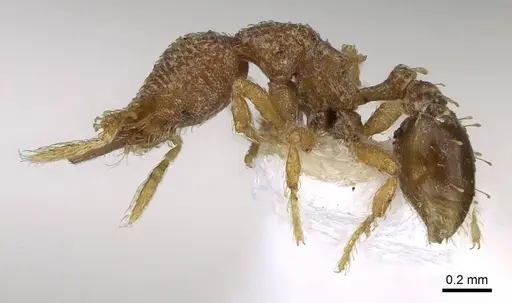
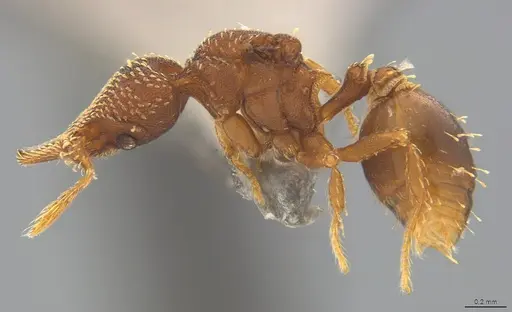
Strumigenys decipula is a tiny predatory ant with workers measuring about 2.1 to 2.2mm in total length . It belongs to the Strumigenys gundlachi group, a set of species known for their trap‑jaw mandibles that snap shut on small prey. Workers have a distinctive look: the antennal scapes are very short and broad, with a large convex lobe near the middle; the eyes are minuscule (only three ommatidia in the longest row); and there are no standing hairs on the upper part of the middle body section - instead, the body is covered with dense, short, spoon‑shaped hairs that lie flat . The mandibles are elongate and sublinear, with strongly convex inner margins that meet at about the midlength when closed . This species is found across northern South America, with confirmed records from Brazil, Colombia, Ecuador, and Peru . In Colombia it has been collected from both lowland Amazon forest (300m) and highland forest (2730m), suggesting a broad altitudinal tolerance . Almost nothing specific is known about its biology, but like all Strumigenys it is a specialized predator that hunts tiny arthropods.
Quick Summary
- Difficulty: Expert
- Origin & Habitat: Neotropical region, Brazil, Colombia, Ecuador, and Peru. Recorded from tropical forest floors at elevations from 300m to 2730m [2].
- Colony Type: Unconfirmed, based on Strumigenys patterns, probably single‑queen (monogyne), but this has not been studied.
- Size & Growth:
- Queen: Size data unavailable, queens have not been described in published literature.
- Worker: 2.1-2.2mm total length [1]
- Colony: Unknown, likely small, as is typical for Strumigenys, but no published colony counts exist.
- Growth: Unknown
- Development: Unknown, no species‑specific data. Based on related small myrmicines, development may take several weeks at warm temperatures, but this is a rough guess. (All development data is speculative because the biology of this species has not been studied.)
- Antkeeping:
- Temperature: Keep warm and stable, roughly 22-26°C. Avoid temperatures below 20°C or above 30°C. Based on Neotropical forest habitat, they prefer steady warmth [2].
- Humidity: High humidity is essential. The nest substrate should be consistently moist but not waterlogged. Aim for 70-85% relative humidity, typical of forest‑floor leaf litter.
- Diapause: Unlikely to require true hibernation because the species comes from tropical latitudes. However, they may slow down during cooler or drier periods, monitor and adjust care if needed.
- Nesting: In nature they probably nest in rotting wood, leaf litter, or soil. A small test‑tube setup works for founding. For established colonies, use a small plaster or Y‑tong nest with chambers scaled to their tiny size. Because they are only 2mm, use very fine mesh (under 0.5mm) on all openings to prevent escape.
- Behavior: Strumigenys decipula is a specialized predator that uses its trap‑jaw mandibles to capture tiny prey like springtails. They are not aggressive toward humans but can sting, the sting is very small and not medically significant. Their minute size means they can squeeze through impossibly small gaps, so escape prevention is your top priority. Colonies are likely shy and may abandon brood if disturbed.
- Common Issues: very small size makes escape prevention challenging, use mesh with openings under 0.5mm., specialized diet of live micro‑arthropods (springtails, fruit flies), they will not accept sugar water or dead food., slow colony growth and small final size make any loss of workers or queens hard to recover from., sensitive to drying out, consistent high humidity is required, monitor nest moisture daily., wild‑caught colonies may carry internal mites or parasites that are difficult to treat.
Appearance and Identification
Workers of Strumigenys decipula are just 2.1-2.2mm long [1]. The most distinctive features are the very short, broad antennal scape that expands into a large convex lobe, and the tiny eyes, only three ommatidia (individual lens units) in the longest row [2]. There are no upright (standing) hairs on the dorsal mesosoma (the middle part of the body), instead, the body is covered with dense, short, spoon‑shaped (spatulate) hairs that lie flat [2][1]. The mandibles are elongate and sublinear, and when closed their inner margins meet at about the midlength [2]. This species is very close to Strumigenys subedentata but can be told apart by the lack of standing hairs on the dorsal alitrunk, the very broad scape, and the smaller eyes [1].
Distribution and Habitat
Strumigenys decipula is known from Brazil (type locality near Manaus), Colombia, Ecuador, and Peru [2][3][4]. The wide altitudinal range is notable: in Colombia it has been collected from 300m in lowland Amazon forest (Caquetá) and from 2730m in highland Andean forest (Boyacá) [2]. Presumably it lives in rotting wood, leaf litter, and moist soil on the forest floor, typical Strumigenys microhabitats.
Feeding and Diet
Like all Strumigenys, this species is a specialized predator. It uses its trap‑jaw mandibles to capture small arthropods, primarily springtails (Collembola) and other micro‑arthropods found in leaf litter and soil. In captivity you must provide live small prey, they do not accept sugar water, honey, or dead insects. Offer small live springtails as the main food. Fruit flies, tiny crickets, or soil mites may also be taken. Feed every 2-3 days and remove uneaten prey to prevent mold. [3]
Temperature and Care
Because the species comes from warm Neotropical forests, keep the temperature stable around 22-26°C. Avoid letting it drop below 20°C or climb above 30°C. If your room is cooler, use a heating cable placed on top of the nest (not underneath) to avoid drying out the substrate. High humidity is critical: aim for a consistently moist nest, the substrate should feel damp but not waterlogged. Monitor humidity daily, especially in dry climates. [2]
Nesting Requirements
In the wild they likely nest in rotting wood, leaf litter, or soil. For captive colonies, a small test‑tube setup works well during founding. For larger colonies, use a plaster or Y‑tong nest with chambers scaled to their tiny 2mm size, avoid large, open spaces. Keep the nest material damp. Escape prevention is critical: use mesh with openings no larger than 0.5mm. They can sting, but it is not painful or dangerous.
Colony Development
Nothing has been published about the colony development of this species. Based on overall patterns in Strumigenys, colonies are probably small and grow slowly. The founding method is unconfirmed, there is no evidence for claustral or semi‑claustral behavior. Development time from egg to worker is unknown. Treat this species as a blank slate: observe carefully and adjust care as you learn.
Frequently Asked Questions
How long does it take for Strumigenys decipula to produce first workers?
The exact time is unknown, no published data exist. Even rough estimates from related species may not apply. Be patient and expect months rather than weeks.
What do Strumigenys decipula ants eat?
They are specialized predators that need live small prey. Offer springtails as the main food. They may also take fruit flies or tiny crickets. They will not eat sugar water, honey, or dead insects.
What size colony do Strumigenys decipula colonies reach?
Colony size has never been recorded. Based on the genus, they are probably small, likely under a few hundred workers, but this is an educated guess, not a fact.
Do Strumigenys decipula need hibernation?
Probably not, they come from tropical latitudes without a cold winter. However, they might have a natural slowdown during cooler or drier months. Watch your colony and adjust care if you see less activity.
What is the best nest for Strumigenys decipula?
A small test tube works well for a founding queen. For an established colony, use a small plaster or Y‑tong nest with chambers that match their tiny size. Keep the substrate moist and use very fine mesh to block escapes.
Why are my Strumigenys decipula dying?
Common causes: the nest dried out (they need constant high humidity), the food was wrong (they need live small prey), they escaped through gaps you didn't notice, or they were over‑disturbed. These are sensitive ants, so even small mistakes can be fatal.
Are Strumigenys decipula good for beginners?
No. Their tiny size, specialized diet, high humidity needs, and overall fragility make them an expert‑level species. Beginners should start with a hardier ant.
Where is Strumigenys decipula found?
In northern South America: Brazil (type locality near Manaus), Colombia, Ecuador, and Peru [2][3]. In Colombia it has been found at both low (300m) and high (2730m) elevations [2].
Can I keep multiple Strumigenys decipula queens together?
Colony structure is not known for this species. Based on the genus, colonies are probably single‑queen. There is no record of multiple queens cooperating. To be safe, house each queen separately.
Report an Issue
The current care sheet is based fully on literature. See inconsistencies, or something that's incorrect? Please , it will be resolved after review from an admin. Contributing to the blogs tab also helps providing information, to make us be able to further improve the caresheets. Thank you for your support!
References

This caresheet is licensed under CC BY-SA 4.0 .
Community Blogs
ANTWEB1053316
View on AntWeb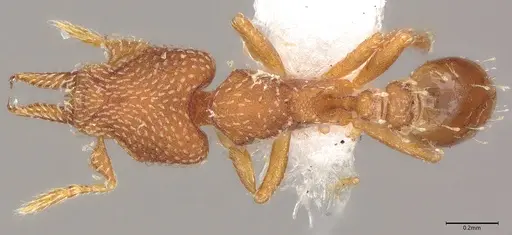
ANTWEB1053317
View on AntWeb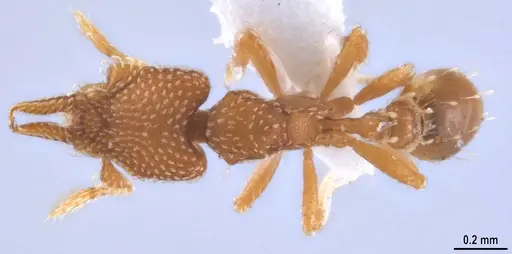
ANTWEB1053319
View on AntWeb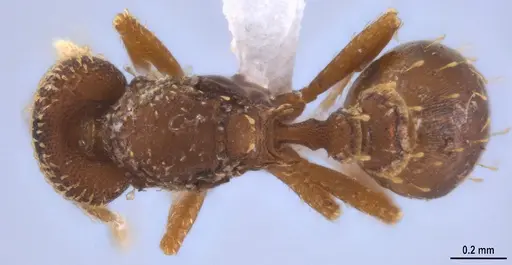
CASENT0900186
View on AntWeb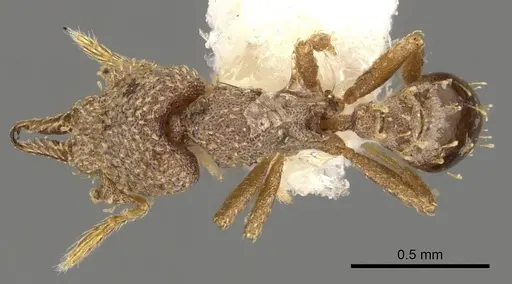
CASENT0914685
View on AntWeb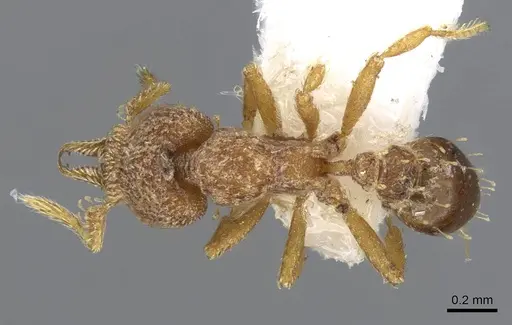
CASENT4036128
View on AntWeb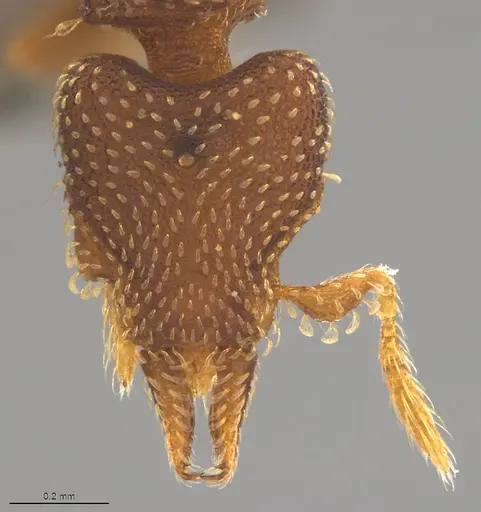
Literature
Loading distribution map...Loading products...