
Strumigenys cultrigera
- Sci. Name
- Strumigenys cultrigera
- Tribe
- Attini
- Subfamily
- Myrmicinae
- Author
- Mayr, 1887
- Distribution
- Found in 1 countries
Introduction
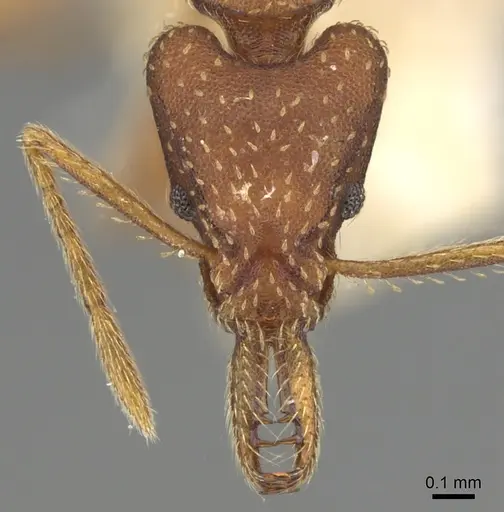
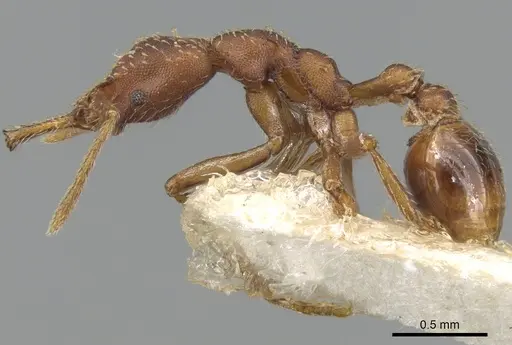
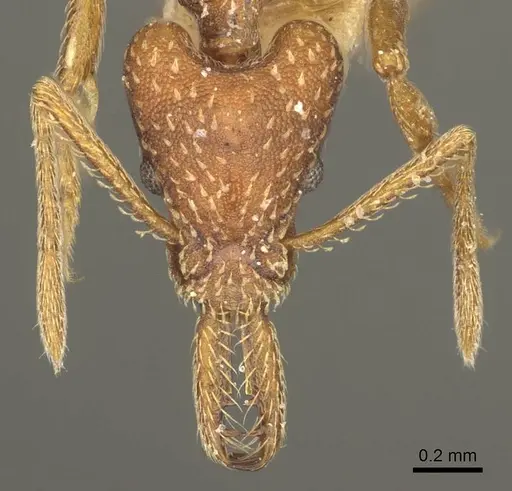
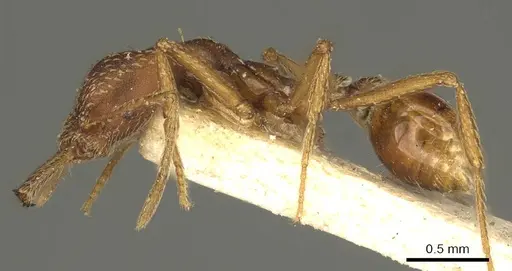
Strumigenys cultrigera is a tiny predatory ant with workers measuring 3.1–3.7 mm in total length . They belong to the Dacetini tribe and have a distinctive cuticular lamella (a thin flap) running along the inner edge of the mandible, which sets them apart from related species . Their mandibles have two preapical teeth, and the body is partly covered in fine, curved hairs . These ants are native to Brazil (Santa Catarina, Rio Grande do Sul) and Colombia (Valle del Cauca), living in leaf litter on humid forest floors and even in pine plantations . Specific biology for this species is unstudied. Based on their tribe, they are almost certainly specialized predators that hunt springtails and other tiny soil arthropods. They move slowly and deliberately, and colonies are likely small. This combination of a specialized diet and tiny size makes them a very challenging species to keep in captivity.
Quick Summary
- Difficulty: Expert
- Origin & Habitat: Native to Brazil (Santa Catarina, Rio Grande do Sul) and Colombia (Valle del Cauca) [3][5]. Found in leaf litter at elevations around 900 m in Colombia, and recorded from pine plantation areas in southern Brazil [3][4]. They live in humid, shaded forest floor environments where leaf litter accumulates.
- Colony Type: Unknown – colony structure has not been documented for this species.
- Size & Growth:
- Queen: Undescribed – queen size not documented in available literature.
- Worker: 3.1–3.7 mm total length (TL) [1].
- Colony: Unknown – no colony size data available.
- Growth: Unknown – no development data available.
- Development: Unknown – no direct observations recorded. (Development timeline is unconfirmed. Based on typical Dacetini patterns, it is likely slow, but no timeline can be given.)
- Antkeeping:
- Temperature: Keep the nest area stable, roughly in the low-to-mid 20s °C. Provide a slight temperature gradient so ants can self-regulate, but no exact range is confirmed.
- Humidity: High humidity is critical – these ants come from humid leaf-litter habitats. Keep the substrate consistently moist but not waterlogged. Condensation on container walls is a good sign.
- Diapause: Unknown – no data on overwintering requirements given their Neotropical distribution. They likely do not need true diapause, but this is unconfirmed [1].
- Nesting: A naturalistic setup with a deep layer of moist substrate (soil or peat mix) works best. Add leaf litter and small pieces of bark for cover. Test tubes with a water reservoir can be used, but must be paired with a moist foraging area.
- Behavior: Shy and non‑aggressive. These are specialist predators that hunt individually using their trap‑jaw mandibles. They rarely sting and are not defensive. Escape prevention is absolutely critical because of their tiny size – they can squeeze through standard barrier gaps. Workers are slow‑moving and spend most of their time in the leaf litter, foraging alone.
- Common Issues: specialized diet requires live springtails or other tiny live prey – hard to maintain., very small size means escape prevention must be extreme – standard barriers may fail., no captive breeding data exists – wild colonies are the only source, which often fail in captivity., high humidity can cause mold problems if ventilation is poor., stress from frequent disturbance can cause workers to abandon brood.
Housing and Setup
Strumigenys cultrigeraa requires a setup that mimics their leaf‑litter habitat. Use a container with a deep layer of moist substrate – a mix of soil and peat works well. The substrate should be consistently moist but never waterlogged. Add leaf litter, small pieces of bark, and other debris on the surface to give foragers cover and hunting grounds. Because they are so tiny, even small gaps can allow escapes – use fine mesh on ventilation holes and apply a reliable barrier (like Fluon) to the rim. A small water tube is essential, though they get most moisture from prey and substrate. [4][3]
Feeding and Diet
This species is a specialist predator and requires live prey. Their primary food source in the wild is springtails (Collembola) and other tiny soil arthropods [4]. In captivity, you should culture your own springtail colony as a constant food source. Offer small fruit flies, pinhead crickets, and other tiny live insects occasionally. They will not accept dead prey readily – their hunting is triggered by movement. Feed every 2–3 days, offering only what they can consume to avoid mold. Sugar sources are generally not accepted by Dacetini ants. Never leave uneaten prey in the setup for more than 24 hours.
Temperature and Humidity
Keep the nest area at a stable temperature, roughly low‑to‑mid 20s °C. A heating cable on one side can create a gentle gradient, but avoid sudden fluctuations. High humidity is critical – keep the substrate consistently moist and the air humid. Monitor condensation on container walls, if it disappears quickly, the setup is too dry. Use a moisture‑retaining substrate and mist occasionally, but avoid standing water. Good ventilation is necessary to prevent mold, but avoid excessive airflow that dries the setup. [3][5]
Behavior and Temperament
Strumigenys ants are shy, non‑aggressive predators. Workers hunt alone using their specialized mandibles to capture tiny prey. They are not defensive and rarely attempt to sting. Colonies are slow‑moving and spend much of their time in the substrate rather than at the surface. Workers may be inactive for long periods – this is normal. Do not disturb the colony frequently, stress can cause workers to abandon brood. They are not suitable for watching active foraging like some larger ant species. [2]
Colony Acquisition and Survival
This species is not available from commercial breeders and must be collected from the wild in its native range (Brazil or Colombia). Wild‑caught colonies face significant challenges in captivity – transport stress, parasites, and adaptation to captive conditions often cause colony failure. Before attempting to keep this species, ensure you can provide the specialized care they require. Given the complete lack of captive breeding data, expect high mortality. Consider studying less demanding species first. [3][4]
Frequently Asked Questions
Can I keep Strumigenys cultrigera in a test tube?
A test tube setup is possible but challenging. You would need to provide a separate moist foraging area with substrate and leaf litter for hunting. The tube should have a water reservoir but be set up to prevent flooding. Many keepers find naturalistic setups work better for these leaf‑litter specialists.
What do Strumigenys cultrigera ants eat?
They are specialist predators that require live prey. Their primary food is springtails (Collembola) and other tiny soil arthropods [4]. You will need to culture your own springtail colony. They rarely accept dead food or sugar sources.
How long does it take for Strumigenys cultrigera to produce first workers?
The development timeline is unconfirmed for this species. No data is available.
Are Strumigenys cultrigera ants good for beginners?
No. This is an expert‑level species due to their specialized diet (requiring live springtail cultures), tiny size (escape risk), high humidity needs, and complete lack of captive breeding data. They are not recommended for anyone without significant antkeeping experience.
How big do Strumigenys cultrigera colonies get?
Colony size is unconfirmed for this species. No data is available.
Do Strumigenys cultrigera need hibernation?
Unknown – no data on overwintering requirements. Given their Neotropical distribution, they likely do not require true diapause, but this is unconfirmed. Do not attempt hibernation without specific guidance.
Why are my Strumigenys cultrigera dying?
Common causes include: stress from disturbance, improper humidity (too dry or too wet), lack of live prey, temperature extremes, and escape. These ants are extremely sensitive to husbandry errors. If your colony is declining, review all environmental parameters and ensure fresh live prey is available.
Can I keep multiple queens together?
Unknown – colony structure has not been documented for this species. Do not attempt combining unrelated queens.
Where is Strumigenys cultrigera found?
This species is native to Brazil (Santa Catarina, Rio Grande do Sul) and Colombia (Valle del Cauca). They live in leaf litter in humid forest areas [3][5].
Report an Issue
The current care sheet is based fully on literature. See inconsistencies, or something that's incorrect? Please , it will be resolved after review from an admin. Contributing to the blogs tab also helps providing information, to make us be able to further improve the caresheets. Thank you for your support!
References

This caresheet is licensed under CC BY-SA 4.0 .
Community Blogs
CASENT0280719
View on AntWeb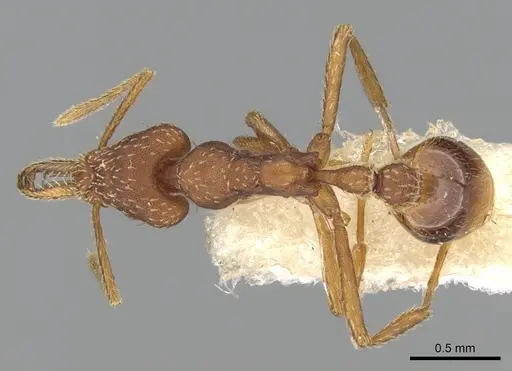
CASENT0915690
View on AntWeb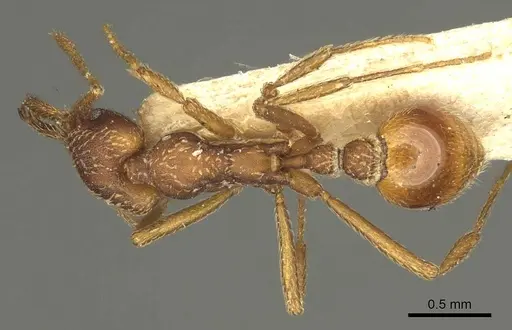
Literature
Loading distribution map...Loading products...