
Strumigenys concolor
- Sci. Name
- Strumigenys concolor
- Tribe
- Attini
- Subfamily
- Myrmicinae
- Author
- Santschi, 1914
- Distribution
- Found in 4 countries
Introduction
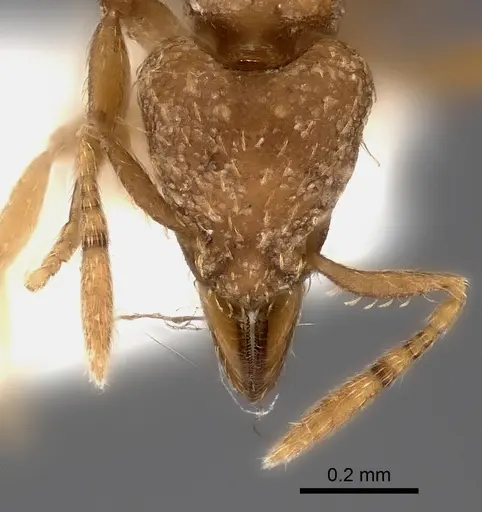
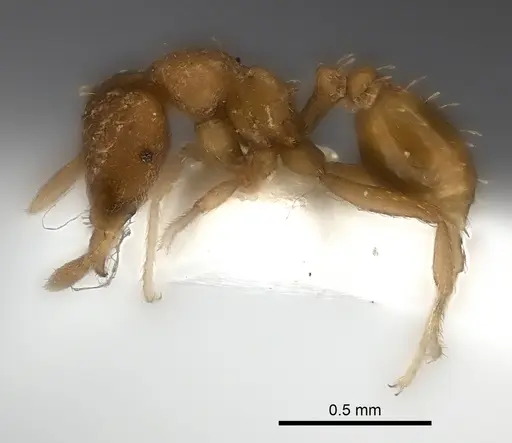
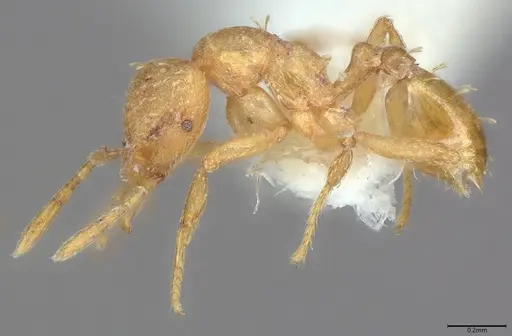
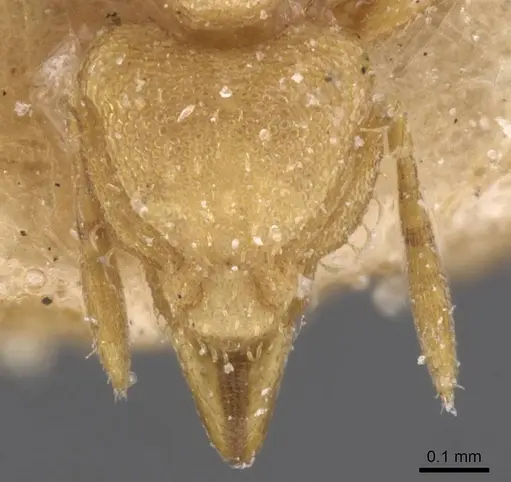
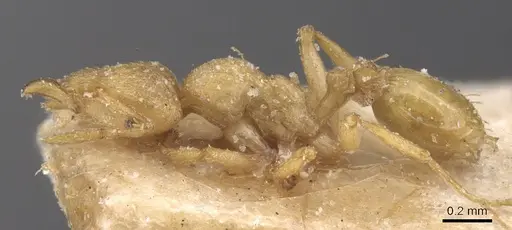
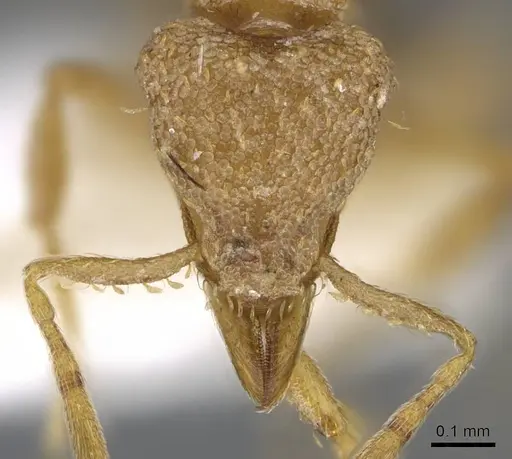
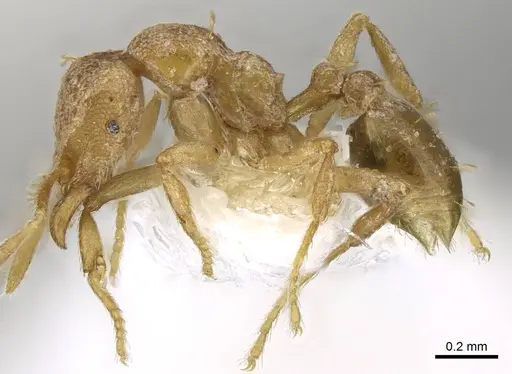
Strumigenys concolor is a tiny predatory ant measuring just 2.0-2.2mm in total length . Workers are yellow to yellowish brown, with distinctive stiff hairs that are club-shaped (clavate) at the tips. This species belongs to the Strumigenys lujae group and can be identified by having only one pair of standing hairs on the mesonotum, and a single pair each on the petiole and postpetiole . This ant occurs across West and Central Africa, from Ghana east to Uganda and south to Angola and the Democratic Republic of Congo . It lives in wet to moist tropical forests, with most specimens collected from leaf litter. Nests have been found in soil and in a rotten log . Like other members of the genus, it is a specialized predator of tiny soil arthropods.
Quick Summary
- Difficulty: Hard
- Origin & Habitat: West and Central Africa: Ghana, Ivory Coast, Cameroon, Equatorial Guinea, Gabon, Angola, Democratic Republic of Congo, Rwanda, Uganda, Kenya [2][3][4][1]. Inhabits wet to moist tropical forests, typically collected from leaf litter in lowland and highland forest areas [1].
- Colony Type: Unknown. Colony structure has not been documented for this species.
- Size & Growth:
- Antkeeping:
- Temperature: Based on its tropical forest origin, maintain temperatures around 22-26°C. Avoid prolonged temperatures below 20°C or above 30°C. Use a gentle heat source if needed [1].
- Humidity: High humidity is essential. Keep the nest substrate consistently damp but not waterlogged. Aim for 70-85% relative humidity. A thin layer of condensation on nest walls is a good sign [1].
- Diapause: No diapause required. This tropical species does not need a cold period.
- Nesting: Use a naturalistic setup with moist substrate (soil or soil/plaster mix) layered with leaf litter and moss. In nature, nests are found in soil and in rotting wood [1]. Y-tong or plaster nests can work if kept humid. Due to tiny size, all connections must be escape-proof.
- Behavior: Workers have a functional stinger, but it is tiny and not harmful to humans. They are shy and prefer to hide in the substrate. They are specialized predators of small soil arthropods, typical for the genus. Their minute size (2mm) makes them excellent escape artists, gaps invisible to the eye can be an escape route. They are not aggressive and will not attack keepers.
- Common Issues: escape prevention is critical, their tiny 2mm size means they can escape through gaps invisible to the naked eye, specialized live prey required, they likely need a constant supply of springtails or other tiny arthropods (based on genus biology), high humidity needs can lead to mold problems if ventilation is inadequate, wild-caught colonies may harbor mites or parasites that can decimate the colony in captivity, slow or stalled growth may be caused by suboptimal temperature or diet
Housing and Nest Setup
Mimic their natural habitat: a naturalistic formicarium with moist soil or a soil-plaster mix, topped with leaf litter and moss. Nests have been found in soil and in a rotten log [1], so a setup with a dug-out chamber in moist substrate works well. Alternatively, a well-hydrated Y-tong or plaster nest with narrow chambers is suitable. The nest area should be kept consistently damp but never waterlogged. Add a water tube or small water reservoir to help maintain humidity. Because of their minute size, all connections and barriers must be extremely tight, even standard ant keeping setups often have gaps large enough for these ants to escape. Use fluon or other barrier treatments on all edges and double-check all seams.
Feeding and Diet
No specific diet data exists for this species, but like other Strumigenys, they are specialized predators of tiny soil arthropods (springtails, booklice, etc.). You will need a thriving culture of springtails (Collembola) to keep them. They are unlikely to accept sugar water or honey. Do not offer large prey like mealworms, their trap-jaw mandibles are adapted for small, fast-moving prey. A well-established springtail culture is essential before acquiring these ants.
Temperature and Humidity Requirements
Coming from tropical African forests, Strumigenys concolor needs warm, humid conditions. Maintain temperatures between 22-26°C. Temperatures below 20°C may slow metabolism and prevent brood development. Temperatures above 30°C can be lethal. Use a gentle heat source if needed, a heating cable on one side of the setup creates a suitable gradient. Humidity is critical: aim for 70-85% relative humidity in the nest. The substrate should feel consistently damp. However, balance humidity with adequate ventilation to prevent mold growth. A thin layer of condensation on the nest walls is ideal, if you see heavy water droplets or pooling, reduce humidity, if the substrate looks dry, increase it. [1]
Handling and Temperament
These ants are completely harmless to keepers. They have a functional stinger, but it is tiny and not medically significant. Their first defense is fleeing and hiding. Because of their tiny size, they are extremely difficult to handle or move without accidentally injuring them. Use soft brushes or pipettes rather than forceps. Their slow movement and cryptic behavior mean you may not see much activity, this is normal. Workers spend most of their time hunting through the substrate.
Growth and Development
No data on colony growth or development time is available for this species. Based on the general biology of small dacetine ants, growth is likely slow. Be patient and avoid the temptation to overfeed, as excess prey can mold and harm the colony. Monitor brood development and adjust temperature if you notice slow or stalled development.
Frequently Asked Questions
Can I keep Strumigenys concolor in a test tube?
A test tube setup can work for a founding queen or very small colony, but these ants need more space to hunt than typical ants. A naturalistic setup with moist substrate is better long-term. If using test tubes, ensure excellent escape prevention as they can squeeze through tiny gaps.
What do Strumigenys concolor eat?
No species-specific diet data exists, but they likely require live springtails as their primary food source, like other Strumigenys. Establish a springtail culture before acquiring these ants. They may also accept other tiny arthropods like booklice, but springtails should form the bulk of their diet. They will not accept sugar water or honey.
How long does it take for Strumigenys concolor to produce first workers?
Exact timing is unconfirmed for this species. No data available. Based on related dacetine ants, it may take 2-3 months, but this is speculative.
Are Strumigenys concolor dangerous?
No, they are completely harmless. They have a functional stinger, but it is tiny and not harmful to humans. They are shy and non-aggressive.
Do Strumigenys concolor need hibernation?
No, they come from tropical Africa and do not require hibernation. Keep them warm year-round (22-26°C).
Why are my Strumigenys concolor escaping?
Their tiny 2mm size makes them excellent escape artists. They can squeeze through gaps that are barely visible. Use excellent escape prevention: apply fluon to all edges, check all seams, and use fine mesh if you have any ventilation openings. Even standard ant keeping setups often have gaps too large for these minute ants.
How big do Strumigenys concolor colonies get?
Unknown. Colony size has not been documented in scientific literature.
Are Strumigenys concolor good for beginners?
No, this species is not recommended for beginners. Their specialized diet (requiring live springtail cultures), high humidity needs, tiny size making escape prevention difficult, and lack of published care data make them a challenging species. They are best suited for experienced antkeepers.
What temperature should I keep Strumigenys concolor at?
Keep them at 22-26°C. This is a tropical species that needs warm, stable temperatures. Avoid temperatures below 20°C or above 30°C.
Why is my Strumigenys concolor colony not growing?
Several factors could be involved: temperatures may be too low (below 20°C), humidity may be inadequate, or they may not be accepting the prey you're offering. Ensure optimal temperature (22-26°C) and high humidity. Growth is naturally slow for this species, and exact requirements are unknown.
Report an Issue
The current care sheet is based fully on literature. See inconsistencies, or something that's incorrect? Please , it will be resolved after review from an admin. Contributing to the blogs tab also helps providing information, to make us be able to further improve the caresheets. Thank you for your support!
References

This caresheet is licensed under CC BY-SA 4.0 .
Community Blogs
CASENT0217193
View on AntWeb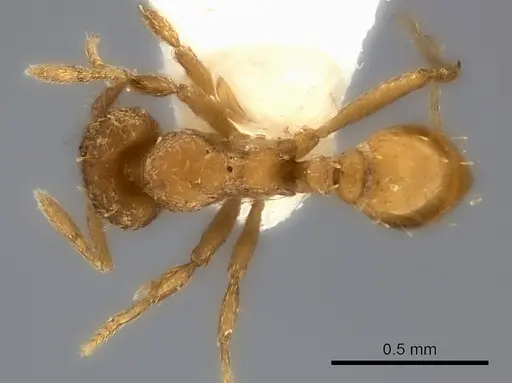
CASENT0217919
View on AntWeb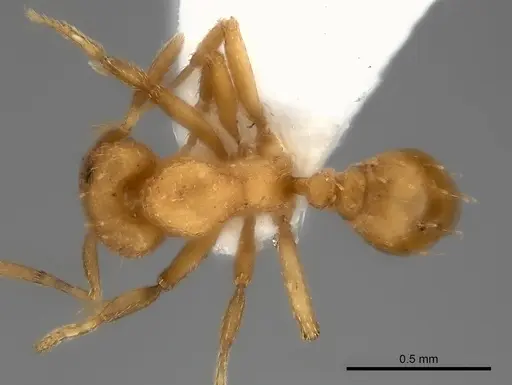
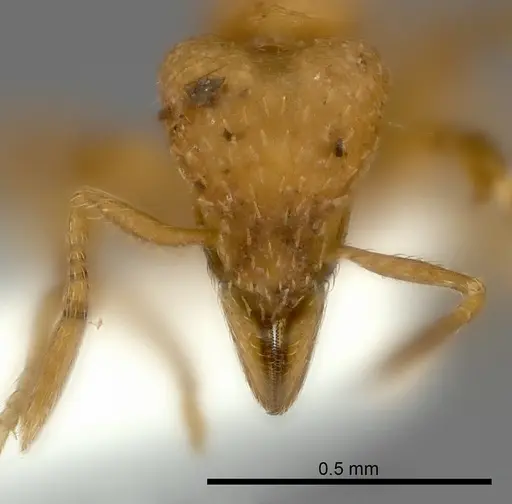
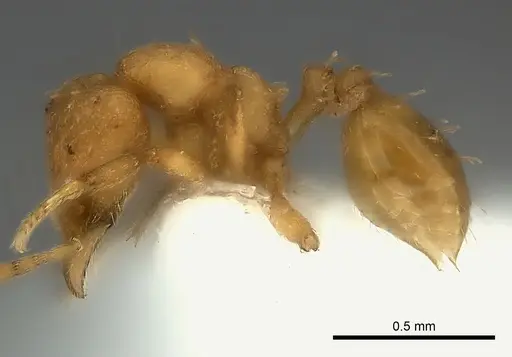
CASENT0358443
View on AntWeb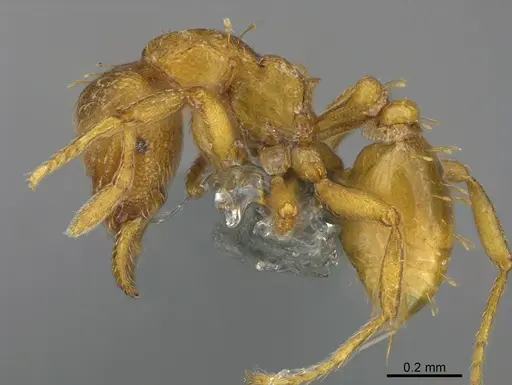
CASENT0763579
View on AntWeb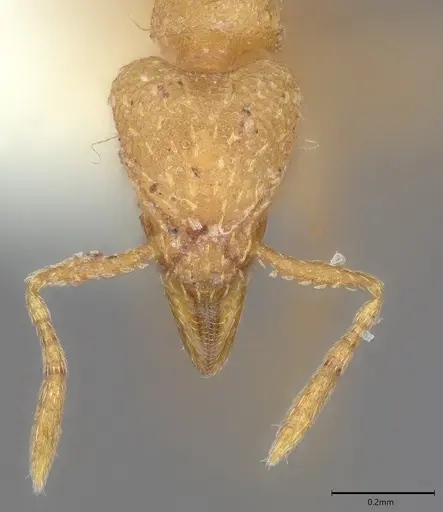
CASENT0912833
View on AntWeb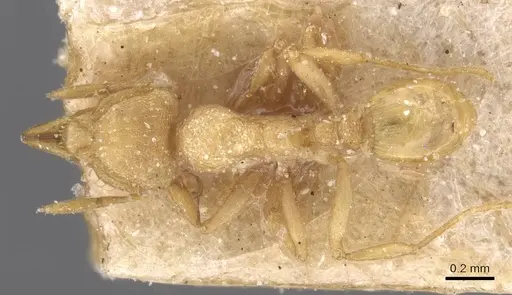
CASENT0914706
View on AntWeb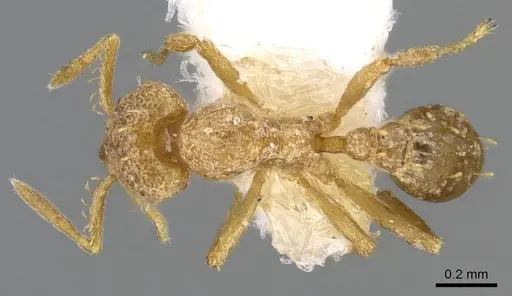
Literature
Loading distribution map...Loading products...