
Strumigenys chilo
- Sci. Name
- Strumigenys chilo
- Tribe
- Attini
- Subfamily
- Myrmicinae
- Author
- Fisher, 2000
- Distribution
- Found in 1 countries
Introduction
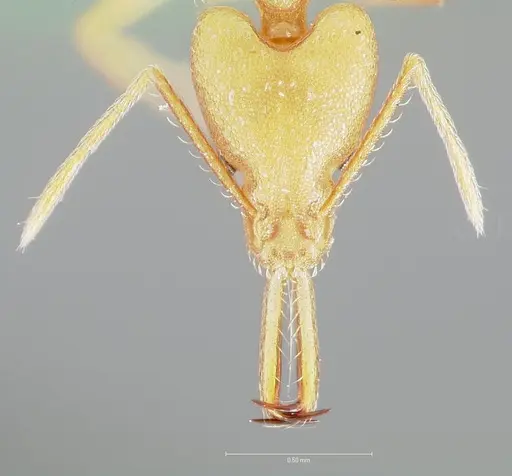
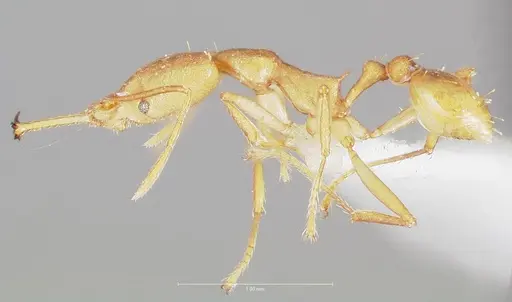
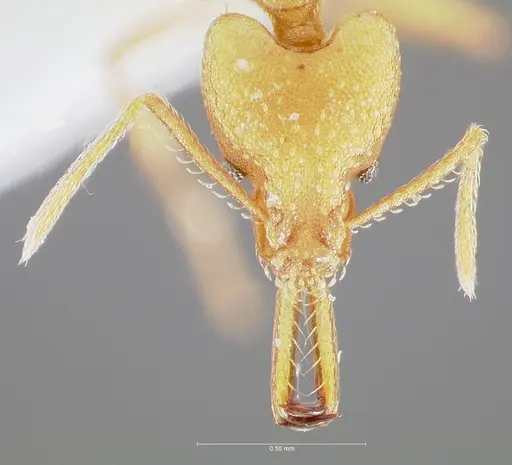
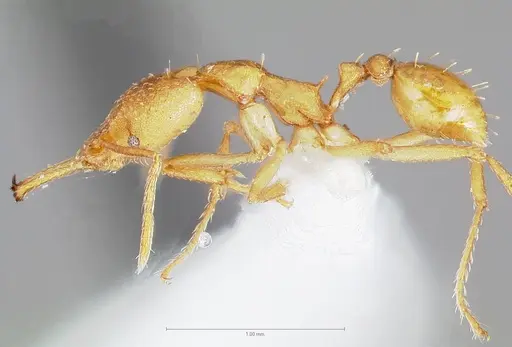
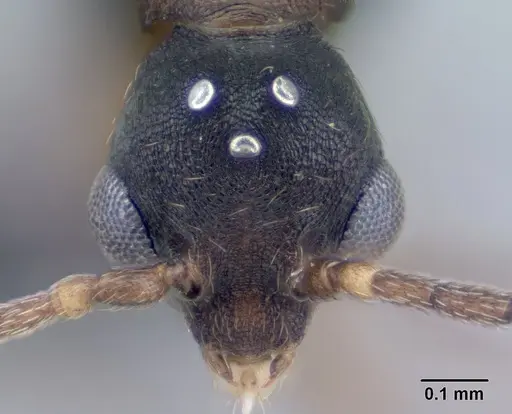
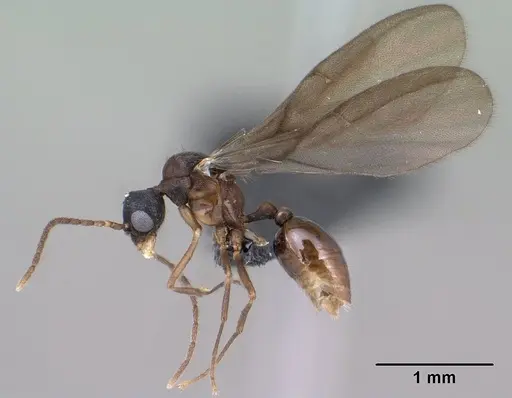
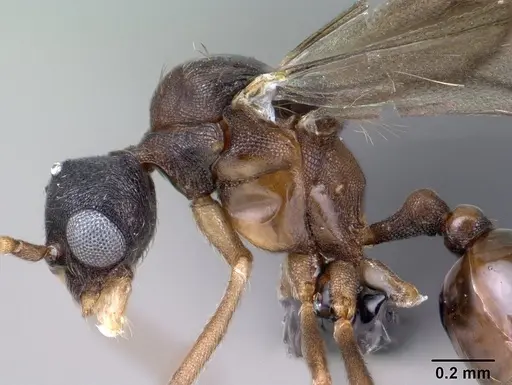
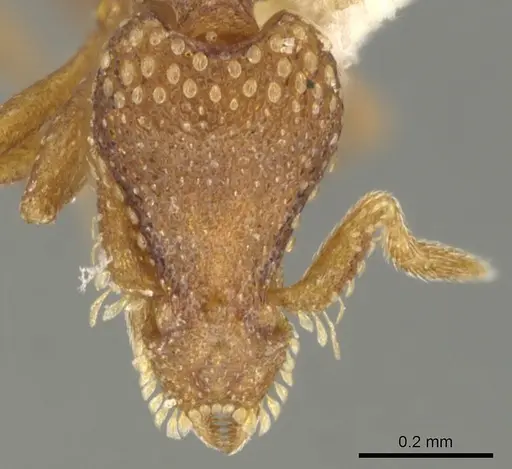
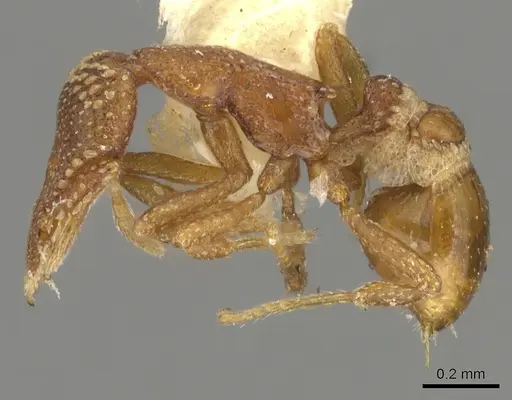
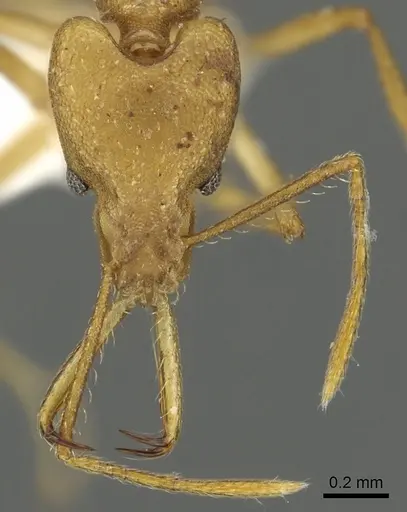
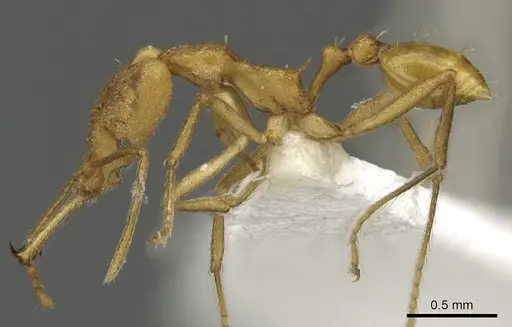
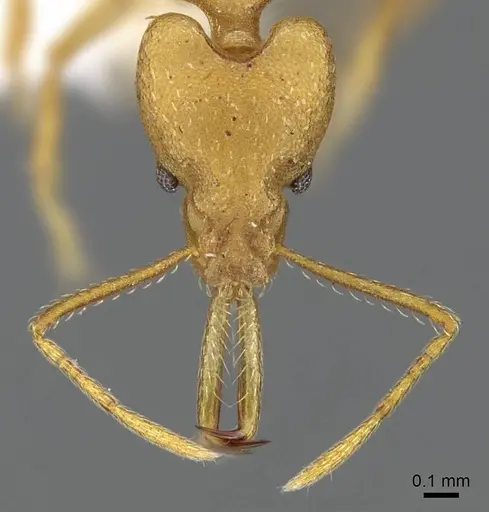
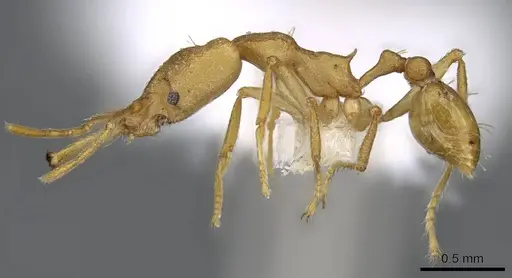
Strumigenys chilo is a tiny predatory ant from the rainforests of Madagascar. Workers are about 3.2-3.6mm long and dull yellow to light brown in color . It belongs to the grandidieri group, closely related to Strumigenys bibiolona, and is part of the dacetine tribe (Attini) - a group known for specialized trap-jaw mandibles used to hunt micro-arthropods like springtails. In the wild, these ants live in leaf litter, downed logs, and rotting wood in wet forests across Madagascar . Unlike many ants, S. chilo is an obligate predator that rarely accepts sugar or other common ant foods. This makes them a challenging species to keep, as they require a constant supply of live prey. They are cryptic and spend most of their time in dark, humid microhabitats.
Quick Summary
- Difficulty: Expert
- Origin & Habitat: Madagascar rainforests and other wet forest habitats. Found in leaf litter, downed logs, and rotting wood [1].
- Colony Type: Colony structure is unconfirmed. Most Strumigenys species are monogyne (single queen), but this has not been directly documented for S. chilo.
- Size & Growth:
- Queen: Unknown, only a dealate queen paratype is known, but no total length measurement has been published [1].
- Worker: 3.2-3.6mm [1].
- Colony: Unknown, likely under 500 workers based on related species.
- Growth: Slow
- Development: Unknown, based on related dacetine ants, likely 8-12 weeks. (Dacetine ants typically develop slowly. Expect extended development times compared to common genera like Camponotus.)
- Antkeeping:
- Temperature: Keep at 24-26°C. These are tropical rainforest ants that need warm, stable conditions year-round.
- Humidity: High humidity required, aim for 70-85%. They naturally live in damp forest floor environments. Keep the nest substrate consistently moist but not waterlogged [2].
- Diapause: No, being a tropical species from Madagascar, they do not require hibernation [1]. Maintain warm conditions year-round.
- Nesting: Provide a naturalistic setup with moist substrate (soil/peat mix) and pieces of rotting wood or cork for nesting sites. They prefer tight, humid chambers. Avoid acrylic nests, Y-tong, plaster, or naturalistic soil nests with good moisture retention work well.
- Behavior: S. chilo is a specialized predator. Workers use their trap-jaw mandibles to capture small prey, primarily springtails and other micro-arthropods. They are not aggressive toward larger threats, they will flee instead. Like most Myrmicinae, they have a functional stinger but it is rarely used defensively against humans and is not medically significant. Escape prevention is critical due to their tiny size, they can squeeze through very small gaps. Activity is moderate, they forage slowly and methodically through the substrate. Sugar sources are typically rejected, they are obligate predators.
- Common Issues: tiny size means escapes are likely without fine mesh or Fluon barriers, requiring live prey makes them difficult to feed, colony decline without constant springtail supply, slow growth can frustrate keepers who overfeed or abandon colonies, high humidity needs can lead to mold problems if ventilation is poor, wild-caught colonies may have parasites that kill them in captivity
Housing and Nest Setup
S. chilo needs a setup that maintains high humidity while providing hunting grounds for live prey. A naturalistic terrarium-style setup works best, use a soil and peat mixture as substrate (keep it consistently moist), add pieces of rotting wood or cork for nesting sites, and include leaf litter for hunting. The enclosure must have excellent escape prevention: because workers are only 3mm, standard mesh may not be enough, use fine mesh (under 0.5mm gaps) or apply Fluon to barrier surfaces. A small water reservoir connected to the nest helps maintain humidity without flooding. Avoid test tube setups unless you can keep humidity stable, these ants desiccate quickly in dry conditions [1].
Feeding and Diet
This is the most critical aspect of keeping S. chilo. They are obligate predators that specialize in hunting springtails and other micro-arthropods. They will not accept sugar water, honey, or typical ant feeds. You must culture a constant supply of springtails (Folsomia candida or similar) and possibly other tiny prey like booklice. Offer small live prey every 2-3 days, adjusting based on colony size and consumption. Remove uneaten prey to prevent mold. Some keepers report success with tiny fruit fly larvae as occasional variety. Do not try to supplement with protein shakes or dead insects, these ants require live, moving prey to trigger their hunting response.
Temperature and Humidity
Maintain temperatures between 24-26°C year-round. Being from Madagascar rainforests, they need warm, stable conditions. Use a low-wattage heating cable on one side of the enclosure to create a gentle gradient if room temperature is below 24°C. Place heating on top of the nest, not underneath, to avoid drying out the substrate. Humidity should stay at 70-85%, check that the substrate surface remains damp but not pooling with water. Mist occasionally, but rely on a water reservoir or damp substrate for stable humidity. Poor humidity kills colonies faster than incorrect temperature [2].
Colony Development
S. chilo colonies grow slowly. Expect 6-12 months from founding to first workers, and several years to reach moderate colony sizes. The queen lays few eggs at a time, and brood development takes longer than typical ants. Do not disturb the founding chamber, queens are sensitive during the founding period. Once workers emerge, they are tiny (around 3mm) and will begin hunting. Do not overfeed, excess prey dies and causes mold that can kill the colony. Patience is essential. Colony size likely maxes out under 500 workers based on related species.
Behavior and Temperament
These are not aggressive ants. When threatened, workers flee rather than attack. Their trap-jaw mandibles are specialized for catching tiny prey, not defending against larger threats. Workers forage slowly through the substrate, hunting springtails and other micro-arthropods. They do not form raiding columns or show territorial behavior. Colonies are quiet and spend most of their time in the nest or hunting in the substrate. You will rarely see them out in the open, they are cryptic and prefer dark, humid microhabitats.
Frequently Asked Questions
Can I keep Strumigenys chilo in a test tube?
Test tubes can work but are not ideal. These ants need high humidity (70-85%) and a constant supply of live prey. Test tubes dry out quickly and offer no hunting space. A small naturalistic setup with moist substrate is better. If using test tubes, connect a water reservoir and use a small outworld with springtail culture.
What do Strumigenys chilo eat?
They are obligate predators that eat only live springtails and other tiny micro-arthropods. They will not accept sugar water, honey, dead insects, or protein shakes. You must culture a springtail colony to keep them fed. This makes them one of the most difficult ants to feed in captivity.
How long does it take for Strumigenys chilo to produce first workers?
The exact time is unknown. Based on related dacetine ants, expect 6-12 months from founding to first workers. The queen will remain in her chamber, laying and tending eggs until nanitics emerge. Do not disturb during this time.
Are Strumigenys chilo good for beginners?
No. This is an expert-level species. They require live prey culture, high humidity maintenance, and have very specific dietary needs. Beginners should start with species like Lasius niger or Camponotus that accept varied diets and tolerate beginner mistakes.
Do Strumigenys chilo need hibernation?
No. They are tropical ants from Madagascar and do not require hibernation. Keep them warm (24-26°C) year-round. Extended temperature drops below 20°C can be harmful.
How big do Strumigenys chilo colonies get?
Colony size is unknown for this species. Based on related Strumigenys species, they likely max out at a few hundred workers. They are not large colony formers.
Why are my Strumigenys chilo dying?
Common causes include: dried-out substrate (they need high humidity), lack of live springtail prey (they won't eat dead food), mold from overfeeding, and temperature stress. Check humidity levels first, then verify prey availability. Wild-caught colonies may also carry parasites.
Can I keep multiple Strumigenys chilo queens together?
Not recommended. Combining unrelated queens has not been documented for this species. Most Strumigenys are monogyne. If you have multiple foundresses, keep them in separate setups.
When should I move Strumigenys chilo to a formicarium?
Wait until the colony has at least 20-30 workers before considering any move. Even then, they do better in naturalistic setups than in commercial formicariums. If you must move them, create a moist soil setup that mimics their natural environment.
What temperature range is ideal for Strumigenys chilo?
Keep them at 24-26°C consistently. They are tropical and do not tolerate cool temperatures. Use a heating cable on one side to maintain warmth if your room temperature is below 24°C.
Report an Issue
The current care sheet is based fully on literature. See inconsistencies, or something that's incorrect? Please , it will be resolved after review from an admin. Contributing to the blogs tab also helps providing information, to make us be able to further improve the caresheets. Thank you for your support!
References

This caresheet is licensed under CC BY-SA 4.0 .
Community Blogs
CASENT0005508
View on AntWeb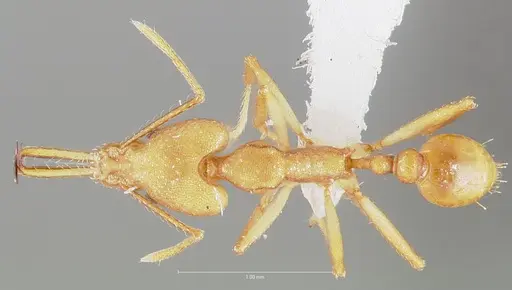
CASENT0005509
View on AntWeb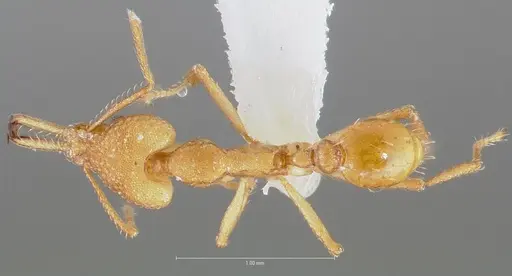
CASENT0145240
View on AntWeb
CASENT0900073
View on AntWeb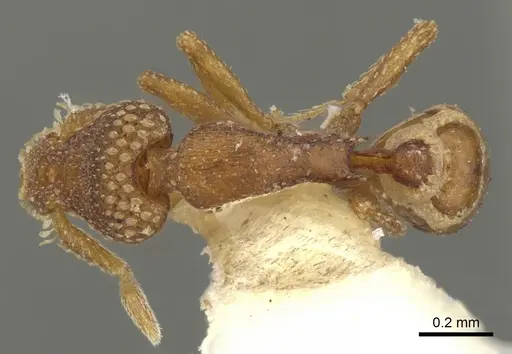
CASENT0900698
View on AntWeb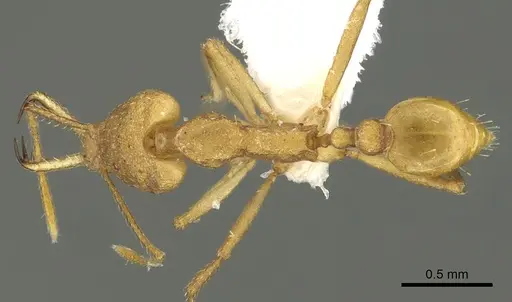
CASENT0914762
View on AntWeb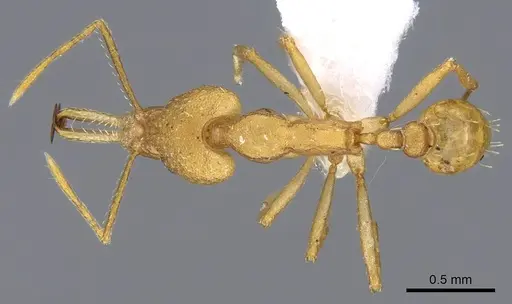
Literature
Loading distribution map...Loading products...