
Strumigenys capitata
- Sci. Name
- Strumigenys capitata
- Tribe
- Attini
- Subfamily
- Myrmicinae
- Author
- Smith, 1865
- Distribution
- Found in 1 countries
Introduction
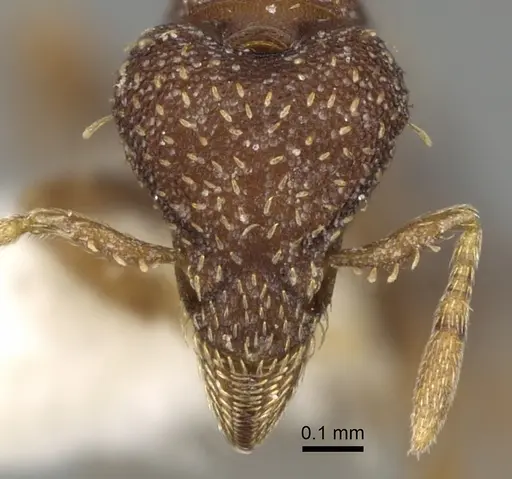
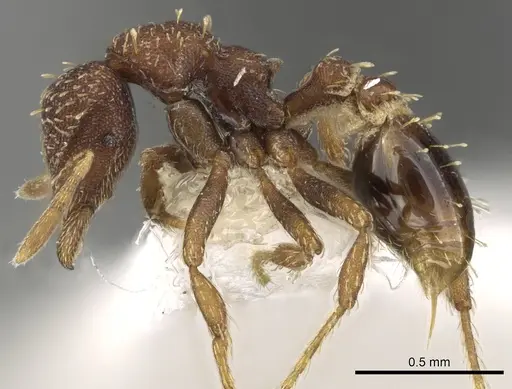
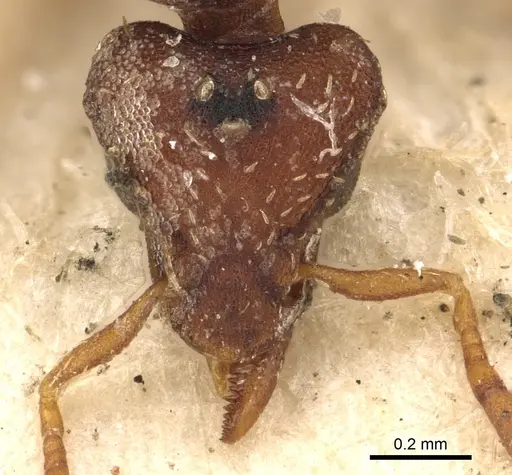
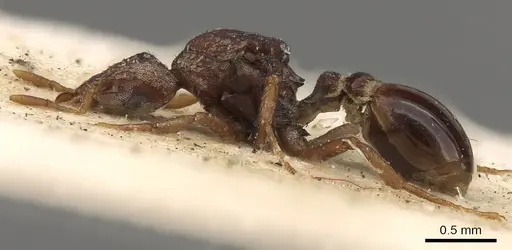
Strumigenys capitata is a tiny predatory ant. Workers measure 2.6-2.8 mm in total length, making them one of the smaller ant species . Queens are slightly smaller at about 2.33 mm . The head is densely punctate and covered with fine standing hairs; the eyes are very small, with only 4-5 ommatidia in the longest row . This species is found in the Australasian and Indomalayan regions, including New Guinea, Seram, Sulawesi, and Sumatra . It lives in rainforest habitats and nests inside rotting logs . Strumigenys are trap‑jaw ants, but specific hunting behavior for this species has not been studied in detail.
Quick Summary
- Difficulty: Expert
- Origin & Habitat: Rainforest habitats in New Guinea, Indonesia (Seram, Sulawesi, Sumatra). Specimens have been collected from rotten logs in rainforest environments [1].
- Colony Type: Colony structure is unconfirmed. Based on typical Strumigenys patterns, colonies are likely monogyne (single queen) and remain small.
- Size & Growth:
- Queen: ~2.33 mm [2]
- Worker: 2.6-2.8 mm [1]
- Colony: Unconfirmed, based on genus patterns, mature colonies likely stay under 100 workers.
- Growth: Slow
- Development: Unknown, development takes at least a few months at warm temperatures (inferred from slow growth of related Strumigenys). (Growth is very slow, the first nanitics are tiny. Avoid disturbing the founding queen.)
- Antkeeping:
- Temperature: Keep at 22-26 °C, based on tropical rainforest habitat, maintain warm, stable conditions. Avoid prolonged drops below 20 °C.
- Humidity: High humidity is essential. Keep the nest substrate consistently moist (but not waterlogged) to mimic rainforest conditions. Provide good ventilation to prevent mold.
- Diapause: No true diapause required. These tropical ants do not hibernate but may slow activity during cooler periods.
- Nesting: Natural nests are in rotting wood and leaf litter [1]. In captivity, use a small test tube with a water reservoir, or a miniature formicarium with tiny chambers scaled to the ants’ size. Moist substrate (coco peat or soil) helps maintain humidity.
- Behavior: Strumigenys capitata is a specialized predator that hunts tiny arthropods like springtails. Workers are shy and non‑aggressive, they have a functional sting but it is harmless to humans due to their tiny size. Escape prevention is critical, they can squeeze through gaps smaller than 0.5 mm. They spend most of their time hidden in the nest or hunting in leaf litter.
- Common Issues: escape risk is extreme, their tiny size means even standard ant barriers may not contain them, use fine mesh (0.3 mm or smaller) and seal all gaps., very slow colony growth may frustrate keepers expecting rapid development., high humidity requirements can lead to mold if ventilation is poor, balance moisture with airflow., specialized diet, they require live micro‑prey (springtails, booklice) and may refuse conventional ant foods like sugar water or protein gels., wild‑caught colonies may carry parasites, quarantine new queens if possible.
Housing and Nest Setup
Because of their tiny size, Strumigenys capitata needs a nest with very small chambers. A test tube with a water reservoir and a cotton plug works well for a founding queen. For established colonies, use a small plaster, Y‑tong, or 3D‑printed nest with passages scaled to the ants (2.6-2.8 mm). Keep the nest dark and in a low‑light area. The outworld should have fine mesh (max 0.3 mm openings) to prevent escapes. Layout: a layer of moist substrate (coconut coir or soil) in the outworld helps maintain humidity and gives workers a place to hunt.
Feeding and Diet
Strumigenys capitata is a specialized predator. Its natural prey includes tiny arthropods like springtails (Collembola) and booklice (Psocoptera). You can culture springtails separately and offer them every 2-3 days. They may also accept fruit fly larvae or spider mites. Unlike many ants, they do not normally take sugar water or honey, their diet is almost purely protein. Remove uneaten prey after 24 hours to prevent mold. A small colony may eat 5-10 springtails per week, adjust as the colony grows.
Temperature and Humidity
These are tropical rainforest ants. Maintain temperatures between 22-26 °C. A heat cable or mat can help, but avoid direct heating of the nest, use a gradient. Humidity must stay high (roughly 70-80 % relative humidity in the nest). Achieve this by keeping the substrate moist and misting the outworld lightly. Use a well‑ventilated nest to prevent mold, but cover part of the top to reduce evaporation. A small water dish in the outworld provides drinking water.
Colony Development
Colony growth is very slow. After a queen is fertilized, she will seal herself in a cavity and lay a small clutch of eggs. The first workers (nanitics) emerge after several months. Expect only a handful of workers in the first year, numbers increase gradually over following years. Do not disturb the founding queen, vibrations or light can cause her to eat the brood. Once the colony has 10-15 workers, you can begin feeding live prey regularly. Patience is essential, this species rewards long‑term keepers who appreciate cryptic ants.
Behavior and Temperament
Strumigenys capitata workers are secretive and non‑aggressive. They spend most of their time in the nest or hunting in the foraging area. Their trap‑jaw mandibles are used only for capturing tiny prey, not for defense. When disturbed, they flee rather than fight. They have a sting (like most Myrmicinae), but it is too small to penetrate human skin. These ants are not showy, they are best appreciated for their unique hunting method and tiny size. Escape prevention is critical due to their size.
Frequently Asked Questions
Can I keep Strumigenys capitata in a test tube?
Yes, a test tube setup works well for founding. Use a small tube with a water reservoir and a cotton plug. Keep it horizontal so the queen can choose between wet and dry areas. Cover the tube with a dark sleeve to reduce stress.
What do Strumigenys capitata eat?
They are specialized predators that need live micro‑prey. Springtails (Collembola) are ideal, you can also offer booklice (Psocoptera) or fruit fly larvae. They do not typically accept sugar water or honey.
How long does it take for first workers to emerge?
The exact time is unknown, but based on related Strumigenys species, development from egg to worker likely takes several months (maybe 3-6 months or more). Be patient and avoid disturbing the founding queen.
Are Strumigenys capitata good for beginners?
No. This is an expert‑level ant because of its tiny size, specialized diet (live springtails), high humidity needs, and extremely slow growth. Beginners should start with easier species like Lasius niger or Messor barbarus.
Why are my Strumigenys escaping?
Their tiny size (2.6-2.8 mm) lets them squeeze through gaps under 0.5 mm. Use very fine mesh (0.3 mm or smaller), seal all joints with silicone, and ensure tight‑fitting lids. Even standard fluon barriers may not stop them.
How big do Strumigenys capitata colonies get?
Colony size is unconfirmed. Based on related Strumigenys, mature colonies likely contain 50-100 workers, possibly a little more. They are not a large‑colony species.
Do Strumigenys capitata need hibernation?
No. They are tropical ants and do not require a cold diapause. Keep temperatures stable year‑round (22-26 °C). They may reduce activity slightly in cooler periods, but that is normal.
When should I move my colony to a formicarium?
Wait until you have at least 20 workers and the test tube is becoming crowded. They prefer small, tight spaces, so use a nest with chambers no larger than a few centimeters. A small Y‑tong or plaster nest works well.
Why is my colony not growing?
Strumigenys naturally grow very slowly. Check that you are providing live springtails, high humidity (70-80 %), and warm temperatures (22-26 °C). Also verify that the queen is alive and laying eggs. If all conditions are correct, just be patient, it can take years to reach a substantial colony.
Report an Issue
The current care sheet is based fully on literature. See inconsistencies, or something that's incorrect? Please , it will be resolved after review from an admin. Contributing to the blogs tab also helps providing information, to make us be able to further improve the caresheets. Thank you for your support!
References

This caresheet is licensed under CC BY-SA 4.0 .
Community Blogs
CASENT0280701
View on AntWeb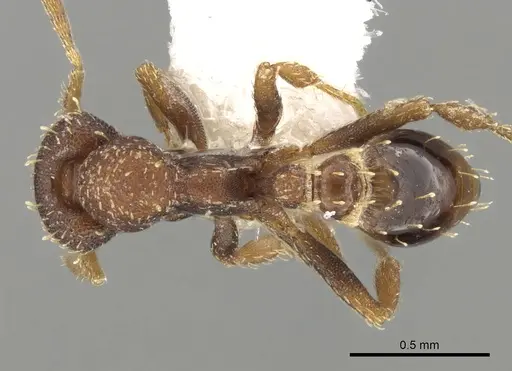
CASENT0901397
View on AntWeb
Literature
Loading distribution map...Loading products...