
Short-haired Mustache Ant
Strumigenys brevisetosa
- Sci. Name
- Strumigenys brevisetosa
- Tribe
- Attini
- Subfamily
- Myrmicinae
- Author
- Smith, 1935
- Common Name
- Short-haired Mustache Ant
- Distribution
- Found in 1 countries
Introduction
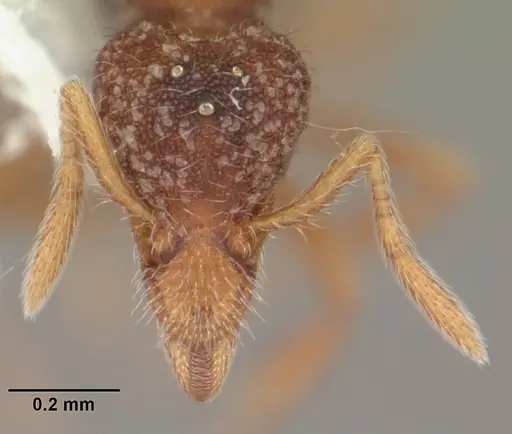
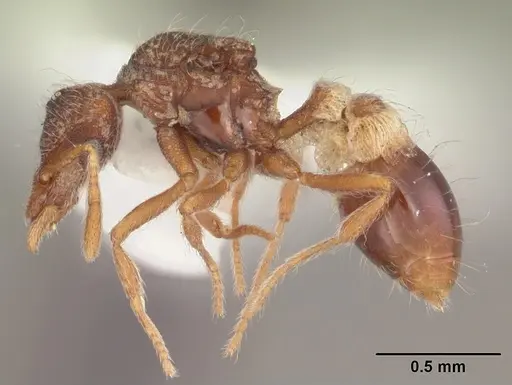
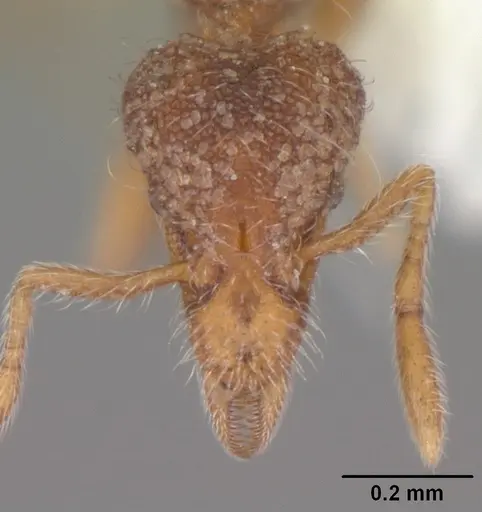
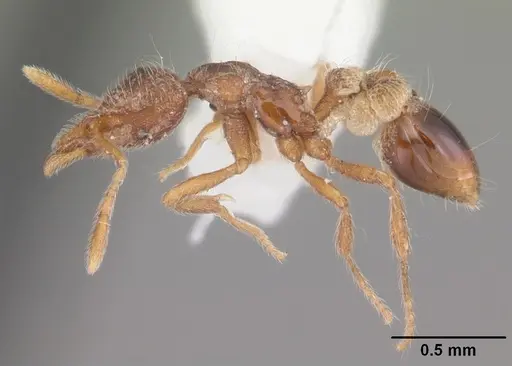
Strumigenys brevisetosa is a tiny ant native to eastern North America, measuring 2.3-2.8 mm total length . Workers are golden to reddish-brown, with triangular mandibles carrying five teeth . It belongs to the clypeata group, recognized by a distinct groove along the free margin of the clypeus . A key identifying feature is the linear‑spatulate hairs on the clypeus - these are inclined forward at the base but curve so their tips point upward or backward . This species was long confused with Strumigenys pilinasis until being resurrected in 2019 . It is found in deciduous forests and bogs, where workers forage in leaf litter and rotting wood debris .
Quick Summary
- Difficulty: Medium
- Origin & Habitat: Eastern USA from Florida to Pennsylvania, west to Missouri, also in Kansas, Oklahoma, and Texas [3]. Inhabits deciduous forests and bogs, workers collected from leaf litter and log debris [3][2].
- Colony Type: Unconfirmed, colony structure is not detailed in available research.
- Size & Growth:
- Queen: Unknown, no measurements available in research.
- Worker: 2.3-2.8 mm total length (average 2.6 mm) [1]
- Colony: Unknown, not documented in research. Based on related species, likely under a few hundred workers.
- Growth: Unknown
- Development: Unknown, not documented. Expect several weeks to months based on related temperate Strumigenys. (Specifics are unavailable, patience is needed.)
- Antkeeping:
- Temperature: No exact data from research. Based on temperate forest floor habitat, maintain around 20-24 °C. Avoid extremes [3].
- Humidity: High humidity, these ants live in damp leaf litter and bogs [3]. Keep nest substrate consistently moist but not waterlogged.
- Diapause: Likely required as the species is temperate. Specific duration unknown, many temperate Strumigenys need 2-3 months of cool rest (roughly 10-15 °C).
- Nesting: No specific nesting data. Strumigenys typically nest in leaf litter and rotting wood. Y‑tong (AAC) or naturalistic soil setups with high moisture retention may work.
- Behavior: Docile and non‑aggressive based on general Strumigenys behavior. Very small size means high escape risk, use fine mesh barriers. They hunt tiny arthropods in leaf litter using their mandibles.
- Common Issues: slow colony growth, be patient and minimize disturbances, requires specialized live prey (springtails) which can be hard to source, high escape risk due to tiny size, use fine mesh around all openings, mold problems in high‑humidity setups, ensure some ventilation, limited research means care advice is based on related species, expect trial and error
Housing and Nest Setup
Strumigenys brevisetosa requires high humidity and a setup that mimics damp leaf litter. A naturalistic nest with a soil‑peat mixture, rotting wood pieces, and leaf litter works well [3]. Y‑tong (AAC) or plaster nests can hold moisture, but make sure they stay consistently damp. These ants are tiny, so check that all connections and barriers are escape‑proof, even small gaps will let them slip through. Provide a dark, enclosed space, a test tube with a water reservoir is fine for founding, though mold can appear if ventilation is poor.
Feeding and Diet
These are predators of tiny arthropods. Springtails (Collembola) are a natural prey, as they are abundant in the leaf litter habitat [3]. Offer live springtails regularly, you can culture them separately or buy from suppliers. Other micro‑arthropods (e.g., booklice, small fruit fly larvae) may be accepted, but this is unconfirmed. Sugar sources are probably not needed, Strumigenys are thought to be obligate predators. Remove uneaten prey to prevent mold.
Temperature and Seasonal Care
No specific temperature data exists. Based on the temperate forest floor habitat [3], keep the colony around 20-24 °C. Avoid temperatures above 26 °C or below 18 °C for long periods. This species likely needs a winter diapause (2-3 months of cool rest at 10-15 °C), many temperate Strumigenys do. During diapause, keep the nest slightly moist and do not feed.
Behavior and Colony Dynamics
Colonies grow slowly and remain small, size is unknown from research. Workers are docile and spend most of their time foraging through the substrate for prey. They use their triangular mandibles to capture small arthropods, they do not have trap‑jaws [1]. The queen stays hidden after founding. Do not expect large foraging trails or aggressive food defense, these ants are peaceful and can be observed without startling them.
Frequently Asked Questions
How long does it take for Strumigenys brevisetosa to raise their first workers?
Not documented in research. Based on related species, development may take several weeks to months. Be patient, Strumigenys are slow to grow.
What do Strumigenys brevisetosa ants eat?
Live tiny arthropods, primarily springtails (Collembola), which are naturally found in leaf litter [3]. You can culture springtails or buy them. Other micro‑arthropods may be accepted. Sugar is probably not needed.
Can I keep Strumigenys brevisetosa in a test tube?
Yes, a test tube with a water reservoir works for a founding colony. Keep it consistently moist but watch for mold. Transfer to a formicarium when the colony outgrows the tube or after several months.
What temperature do Strumigenys brevisetosa need?
No exact data, aim for 20-24 °C based on their temperate forest floor habitat [3]. Avoid extremes above 26 °C or below 18 °C.
Do Strumigenys brevisetosa need hibernation?
Likely yes, as it is a temperate species. Specifics are unknown, many temperate Strumigenys need 2-3 months of cool rest (roughly 10-15 °C). Keep the nest slightly moist during that period and do not feed.
How big do Strumigenys brevisetosa colonies get?
Unknown from research. Based on related Strumigenys species, colonies are likely small, probably under a few hundred workers.
Why are my Strumigenys brevisetosa dying?
Common causes: too low humidity (keep substrate moist), wrong temperature (they need moderate temperatures), lack of live prey (they cannot survive on sugar alone), or stress from disturbance. Wild‑caught colonies may have parasites.
Are Strumigenys brevisetosa good for beginners?
They are intermediate difficulty. Their need for live prey and high humidity makes them more challenging than species like Lasius or Camponotus. Best for keepers with some experience.
When do Strumigenys brevisetosa have nuptial flights?
A malaise trap in Texas suggests fall mating flights [2]. In the eastern USA, flights likely occur in late summer to early fall. Watch for winged reproductives from August to October.
Report an Issue
The current care sheet is based fully on literature. See inconsistencies, or something that's incorrect? Please , it will be resolved after review from an admin. Contributing to the blogs tab also helps providing information, to make us be able to further improve the caresheets. Thank you for your support!
References

This caresheet is licensed under CC BY-SA 4.0 .
Community Blogs
CASENT0104481
View on AntWeb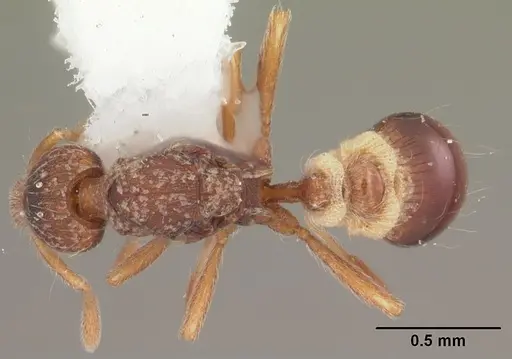
CASENT0104482
View on AntWeb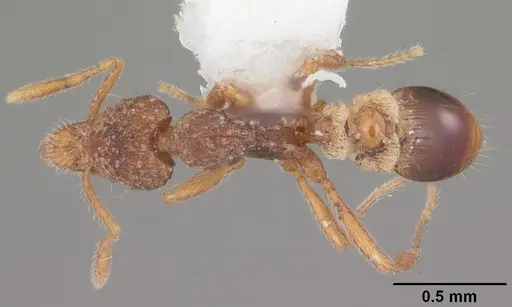
Literature
Loading distribution map...Loading products...