
Strumigenys boltoni
- Sci. Name
- Strumigenys boltoni
- Tribe
- Attini
- Subfamily
- Myrmicinae
- Author
- Deyrup, 2006
- Distribution
- Found in 1 countries
Introduction
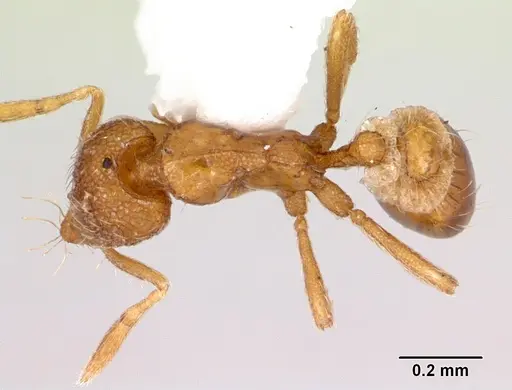
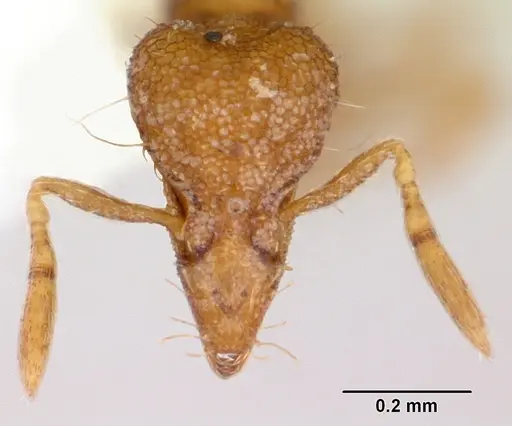
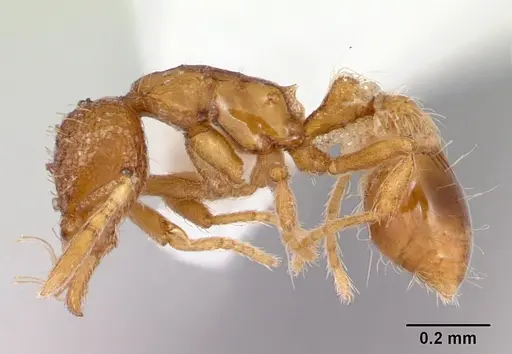
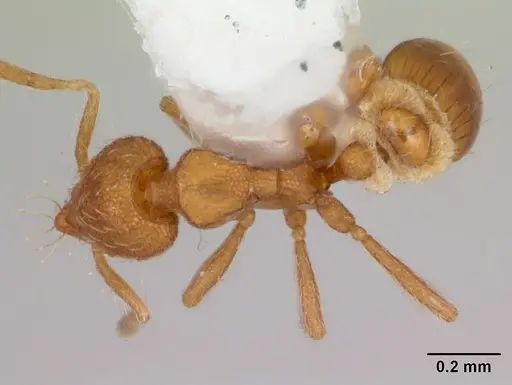
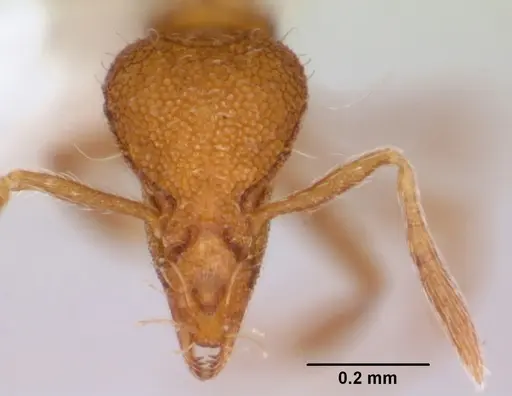
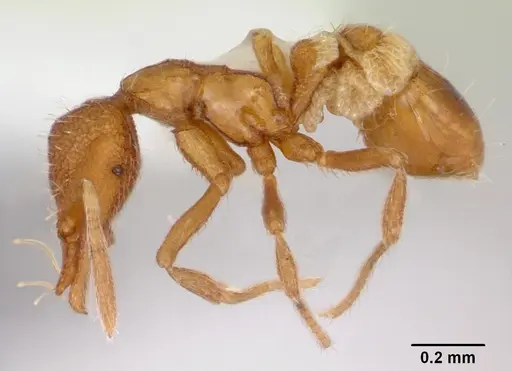
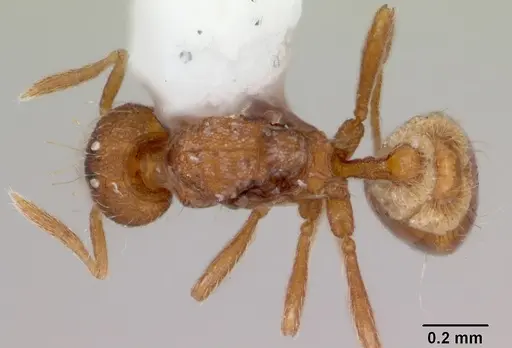
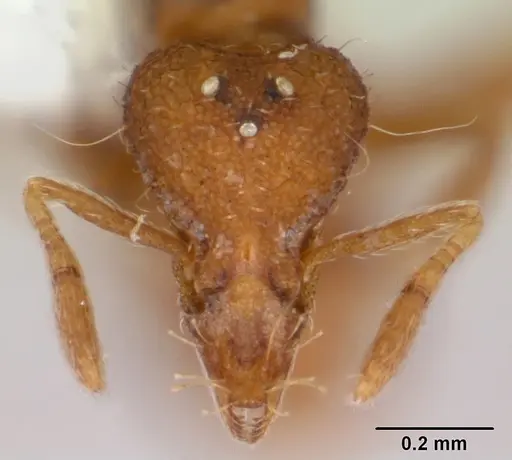
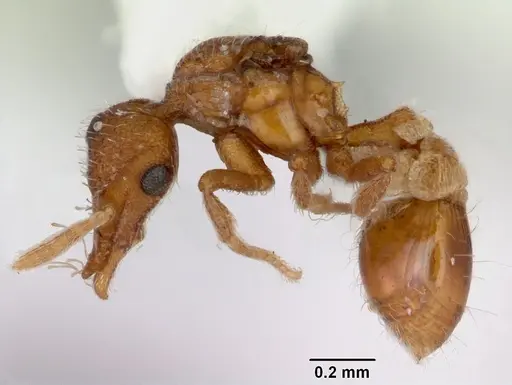
Strumigenys boltoni is a tiny leaf-litter ant known only from Florida, USA. Workers measure 1.66 mm and queens 2.05 mm in total length . It belongs to the tribe Attini within Myrmicinae. This species is identified by its pointed clypeus with four radiating subapical hairs and a pair of large curved hairs near the tip . The mandibles have four enlarged subapical teeth, and the toothless gap (diastemma) between the clypeus and the teeth is barely visible from the front . Unlike many Strumigenys that favor wet habitats, S. boltoni shows a strong preference for drier forests: 57% of specimens were collected in xeric (dry) forest,39% in mesic forest, and only 4% in wet areas . The species is named after myrmecologist Barry Bolton . All known specimens were extracted from leaf litter using Berlese funnels; no live specimens have been observed in the wild .
Quick Summary
- Difficulty: Hard
- Origin & Habitat: Florida, USA, xeric forest, mesic forest, occasional wet flatwoods. All specimens from leaf litter [1].
- Colony Type: Unconfirmed, likely monogyne (single queen) based on typical Strumigenys patterns.
- Size & Growth:
- Queen: 2.05 mm total length [1]
- Worker: 1.66 mm total length [1]
- Colony: Likely under 100 workers, estimated based on leaf-litter Strumigenys behavior.
- Growth: Slow
- Development: Estimated 8-12 weeks based on related Strumigenys species (Specific development data unavailable for this species. Temperature significantly affects speed.)
- Antkeeping:
- Temperature: 20-24°C. They prefer cooler conditions than many tropical ants. Avoid temperatures above 26°C [1].
- Humidity: Keep substrate mostly dry, mimicking xeric forest floor. Provide a water source separately, do not saturate the substrate. Overwatering is a common cause of death.
- Diapause: May benefit from a mild winter cool-down (12-15°C for 2-3 months), but true diapause is unconfirmed given Florida's subtropical climate.
- Nesting: Use a naturalistic setup with dry substrate (sand/soil mix), leaf litter, and bark pieces. A Y-tong nest with narrow chambers works, but ensure it is scaled to their tiny size.
- Behavior: Very shy and non-aggressive. Workers move slowly and spend most time hunting micro-arthropods in the substrate. They possess a small functional stinger but it is not medically significant to humans. Escape prevention is critical due to their minute size, they can slip through gaps smaller than 0.5 mm. They are not defensive and prefer to hide.
- Common Issues: escape prevention is critical, they are tiny and will slip through standard barriers, colonies are slow-growing and small, which can frustrate beginners, requires micro-prey (springtails, mites) which may be harder to source than standard feeder insects, dry habitat preference means overwatering easily causes mold and colony death, unconfirmed founding behavior and colony structure add uncertainty for keepers
Housing and Nest Setup
Mimic their natural leaf-litter environment. Use a shallow container with a substrate mix of sand and dry soil (roughly 70% sand,30% soil) to replicate xeric conditions [1]. Add leaf litter, small pieces of bark, and dead wood for cover. Keep the substrate dry, damp conditions will kill this species. A Y-tong nest with very narrow chambers can work, but ensure the entrance size and chamber height suit their tiny size. Excellent escape prevention is mandatory: apply fluon to container walls, cover ventilation holes with fine mesh (less than 0.2 mm gap), and check seals regularly. These ants can squeeze through gaps that seem impossibly small [1].
Feeding and Diet
Strumigenys boltoni is a specialized micro-predator. In the wild, they hunt tiny arthropods like springtails and mites in leaf litter [1]. In captivity, provide live springtails as their main food. They may also accept fruit flies, pinhead crickets, or micro-waxworms, but springtails are the most reliable. Do not offer sugar water or honey, this species is entirely predatory and will not accept carbohydrates. Feed small amounts every 2-3 days and remove uneaten prey after 24 hours to prevent mold. Culturing your own springtail colony is highly recommended for a steady supply.
Temperature and Seasonal Care
Keep at 20-24°C. Avoid temperatures above 26°C, which can be fatal. Their native range in Florida experiences mild winters, so they likely do not require a true diapause but may benefit from a cool-down period. If you offer a seasonal cycle, reduce to 12-15°C for 2-3 months in winter (November to February). Otherwise, stable year-round temperatures around 22°C should suffice. Use a heating cable only if room temperature drops below 18°C, and always create a temperature gradient so ants can self-regulate [1].
Behavior and Temperament
Strumigenys boltoni is extremely docile. Workers are slow-moving and spend most of their time hunting through the substrate. They are not defensive and will flee rather than fight. They possess a small functional stinger (typical for Myrmicinae), but it is not medically significant to humans. The main challenge is their escape ability: check for gaps daily, especially around lids and ventilation. Their small colony size (likely under 100 workers) means they will stay inconspicuous in a larger setup. They are fascinating to observe but not interactive [1].
Colony Founding
Founding behavior has not been directly documented. Based on related Strumigenys, queens likely seal themselves in a small chamber (claustral founding) and use stored fat reserves until the first workers emerge. Queens measure 2.05 mm total length [1]. The first workers (nanitics) may appear in about 6-10 weeks at 22°C. If you obtain a founding queen, place her in a small test tube with a dry substrate plug (not a water reservoir) and keep her undisturbed in a dark, cool spot. Do not offer food during the claustral stage [1].
Frequently Asked Questions
Can I keep Strumigenys boltoni in a test tube?
A test tube can work for a founding queen, but avoid large water reservoirs that raise humidity. Use a small water source or dry substrate. Once the colony grows beyond 10 workers, transfer to a naturalistic setup with dry substrate [1].
How long until first workers in Strumigenys boltoni?
Estimated 8-12 weeks from egg to worker at 22°C, based on related Strumigenys species. No specific data for S. boltoni. Cooler temperatures slow development [1].
Are Strumigenys boltoni good for beginners?
No. They require micro-prey (springtails), excellent escape proofing, and dry conditions. Their slow growth and small colony size can be disappointing. Best for experienced keepers interested in specialized leaf-litter species [1].
What do Strumigenys boltoni eat?
They are specialized micro-predators. Their main food is live springtails. They may also accept fruit flies, micro-mites, or other tiny prey. Do not offer sugar water or honey, they will not eat it [1].
Do Strumigenys boltoni need hibernation?
True diapause is unconfirmed. Their Florida habitat has mild winters, but a cool-down period (12-15°C for 2-3 months) may benefit colony development. It is not mandatory [1].
How big do Strumigenys boltoni colonies get?
Colony size is not documented but is likely under 100 workers, typical for leaf-litter Strumigenys. They will not form large colonies [1].
Why are my Strumigenys boltoni dying?
Most common causes: overwatering (keep substrate dry), starvation (they need live micro-prey), or escape. Check humidity first. Also ensure they have a steady supply of springtails [1].
Can I keep multiple queens together?
Pleometrosis (multiple queens) has not been documented for this species. It is not recommended as colony structure is unknown. Keep only one queen per nest.
When to move to a formicarium?
Transfer to a naturalistic setup when the colony reaches 15-20 workers. Ensure the new nest has dry substrate and excellent escape prevention [1].
Report an Issue
The current care sheet is based fully on literature. See inconsistencies, or something that's incorrect? Please , it will be resolved after review from an admin. Contributing to the blogs tab also helps providing information, to make us be able to further improve the caresheets. Thank you for your support!
References

This caresheet is licensed under CC BY-SA 4.0 .
Community Blogs
Literature
Loading distribution map...Loading products...