
Strumigenys biroi
- Sci. Name
- Strumigenys biroi
- Tribe
- Attini
- Subfamily
- Myrmicinae
- Author
- Emery, 1897
- Distribution
- Found in 1 countries
Introduction
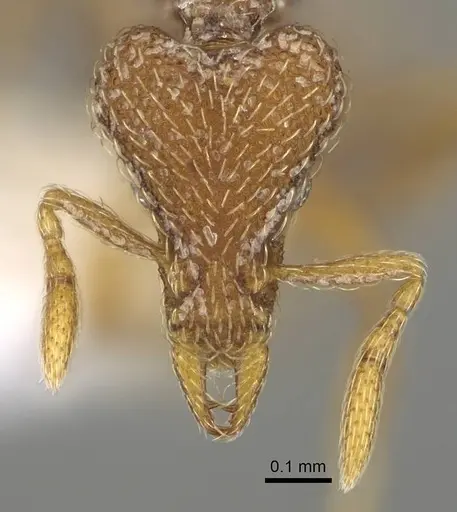
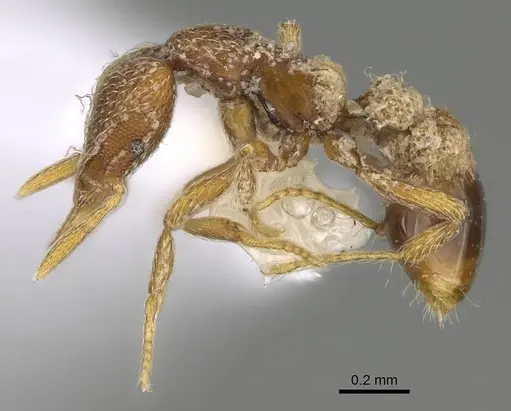
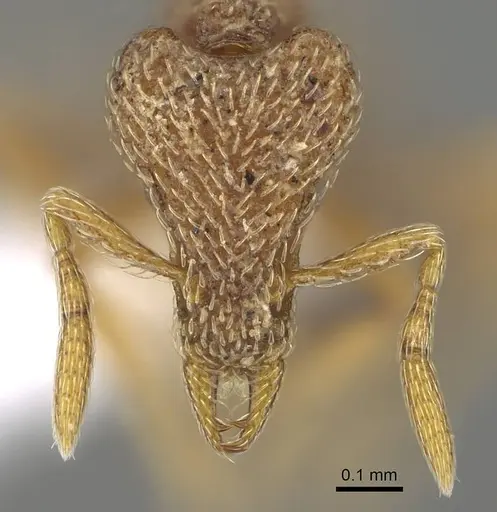
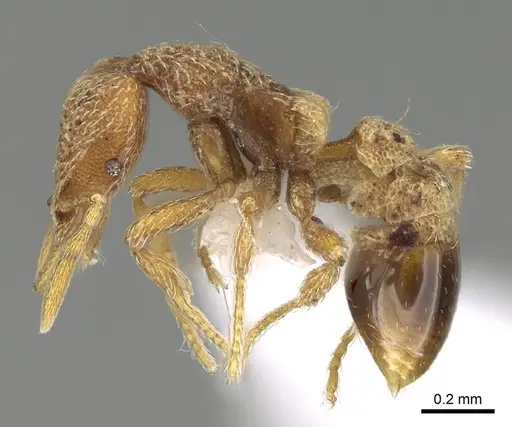
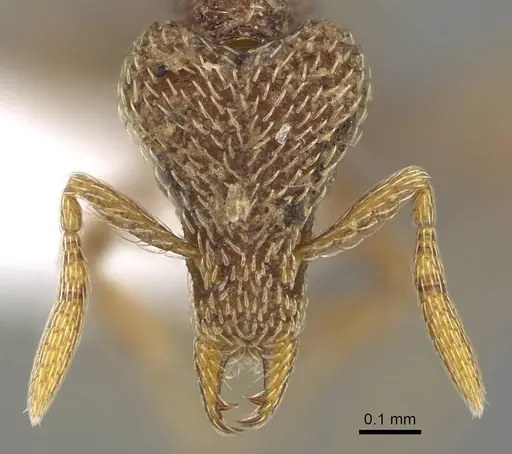
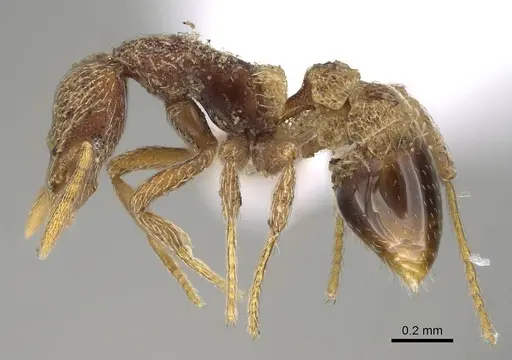
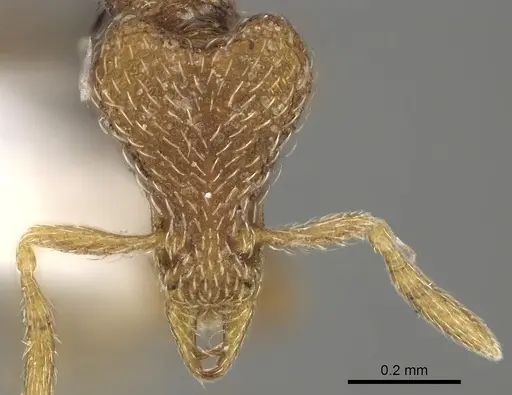
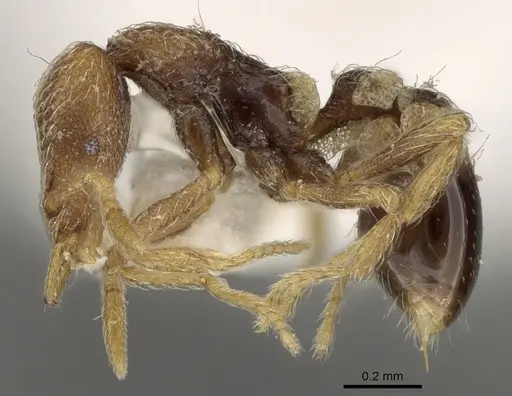
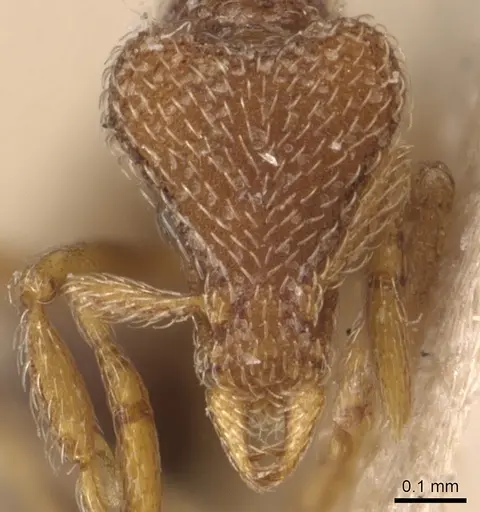
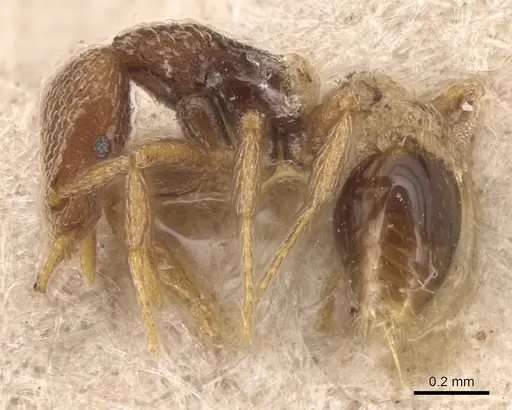
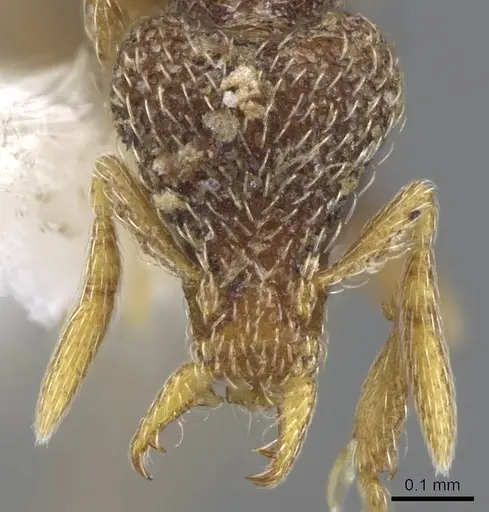
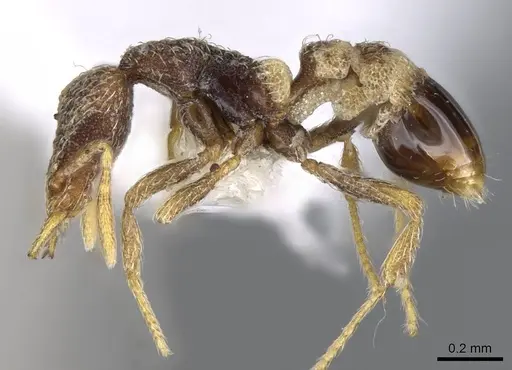
Strumigenys biroi is a tiny predatory ant, with workers measuring 1.9-2.0 mm in total length . It belongs to the subfamily Myrmicinae and tribe Attini, and is a member of the Strumigenys biroi group. The species is native to the Australasian and Indomalayan regions, specifically recorded from New Guinea and Indonesia, where it inhabits rainforest leaf litter . Workers have distinctive spatulate hairs on the head and body, and the propodeum lacks teeth but has a broad spongiform lamella. There may be two sibling species under this name, separated by details of propodeal sculpture . The biology of this species is poorly documented, and most care advice is inferred from its habitat and related Strumigenys species.
Quick Summary
- Difficulty: Hard
- Origin & Habitat: Native to New Guinea and Indonesia (Australasian and Indomalayan regions). Collected from rainforest leaf litter samples [2][1].
- Colony Type: Colony structure is unconfirmed. Based on related Strumigenys species, it may be monogyne, but this is not documented.
- Size & Growth:
- Queen: Size data unavailable.
- Worker: 1.9-2.0 mm total length (TL) [1].
- Colony: Unknown for this species.
- Growth: Unknown, likely slow due to small size and specialized diet, but not documented.
- Development: Unknown. No specific data exists for this species. (Development timeline has not been studied. Estimates from other Strumigenys are speculative.)
- Antkeeping:
- Temperature: Not documented. As a tropical rainforest species, warm conditions (likely 24-28°C) are recommended, but exact requirements are unknown. Maintain stable warmth and avoid temperatures below 22°C or above 30°C.
- Humidity: High humidity is essential. Based on litter-dwelling habitat, the substrate should be kept consistently moist but not waterlogged. Avoid specific percentages as they are not documented.
- Diapause: No true diapause required, being a tropical species, they do not need hibernation. This is inferred from their natural range.
- Nesting: Naturalistic setups with moist substrate are recommended. Plaster or soil nests with tight, small chambers work best. Avoid large open spaces, these ants need confined spaces. Test tubes can be used for founding. Data is not species-specific.
- Behavior: Strumigenys biroi is a cryptic, slow-moving predator that forages in leaf litter. They are not aggressive and will flee rather than engage threats. Their small size (under 3mm) means escape prevention is critical, they can squeeze through tiny gaps. As a member of Myrmicinae (tribe Attini), they possess a functional stinger, but due to minute size it is not a concern for humans. They are quiet, unobtrusive ants that spend most of their time hidden in the substrate.
- Common Issues: high humidity is critical, these rainforest litter ants easily die in dry conditions., escape prevention must be excellent due to their tiny ~2mm size., slow growth means colonies take a long time to develop, patience is required., they are presumably specialized predators and may refuse standard ant foods, live small prey is likely essential., wild-caught colonies may be stressed and difficult to establish in captivity.
Housing and Nest Setup
Because specific nesting preferences are undocumented, a naturalistic high-humidity setup is recommended. For founding colonies, a test tube with a water reservoir and tight cotton plug works well. For established colonies, a plaster nest or soil formicarium with small, confined chambers is ideal, these ants dislike large open spaces. The substrate should be kept consistently moist but not waterlogged. Use fine mesh over ventilation holes to prevent escape, as workers are only ~2mm. Avoid sudden humidity fluctuations, a water reservoir connected to the nest chamber helps maintain stable conditions.
Feeding and Diet
Strumigenys biroi is a predator that likely hunts small arthropods in leaf litter. In captivity, offer live small prey such as springtails, fruit flies, and other tiny insects. Dead prey or sugar sources are probably ignored. Feed small amounts 2-3 times per week, adjusting based on colony consumption. Remove uneaten prey after 24 hours to prevent mold. Actual dietary preferences have not been studied, so observation is key.
Temperature and Humidity
As a tropical rainforest species from New Guinea, warmth and high humidity are critical. Maintain temperatures around 24-28°C (if possible) and avoid temperatures below 22°C or above 30°C. Humidity should be kept very high, the substrate should feel damp continuously. A water reservoir in the nest helps, and a digital hygrometer can be useful, but exact percentages are not documented. The nest should have good ventilation but not so much that it dries out. Monitor for mold due to high moisture.
Colony Establishment
Establishing this species is challenging due to lack of documented husbandry. If acquiring a queen, house her in a small test tube setup with high humidity. The founding period is unknown, minimize disturbance. Once workers emerge, offer tiny live prey. Growth is slow, expect many months to reach even a small worker count. Wild-caught colonies may be stressed, quarantine and monitor for mites. This species is best suited for experienced keepers willing to experiment.
Behavior and Temperament
Strumigenys biroi is calm and non-aggressive, fleeing rather than fighting. They are cryptobiotic, spending most time hidden in substrate and active in dim light. Workers move slowly and methodically while foraging. They do not form visible trails or dramatic swarms. Their specialized mandibles are used for hunting small prey, not defense. Due to their small size, they are not display ants, best observed through nest walls. They pose no danger to humans.
Frequently Asked Questions
How long does it take for Strumigenys biroi to produce first workers?
This is not documented. Development timeline has not been studied for this species. Expect a slow process, but no reliable estimate exists.
What do Strumigenys biroi ants eat?
They are presumably specialized predators of small arthropods. Offer live springtails, fruit flies, and other tiny insects. Dead prey or sugars are likely ignored. Specific dietary data is lacking.
Can I keep Strumigenys biroi in a test tube?
Yes, test tubes with a water reservoir and tight cotton plug work well, especially for founding colonies. For established colonies, a small plaster or soil nest with high humidity may be better. Avoid large spaces.
Are Strumigenys biroi good for beginners?
No. Their specialized requirements (high humidity, live small prey, slow growth) and lack of documented care data make them unsuitable for beginners. Recommended for experienced keepers only.
Do Strumigenys biroi need hibernation?
No, they are a tropical species and do not require hibernation. Year-round warm, stable conditions are appropriate.
How big do Strumigenys biroi colonies get?
Colony size is not documented. Related Strumigenys species often have small colonies, but no specific data exists for this species.
Why are my Strumigenys biroi dying?
The most common causes are likely low humidity, improper diet (need live small prey), or escape through tiny gaps. Verify that the setup maintains consistent moisture and that there are no gaps. Also ensure prey is appropriately small. These issues are inferred from typical challenges with small, cryptic ants.
What temperature do Strumigenys biroi need?
Not documented exactly. Based on their tropical origin, warm conditions (approximately 24-28°C) are recommended. Avoid extremes below 22°C or above 30°C.
When should I move Strumigenys biroi to a formicarium?
Move only when the colony outgrows the test tube or when humidity cannot be maintained. Due to their small size, they can stay in test tubes long-term. Avoid unnecessary moves to reduce stress. There is no documented guideline.
Report an Issue
The current care sheet is based fully on literature. See inconsistencies, or something that's incorrect? Please , it will be resolved after review from an admin. Contributing to the blogs tab also helps providing information, to make us be able to further improve the caresheets. Thank you for your support!
References

This caresheet is licensed under CC BY-SA 4.0 .
Community Blogs
CASENT0215143
View on AntWeb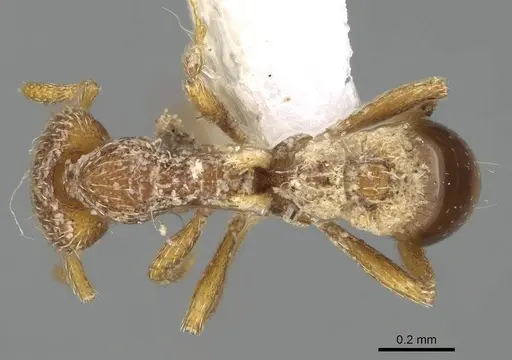
CASENT0216908
View on AntWeb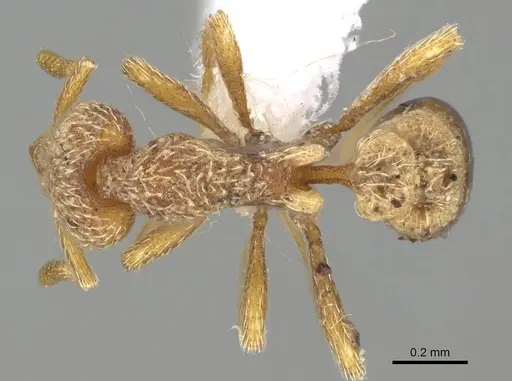
CASENT0222005
View on AntWeb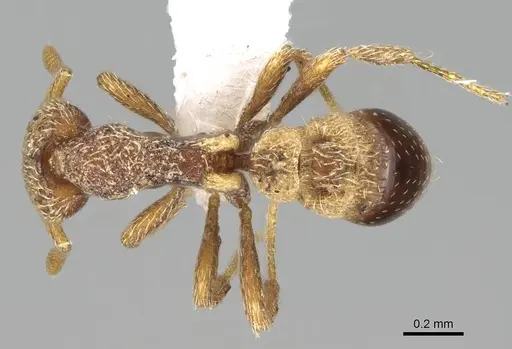
CASENT0280753
View on AntWeb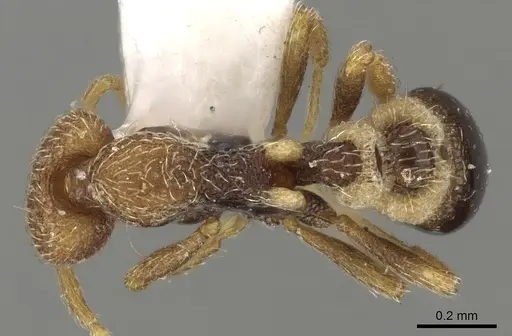
CASENT0904949
View on AntWeb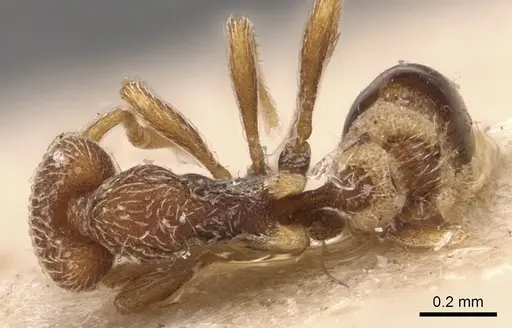
CASENT0914784
View on AntWeb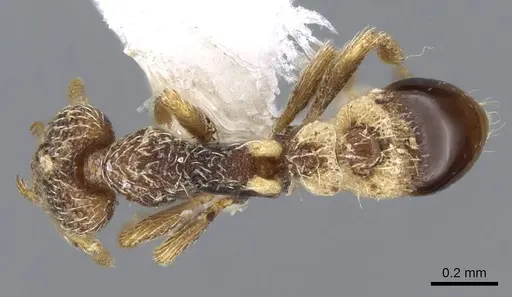
Literature
Loading distribution map...Loading products...