
Strumigenys bernardi
- Sci. Name
- Strumigenys bernardi
- Tribe
- Attini
- Subfamily
- Myrmicinae
- Author
- Brown, 1960
- Distribution
- Found in 5 countries
Introduction
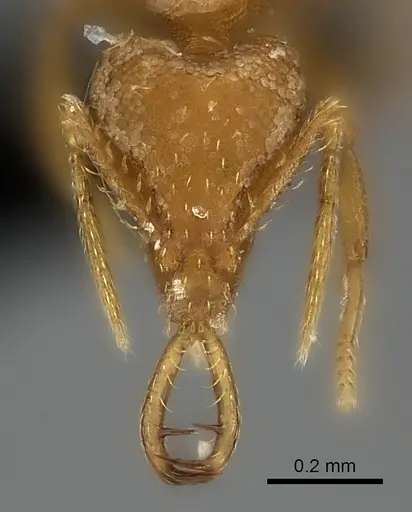
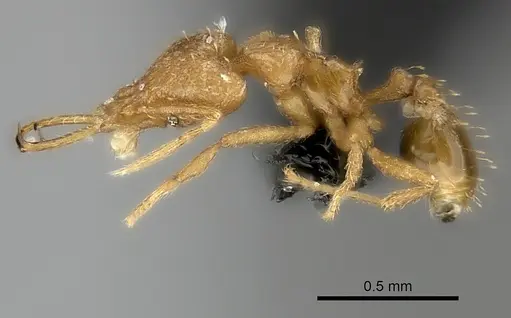
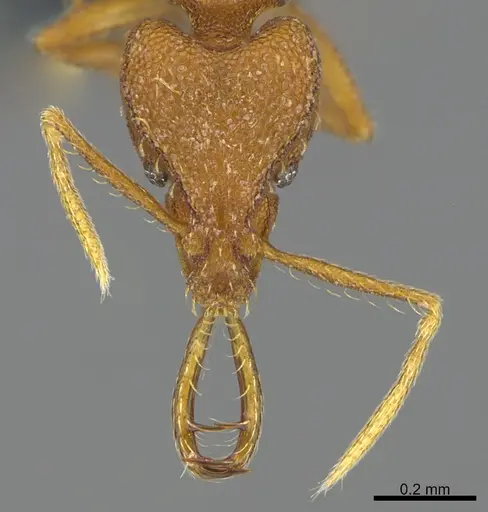
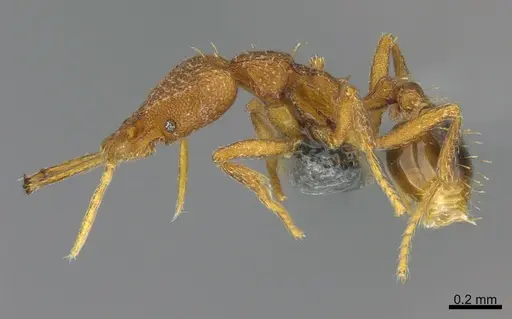
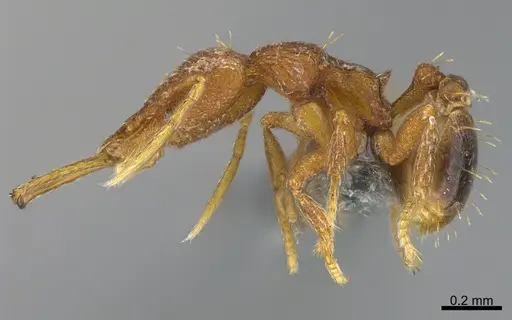
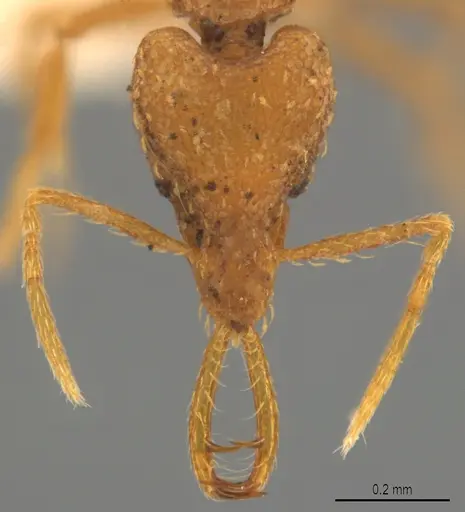
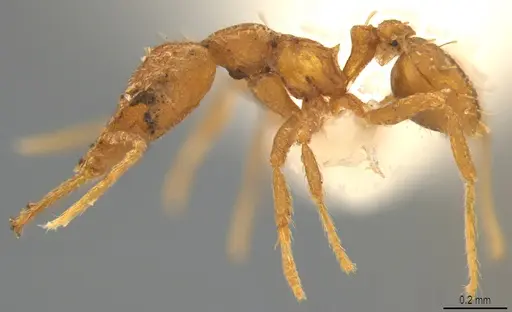
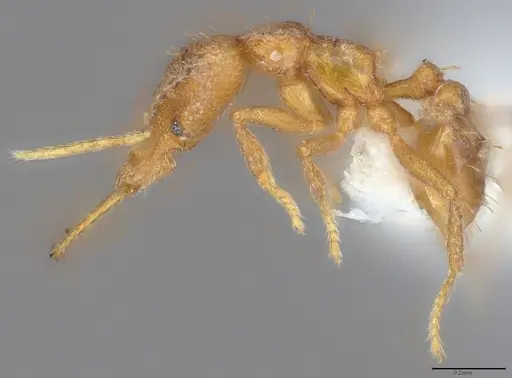
Strumigenys bernardi is a tiny predatory ant measuring 1.7-2.1mm in total length . It belongs to the subfamily Myrmicinae and tribe Attini . Workers have characteristic long, slender mandibles that bow outwards, giving them a unique appearance. They are remarkably variable in color, ranging from pale straw-yellow to almost black . This species is part of the Strumigenys rogeri group (rogeri-complex) and is closely related to Strumigenys vazerka, from which it can usually be distinguished by having only a single preapical tooth on the left mandible . These ants are leaf-litter dwellers found across the Afrotropical region, including Angola, Cameroon, Democratic Republic of Congo, Equatorial Guinea, Gabon, Togo, and Uganda . They are among the most widely distributed Strumigenys species at Monts Doudou in Gabon, found at elevations from 110m to 640m . They serve as a potential bioindicator for wooded habitats . Like other Strumigenys, they are specialized predators that use their trap-jaw mandibles to capture tiny prey like springtails and mites on the forest floor.
Quick Summary
- Difficulty: Hard
- Origin & Habitat: Afrotropical forests of Central and West Africa (Angola, Cameroon, DRC, Equatorial Guinea, Gabon, Togo, Uganda). Found in leaf litter at elevations from 110m to 640m in Gabonese forests [3][4][1].
- Colony Type: Unconfirmed – no documentation available on colony type.
- Size & Growth:
- Queen: Unknown – queens have not been described in the available literature.
- Worker: 1.7-2.1mm total length [1]
- Colony: Unknown – no specific data. Typical Strumigenys colonies are small, but this is an estimate only.
- Growth: Likely slow – inferred from the small colony sizes typical of the genus.
- Development: Estimated 8-12 weeks based on typical Strumigenys development patterns (no direct study for this species). (Development time is estimated. Colony growth is expected to be slow.)
- Antkeeping:
- Temperature: Tropical, aim for 24-26°C. Avoid temperatures below 20°C. These are forest-floor ants from warm climates, but no specific temperature data exists. Use condition-based guidance.
- Humidity: Keep the nest substrate consistently moist but not waterlogged. These are leaf-litter ants from humid forests, high ambient humidity (70-85%) is beneficial.
- Diapause: No – this is a tropical species that does not require hibernation. Maintain warm conditions year-round.
- Nesting: Use a naturalistic setup with moist substrate and leaf litter. Y-tong (AAC), plaster, or soil nests work well, provided they retain moisture. Avoid acrylic nests. Escape prevention is critical due to their tiny size.
- Behavior: Shy, non-aggressive ants with a functional sting (not medically significant to humans). They are specialized ambush predators of tiny arthropods like springtails. Workers forage slowly and methodically in the leaf litter. Their small size makes escape prevention very challenging.
- Common Issues: tiny size makes escape prevention challenging – use fine mesh and tight-fitting lids., slow or unknown growth rate may lead to frustration for keepers expecting rapid colony development., specialized diet – they require live micro-prey such as springtails, standard ant foods are usually refused., high humidity requirements can lead to mold if ventilation is poor., wild-caught colonies may have unknown health issues or parasites that cause colony failure.
Housing and Nest Setup
Strumigenys bernardi requires a setup that mimics its natural leaf-litter habitat. Use a naturalistic terrarium-style formicarium with a layer of moist forest floor substrate (a mix of soil, sand, and decaying leaves). Y-tong (AAC) or plaster nests also work well if they retain moisture. The outworld should have a layer of leaf litter so the ants can forage naturally. Because these ants are tiny (under 2.1mm), escape prevention is critical – use fine mesh on all ventilation holes and ensure tight lid seals. A small water reservoir connected to the nest helps maintain humidity without flooding. Avoid acrylic nests. [1]
Feeding and Diet
Strumigenys bernardi is a specialized predator that requires live micro-prey. Their primary food source should be springtails (Collembola), which you can culture separately or buy. They will also accept other tiny arthropods such as woodlice (isopods), minute mites, and small fly larvae. Unlike many ants, they are not attracted to sugar sources or honey. Feed small prey items every 2-3 days, adjusting based on colony size and consumption. Remove uneaten prey after 24 hours to prevent mold. A well-fed colony will actively patrol the leaf litter searching for prey.
Temperature and Humidity
These are tropical forest ants that need warm, stable conditions. Keep the colony at 24-26°C year-round. Avoid temperatures below 20°C. A heating mat on one side of the enclosure can create a temperature gradient, but make sure the nest area stays within the ideal range. Humidity should be high – keep the substrate consistently damp but not waterlogged. Mist the enclosure occasionally and use a water reservoir in the nest to maintain moisture. Good ventilation is important to prevent mold, but avoid excessive airflow that dries out the habitat.
Behavior and Temperament
These ants are shy and non-aggressive. They are specialized ambush predators that use their long, slender mandibles to capture tiny prey in leaf litter. Workers forage slowly and methodically, often staying hidden in the substrate. They have a functional sting but it is not dangerous to humans. The main challenge is their tiny size – they are excellent escape artists, so use fine mesh barriers. Colonies are small and grow slowly, so do not expect rapid expansion. Watching workers carry prey back to the nest is a good sign of a healthy colony. [1]
Colony Establishment
Establishing a colony from a wild-caught queen is challenging because founding behavior has not been documented for this species. If you acquire a founding queen, provide a small test tube setup with moist cotton and keep it undisturbed at 24-26°C. First workers (nanitics) will be very small. Alternatively, you may find a colony in leaf litter samples – transfer the entire substrate to a naturalistic setup. Be very gentle as these tiny ants are easily damaged.
Growth and Development
Colony growth is expected to be slow. Based on typical Strumigenys development, egg to worker likely takes 8-12 weeks at optimal temperature. Colonies probably remain small (under 500 workers is a rough estimate, but no data exists). The key to success is consistent feeding with appropriate live prey. Be patient – these ants can live for several years once established.
Frequently Asked Questions
How long does it take for Strumigenys bernardi to produce first workers?
Based on typical Strumigenys patterns, expect 8-12 weeks from egg to first worker at optimal temperature (24-26°C). Growth is slow, so patience is essential.
What do Strumigenys bernardi eat?
They are specialized predators that need live micro-prey. Feed springtails (Collembola) as a primary food source. They may also accept other tiny arthropods like mites and small fly larvae. Sugar sources are typically not accepted.
Can I keep Strumigenys bernardi in a test tube setup?
A test tube can work for founding colonies, but these ants prefer a naturalistic setup with leaf litter. If using a test tube, ensure high humidity and add small pieces of leaf litter. A naturalistic terrarium-style formicarium is better for established colonies.
How big do Strumigenys bernardi colonies get?
There is no specific data for this species. Based on typical Strumigenys, colonies likely remain under 500 workers at maturity, but this is an estimate. Growth is slow.
Do Strumigenys bernardi need hibernation?
No, they are tropical ants and do not require hibernation. Keep them warm year-round at 24-26°C. Temperatures below 20°C can be harmful.
Why are my Strumigenys bernardi dying?
Common causes include: temperature too low (keep above 22°C), humidity too low (they need damp conditions), insufficient live prey (they must eat small live insects), or escape-related losses (use fine mesh). Wild-caught colonies may also have undetected health issues.
Are Strumigenys bernardi good for beginners?
No, this species is not recommended for beginners. Their tiny size, specialized diet (live micro-prey), high humidity needs, and slow growth make them challenging. They are better suited for experienced keepers familiar with tropical leaf-litter ants.
When should I move Strumigenys bernardi to a formicarium?
Move them when the colony outgrows the test tube – when you see many workers and brood. A naturalistic setup with moist substrate works best from the start if you can maintain humidity. There is no hard rule, monitor the colony's space.
Can I keep multiple Strumigenys bernardi queens together?
Combining unrelated queens has not been documented for this species. Based on typical Strumigenys behavior, it is not recommended. Single-queen colonies are standard.
What is the best humidity level for Strumigenys bernardi?
Keep the substrate consistently moist but not waterlogged. Ambient humidity around 70-85% is beneficial. Use a water reservoir in the nest and mist occasionally. Good ventilation prevents mold.
Where is Strumigenys bernardi found in the wild?
They live in Afrotropical forests across Central and West Africa, including Gabon, Cameroon, Democratic Republic of Congo, Equatorial Guinea, Togo, Angola, and Uganda. They are leaf-litter dwellers found at elevations from 110m to 640m [3][2][4].
Report an Issue
The current care sheet is based fully on literature. See inconsistencies, or something that's incorrect? Please , it will be resolved after review from an admin. Contributing to the blogs tab also helps providing information, to make us be able to further improve the caresheets. Thank you for your support!
References

This caresheet is licensed under CC BY-SA 4.0 .
Community Blogs
CASENT0217946
View on AntWeb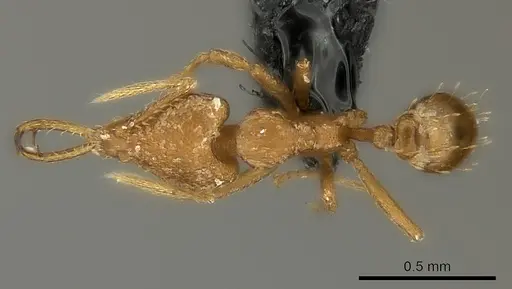
CASENT0358486
View on AntWeb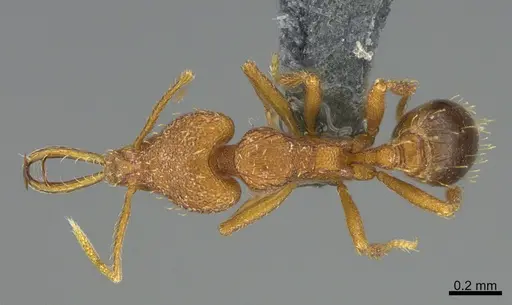
CASENT0359586
View on AntWeb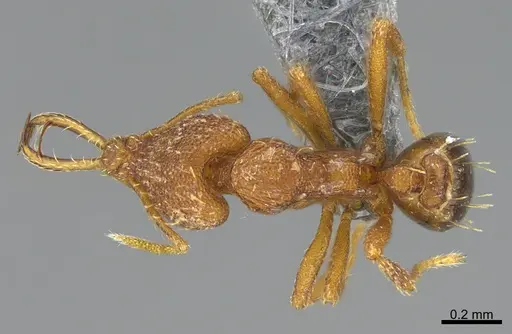
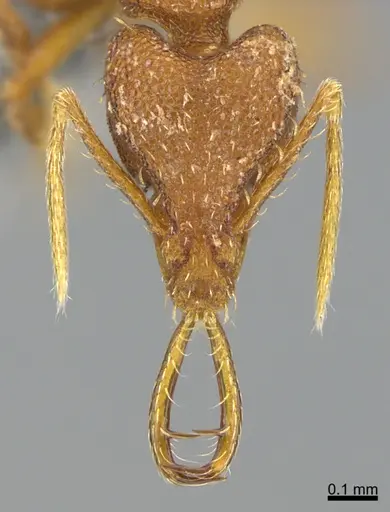
CASENT0763672
View on AntWeb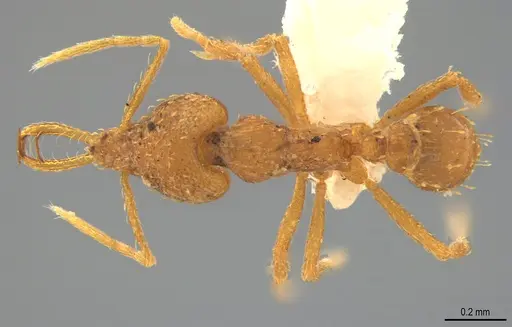
CASENT0763673
View on AntWeb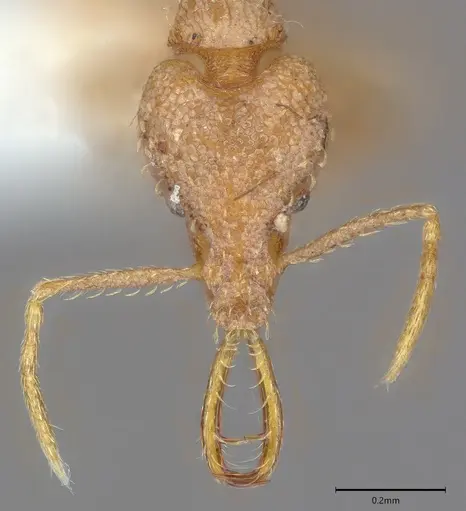
Literature
Loading distribution map...Loading products...