
Strumigenys aechme
- Sci. Name
- Strumigenys aechme
- Tribe
- Attini
- Subfamily
- Myrmicinae
- Author
- Bolton, 2000
- Distribution
- Found in 1 countries
Introduction
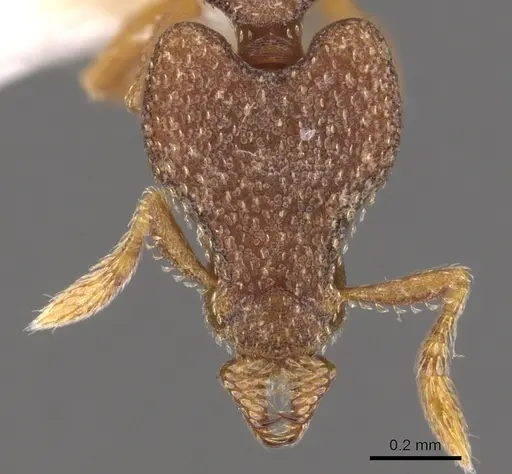
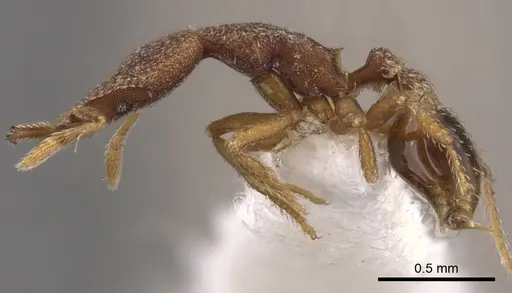
Strumigenys aechme is a minute predatory ant species native to the rainforests of Borneo, Indonesia, and Malaysia . Workers measure 2.3-2.5 mm in total length . They belong to the lyroessa species group and can be identified by their lack of pronotal humeral hairs, absence of standing hairs on the mesonotum, and distinctive spatulate hairs on the gaster . These ants are specialized predators, feeding on springtails and other tiny soil micro-arthropods . In the wild, they nest inside small pieces of dead wood on the forest floor and forage slowly through the leaf litter layer .
Quick Summary
- Difficulty: Expert
- Origin & Habitat: Borneo, Indonesia, and Malaysia – tropical Dipterocarp rainforests [1]. They live in the leaf litter layer of lowland tropical forests.
- Colony Type: Colony structure is unconfirmed. Field sampling only recovered single individuals, suggesting very small colonies or low population density [2]. Possibly monogyne based on typical Strumigenys patterns.
- Size & Growth:
- Queen: Undescribed. Likely slightly larger than workers (around 3-4 mm) based on related Strumigenys, but no reliable data exists.
- Worker: 2.3-2.5 mm total length [1]
- Colony: Likely under 100 workers – inferred from field sampling data [2]
- Growth: Likely slow
- Development: Unconfirmed, estimated 8-12 weeks based on related tropical Strumigenys species (No direct development data exists for this species.)
- Antkeeping:
- Temperature: Keep at 24-28°C – these are tropical ants requiring stable warmth, inferred from rainforest habitat. Room temperature is often suitable if your home stays warm.
- Humidity: High humidity required (70-85% RH). Keep substrate consistently moist but not waterlogged. Provide a gradient from damp to slightly drier areas.
- Diapause: No – being a tropical species, they do not require hibernation or winter rest.
- Nesting: In captivity, use a naturalistic setup with a deep layer of moist soil mixed with dead leaves, twigs, and small pieces of rotting wood. They nest inside dead wood in the wild [2]. Avoid standard formicaria, a natural terrarium with good drainage works best.
- Behavior: These ants are slow-moving and secretive. They forage individually through leaf litter, using their specialized trap-jaw mandibles to capture tiny prey like springtails [2]. They have a functional sting (like other myrmicine ants), but it is tiny and not medically significant to humans. They are not aggressive. Their tiny size means escape prevention is critical – they can squeeze through remarkably small gaps. They are purely predatory and will not accept sugar or honeydew.
Housing and Nest Setup
Strumigenys aechme requires a setup that mimics their natural leaf litter habitat. Because they are extremely small, use a naturalistic terrarium-type setup with a deep layer of moist soil (at least 5-7 cm) mixed with pieces of dead leaves, twigs, and small fragments of rotting wood [2]. The soil should remain consistently damp but never waterlogged. A thin layer of moss on top helps retain moisture. You can also use small plaster or Ytong nests with very tight chambers, but these tiny ants often do better in fully naturalistic setups where they can forage naturally. Whatever setup you choose, ensure all connections and barriers are absolutely tight – these ants can fit through gaps that seem impossible.
Feeding and Diet
This species is exclusively predatory, feeding on springtails and other tiny soil micro-arthropods [2][3]. Their delta-N15 value of 4.60‰ confirms they occupy a strictly predatory trophic position [3][4]. You must provide a constant supply of live springtails (collembola) – this is non-negotiable for keeping this species alive. Other tiny prey like booklice (psocids), minute soil mites, and tiny beetle larvae may be accepted, but springtails should form the staple diet. They will not accept sugar water, honey, or seed-based foods. Feed small prey items every few days, removing any uneaten prey after 24-48 hours to prevent mold issues.
Temperature and Humidity
As a tropical Borneo species, Strumigenys aechme requires warm and humid conditions [1]. Maintain temperatures between 24-28°C – they are not tolerant of cool conditions. Room temperature in most heated homes works well, but you may need a small heating mat if your space runs cool. Humidity should be high – aim for 70-85% relative humidity in the nest area. The substrate should feel consistently moist but not soggy. Allow the surface to dry slightly between mistings, but the deeper layers must remain damp. Poor humidity leads to desiccation and colony loss.
Behavior and Foraging
These ants are slow, deliberate foragers that move through the leaf litter layer searching for prey [2]. Their walking speed of 3.3 mm/s is significantly slower than related species like Strumigenys rofocala [2]. They forage individually rather than in groups, using their specialized trap-jaw mandibles to capture springtails and other small arthropods. They have a functional sting, but it is tiny and not medically significant to humans. They are not aggressive and do not form swarms.
Colony Establishment
Establishing Strumigenys aechme in captivity is extremely difficult. In the wild, they nest inside small pieces of dead wood on the forest floor, and only single individuals are typically found in leaf litter samples [2]. This suggests naturally small colony sizes and possibly low queen productivity. If you obtain a queen, she will need to be kept in a small claustral-type setup with moist soil and provided with live springtail prey during founding. Expect slow growth – first workers may take several months to appear. Wild-caught colonies are rarely available and establishing them requires significant expertise with micro-predatory ants.
Frequently Asked Questions
Can I keep Strumigenys aechme in a test tube?
Test tubes are not ideal for this species. They require a naturalistic setup with moist soil and leaf litter to forage naturally. If you must use a test tube for founding, use a very small one and transfer to a naturalistic setup once the first workers arrive.
What do Strumigenys aechme eat?
They eat only live springtails and other tiny micro-arthropods. They are strictly predatory and will not accept sugar, honey, or dead insect pieces. Live springtails must be available at all times [2][3].
How long does it take for the first workers to appear?
The development timeline is unconfirmed for this species. Based on related tropical Strumigenys species, expect 8-12 weeks from egg to worker at optimal temperature (around 26°C). Growth is likely slow.
Are Strumigenys aechme good for beginners?
No. This is an expert-level species requiring specialized live prey (springtails), high humidity, and very small colony sizes with slow growth. They are not recommended for beginners.
Do Strumigenys aechme need hibernation?
No. Being a tropical species from Borneo, they do not require any winter rest or diapause. Keep them warm year-round.
How big do Strumigenys aechme colonies get?
Likely small – probably under 100 workers. Field sampling only recovered single individuals, suggesting naturally small colony sizes [2].
Why are my Strumigenys aechme dying?
Common causes include: lack of live springtail prey (they will starve without constant access to micro-prey), low humidity causing desiccation, temperatures below 24°C, and escapes due to inadequate barriers. These are fragile ants with very specific requirements.
Can I keep multiple queens together?
Not recommended. There is no documented evidence of pleometrosis (multiple queen founding) in this species, and combining unrelated queens typically leads to fighting.
When should I move them to a formicarium?
For this species, a naturalistic terrarium setup is preferable to traditional formicaria. If you must use a formicarium, wait until the colony reaches at least 10-15 workers and use one with very small chambers and excellent humidity control.
Report an Issue
The current care sheet is based fully on literature. See inconsistencies, or something that's incorrect? Please , it will be resolved after review from an admin. Contributing to the blogs tab also helps providing information, to make us be able to further improve the caresheets. Thank you for your support!
References

This caresheet is licensed under CC BY-SA 4.0 .
Community Blogs
CASENT0725220
View on AntWeb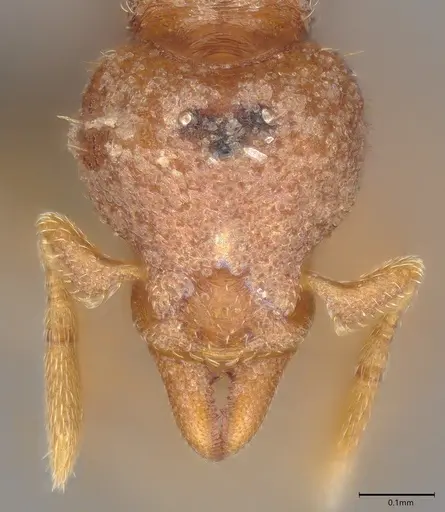
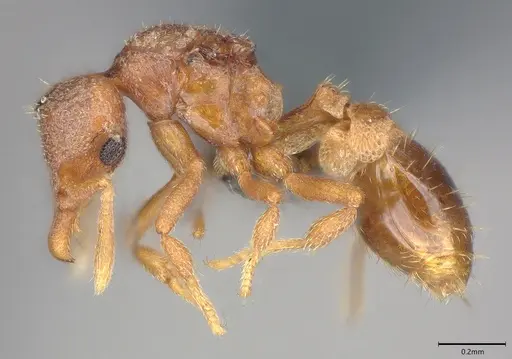
CASENT0900769
View on AntWeb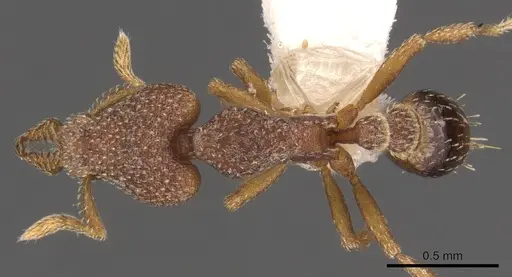
Literature
Loading distribution map...Loading products...