
Strumigenys adrasora
- Sci. Name
- Strumigenys adrasora
- Tribe
- Attini
- Subfamily
- Myrmicinae
- Author
- Bolton, 1983
- Distribution
- Found in 3 countries
Introduction
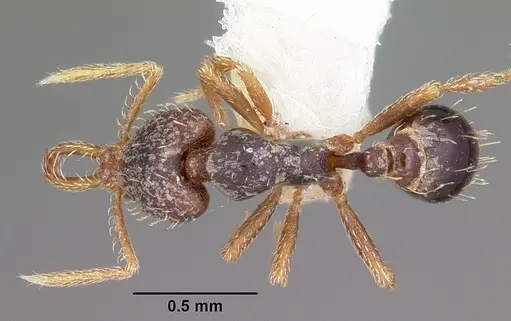
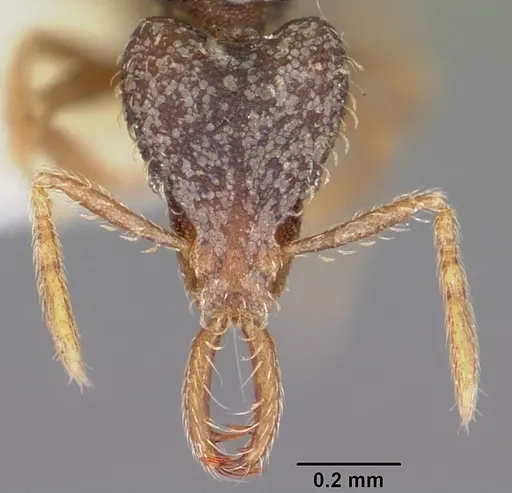
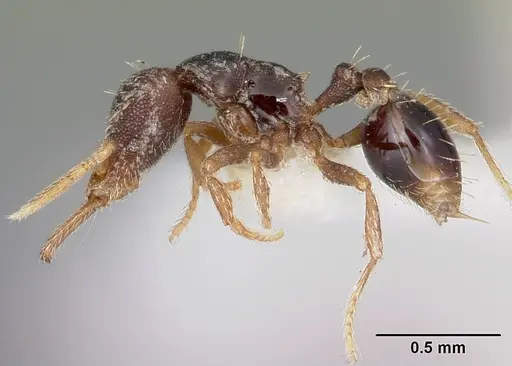
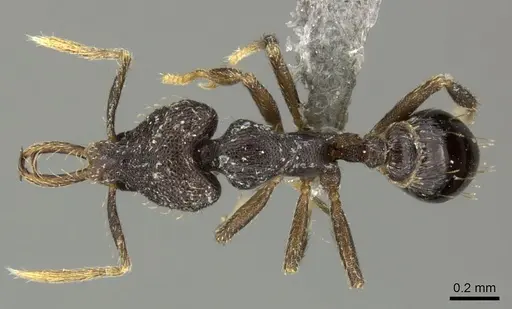
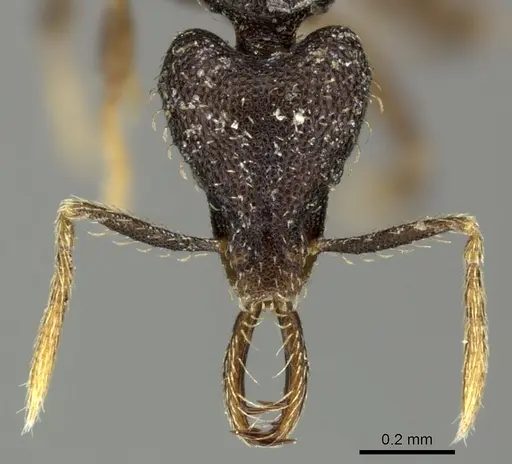
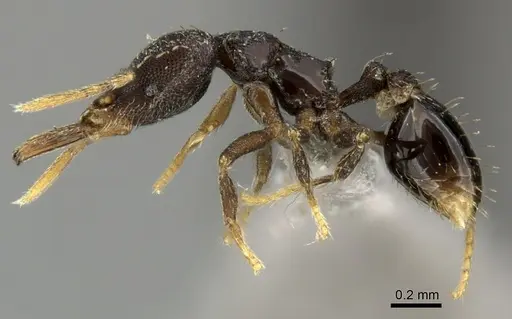
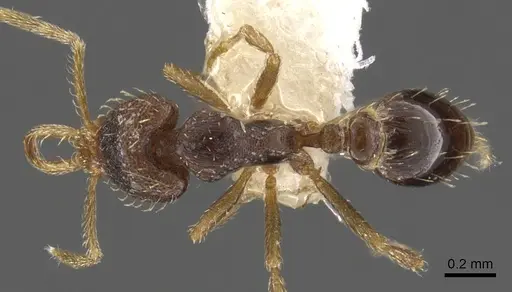
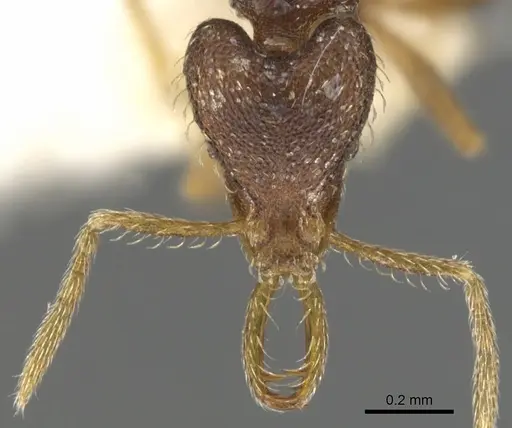
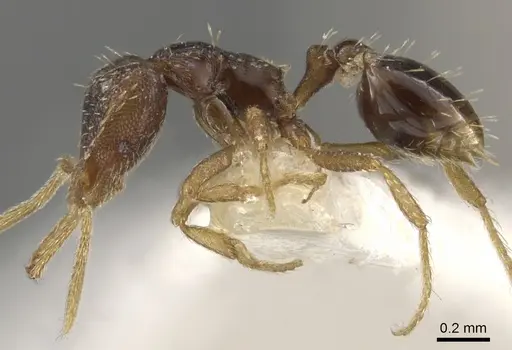
Strumigenys adrasora is a tiny predatory ant belonging to the dacetine tribe (Attini). Workers measure 2.3-2.4 mm in total length, making them one of the smallest ant species you can keep. They are blackish brown to black with reduced spongiform appendages on their petiole and postpetiole and narrow, elongated hairs on their scrobe margins. This species belongs to the Strumigenys scotti group and was originally described from Rwanda in 1983. In the wild, they have been collected from primary forest habitats at elevations around 1800 m, with confirmed records from Rwanda, Burundi, Uganda, and Tanzania in East Africa . As with most Strumigenys species, these ants are specialized predators equipped with trap‑jaw mandibles designed for capturing tiny prey, particularly springtails and other micro‑arthropods. Their small size and specialized diet make them a challenging species to keep. They require humid, shaded conditions similar to their forest floor habitat and a constant supply of live micro‑prey to thrive in captivity.
Quick Summary
- Difficulty: Expert
- Origin & Habitat: East African primary forests in Burundi, Rwanda, Uganda, and Tanzania at elevations around 1800 m. Collected from forest floor habitats using pitfall traps [1][2][3].
- Colony Type: Colony structure is unconfirmed. Based on related Strumigenys species, likely single‑queen (monogyne) colonies.
- Size & Growth:
- Queen: Undescribed, size unknown (only workers have been described).
- Worker: 2.3-2.4 mm [3]
- Colony: Unknown, likely under 100 workers based on typical Strumigenys colony sizes.
- Growth: Slow
- Development: Estimated 8-12 weeks at optimal temperature based on related species. (Development time is estimated as this species has not been studied directly. Small colony size suggests slow growth.)
- Antkeeping:
- Temperature: Keep at 20-24 °C. These are forest‑floor ants from a cool, high‑elevation tropical habitat. Avoid overheating, they prefer stable, moderate temperatures [1][2][3].
- Humidity: High humidity required, aim for 70-85%. Keep the nest substrate consistently moist but not waterlogged. Their natural habitat is damp forest floor [3].
- Diapause: Unconfirmed, likely no true diapause given their tropical origin, but may show reduced activity during cooler periods.
- Nesting: Use a naturalistic setup with moist substrate or a Y‑tong/plaster nest with small chambers. They do well in tight, humid environments scaled to their tiny size.
- Behavior: Strumigenys adrasora is a specialized predator with trap‑jaw mandibles. Workers are active foragers that hunt small prey, primarily springtails and other micro‑arthropods. They are not aggressive toward keepers but their tiny size makes them nearly invisible and escape prevention is critical. Workers likely use chemical trails to recruit nestmates to food sources. Colonies are small and secretive, spending most of their time within the nest or foraging in hidden areas.
- Common Issues: escape prevention is critical due to their extremely small size, they can squeeze through gaps invisible to the naked eye, specialized diet means they need constant access to live micro‑prey, they cannot survive on sugar alone, slow growth tests keeper patience, colonies may remain tiny for months, wild‑caught colonies may have parasites or fail to adapt to captivity, overheating or drying out quickly kills colonies, monitor humidity and temperature closely
Housing and Nest Setup
Strumigenys adrasora requires careful housing due to their extremely small size. A naturalistic setup with a moist soil substrate works well, use a small container with 1-2 cm of damp potting mix or coco fiber. Cover it with a fine mesh lid to prevent escapes. Alternatively, a small Y‑tong (AAC) or plaster nest with chambers scaled to their tiny size works well. The key is providing tight, humid conditions. Avoid tall, open spaces, these ants feel safest in compact areas. Place the nest in a shaded location away from direct sunlight and heat sources. A small water reservoir connected to the nest helps maintain humidity without flooding [1][3].
Feeding and Diet
This species is a specialized predator and requires live micro‑prey to survive. Their primary food in the wild consists of springtails (Collembola) and other tiny soil‑dwelling arthropods. In captivity, offer live springtails as a staple food, these can be cultured separately or purchased. Other acceptable prey includes tiny isopods, booklice (psocids), and fruit fly larvae. Feed small prey items every 2-3 days, offering only what the colony can consume within 24 hours. Sugar sources are generally not accepted by Strumigenys, they are obligate predators. Some keepers report success offering tiny amounts of honey or sugar water occasionally, but this should not be a primary food source. Remove uneaten prey to prevent mold [3].
Temperature and Humidity
Keep temperatures in the 20-24 °C range, this matches their high‑elevation East African forest habitat. They do not tolerate heat well, so avoid temperatures above 28 °C. Room temperature (around 21-23 °C) is often ideal. Humidity should be high, around 70-85 %. The substrate should feel consistently damp but never waterlogged. Mist the enclosure regularly and consider using a small water reservoir. Good ventilation is important to prevent mold, but avoid excessive airflow that dries out the nest. Place the colony in a stable location without temperature fluctuations or direct sunlight [1][2][3].
Colony Founding and Growth
Colony founding details are unconfirmed for this specific species. Based on related Strumigenys, the queen likely seals herself in a small chamber and rears the first brood alone. The founding chamber should be kept humid and undisturbed. First workers (nanitics) will be very small and may take several months to appear. Growth is slow, expect the colony to remain small for the first year. Maximum colony size is unknown but likely under 100 workers based on typical Strumigenys colony sizes. Do not disturb the queen or brood during founding, stress can cause abandonment [3].
Behavior and Temperament
Strumigenys adrasora is a calm, non‑aggressive species. Workers are small and secretive, rarely emerging into the open. They are equipped with trap‑jaw mandibles used to capture tiny prey, while they can bite, their small size means they pose no danger to keepers. As a member of Myrmicinae (tribe Attini), they possess a functional sting, but it is not medically significant for humans. The main behavioral concern is escape prevention, at 2.3-2.4 mm, they can slip through the tiniest gaps. Use excellent escape prevention including fine mesh barriers, tight‑fitting lids, and fluon barriers on any edges. Workers forage individually or in small groups [3].
Frequently Asked Questions
How long does it take for Strumigenys adrasora to produce first workers?
The exact timeline is unconfirmed for this species, but based on related Strumigenys species, expect 8-12 weeks from egg to worker at optimal temperature (around 22 °C). Founding can be slow, the queen may need several months to produce her first nanitic workers. Patience is essential with this species.
What do Strumigenys adrasora ants eat?
They are specialized predators that need live micro‑prey. Their primary food should be live springtails (Collembola), which can be cultured or purchased. Other tiny arthropods like booklice, tiny isopods, and fruit fly larvae may also be accepted. Sugar sources are generally not part of their diet. Offer prey every 2-3 days.
Can I keep Strumigenys adrasora in a test tube?
A test tube can work for a founding queen, but a small naturalistic setup with moist substrate is better for established colonies. The key requirement is maintaining high humidity while preventing escapes. If using a test tube, ensure excellent escape prevention and provide regular moisture.
Are Strumigenys adrasora good for beginners?
No. This is an expert‑level species due to their specialized diet requirements (live micro‑prey), extremely small size requiring excellent escape prevention, and need for high humidity. They are not recommended for beginners. Start with easier species like Lasius niger or Messor barbarus first.
How big do Strumigenys adrasora colonies get?
Colony size is unconfirmed but likely remains small, probably under 100 workers based on typical Strumigenys colony sizes. They are not large colony builders.
Do Strumigenys adrasora need hibernation?
Unlikely. Their tropical East African origin suggests they do not require a true diapause. They may show reduced activity during cooler periods, but no formal hibernation period is needed. Keep them at stable room temperature year‑round.
Why are my Strumigenys adrasora dying?
Common causes include: lack of live prey (they cannot survive without hunting), too low humidity (they need 70-85 %), temperature stress (above 28 °C is dangerous), escapes (check for tiny gaps), and mold from overwatering or uneaten prey. Ensure you are offering appropriate live micro‑prey and maintaining proper humidity.
Can I keep multiple queens together?
Not recommended. Combining unrelated queens of this species has not been documented and is likely to result in aggression. Keep only one queen per colony.
What temperature is best for Strumigenys adrasora?
Keep them at 20-24 °C. This matches their high‑elevation East African forest habitat. Room temperature (21-23 °C) is often ideal. Avoid temperatures above 28 °C as they do not tolerate heat well.
Report an Issue
The current care sheet is based fully on literature. See inconsistencies, or something that's incorrect? Please , it will be resolved after review from an admin. Contributing to the blogs tab also helps providing information, to make us be able to further improve the caresheets. Thank you for your support!
References

This caresheet is licensed under CC BY-SA 4.0 .
Community Blogs
Literature
Loading distribution map...Loading products...